Sophie Rykena Shows Duisburg's Path from the Palatinate to the Hanseatic City
Date and Time
Location
Price
About this Event
Mood
Venue Type
When Duisburg Became a Medieval City
How did Duisburg develop between the 10th and 13th centuries from a royal palatinate to a walled city of the High Middle Ages? The lecture by Sophie Rykena as part of the City History Thursdays series delves into an era in which political power, trade, architecture, and urban life were newly formed.
Archaeology as a Key to City History
The focus is on the archaeological remains of the Duisburg palatinate and its architectural development. Rykena connects findings from over 130 years of excavation history with written sources and asks how a high medieval city can be recognized. This results in a precise view of the genesis of Duisburg between 920 and 1250.
Palatinate, Churches, and City Wall
The scientific reading follows the stone traces of a city in transformation. Representative groups of findings such as the palatinate, churches, and city walls make political order and religious influence visible. A special emphasis is placed on secular residential construction: especially in living and working spaces, it shows how urban infrastructure and everyday culture developed.
Duisburg as a Trading Place on the Hellweg
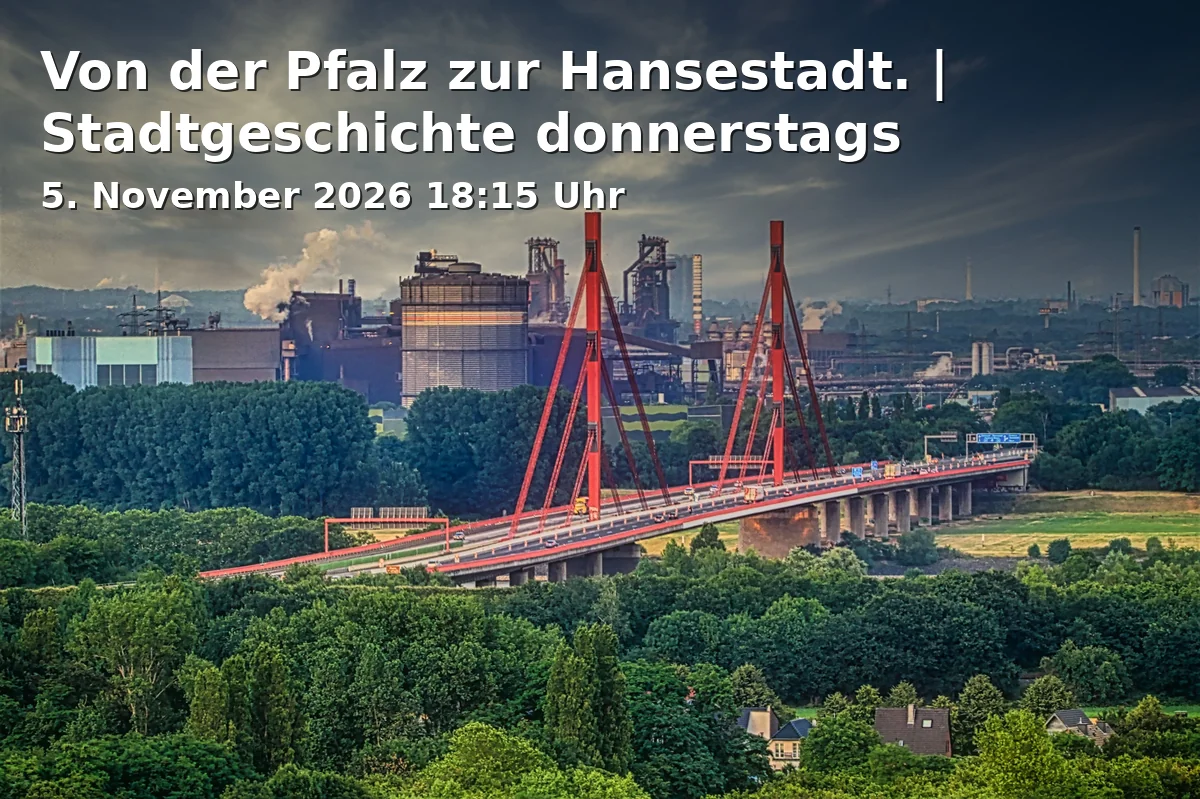
Duisburg was located at a significant junction between the Rhine, Ruhr, and Hellweg. Therefore, the medieval city history not only tells of rulers' seats but also of trade routes, markets, and growing urban independence. Rykena's research places the Duisburg imperial palatinate within the early and high medieval palatial landscape and thus illuminates an important chapter in European city development.
A Meeting with the Author in Historical Research
Sophie Rykena studied in Bonn, Cologne, and Vienna and works as a doctoral student in the DFG research project Genesis of the Western Ruhr Area. Her scientific focus is on the Duisburg royal palatinate and the city’s development in the High Middle Ages. The event combines professional expertise with a vivid presentation of archaeological research.
Conclusion
Visitors can expect a concentrated lecture on the palatinate, city wall, churches, residential buildings, and the origins of Duisburg as an important medieval site. The intimate atmosphere of the city archive provides the perfect setting for this literary and scientific experience of city history. Those wishing to discover Duisburg's historical depth beyond the industrial age will experience a remarkable author encounter with the past.
Official Channels of Sophie Rykena:
- Instagram: no official profile found
- Facebook: no official profile found
- Website: no official profile found
- Publisher: no official profile found