
Sören Link
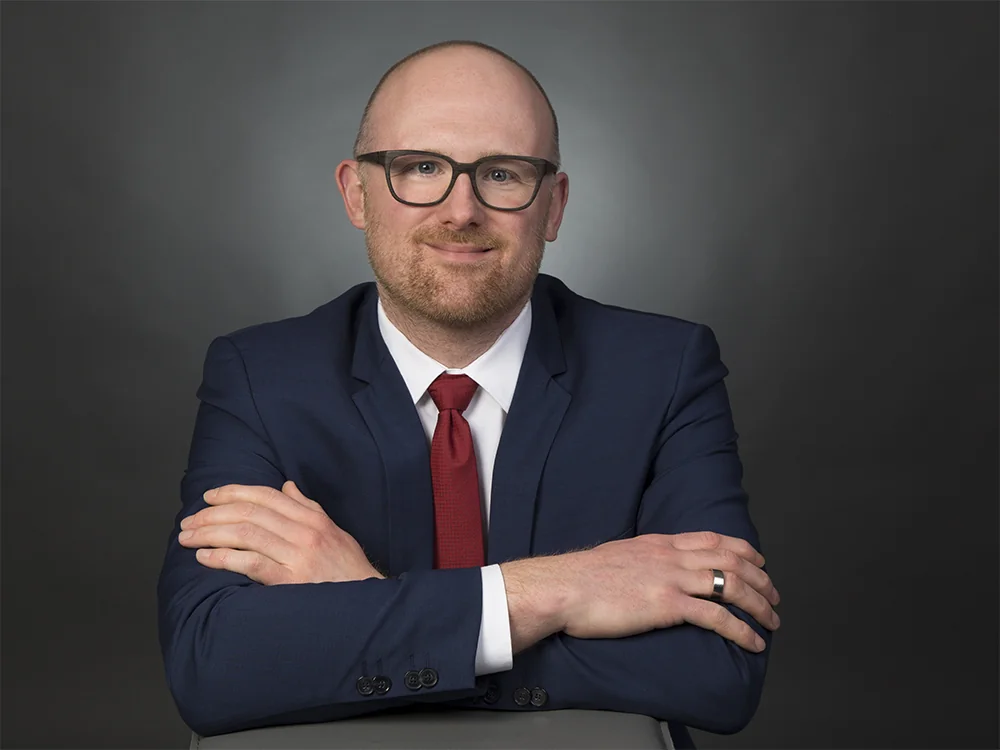
Image from Wikipedia
Image from Wikipedia
Sören Link: Local Politician with a Clear Vision, Ruhr Area Profile, and Endurance in Duisburg
A Profile Between Background, Administration, and Political Responsibility
Sören Link, born June 28, 1976, in Duisburg-Hamborn, has long represented a form of local politics that remains deeply rooted in its city. Growing up in the Walsum district of Duisburg, he has consistently focused his biographical and political efforts in the Ruhr area. Since July 4, 2012, he has been the Mayor of Duisburg, serving as the administrative face of one of North Rhine-Westphalia's key cities. ([duisburg.de](https://www.duisburg.de/rathaus/rathausundpolitik/verwaltungsvorstand/oberbuergermeister-soeren-link))
His path into public life did not begin with a rapid rise but rather as a traditionally structured career involving training, study, and party work. This groundedness also shapes his political perception: Link is regarded as a politician with administrative experience, regional roots, and a clear focus on local governance. Particularly in Duisburg, where urban development, infrastructure, education, and social issues are closely interconnected, this type of leadership is directly felt by many citizens. ([duisburg.de](https://www.duisburg.de/rathaus/rathausundpolitik/verwaltungsvorstand/oberbuergermeister-soeren-link))
Biographical Development: Education, Party, and the Path to City Hall
Early Years and Professional Qualification
After graduating from Kopernikus-Gymnasium in Duisburg-Walsum in 1995, Link initially completed his basic military service. He then studied political science at the University of Duisburg-Essen, completing his studies in 1998 without a degree. Concurrently, he pursued a career in administration: From 1998 to 2001, he completed training at the Düsseldorf District Government, which he finished as a graduate in Public Administration (FH). ([duisburg.de](https://www.duisburg.de/rathaus/rathausundpolitik/verwaltungsvorstand/oberbuergermeister-soeren-link))
This combination of political science interest and administrative qualification later became a defining component of his public role. Before jumping into large state politics, he worked in the school department of the Düsseldorf District Government, dealing with personnel matters for teachers at comprehensive schools until 2005. This early practical experience explains why Link is often perceived in many debates as a pragmatic designer rather than an ideological spokesperson. ([duisburg.de](https://www.duisburg.de/rathaus/rathausundpolitik/verwaltungsvorstand/oberbuergermeister-soeren-link))
SPD, Jusos, and the Entry into Political Work
Link joined the SPD in 1993, making a clear political move early on. In Duisburg, he was active as the chair of the Jusos and other board positions within the SPD local association in Walsum and the Duisburg district SPD. These positions illustrate a classic political structure based on youth work, intra-party anchoring, and local engagement. ([munzinger.de](https://www.munzinger.de/register/portrait/biographien/link%20soeren/00/29226))
His career is therefore heavily shaped by party structures and local continuity. Unlike careers focused on short-term media attention, Link's profile developed in the long-term, often invisible spaces of local and state politics. This is a substantial part of his public credibility: he comes from the city's organization and not merely from the arena of daily politics. ([munzinger.de](https://www.munzinger.de/register/portrait/biographien/link%20soeren/00/29226))
North Rhine-Westphalia State Parliament: Focus on Education Policy
From May 2005 to 2012, Sören Link was a member of the North Rhine-Westphalia State Parliament. There, he served on the School Committee, the Interior Committee, and the Main and Media Committee; from 2010, he acted as the SPD parliamentary group's education policy spokesman. His parliamentary work was therefore heavily focused on education, administration, and locally relevant policy areas. ([duisburg.de](https://www.duisburg.de/rathaus/rathausundpolitik/verwaltungsvorstand/oberbuergermeister-soeren-link))
Particularly school and education policy are crucial for understanding his political signature. They combine administrative logic with social responsibility and require a language that bridges state politics and local realities. Link's time in the state parliament directly prepares him for his later role as mayor, as it revealed the key interfaces between party, administration, and public welfare. ([duisburg.de](https://www.duisburg.de/rathaus/rathausundpolitik/verwaltungsvorstand/oberbuergermeister-soeren-link))
Mayor of Duisburg: Leadership, Continuity, and Re-election
Since 2012, Sören Link has been at the head of the Duisburg city administration. The city of Duisburg describes him as the head of the municipal administration while emphasizing that he has remained loyal to his hometown. On a personal level, his life path remains closely tied to Duisburg: he lives with his wife, child, and dog in the city, enjoys cooking and reading, and occasionally plays basketball. ([duisburg.de](https://www.duisburg.de/rathaus/rathausundpolitik/verwaltungsvorstand/oberbuergermeister-soeren-link))
Politically, his constant presence in city hall is one of the most notable features of his career. In the runoff election on September 28, 2025, he was re-elected as mayor with 78.57 percent; the city's election report states 78.6 percent and describes him as clearly re-elected. This confirmation solidified his position as a long-term influential local figure in Duisburg. ([duisburg.de](https://www.duisburg.de/rathaus/rathausundpolitik/verwaltungsvorstand/oberbuergermeister-soeren-link))
The election report from the city of Duisburg also emphasizes that Link, with 13 years in office, will be the longest-serving mayor in all of North Rhine-Westphalia in the upcoming election period. This continuity indicates a political career based on stability, recognizability, and local roots. For the local public, this means not only experience in office but also a high degree of institutional routine in a city facing complex social and economic challenges. ([duisburg.de](https://www.duisburg.de/microsites/wahlen/Informationslogistik_Statistik/archiv/archiv.php.media/631525/Wahlbericht-Stichwahl-2025.pdf))
Political Profile and Public Perception
Local Leadership with Clear Responsibilities
As mayor, Link is not only a representative in Duisburg but also the administrative leader. The official city website explicitly describes his role as the head of the municipal administration. This connects with a role that goes far beyond symbolic presence and includes concrete responsibilities in decision-making processes, personnel matters, and municipal management. ([duisburg.de](https://www.duisburg.de/rathaus/rathausundpolitik/verwaltungsvorstand/oberbuergermeister-soeren-link))
Additionally, he holds roles in other committees: Wikipedia mentions his positions as chairman of the supervisory board of Sparkasse Duisburg, as a member of the supervisory board of Stadtwerke Duisburg, and as chairman of the supervisory board of the Deutsche Oper am Rhein. These positions illustrate how closely local politics, economy, and culture are intertwined in a major city. Link's office thus represents a network of administration, supply, and public infrastructure. ([de.wikipedia.org](https://de.wikipedia.org/wiki/S%C3%B6ren_Link))
Rooted in the Ruhr Area
Link's biography remains intertwined with Duisburg and the northern Ruhr area. The city of Duisburg points to his origins in Hamborn and his long attachment to Walsum; Munzinger adds the family and social backgrounds of his upbringing. Such details are more than biographical embellishments; they explain the regional authenticity of a politician who presents himself not as an import but as part of the local history. ([duisburg.de](https://www.duisburg.de/rathaus/rathausundpolitik/verwaltungsvorstand/oberbuergermeister-soeren-link))
In public perception, this creates a profile that emphasizes stability and proximity. This closeness to the city forms an important part of his authority because it underpins political decisions with biographical credibility. In an industrial city with a strong sense of identity, the connection between person and place plays a central role. ([duisburg.de](https://www.duisburg.de/rathaus/rathausundpolitik/verwaltungsvorstand/oberbuergermeister-soeren-link))
Context: What Makes Sören Link an Interesting Local Politician
Sören Link represents a form of politics that has emerged from administrative experience, party work, and a sense of local responsibility. His path from the Duisburg district of Walsum through state politics to city hall illustrates a career with a clear direction and high continuity. For those looking to understand how local leadership functions in a major city, his career provides a precise example of institutional experience and regional loyalty. ([duisburg.de](https://www.duisburg.de/rathaus/rathausundpolitik/verwaltungsvorstand/oberbuergermeister-soeren-link))
He remains particularly interesting because his political biography does not rely on short-term staging but emphasizes long tenure, administrative knowledge, and direct ties to Duisburg. His re-election in 2025 underscores his ongoing relevance in the city's political daily life. Those wanting to experience current local politics with a focus on responsibility, stability, and local identity should closely follow Sören Link and Duisburg's city politics. ([duisburg.de](https://www.duisburg.de/rathaus/rathausundpolitik/verwaltungsvorstand/oberbuergermeister-soeren-link))
Official Channels of Sören Link:
- Instagram: No official profile found
- Facebook: No official profile found
- YouTube: No official profile found
- Spotify: No official profile found
- TikTok: No official profile found
Sources:
- City Portal Duisburg - Mayor Sören Link
- Munzinger Biography - Sören Link
- Wikipedia - Sören Link
- City Duisburg - Election Report Runoff 2025
- Wikipedia: Image and Text Source