
Patrick Bahners
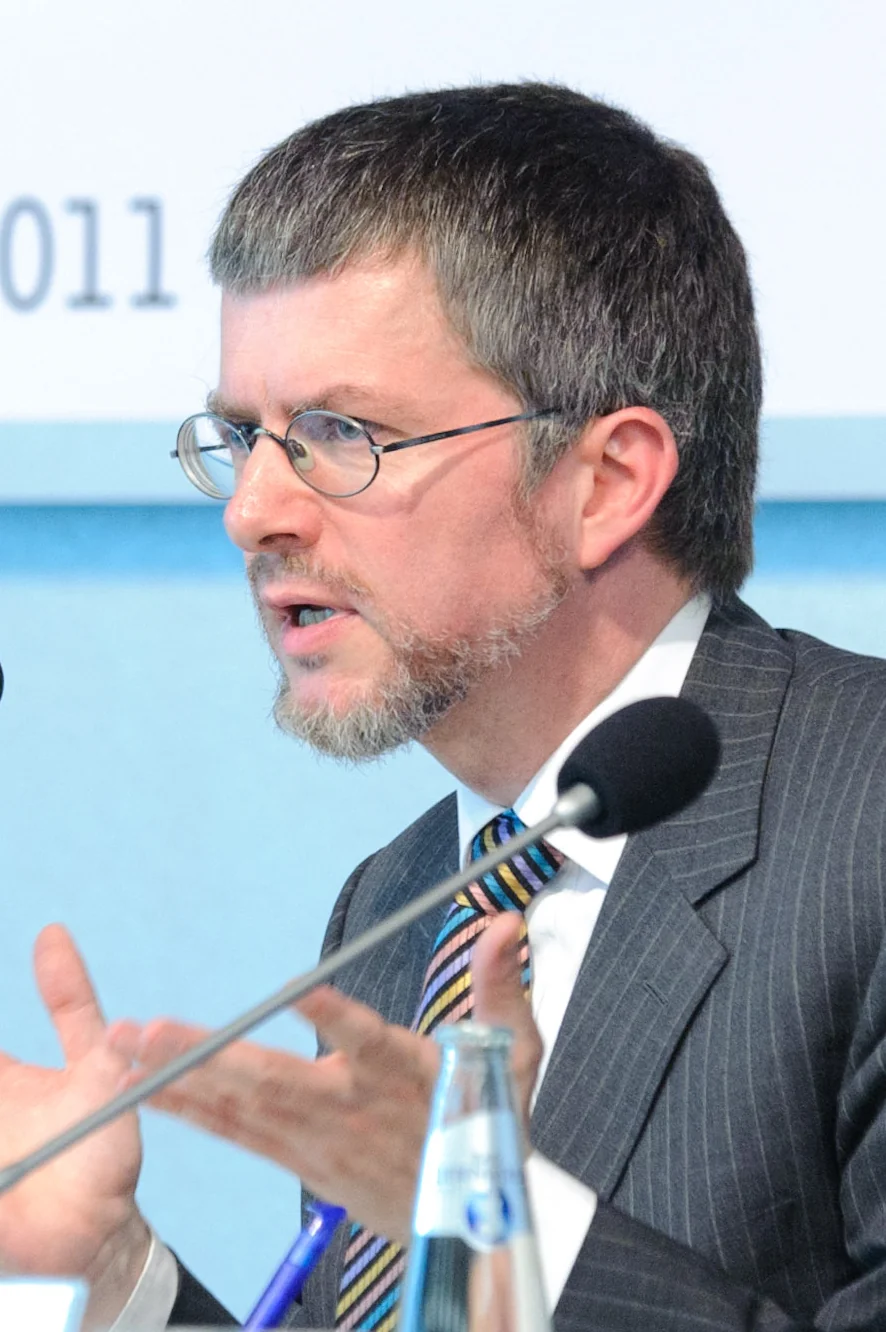
Image from Wikipedia
Image from Wikipedia
Patrick Bahners: The Precise Chronicler of German Debates between Feature, Essay, and Cultural Critique
A Journalist with a Sharp Eye for Power, Opinion, and Cultural Interpretation
Patrick Bahners, born on February 10, 1967, in Paderborn, is one of the defining German journalists and authors of his generation. Since the late 1980s, he has worked in the environment of the Frankfurter Allgemeine Zeitung, where he has made a name for himself with analytical sharpness, stylistic precision, and a keen sense of intellectual controversies. His work combines political observation, cultural-historical depth, and a desire for argumentative sharpness. ([munzinger.de](https://www.munzinger.de/register/portrait/biographien/bahners%20patrick/00/28618))
Background, Education, and Intellectual Influence
Bahners grew up in Cologne and Bonn and attended the Beethoven Gymnasium in Bonn, where he graduated in 1985. He then studied History, Philosophy, English Studies, and Public Law at the University of Bonn and at Worcester College, University of Oxford; he completed his studies with a master's degree in 1990. This broad academic foundation is still evident in his writing today: Bahners never works solely journalistically, but always also addresses intellectual history, concepts, and institutions. ([munzinger.de](https://www.munzinger.de/register/portrait/biographien/bahners%20patrick/00/28618))
Even his education reveals the core of his later musical career in a metaphorical, cultural-critical sense: the musicality of his sentences, the control over rhythm and argument, the composition of larger contexts. He does not think in mere headlines but rather in structures, conflicts, and historical lines. This is precisely where his authority as a feature writer and essayist lies. ([munzinger.de](https://www.munzinger.de/register/portrait/biographien/bahners%20patrick/00/28618))
The Rise at FAZ: Head of Feature, Correspondent, and Department Head
In 1989, Bahners joined the features editorial team of the Frankfurter Allgemeine Zeitung. From 1993 to 1997, he worked as a permanent contributor to the FAZ feature section in Bonn, before moving to Frankfurt in 1997, where he initially served as deputy head of features and responsible editor for new non-fiction books. From 2001 to the end of 2011, he led the feature section of the newspaper, one of the most visible and influential cultural positions in German journalism. ([munzinger.de](https://www.munzinger.de/register/portrait/biographien/bahners%20patrick/00/28618))
Later, he took on international and regional roles: from 2012 to 2015, he reported as a cultural correspondent from New York, from July 2015 to December 2017 from Munich, and starting in January 2018 from Cologne about culture in North Rhine-Westphalia. Since December 2016, he has also been responsible for the Humanities section of FAZ. His career illustrates a journalist who not only accompanies cultural debates but also helps to shape them. ([de.wikipedia.org](https://de.wikipedia.org/wiki/Patrick_Bahners?utm_source=openai))
Books as a Form of Controversy: Patrick Bahners Between Analysis and Polemic
Bahners is not only an editor but also a prolific author. His first book, In the Cloak of History: Helmut Kohl or the Unreplaceability, was published in 1998 and combined political biography with contemporary diagnosis. This was followed by Prussian Styles (2001), The Panic Makers: The German Fear of Islam (2011), Duckburg: The Whole Truth (2014), Helmut Kohl: The Character of Power (2017), The Return: The AfD and the New German Nationalism (2023), and Campaign in Germany: Bénédicte Savoy and the Controversy over Looted Art (2023). Bahners navigates confidently between politics, intellectual history, pop culture, and current controversy. ([de.wikipedia.org](https://de.wikipedia.org/wiki/Patrick_Bahners?utm_source=openai))
Particularly, The Panic Makers marked a public culmination point: the book elicited intense reactions and was nominated in 2011 for the Leipzig Book Fair Prize in the Non-Fiction/Essay category. Contemporary reception ranged from praise as a “masterpiece of enlightenment” to sharp criticism from the targeted journalists themselves. This range shows how Bahners’ writing functions as an intervention in the public sphere. ([de.wikipedia.org](https://de.wikipedia.org/wiki/Patrick_Bahners))
Style, Method, and Journalistic Handwriting
Bahners’ style is analytical, argumentative, and historically grounded. He works with long lines, precise terms, and a distinct willingness to sharpen arguments, without compromising on intellectual cleanliness. His texts often unfold a mixture of essay, report, and political diagnosis; making them both challenging and extraordinarily lively for readers. ([de.wikipedia.org](https://de.wikipedia.org/wiki/Patrick_Bahners))
This handwriting is particularly evident in his writings on the Islam debate and political right. Bahners does not take public outrage at face value but dissects its rhetoric, premises, and political consequences. His expertise lies in viewing debates as a cultural form, as an arrangement of arguments, images, and claims to power. ([de.wikipedia.org](https://de.wikipedia.org/wiki/Patrick_Bahners))
Cultural Influence and Public Resonance
Bahners is not an author of loud poses but one of long-term impact. He was a fellow at the Wissenschaftskolleg zu Berlin, held the Dahrendorf Visiting Professorship at the University of Konstanz, and is a founding member of PEN Berlin. He is also the honorary president of the German organization of non-commercial supporters of loud Donaldism, which demonstrates his love for intellectual irony as well as his proximity to German comic and cultural history. ([de.wikipedia.org](https://de.wikipedia.org/wiki/Patrick_Bahners))
His cultural influence is also evident in his ability to transfer themes from the feature section into broader public debates. Whether it concerns Helmut Kohl, criticism of Islam, the AfD, or looted art: Bahners works at the friction points of the Republic. Recent books and publications from 2023 and 2025 confirm that his voice continues to be relevant in German-speaking discourse. ([de.wikipedia.org](https://de.wikipedia.org/wiki/Patrick_Bahners?utm_source=openai))
Current Activities and Ongoing Presence
In 2024 and 2025, Bahners remained present. The University of Bamberg announced in May 2024 a lecture by him on disinformation, propaganda, and the tasks of modern journalism. In June 2025, the Wissenschaftskolleg zu Berlin published a contribution by Patrick Bahners in its "Heads and Ideas" series, and in August 2025, an article by him on Bayreuth appeared in the FAZ. This shows that Bahners does not work retrospectively but remains actively engaged in cultural journalism. ([uni-bamberg.de](https://www.uni-bamberg.de/kowi/news/artikel/vortragsankuendigung-desinformation-und-propaganda-was-kann-moderner-journalismus-tun/?utm_source=openai))
Overview of Publications
His work comprises political essays, historical analyses, and cultural-critical books. Noteworthy are In the Cloak of History, The Panic Makers, Duckburg: The Whole Truth, Helmut Kohl: The Character of Power, and The Return. Additionally, he has edited works like 1848 – The Experience of Freedom or Prussian Styles, which underscore his perspective on historical constellations and state formations. ([de.wikipedia.org](https://de.wikipedia.org/wiki/Patrick_Bahners?utm_source=openai))
In summary, the portrait emerges of an author who rarely connects journalistic presence, historical education, and public controversy with such precision. Bahners remains compelling because he does not merely comment but shifts frameworks of interpretation. Those who read his texts encounter one of the smartest cultural critics in the German-speaking world – and an author who not only describes debates but structures them. ([de.wikipedia.org](https://de.wikipedia.org/wiki/Patrick_Bahners))
Conclusion: Why Patrick Bahners Remains Relevant Today
Patrick Bahners represents journalism that combines intellectual diligence, historical depth, and argumentative tension. His books and essays demonstrate how vibrant cultural critical writing can be when it prioritizes precision over effects. Anyone who wants to understand political and cultural debates in Germany finds in Bahners an indispensable observer. ([de.wikipedia.org](https://de.wikipedia.org/wiki/Patrick_Bahners))
He remains interesting because he does not smooth over contradictions but rather reveals them. Those who follow his texts, lectures, or public conversations experience an author with profile, intellectual stance, and lasting impact. This is precisely why it is worthwhile to experience Patrick Bahners live and in direct exchange. ([uni-bamberg.de](https://www.uni-bamberg.de/kowi/news/artikel/vortragsankuendigung-desinformation-und-propaganda-was-kann-moderner-journalismus-tun/?utm_source=openai))
Official Channels of Patrick Bahners:
- Instagram: No official profile found
- Facebook: No official profile found
- YouTube: No official profile found
- Spotify: No official profile found
- TikTok: No official profile found
Sources:
- Wikipedia – Patrick Bahners
- Munzinger Biography – Patrick Bahners
- Wissenschaftskolleg zu Berlin – Patrick Bahners
- University of Bamberg – Lecture Announcement with Patrick Bahners
- Wissenschaftskolleg zu Berlin – Heads and Ideas 2025
- FAZ – Siegfried and Götterdämmerung in Bayreuth 2025
- Wikipedia: Image and text source