
Klavier-Festival Ruhr
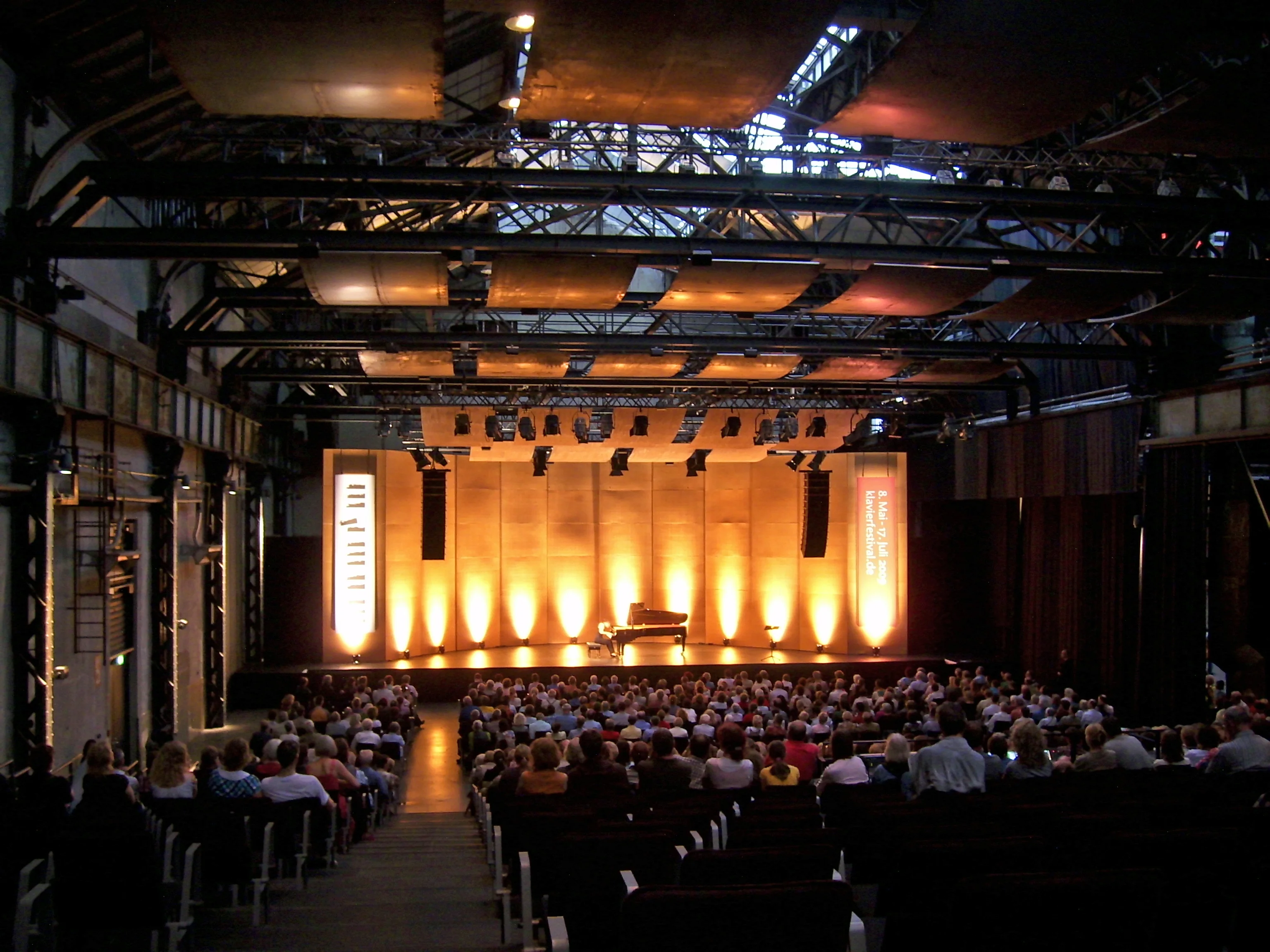
Image from Wikipedia
Image from Wikipedia
Piano Festival Ruhr: The Grand Summer Event for Piano Art in the Ruhr Area
A festival that transforms the entire region into a sound space
The Piano Festival Ruhr is much more than a classical concert series: it is a cultural flagship project that has shaped the summer in the Ruhr area for decades and makes piano music accessible in its full stylistic and artistic breadth. Every year, the festival brings together international pianists, emerging talents, and a curious audience, creating a space where virtuosity, repertoire diversity, and musical discovery intersect. The artistic idea is clear: the piano is at the center, but the cultural resonance space extends far beyond the instrument. ([klavierfestival.de](https://www.klavierfestival.de/ueber-uns/?utm_source=openai))
With around 60 to 80 concerts, several performance days per week, and about 60,000 visitors per year, the festival is one of the most visible music brands in the region. The venues range from renowned concert halls to industrial monuments and unusual stages in Dortmund, Essen, Duisburg, Bochum, Hagen, Recklinghausen, Wuppertal, and Düsseldorf. This mix of urban identity, architectural diversity, and high artistic quality makes the festival a special case of cultural mediation in the best sense. ([klavierfestival.de](https://www.klavierfestival.de/ueber-uns/?utm_source=openai))
Biography and Development: From a Regional Summer Festival to a Cultural Beacon
The Piano Festival Ruhr was established as a festival of piano music and takes place every summer in the Ruhr area. The organizer is the Foundation Piano Festival Ruhr, whose artistic and organizational development has been strongly associated with Franz Xaver Ohnesorg over the years. Under his leadership, the festival was further developed as the artistic flagship project of the Ruhr Initiative Circle and increasingly established itself as an internationally recognized platform for piano art. ([de.wikipedia.org](https://de.wikipedia.org/wiki/Klavier-Festival_Ruhr?utm_source=openai))
With the transition to Katrin Zagrosek on January 1, 2024, a new chapter in the festival's history began. She was already appointed to the board of the foundation and the management of the sponsoring and service company on April 1, 2023, facilitating a controlled leadership change. This continuity is crucial for a festival of this scale, as artistic signature and organizational stability are closely intertwined here. ([de.wikipedia.org](https://de.wikipedia.org/wiki/Klavier-Festival_Ruhr?utm_source=openai))
The Artistic Idea: Piano Music as a Panorama of Possibilities
The festival thrives on its programmatic range. International stars of the piano scene perform alongside young artists who are at the beginning of a promising career. This is one of the great strengths of the Piano Festival Ruhr: it showcases the piano not just as a solo instrument, but as a medium with orchestral power, chamber music finesse, and contemporary openness. ([klavierfestival.de](https://www.klavierfestival.de/ueber-uns/?utm_source=openai))
The series "Youngsters," which has been presenting young pianists at Zeche Zollern since 2024, particularly exemplifies this attitude. Here, competition winners, hidden gems, and child prodigies meet an audience that perceives the next generation of piano music not as a footnote but as a true space for the future. The educational and curatorial ambition of the festival thus gains an additional, forward-looking dimension. ([klavierfestival.de](https://www.klavierfestival.de/konzertreihe/youngsters/?utm_source=openai))
Venues and Atmosphere: The Ruhr Area as a Stage of the Present
A central feature of the Piano Festival Ruhr is the connection between music and place. The festival uses time-honored concert halls as well as industrial architecture, museums, and unusual performance venues, giving each evening its own atmospheric signature. Konzerthaus Dortmund, Philharmonie Essen, Mercatorhalle Duisburg, and Tonhalle Düsseldorf exemplify a mix of prestige, acoustics, and urban cultural history. ([klavierfestival.de](https://www.klavierfestival.de/ueber-uns/?utm_source=openai))
In the Ruhr area, this spatial diversity has a particularly strong impact, as it musically reflects the structural change of the region. Where industry once dominated perception, the festival today emphasizes cultural density, international radiance, and artistic openness. Thus, the piano is not staged as an elitist object, but as a connecting instrument between city, audience, and contemporary art. ([klavierfestival.de](https://www.klavierfestival.de/ueber-uns/?utm_source=openai))
Current Projects and Festival Profile 2024 to 2026
Even in the most recent editions, the festival has proven to be programmatically vibrant and adaptable. A season with more than 100 artists, including 59 pianists at 25 venues in 17 cities, has been announced for 2025; the series "Piano & Electronics" has also been continued. Such formats demonstrate how consistently the festival connects historical piano tradition with new sound concepts. ([ruhrgespraech.de](https://ruhrgespraech.de/artikel/486/klavier-festival-ruhr-2025-intendantin-katrin-z?utm_source=openai))
For 2026, the festival website indicates a period from May 7 to July 21, 2026, thereby underlining the festival's lasting presence as a fixed part of the European summer calendar. At the same time, the festival emphasizes its cultural educational projects, including offerings for children and youth in neighborhoods with increased support needs. This expands the pure concert activity into a social responsibility that goes far beyond the evening's events. ([klavierfestival.de](https://www.klavierfestival.de/?utm_source=openai))
Impact, Promotion, and Cultural Influence
The Piano Festival Ruhr is not only a presentation space for big names but also an actor in the promotion of music. The inclusion of emerging artists, educational work, and connections to regional sponsors demonstrate how deeply the festival is embedded in the cultural ecosystem of the Ruhr area. The event series is supported by industrial actors such as the Ruhr Initiative Circle and RWE, further emphasizing its regional grounding. ([de.wikipedia.org](https://de.wikipedia.org/wiki/Klavier-Festival_Ruhr?utm_source=openai))
The public perception also speaks for the authority of the format. In the professional and cultural scene, the festival is regarded as a significant brand for piano music, and reports on the 2024 balance highlight encouragement through new venues and new offerings. Thus, the influence lies not only in the quality of individual evenings but in the long-term shaping of an entire region as a musical space. ([ruhr24jobs.de](https://www.ruhr24jobs.de/organization/klavier-festival-ruhr?utm_source=openai))
Discography, Recordings, and Documented Reception
As a festival, the Piano Festival Ruhr does not have a "discography" in the sense of a single artist, but there are published recordings and editions that document its programmatic ambitions. Such publications contribute to the archiving of interpretations and make the artistic work accessible beyond the moment of the concert. This creates a kind of festival discography that connects repertoire history, contemporary practices, and interpretation culture. ([de.wikipedia.org](https://de.wikipedia.org/wiki/Alexej_Gorlatch?utm_source=openai))
The critical reception portrays the festival as an institution with high radiance. Music journalism and specialized media emphasize the artistic focus, international composition, and the ability to unite great pianists and young talents in a consistent format. The balance between repertoire cultivation, a thirst for discovery, and a clear, recognizable festival identity is particularly valued. ([miz.org](https://miz.org/en/interviews/klavier-festival-ruhr?utm_source=openai))
Conclusion: Why the Piano Festival Ruhr Remains So Exciting
The Piano Festival Ruhr is exciting because it connects musical excellence with regional depth. It shows how a festival can develop a distinctive artistic brand over the years without losing its openness to new formats, new generations, and new listening experiences. Those who want to experience piano music in its entire spectrum will not only find concerts here but also a concentrated cultural history of the instrument. ([klavierfestival.de](https://www.klavierfestival.de/ueber-uns/?utm_source=openai))
It is precisely the combination of international level, smart programming, and the unique Ruhr area spirit that is appealing. The festival invites audiences to not only listen to well-known masterpieces but to experience piano art as a living present. Anyone attending the next edition will experience a festival that brings together tradition, experimentation, and musical passion in rare density. ([klavierfestival.de](https://www.klavierfestival.de/?utm_source=openai))
Official Channels of Piano Festival Ruhr:
- Instagram: https://www.instagram.com/klavierfestival
- Facebook: https://www.facebook.com/klavierfestival
- YouTube: https://www.youtube.com/user/klavierfestivalruhr
- Spotify: No official profile found
- TikTok: No official profile found
Sources:
- Piano Festival Ruhr – Official Website
- Piano Festival Ruhr – Impressum and official social media notes
- Piano Festival Ruhr – About Us
- Piano Festival Ruhr – Youngsters
- miz.org – Piano Festival Ruhr
- MUSIK HEUTE – Piano Festival Ruhr satisfied with 2024 balance
- RUHRgespräch – Piano Festival Ruhr 2025
- Wikipedia: Piano Festival Ruhr – Image and text source