
György Pálfi
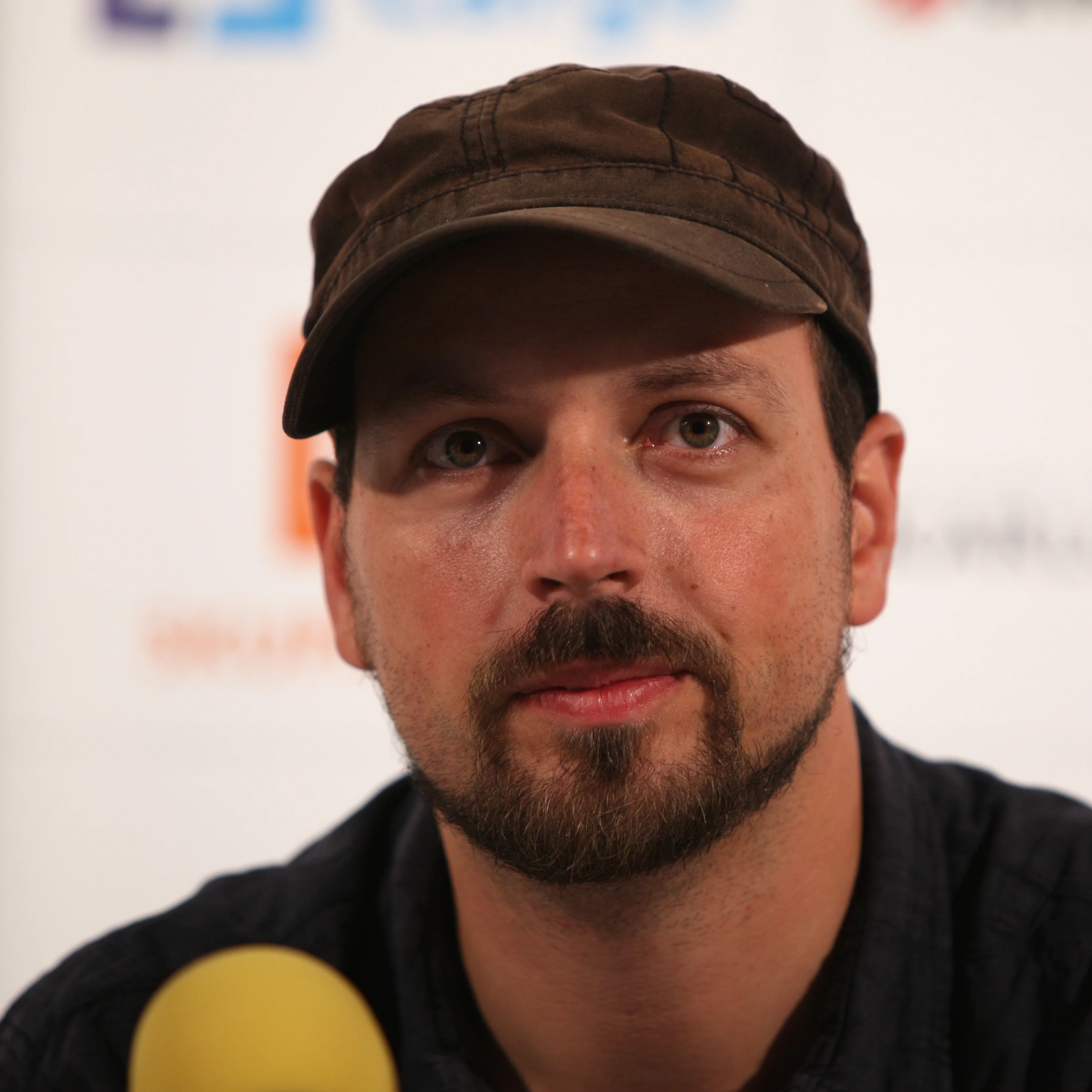
Image from Wikipedia
Image from Wikipedia
György Pálfi – The Hungarian Author Filmmaker Between Silence, Grotesque, and Radical Visual Power
A Director Who Thinks of Cinema as a Precisely Composed Narrative Machine
György Pálfi, born on April 11, 1974, in Budapest, is one of the most distinctive voices in contemporary Hungarian auteur cinema. His career began early: at the age of 14, he first appeared on camera, before leaving acting behind and dedicating himself uncompromisingly to directing. From this decision developed a musical career of cinema in a metaphorical sense: Pálfi works with rhythm, pauses, dynamics, and silence with such precision that it feels as if he is designing a complex arrangement. ([de.wikipedia.org](https://de.wikipedia.org/wiki/Gy%C3%B6rgy_P%C3%A1lfi?utm_source=openai))
His work combines formal boldness with a keen observation of social and physical reality. Even his first feature film made it clear that Pálfi does not seek conventional narrative paths, but rather understands cinema as a field of experimentation. In his films, image composition, soundtracks, and dramaturgy intersect like in a carefully produced composition that draws its effect from contrasts. ([nfi.hu](https://nfi.hu/en/cast/gyorgy-palfi))
From Acting Role to a Unique Signature
Pálfi's artistic journey did not begin with directing, but with an early encounter with film production and set experience. In 1988, he played a small role in István Dárdais and Györgyi Szalai's A Dokumentátor; in 1997, he followed with the satirical short film A Hal. After studying at the Academy of Drama and Film in Budapest, he gradually honed his signature style and established himself as a filmmaker who blends formal rigor with grotesque humor. ([de.wikipedia.org](https://de.wikipedia.org/wiki/Gy%C3%B6rgy_P%C3%A1lfi?utm_source=openai))
This development shapes his entire œuvre. Early on, his interest in marginal figures, bodily presence, and the tension between everyday reality and cinematic elevation becomes evident. Pálfi does not rely on loud effects but instead on a precise choreography of gazes, sounds, and narrative shifts, which gives his works a distinctive authority. ([nfi.hu](https://nfi.hu/en/cast/gyorgy-palfi))
Hukkle: The International Breakthrough with a Film Without Dialogues
The breakthrough came in 2002 with Hukkle – The Village. The debut film, which does not rely on dialogues and unfolds life in a Hungarian village through sounds, observations, and microscopic everyday details, was shown at over 100 international festivals and screened in numerous art cinemas worldwide. The response was enormous: Pálfi received, among others, the European Discovery Award and the Fassbinder Award, as well as various accolades that immediately brought him into international discussions. ([nfi.hu](https://nfi.hu/en/cast/gyorgy-palfi))
Hukkle already shows the central qualities of his cinema: formal radicality, precision in sound, a sense for atmospheric tension, and a visual language that actively forces the audience to think along. The fact that this film was perceived as original, provocative, and stylistically unmistakable marks the beginning of directorial work that consistently operates outside the mainstream. ([siff.bg](https://siff.bg/en/m/masterclass-gyorgy-palfi))
Taxidermia and the Reputation for Radical Author Cinema
With Taxidermia from 2006, Pálfi significantly increased his formal and thematic boldness. The film, a grotesque narrative about three generations, premiered in the Un Certain Regard section at Cannes and won the main award at the Hungarian Film Week in Budapest as well as several individual awards, including accolades for acting, set design, and the Gene Moskowitz Prize from international critics. This solidified Pálfi's reputation as an author of uncompromising, physically charged cinema. ([nfi.hu](https://nfi.hu/en/cast/gyorgy-palfi))
Taxidermia is, in its intensity, almost like an extreme genre album: over the top, precise, taboo-free, yet controlled in structure. Pálfi develops a visual language that blends disgust, satire, and tragedy into a single cinematic movement. It is precisely this ability to combine exaggeration and observation that makes his works appealing both to festival juries and cinephiles seeking radical author positions. ([nfi.hu](https://nfi.hu/en/cast/gyorgy-palfi))
Between Collage, Experiment, and Narrative Cinema
In the following years, Pálfi significantly expanded his spectrum. I am Not Your Friend from 2009, Final Cut – Ladies & Gentlemen from 2012, and Free Fall from 2014 demonstrate how confidently he can handle different forms: from psychologically sharp dramas to a collage of hundreds of foreign film clips. Final Cut was presented in Cannes Classics in 2012, and Free Fall won three major awards at the Karlovy Vary International Film Festival in 2014, including Best Director. ([nfi.hu](https://nfi.hu/en/cast/gyorgy-palfi))
Final Cut – Ladies and Gentlemen, in particular, reveals Pálfi's archival thinking. The film works with a historical memory of cinema and shapes it into a new, unusually vibrant narrative. In its structure, the work resembles a large audiovisual montage, where editing, rhythm, and citation culture merge into an independent artistic language. ([nfi.hu](https://nfi.hu/en/cast/gyorgy-palfi))
Current Projects: Hen and the New Phase of a Mature Author
One of Pálfi's current works is Hen, a feature film from 2025 that has gained significant attention in international festival programs. The film tells the story of a hen that escapes from a poultry transport situation and highlights human conflicts along her journey; the work has been featured at the Toronto International Film Festival 2025, among other festival contexts. Pálfi himself described the project in an interview as a risky undertaking because he placed a small creature in the midst of a great human tragedy. ([2025.tiff-jp.net](https://2025.tiff-jp.net/download/TIFF2025_38th-TIFF_GUIDE-1.pdf))
The relevance of this film lies not only in its unusual premise but also in the consistency with which Pálfi develops his themes. Hen continues the search for a radical perspective and demonstrates that the director, even in the second decade of his career, is unafraid of formal risks. The festival presence in 2025 and 2026 underscores how vibrant and relevant his cinema remains. ([2025.tiff-jp.net](https://2025.tiff-jp.net/download/TIFF2025_38th-TIFF_GUIDE-1.pdf))
Style, Language, and Artistic Signature
Pálfi's style thrives on strong contrasts: silence against noise, body against system, comedy against abyss. His films draw their energy from precise staging that focuses on details while simultaneously opening up large thematic spaces. In this respect, he works almost like a composer, varying motifs, placing pauses, and shaping a unique dramaturgy through the interplay of sound and image. ([siff.bg](https://siff.bg/en/m/masterclass-gyorgy-palfi))
The international press also emphasizes this originality. The trade media describe him as one of the most provocative Hungarian directors, whose early works stood out for their unconventional imagery and clear authorial signature. The fact that Hukkle, Taxidermia, and Free Fall have been shown and awarded at prestigious festivals attests to the artistic authority of his oeuvre, as well as its relevance to the great tradition of European festivals. ([siff.bg](https://siff.bg/en/m/masterclass-gyorgy-palfi))
Cultural Influence and Significance in European Cinema
György Pálfi represents a cinema that has made Hungarian film culture visible internationally. His works move between national roots and European festival discourse, between grotesque physicality and philosophical observation. It is precisely this connection that makes him an important figure in contemporary auteur cinema, as he does not reproduce forms but constantly questions them. ([nfi.hu](https://nfi.hu/en/cast/gyorgy-palfi))
His influence is also evident in the way his films are discussed: as formal risks, as poetic experiments, as works with high recognition value. From the early short films to the international festival premieres of the 2020s, a clear line emerges that emphasizes independence, precision, and artistic willingness to take risks. This is where the sustained tension of his work lies. ([nfi.hu](https://nfi.hu/en/cast/gyorgy-palfi))
Conclusion: Why György Pálfi Remains Fascinating
György Pálfi is intriguing because he never perceives cinema as routine but always as a quest. His films combine experiment, humor, grotesque elements, and strong visual control into an unmistakable artistic language. Those interested in auteur cinema, festival history, and radical visual ideas will find in his work one of the most distinctive signatures in Hungarian and European cinema. ([nfi.hu](https://nfi.hu/en/cast/gyorgy-palfi))
Especially at a time when many films focus on quick marketability, Pálfi's work feels like an invitation to experience cinema again: sensually, riskily, and surprisingly. His films deserve the big screen, focused attention, and conversation afterward. Anyone who has the opportunity to experience György Pálfi at a festival or in a cinema should seize it. ([cineuropa.org](https://cineuropa.org/en/interview/484104))
Official Channels of György Pálfi:
- Instagram: No official profile found
- Facebook: No official profile found
- YouTube: No official profile found
- Spotify: No official profile found
- TikTok: No official profile found
Sources:
- Wikipedia – György Pálfi
- National Film Institute Hungary – György Pálfi
- National Film Institute Hungary – Silent Friend
- Festival de Cannes – György Pálfi
- International Sofia Film Festival – Masterclass: György Pálfi
- Cineuropa – György Pálfi • Director of Hen
- Tokyo International Film Festival 2025 Guide – Hen
- DC Environmental Film Festival 2026 Program – Hen
Upcoming Events
Views of a Chicken
Views of Life of a Chicken
Life Views of a Chicken
Views of a Chicken
Views on Life of a Chicken
Life Perspectives of a Chicken
Life Perspectives of a Chicken
Views of a Chicken
Life Views of a Chicken