
George Wassouf
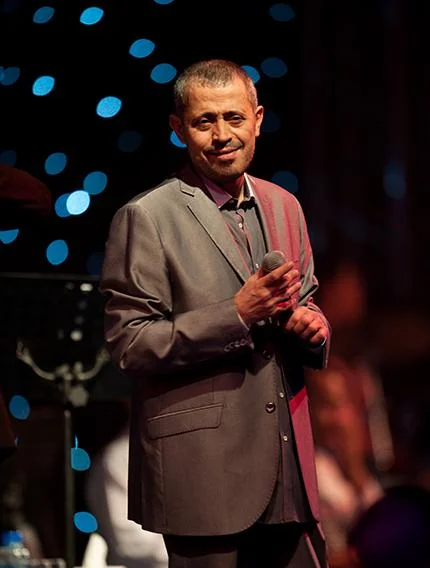
Image from Wikipedia
Image from Wikipedia
George Wassouf – The Voice of Arabic Tarab Between Legend, Passion, and Stage
A Unique Syrian Artist with an Unmistakable Voice and Decades-Long Music Career
George Wassouf, born on December 23, 1961, in Kafroun, Syria, is one of the most iconic voices in the Arab pop and Tarab tradition. His name signifies emotional intensity, grand melodic arcs, and a stage presence that has resonated across generations. Early on, he became a cultural symbol that gained prominence far beyond the borders of Syria.
Wassouf's artistic biography intertwines early discovery, extraordinary popularity, and a career shaped by both consistency and personal drama. He occupies a unique position in the history of Arabic music: as a performer with classical vocal training, charismatic charisma, and a repertoire that oscillates between romantic ballads, popular hits, and deeply rooted Tarab. It is this blend that makes George Wassouf a name that still evokes immediate resonance in the music culture of the Middle East.
Early Years and the Path to Music
Wassouf began singing as a child and started performing at events and public celebrations from the age of twelve. In his youth, he stood out for a voice that already possessed a rare maturity and depth. His discovery at a wedding marked the beginning of a career that quickly evolved from local performances to one with regional significance.
This early phase is crucial for his artistic profile, as it explains his connection to the traditional Arab singing culture. Singing at festivities, the closeness to the audience, and training in direct emotional expression shaped his later style. The young singer did not become a quickly replaceable pop act, but rather an interpreter with profound impact and endurance.
The Breakthrough and the Emergence of an Icon
At the age of 16, Wassouf earned the nickname "Sultan El-Tarab," a title that continues to define his status in the Arabic music cosmos. The nickname refers to Tarab, a musical principle of intense emotional ecstasy that plays a central role in Arab art music. That such a young singer was already associated with such a prestigious title underscores his exceptional status.
His career grew through strong songs, distinctive melodies, and a voice that conveys pain, longing, and dignity alike. In later years, George Wassouf became one of the most recognized singers in the Arab world, with his reputation grounded not only in hits but in a distinctive identity. The mix of pathos, elegance, and populism made him a cult figure.
Musical Development Between Tarab, Pop, and Emotional Intensity
George Wassouf's musical development is closely linked to the concept of Tarab, while remaining open to popular forms. His interpretations thrive on long phrases, intense vibrato control, and an articulation that places the dramatic moment at the center. In his songs, traditional Arab melody, emotional intensification, and a modern production aesthetic come together.
This stylistic tension gives his discography its lasting impact. Wassouf remains a singer whose compositions and arrangements often rely on emotion, recognition, and vocal presence. Thus, he stands alongside the great voices of the Arab world while retaining his unique sonic signature.
Discography, Achievements, and Cultural Reach
Throughout his career, Wassouf has released more than 30 albums and performed numerous concerts worldwide. This track record not only shows productivity but also remarkable consistency over decades. Among his most famous songs are "Kifak Inta," "Ya Habibi," and "Ahebbak Ya Lail," which remain pivotal titles in his repertoire.
His songs and albums have attained high recognizability in Arab music culture and are closely associated with a specific conception of romantic, passionate vocal art. In streaming environments and digital catalogs, his work remains present, while classics and live versions continue to be heard. George Wassouf's discography is not just an archive but a living part of Arab pop history.
Critical Reception and Position in Arab Music History
For decades, music critics have described George Wassouf as one of the great interpreters of the region, whose singing style is deeply rooted in emotional expression. His status as "Sultan of Tarab" signifies more than popularity: it marks authority, tradition, and the respect of an audience that hears not just entertainment in his voice but cultural memory. This classification is central to his image as an artist with historical depth.
Other musicians also cite him as an inspiration. In the Arab and Levantine music scene, he is regarded as a reference for vocal presence, melodic intensity, and that elegant form of pathos that is so important in Tarab. Consequently, his influence extends far beyond his own discography and shapes an entire generation of singers.
Current Projects and Return to the Present
In 2024, George Wassouf returned with new music. Reports mention the release of "Spanish Dance" in July 2024 on YouTube as his latest official single. In May 2026, it was also reported that he had recorded two new songs and was preparing to make a return to the music scene after approximately two years of absence.
These activities demonstrate that Wassouf remains a relevant name in the current music industry even at an older age. His return is not merely nostalgic but part of an ongoing artistic development. Particularly for a singer of such status, new releases generate special attention as they audibly connect the past and the present.
Stage Presence, Personality, and Public Perception
George Wassouf is not just a studio artist but primarily a singer of the stage. His reputation is founded on performances where voice, gesture, and audience interaction form a unity. This stage presence has significantly contributed to his concerts being perceived as special events in many countries.
His public image also includes his deeply emotive artist persona: great emotion, clear stance, and closeness to the traditions of Arab popular culture. Wassouf is a figure who does not react to short-term trends but rather focuses on lasting impact. This is where the authority of his name lies.
Cultural Influence and Legacy
George Wassouf represents a form of Arabic music that does not smooth over feelings but exposes them. His contribution to music culture ranges from the preservation of classical singing ideals to the popularization of an emotionally charged, mass-appealing ballad language. As such, he has become, for many listeners, a voice of memory, passion, and identification.
His legacy is evident in the ongoing presence of his songs, the worship of fans, and his cultural classification as a legend of Arabic singing. Those who listen to his music encounter not just a singer but an entire aesthetic of Arab Tarab. George Wassouf thus remains an artist whose work transcends time and is continuously rediscovered.
Conclusion: A Singer of Rare Aura Who Must Be Experienced Live
George Wassouf combines musical greatness, emotional directness, and cultural authority in a way that few achieve in the Arabic music landscape. His career narrates a tale of early talent, long perseverance, and a voice that remains instantly recognizable. Anyone wishing to experience Arabic music in its most passionate and tradition-rich form will find in him one of the most important names of all.
Especially live, this art unfolds its full effect: the long phrases, the warmth of the voice, and the immediate connection to the audience. George Wassouf is not just a chapter in music history but a living experience. Seeing him on stage means witnessing a true master of Tarab in his full expressive power.
Official Channels of George Wassouf:
- Instagram: https://www.instagram.com/officialwassouf
- Facebook: https://www.facebook.com/OfficialWassouf/
- YouTube: https://www.youtube.com/channel/UCRpVH-l7I3j1bZHcrW1c-dg
- Spotify: https://open.spotify.com/artist/7Ddov9nbJDbpgzvBVb7cU1
- TikTok: https://www.tiktok.com/@georgeswassoufofficial
Sources:
- Wikipedia: George Wassouf - Image and Text Source
- Wikipedia: George Wassouf - English Biography Page
- Facebook: Georges Wassouf - جورج وسوف
- Spotify: George Wassouf
- Voice of Emirates: George Wassouf Returns with Two New Songs After a Two-Year Absence
- Waradana: New Release by George Wassouf in Egyptian Dialect
- Regardduweb: George Wassouf - Singer Profile