
Charles Gounod
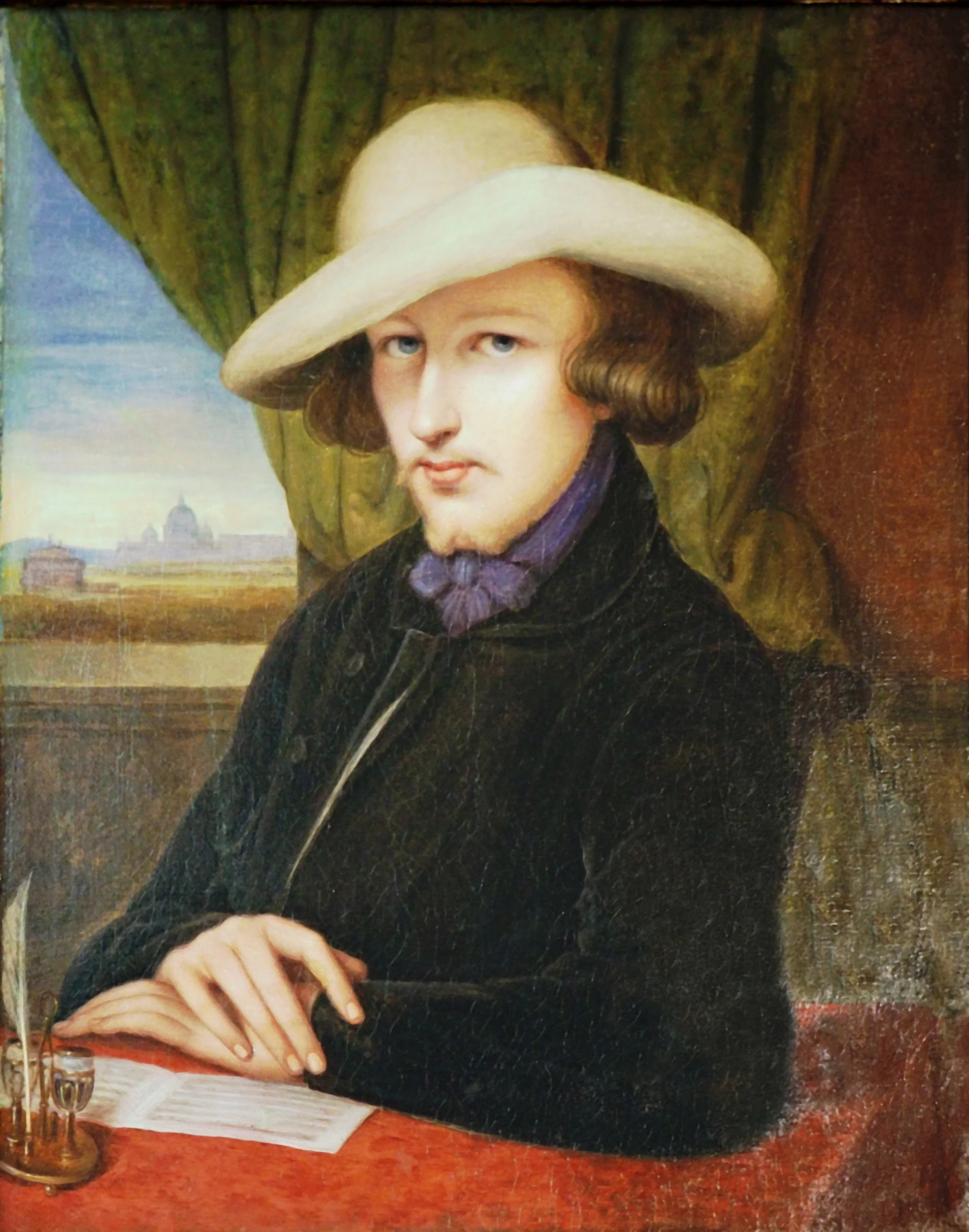
Image from Wikipedia
Image from Wikipedia
Charles Gounod – The Elegant Melodist of French Opera
A Composer Between Church, Stage, and Immortal Melody
Charles Gounod is among the most influential French composers of the 19th century. Born on June 17, 1818, in Paris and died on October 18, 1893, in Saint-Cloud, he developed a musical career that oscillated between sacred introspection and theatrical expressiveness. His fame is still primarily based on the opera Faust from 1859, but his oeuvre extends far beyond this classic, encompassing operas, masses, sacred works, songs, and instrumental pieces. ([britannica.com](https://www.britannica.com/summary/Charles-Gounod))
Early Influences in Paris: Music, Family, and Artistic Curiosity
Gounod grew up in an artistic environment that significantly influenced his later development. His father, François Louis Gounod, was a painter and engraver, while his mother, Victoire Lemachois, gave piano lessons after the early death of her husband to support the family. From a young age, Gounod became acquainted with the world of opera and was profoundly influenced by encounters with Rossini and Mozart; these experiences ultimately steered him toward music. ([charles-gounod.com](https://www.charles-gounod.com/biographie.html))
The biographical sources depict an artist who stood early on at the crossroads of multiple talents. The Lyric Opera of Chicago describes him as an atypical candidate for theater composition, as he came from a family of silversmiths and painters, not a dynasty of musicians. At the same time, he was a musical prodigy, encouraged by his mother and later studied at the Paris Conservatory and in Rome. ([lyricopera.org](https://www.lyricopera.org/about/company/artists-musicians/composers-librettists/charles-gounod/))
Education, Rome, and the Long Path to His Own Voice
The artistic breakthrough did not come immediately. Gounod won the Prix de Rome at the age of 21 on his second attempt, but even afterward, he had yet to present a work that could be called a masterpiece. His time in Rome deepened his compositional education, but his style only gradually matured into that blend of melodic elegance, spiritual discipline, and emotional directness that would later become his hallmark. ([lyricopera.org](https://www.lyricopera.org/about/company/artists-musicians/composers-librettists/charles-gounod/))
Particularly significant was his inner tension between religious vocation and secular art. Gounod even contemplated the priesthood and worked as an organist; this proximity to church music remained central to his entire body of work. At the same time, he felt increasingly drawn to opera, and it was precisely from this tension that the characteristic duality of his career emerged. ([britannica.com](https://www.britannica.com/summary/Charles-Gounod))
The Breakthrough with Faust: The Work That Made Gounod Immortal
The decisive turning point came in 1859 with the premiere of Faust at the Théâtre-Lyrique in Paris. Prior to that, operas such as Sappho, La nonne sanglante, and Le Médecin malgré lui had met with little success; it was only Faust that brought Gounod breakthrough status as a respected composer. The work was quickly performed internationally and is still regarded as his masterpiece and the epitome of French Opéra lyrique. ([de.wikipedia.org](https://de.wikipedia.org/wiki/Charles_Gounod))
The impact of Faust cannot be overstated. According to the biography on charles-gounod.com, the opera was performed hundreds of times in Paris over many years, and Gounod himself conducted the 500th performance at the Opéra in 1888. Thus, a once-controversial composer became a central representative of French musical theater in the 19th century. ([charles-gounod.com](https://www.charles-gounod.com/biographie.html))
Operatic Career and Stage Presence: Between Success and Inconstancy
After Faust, further stage works followed that consolidated Gounod's position while simultaneously making the fluctuations of his opera career evident. Philémon et Baucis premiered in 1860, La Reine de Saba failed in 1862, Mireille received only moderate acclaim in 1864, while Roméo et Juliette became a great success again in 1867. This sequence shows a composer who never settled into routine, always endowing his operas with high melodic demands and fine sensitivity to dramatic line. ([de.wikipedia.org](https://de.wikipedia.org/wiki/Charles_Gounod))
Gounod's stage presence was measured not only by successes but also by his ability to develop a poetic sense of song, declamation, and orchestral balance. The Lyric Opera of Chicago emphasizes that his personality was shaped by mystical Catholicism and the desire to please everyone; it is this inner tension that is also reflected in his music. From today's perspective, his operatic language often seems like a balancing act between lyrical seduction and moral seriousness. ([lyricopera.org](https://www.lyricopera.org/about/company/artists-musicians/composers-librettists/charles-gounod/))
Church Music, Oratorios, and the Spiritual Foundation of His Work
Anyone who perceives Charles Gounod solely through Faust overlooks a crucial aspect of his artistic identity. Britannica names, alongside the operas, 17 masses, more than 150 songs, and two symphonies; the German Wikipedia further emphasizes his numerous oratorios and choral works, which emerged from his work as a choir conductor and composer. Gounod's church music is not a byproduct, but a central expression of his musical thinking. ([britannica.com](https://www.britannica.com/summary/Charles-Gounod))
In his sacred works, compositional clarity and heartfelt religiosity intersect. These works reveal a different Gounod than the master of opera: contemplative, disciplined, often supported by a warm, lyrical line. It is precisely here that it becomes evident how strongly his artistic development was influenced by sacred tradition and the French sound aesthetics of the 19th century. ([de.wikipedia.org](https://de.wikipedia.org/wiki/Charles_Gounod))
The Style of Charles Gounod: Melody, Singability, and French Elegance
Gounod's music thrives on its extraordinary melodic inventiveness. His compositions favor clear lines, vocal cantability, and an orchestration that never seems lavish for the sake of itself, but rather supports the singing. It is for this reason that he became a master of the French Opéra lyrique, a genre where emotion, text clarity, and refined harmony converge. ([de.wikipedia.org](https://de.wikipedia.org/wiki/Charles_Gounod))
Stylistically, Gounod is also interesting because he was neither a pure traditionalist nor a radical. His work connects to the classical French opera while simultaneously responding to the dramatic needs of the 19th century. In his best moments, he achieves a rare unity of musical nobility, spiritual directness, and theatrical effectiveness that keeps his name alive in today's repertoire. ([britannica.com](https://www.britannica.com/summary/Charles-Gounod))
Discography and Reception: A Repertoire of Lasting Brilliance
The most important works in Gounod's discography and performance history are clearly identifiable: Faust, Roméo et Juliette, Mireille, Philémon et Baucis, La Reine de Saba, La colombe, and Le Médecin malgré lui. Britannica also refers to his two symphonies, 17 masses, and a large number of songs, highlighting the stylistic breadth of his work. While historical reception has focused heavily on the operas, it is precisely the sacred and vocal forms that significantly broaden the picture of the composer. ([britannica.com](https://www.britannica.com/summary/Charles-Gounod))
The critical reception was not always friendly, but in the long run, it was highly appreciative. Some early operas were received with restraint or even rejection, while Faust and Roméo et Juliette developed into pillars of the repertoire. The biographies thus show a composer whose work cannot be reduced to a single audience success but exerted a lasting influence on French operatic aesthetics and vocal composition. ([de.wikipedia.org](https://de.wikipedia.org/wiki/Charles_Gounod))
Current Projects and Present Presence: A Historical Composer in a Lively Repertoire
Since Charles Gounod passed away in 1893, there are no current projects, albums, or tours in a contemporary sense. However, his music remains permanently present in opera houses, concert halls, and recordings, impressively confirming his enduring relevance. The continued engagement with his works, particularly Faust and Roméo et Juliette, shows that his music does not feel museum-like but continues to challenge audiences and performers. ([britannica.com](https://www.britannica.com/summary/Charles-Gounod))
Conclusion: Why Charles Gounod Continues to Fascinate Today
Charles Gounod is intriguing because he transformed the contradictions of his era into music: church and theater, inwardness and publicity, melody and drama. His career speaks of perseverance, aesthetic refinement, and a distinctive voice that has significantly shaped French opera. Those who experience Gounod live encounter not only a classic but a composer whose musicality still strikes directly at the heart. ([de.wikipedia.org](https://de.wikipedia.org/wiki/Charles_Gounod))
Official Channels of Charles Gounod:
- Instagram: No official profile found
- Facebook: No official profile found
- YouTube: No official profile found
- Spotify: No official profile found
- TikTok: No official profile found
Sources:
Upcoming Events
The Queen of Sheba – Concert Performance in Duisburg