
Alexander von Zemlinsky
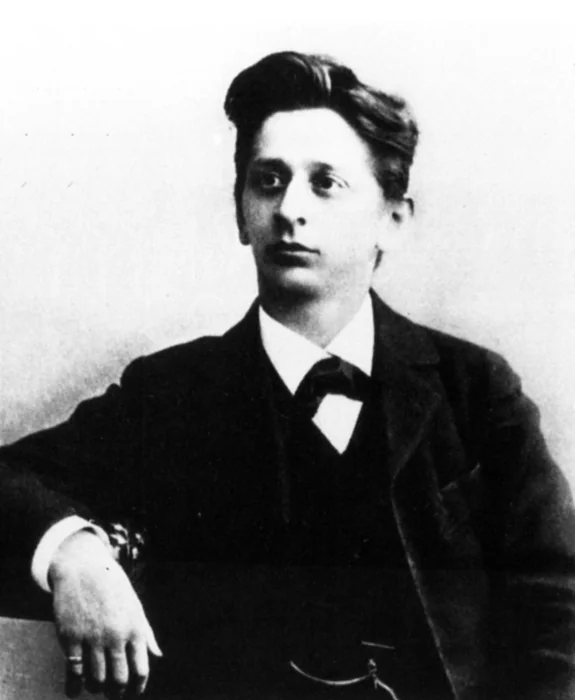
Image from Wikipedia
Image from Wikipedia
Alexander von Zemlinsky – the sensitive sound architect between late Romanticism, Viennese Modernism, and early musical avant-garde
A composer, conductor, and style-defining boundary crosser of modernity
Alexander von Zemlinsky is one of the most fascinating figures in 20th-century music history: a Viennese composer and conductor who developed a distinctive musical language amid late Romanticism, new musical thinking, and expressionistic compression. Born on October 14, 1871, in Vienna and died on March 15, 1942, in Larchmont, New York, he grew up in a culturally vibrant environment that shaped his artistic development early on. As the son of the writer and journalist Adolf von Zemlinszky, he moved between literature, theater, and music from the beginning. ([de.wikipedia.org](https://de.wikipedia.org/wiki/Alexander_von_Zemlinsky?utm_source=openai))
His name still stands for music that does not appear loudly revolutionary yet deeply penetrates modernity. Zemlinsky combined technical proficiency with intense expressiveness, cultivated complex harmonies, rich orchestration, and a particular sensitivity to vocal lines. This very mix makes him equally exciting for music lovers and connoisseurs: a composer who did not seek a major market uproar but created enduring art of inner urgency. ([zemlinsky.at](https://www.zemlinsky.at/de/biographie?utm_source=openai))
Vienna as an artistic origin: education, networks, and early influences
Zemlinsky received his education at the Vienna Conservatory, where he studied piano and theory. His technical talent, as well as his affinity for composition and musical form, became apparent early on. The Viennese cultural scene of the 1890s provided him with a dense network of composers, writers, critics, and interpreters that significantly influenced his career. In this environment, he met key figures such as Gustav Mahler, Franz Schreker, Hugo von Hofmannsthal, and Arnold Schönberg. ([zemlinsky.at](https://www.zemlinsky.at/de/biographie/wien-1895-1911?utm_source=openai))
His connections to musical societies and new artistic circles were particularly important. Zemlinsky was a member of the Tonkünstlerverein, supported by Brahms, from 1893 to 1903, and co-founded the "Vereinigung schaffender Tonkünstler" with Schönberg in 1904. These biographical stages highlight a composer who worked not on the fringes but at the center of Viennese discourse culture and actively shaped the development of modern music. ([zemlinsky.at](https://www.zemlinsky.at/de/biographie/wien-1895-1911?utm_source=openai))
The conductor on the stages of Vienna and Berlin
Between 1900 and 1904, Zemlinsky served as conductor at the Carl Theater and the Theater an der Wien. There, he primarily led operettas, which did not bring him an artistic breakthrough but provided him with extensive stage experience and a precise sense of theatrical impact. This practice in opera later flowed into his own stage works, which connect dramatic economy and musical psychology. ([zemlinsky.at](https://www.zemlinsky.at/de/biographie?utm_source=openai))
In Berlin, Zemlinsky also took on important conducting roles, though mostly in the more conventional repertoire of the house. Nevertheless, he made notable contributions there, such as with artistically remarkable performances of Offenbach's "The Tales of Hoffmann" or Kurt Weill's "Mahagonny." His conducting career thus reveals a clear double role: interpretively onstage, creatively in composing – and always attentive to the musical present. ([zemlinsky.at](https://www.zemlinsky.at/de/biographie/berlin-1927-1933?utm_source=openai))
Compositional breakthrough without mass fame – and why this does not diminish his greatness
While Zemlinsky was denied a major public breakthrough, therein lies part of his historical tragedy and artistic dignity. Sources describe him as a composer whose music did not trigger a history-altering revolution, but rather represents an authentic testament to the turbulent developments between 1890 and 1940. His contemporaries and later admirers recognized his quality; Arnold Schönberg confessed in 1949 that he always believed in Zemlinsky's greatness. ([zemlinsky.at](https://www.zemlinsky.at/de/biographie?utm_source=openai))
Among his important works are operas such as "Sarema," "Der Traumgörge," "Eine florentinische Tragödie," "Der Zwerg," and "Der Kreidekreis." Notably, the "Lyrical Symphony" is regarded as his most famous work; it combines orchestral luxury with vocal intensity and demonstrates Zemlinsky's ability to merge symphonic thinking with song aesthetics. In this music, his language condenses into an emotional yet controlled form of late Romanticism that is close to Mahler while sounding unmistakably unique. ([en.wikipedia.org](https://en.wikipedia.org/wiki/Alexander_von_Zemlinsky?utm_source=openai))
Style, composition, and musical signature
Zemlinsky's music thrives on subtle transitions: between tonal binding and extended harmony, between lyrical cantability and dramatic intensification. His compositions display a pronounced sense of color dramaturgy, orchestral layering, and text-related design. Particularly in songs and staged works, it becomes audible how carefully he relates voice and accompaniment. ([universaledition.com](https://www.universaledition.com/media/04/6a/1e/1693312049/Milestones%201880-1915_Katalog_2.%20Auflage.pdf?utm_source=openai))
Research often describes his reception within the tension between tradition and progress. This very intermediary position makes Zemlinsky interesting for music history: he is not among the radical style breakers, but he translates the upheavals of modernity into a form-conscious, psychologically dense musical language. His works preserve the expressive intensity of late Romanticism while simultaneously opening it up to new colors and sound spaces. ([academic.oup.com](https://academic.oup.com/ml/article/93/2/257/1015619?utm_source=openai))
Emigration and late life in the USA
The political upheavals of National Socialism forced Zemlinsky to return to Vienna in 1933 and thwarted the impending success of his opera in Germany, particularly regarding "Der Kreidekreis." He later emigrated to the United States and spent his last years in Larchmont, New York. Illness, nervous breakdowns, and several strokes increasingly hindered his work; his last stage project, "Der König Kandaules," remained unfinished. ([deutsche-biographie.de](https://www.deutsche-biographie.de/sfz115259.html?utm_source=openai))
This late biographical phase is marked not only by loss but also by historical severity. Zemlinsky's career exemplifies many Jewish and Jewish-influenced artists of modernity, whose biographies were broken by expulsion, exile, and late recognition. For this reason, his oeuvre today has a special cultural value: it tells not only the history of music but also the history of European thought and loss. ([deutsche-biographie.de](https://www.deutsche-biographie.de/sfz115259.html?utm_source=openai))
Discography, reception, and renaissance
Zemlinsky's music has experienced a noticeable renaissance especially since the 1970s. Performances and recordings of central works, along with more intensive biographical studies, have made it clear how rich and modern his work truly is. Sources particularly cite the rediscovery by the LaSalle Quartet, the later stage presence of "Der Traumgörge," "Eine florentinische Tragödie," and "Der Zwerg," as well as the rise of "Seejungfrau" and the "Lyrical Symphony" to particularly noteworthy works. ([zemlinsky.at](https://www.zemlinsky.at/de/biographie?utm_source=openai))
Current catalogs and platforms also demonstrate that Zemlinsky's works continue to be actively recorded and released. Recent album and work publications, including songs, symphonic songs, or excerpts from operas, attest to a sustained presence in the repertoire of labels and interpreters. His discography thrives not on charts but on artistic curiosity, interpretative depth, and an ever-growing international interest. ([open.spotify.com](https://open.spotify.com/album/7I6eHwkAFXkO48Ro1aaFCm?utm_source=openai))
Cultural influence and critical re-evaluation
Zemlinsky's cultural influence lies less in popular fame than in his role model function for composers, singers, and conductors searching for psychologically dense and coloristically refined music. His proximity to Viennese modernism, his connection to Schönberg and Schreker, as well as his work at the intersection of theater and concert shaped a body of work that is now considered an indispensable part of the fin de siècle and the musical interwar period. ([zemlinsky.at](https://www.zemlinsky.at/de/biographie/wien-1895-1911?utm_source=openai))
Music criticism and academic research repeatedly emphasize the independence of this art. Zemlinsky appears as a master of transition: not as an icon of radical avant-garde, but as a composer who brings musical form, expression, and dramatic intelligence into rare balance. This is precisely where his lasting significance lies for today's performance practice and for all who wish to discover the repertoire beyond the usual canons. ([academic.oup.com](https://academic.oup.com/ml/article/93/2/257/1015619?utm_source=openai))
Conclusion: An underestimated master to be re-discovered
Alexander von Zemlinsky is an artist for listeners with curiosity and an appreciation for subtleties. His biography connects Viennese elegance, musical discipline, exiled life paths, and a musical language of remarkable depth. Those who listen to his operas, songs, or the "Lyrical Symphony" encounter a composer who shaped modernity not with noise, but with intensity. An evening with Zemlinsky's music shows how rich the repertoire beyond the best-known names can be – and why it is worth experiencing this sound cosmos live. ([zemlinsky.at](https://www.zemlinsky.at/de/biographie?utm_source=openai))
Official channels of Alexander von Zemlinsky:
- Instagram: no official profile found
- Facebook: no official profile found
- YouTube: no official profile found
- Spotify: no official profile found
- TikTok: no official profile found
Sources:
- Zemlinsky.at – Biography
- Zemlinsky.at – Biography
- Zemlinsky.at – Vienna 1895–1911
- Zemlinsky.at – Berlin 1927–1933
- Deutsche Biographie – Zemlinsky, Alexander von
- Universal Edition – Alexander Zemlinsky
- Wikipedia – Alexander von Zemlinsky
- Spotify – Zemlinsky: Lieder
- Spotify – Zemlinsky: Lyric Symphony; Sinfonische Gesänge
- Shazam – Alexander von Zemlinsky Releases