
Alexander von Zemlinsky
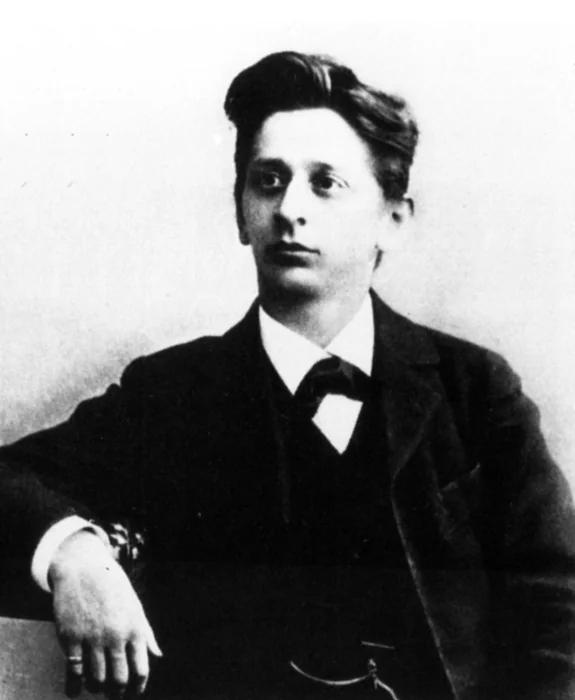
Image from Wikipedia
Image from Wikipedia
Alexander von Zemlinsky: The Quiet Revolutionary Between Late Romanticism, Viennese Modernism, and the History of Musical Exile
An Acclaimed Composer Who Was Finally Recognized Late in Life
Alexander von Zemlinsky is one of the most fascinating figures in Central European music of the early 20th century: a Viennese composer, conductor, and teacher, whose work long lingered in the shadow of the great masters, but today is considered an independent and highly refined voice of modernity. Born on October 14, 1871, in Vienna and died on March 15, 1942, in Larchmont near New York, he blended the musical language of late Romanticism with a distinctive sense of dramatic intensity, vocal lines, and orchestral color. His biography narrates an artistic rise, institutional influences, a frustrated breakthrough, and later rediscovery. ([zemlinsky.at](https://www.zemlinsky.at/en/biography?utm_source=openai))
Biography: Vienna as the Birthplace of a Musical Career
Early Years and Education
Zemlinsky grew up in musically and culturally diverse Vienna and exhibited exceptional talent from an early age. As a teenager, he received a thorough education at the Conservatory of the Society of Friends of Music, where he established himself as a pianist and composer. The influence of Johannes Brahms was crucial: Zemlinsky initially composed in a language characterized by classical formalism and late Romantic density, before gradually expanding his expressive means. His family background and the intellectual climate of Vienna also shaped a career that early on navigated between tradition and innovation. ([zemlinsky.at](https://www.zemlinsky.at/en/biography?utm_source=openai))
Early Successes and Proximity to Brahms and Schönberg
A significant early highlight was the success of his Clarinet Trio, which impressed Johannes Brahms and earned Zemlinsky an important recommendation. At the same time, in the 1890s, a formative relationship with Arnold Schönberg developed, who was influenced by Zemlinsky and later dedicated works to him. This connection became a central hub of music history: Zemlinsky was not only a colleague but also a teacher, mentor, and soon brother-in-law of Schönberg. Thus, he was at the very heart of the network from which Viennese Modernism drew its energy. ([zemlinsky.at](https://www.zemlinsky.at/en/biography?utm_source=openai))
The Path as a Conductor and Opera Figure
As a conductor, Zemlinsky initially gathered experience in Vienna, particularly in the realms of operetta and bourgeois musical life. He worked at the Carl Theater and the Theater an der Wien, among other institutions, gaining a keen sense of stage, timing, and musical dramaturgy. In 1904, he co-founded the Association of Creative Musicians with Schönberg, aimed at promoting new music. This phase shows Zemlinsky as an engaged mediator between compositional innovation and practical theater work. ([zemlinsky.at](https://www.zemlinsky.at/en/biography?utm_source=openai))
Career Highlights: Between Vienna, Prague, and Berlin
The Breakthrough That Never Fully Materialized
Although Zemlinsky received early recognition, the major international breakthrough eluded him for a long time. His operas and orchestral works garnered attention, but fame was distributed unevenly, and personal as well as political circumstances repeatedly hindered his career. The official Zemlinsky biography aptly describes him as a composer caught between epochs and styles, from which he shaped a distinctive musical language. This makes his career so intriguing: it does not follow the logic of triumph but rather that of a quiet, lasting influence. ([zemlinsky.at](https://www.zemlinsky.at/en/biography?utm_source=openai))
Prague as an Artistic Center
Zemlinsky's time in Prague was particularly formative, where he musically directed the New German Theatre and developed the venue into a respected opera stage. It was during this period that some of his strongest works were created, including the Lyric Symphony, A Florentine Tragedy, and The Dwarf. As a conductor, he also set benchmarks and promoted a repertoire ranging from Mahler to contemporary Czech composers. His Prague years showcase him at the height of his organizational and creative powers. ([aso.org](https://www.aso.org/artists/detail/alexander-von-zemlinsky?utm_source=openai))
Berlin, Exile, and the Turning Point of History
In Berlin, Zemlinsky continued to work as a conductor and teacher until political upheavals increasingly restricted his life and work opportunities. The Nazi takeover and the annexation of Austria destroyed the foundations for his late recognition in the German-speaking world. In 1938, he had to leave Vienna; this forced rupture ultimately led him to the United States, where he spent the last years of his life. This story of emigration adds an additional historical depth to his work: Zemlinsky also represents the loss of an entire musical world. ([aso.org](https://www.aso.org/artists/detail/alexander-von-zemlinsky?utm_source=openai))
Discography and Profile of Works: Opera, Song, Orchestra, and Chamber Music
The Operas as the Core of His Oeuvre
Zemlinsky's reputation is primarily based on his operas, which combine psychological depth, literary sophistication, and a shimmering orchestral treatment. Frequently mentioned are A Florentine Tragedy, The Dwarf, and The Chalk Circle; Clothes Make the Man and Once Upon a Time… are also important milestones in his work. These pieces showcase a composer who not only accompanies dramatic situations but also psychologizes them musically. This is precisely what gives them enduring appeal for opera houses and recording studios. ([aso.org](https://www.aso.org/artists/detail/alexander-von-zemlinsky?utm_source=openai))
The Lyric Symphony as a Key Work
Among Zemlinsky's orchestral works, the Lyric Symphony occupies a special position. It merges orchestral song, late-Romantic richness of sound, and a highly differentiated treatment of voice and instrumentation. Many listeners experience this work as the emotional core of his oeuvre because it encapsulates intimacy, longing, and farewell in a grand symphonic arc. Recent recording practices demonstrate that this work is among the most regarded entries into Zemlinsky's world. ([naxos.com](https://www.naxos.com/Handler/GetBackcover.ashx/?file=https%3A%2F%2Fcdn.naxos.com%2FSharedFiles%2Fpdf%2Frear%2F8.572048r.pdf&utm_source=openai))
Chamber Music, Songs, and Stylistic Diversity
Apart from his operas, Zemlinsky unfolds a refined chamber music language in his chamber works and songs. His early quartets, vocal cycles, and choral works demonstrate how adeptly he intertwined text, harmony, and form. The discography on reputable platforms documents a wide repertoire presence, from complete piano works to string quartets and song recordings. This diversity underscores that Zemlinsky was not only an opera composer, but a versatile architect of musical forms. ([qobuz.com](https://www.qobuz.com/se-en/interpreter/alexander-von-zemlinsky/37044?utm_source=openai))
Musical Development: Between Brahms, Mahler, and the Second Viennese School
A Style Full of Late Romanticism and Expressiveness
Zemlinsky's music operates in a tension field of Brahmsian structure, Mahlerian emotionality, and an increasingly modern, color-rich understanding of harmony. His orchestration often appears dense but never merely heavy; rather, he employs the orchestra as a psychological instrument. Particularly in his operas and in the Lyric Symphony, his ability to combine emotional extremes with controlled form is evident. This balance continues to endow his music with extraordinary impact to this day. ([zemlinsky.at](https://www.zemlinsky.at/en/biography?utm_source=openai))
Relationship with the Musical Avant-Garde
As a mentor and companion to Schönberg, Zemlinsky was closely aligned with the early modern movement, without himself taking the step into radical atonality as a main artistic line. This position makes him culturally and historically intriguing: He belongs to the generation of transition, exploring the traditional tonality space without fully abandoning it. His best scores yield an intense expression that already points toward later musical modernity. ([zemlinsky.at](https://www.zemlinsky.at/en/biography?utm_source=openai))
Critical Reception and Cultural Influence
Forgotten, Rediscovered, and Valued Today
After his death, Zemlinsky initially faded largely into the background, until the renewed performance and recording of his works in the 1970s sparked a lasting renaissance. The Zemlinsky website describes this rediscovery as a rehabilitation of a composer whose music encapsulates the developments from 1890 to 1940. Today, he is considered essential by many conductors, opera houses, and labels for re-examinations of the repertoire. His presence in the recording culture affirms that his stature is not merely museum-like, but vibrant. ([zemlinsky.at](https://www.zemlinsky.at/en/biography?utm_source=openai))
Current Recordings and Ongoing Interest
In 2024 and 2025, Zemlinsky remains present in the catalogs of labels and in the music press. A new or recent recording of A Florentine Tragedy has been recognized in international reviews, and major classical labels continue to feature Zemlinsky in their artist and repertoire pages. This shows that his music lives not only in historical memory but in active concert and recording activity. For a composer who struggled for recognition during his lifetime, this is a late but substantial form of authority. ([warnerclassics.com](https://www.warnerclassics.com/artist/alexander-zemlinsky/releases?utm_source=openai))
Conclusion: An Artist for Explorers, Opera Lovers, and All Who Appreciate Great Transitions
Alexander von Zemlinsky fascinates because he did not revolutionize loudly but created his own world with precision, intensity, and tonal imagination. His career tells of Viennese education, Prague maturity, Berlin presence, and the rupture of exile; his music narrates longing, psychological depth, and a distinctive late-Romantic signature. Those who listen to him discover a composer whose work feels as modern today as it rarely has before. Experiencing Zemlinsky live or hearing it in benchmark recordings means rediscovering one of the finest voices in European music history. ([zemlinsky.at](https://www.zemlinsky.at/en/biography?utm_source=openai))
Official Channels of Alexander von Zemlinsky:
- Instagram: No official profile found
- Facebook: No official profile found
- YouTube: No official profile found
- Spotify: No official profile found
- TikTok: No official profile found
Sources:
- Zemlinsky.at – Biography
- Zemlinsky.at – Biography
- Atlanta Symphony Orchestra – Alexander von Zemlinsky
- Deutsche Biographie – Zemlinsky, Alexander von
- Warner Classics – Alexander Zemlinsky Releases
- Warner Classics – Zemlinsky: A Florentine Tragedy
- The Guardian – Album Review, June 20, 2024
- Classics Today – Alexander von Zemlinsky
- Wikipedia: Alexander von Zemlinsky