
Alexander von Zemlinsky
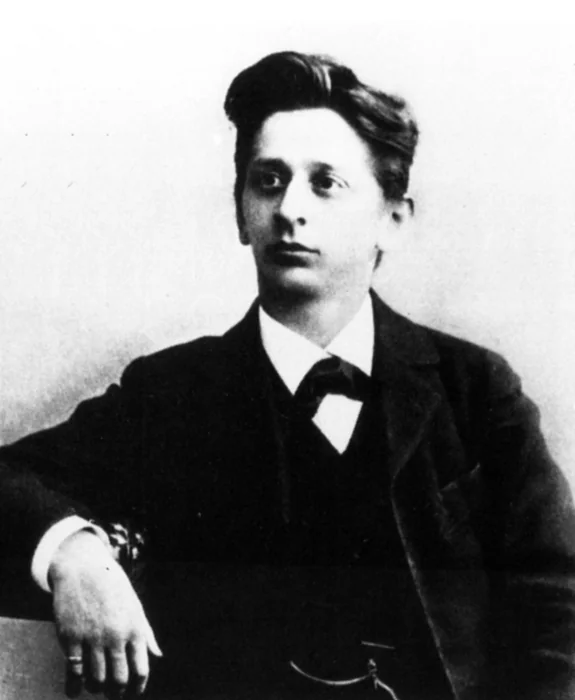
Image from Wikipedia
Image from Wikipedia
Alexander von Zemlinsky: The Sound Between Late Romanticism, Modernity, and Rediscovery
A composer and conductor who shaped Viennese music history
Alexander von Zemlinsky is among those great names in music history that never became a popular mainstay yet significantly influenced the musical thinking of their time. Born in Vienna on October 14, 1871, and passing away on March 15, 1942, in Larchmont near New York, the composer and conductor navigated between late Romanticism, musical modernism, and the expressive musical theater of the early 20th century. His biography tells of not only compositional intensity but also artistic resistance, exile, and later recognition. (de.wikipedia.org)
Early Influences: Vienna, Family, and Musical Education
Zemlinsky grew up in a culturally rich Vienna. As a child, he came into contact with music early, receiving lessons, singing in the temple choir of the Sephardic community, and playing the organ in the synagogue. These beginnings shaped a musician who refused to be confined to a single tradition, instead blending melodic sensitivity, contrapuntal discipline, and dramatic instinct. He studied piano and composition at the Vienna Music Friends Society, winning a gold medal and a Bösendorfer piano at the conservatory's piano competition in 1890. (de.wikipedia.org)
Notably, despite his pianistic successes, Zemlinsky did not pursue a solo career. Instead, he was recognized early on as a sought-after accompanist, pianist, and musical networker. Even his first published composition, the Rural Dances Op. 1, reflects the ambivalence between formal education and the desire for an independent compositional voice. This tension served as a crucial motor for his artistic development. (de.wikipedia.org)
The Breakthrough as a Young Composer
Zemlinsky achieved significant success for the first time in 1896 with the opera Sarema, which won the Luitpold Prize. Shortly thereafter, his name gained further establishment with the opera Es war einmal..., which premiered in 1900 at the Vienna Court Opera under Gustav Mahler. Through this, Zemlinsky arrived early in the environment where the central Viennese music scene shaped itself around Mahler, Schönberg, and other influential figures. (aso.org)
The proximity to Arnold Schönberg was also decisive for his development. The teacher-student relationship evolved into a lifelong friendship; Schönberg dedicated early works to him, and Zemlinsky introduced him to Viennese musical circles. This connection illustrates how much Zemlinsky acted as a mediator figure in the history of modernity: not as a dogmatic revolutionary, but as a sensitive intermediary between tradition and new beginnings. (aso.org)
Viennese Career: Conductor, Kapellmeister, and Music Mediator
After 1900, Zemlinsky solidified his position as a musical authority in Vienna, initially at the Carl Theater and the Theater an der Wien, later at the Volksoper, and temporarily at the Court Opera. His repertoire ranged from operetta to sophisticated music theater, and this practical versatility sharpened his perspective on stage, dramaturgy, and vocal lines. Nevertheless, the great and definitive breakthrough eluded him, even though he was highly present in Viennese musical life. (zemlinsky.at)
During this phase, works emerged that define his stature to this day: the 2nd String Quartet, Die Seejungfrau, and later the grand operas of his mature period. He was also regarded as a musician with natural spirit and precise stylistic sensitivity. His artistic signature combined clarity in structure with dense expressiveness and a sure sense of tonal transparency. (zemlinsky.at)
Prague and Berlin: The Most Productive Years
In 1911, Zemlinsky moved to Prague, where he served as the musical director of the German State Theater until 1927. Here, he celebrated his greatest successes as a conductor, particularly with interpretations of Mozart, Wagner, Mahler, and Schönberg. At the same time, he had limited time for composition; however, it was precisely during this era that some of his most significant works were created. (zemlinsky.at)
Highlights include the Lyrische Symphonie in seven songs, the two Oscar Wilde operas Eine florentinische Tragödie and Der Zwerg, and later the opera Der Kreidekreis. These works showcase Zemlinsky as a composer with expansive musical drama, centered on psychological intensification, sophisticated orchestration, and a distinctive late Romantic coloration. (zemlinsky.at)
Style and Musical Language: Between Late Romanticism and Modernity
Zemlinsky's music lies between times and styles, drawing its tension from precisely this space. His works meld the emotional density of late Romanticism with a harmonic fluidity that points toward modernity. The orchestration is often rich and luxurious yet controlled and transparent, ensuring that his compositions never tip into mere sound volume. (zemlinsky.at)
The Lyrische Symphonie is regarded as his most well-known work; Naxos describes it as being closely related in effect to Mahler's Lied von der Erde and Schönberg's Gurre-Lieder, while Alban Berg drew inspiration from it and incorporated it into his own Lyrische Suite. This demonstrates the significant role Zemlinsky occupies in the music history of the Viennese modernism: not merely as a peripheral figure, but as a creative impetus. (naxos.com)
Personal Experiences as an Artistic Motor
Zemlinsky's private life also flowed directly into his music. His failed relationship with Alma Schindler shaped his artistic conception of longing, rejection, and emotional intensification. This is particularly evident in the opera Der Zwerg, which is based on Oscar Wilde and transforms the biographical experience into a painfully beautiful stage figure. (de.wikipedia.org)
Later, after the death of his first wife Ida in 1929 and his marriage to Louise Sachsel in 1930, there was another productive surge in Vienna. In this late phase, Zemlinsky composed the Sinfonietta, the 13th Psalm, and began Der König Kandaules. His late works exhibit a composer who, despite political threats and personal crises, maintained remarkable compositional focus. (de.wikipedia.org)
Exile, Late Works, and Legacy
With the rise of the Nazis, Zemlinsky's situation drastically worsened. In 1933 he returned to Vienna, and in 1938 he fled with his second wife to New York. There, he was unable to gain a foothold professionally; several strokes and general health decline ended his creative work. The composer died in 1942, far removed from the Viennese world where his work had once flourished. (zemlinsky.at)
For decades, his music remained largely in the shadows until it began to be rediscovered in the 1970s. This renaissance was thanks to performances, recordings, and more intensive biographical research, which made Zemlinsky visible as an important transitional figure between Romanticism and Modernity. The Hamburg premiere of Der König Kandaules in 1996 marked a symbolic endpoint of this rediscovery. (zemlinsky.at)
Discography, Reception, and Current Presence
Zemlinsky's work continues to survive today primarily through recordings, opera productions, and concert programs. Warner Classics lists several current and recent releases such as Zemlinsky: Lyrische Symphonie, Zemlinsky: Die Seejungfrau & Sinfonietta, and Zemlinsky: Der Zwerg, showcasing that his oeuvre remains firmly entrenched in the repertoire of major classical labels. Spotify also lists current album releases, indicating a continued performance tradition of his music in the recording context. (warnerclassics.com)
For critical reception, it is crucial that Zemlinsky is no longer read merely as a student, teacher, or peripheral figure of Viennese modernism today. Rather, he is regarded as an independent composer with a distinctive signature, whose music convinces with psychological depth, sophisticated composition, and subtle stage effect. His discography documents this rediscovery: from the early choral and orchestral works to the grand operas and late symphonic pieces. (zemlinsky.at)
Conclusion: Why Alexander von Zemlinsky Fascinates to This Day
Alexander von Zemlinsky fascinates because he impacts not loudly but deeply. His music possesses emotional intelligence, dramatic tension, and orchestral nobility that has long been underestimated, and now shines all the more brightly. Those who listen to Zemlinsky discover a composer who translated the great upheavals of the first half of the 20th century into a highly personal sound language. Live experiences with his works particularly illustrate how modern, sensual, and moving this music remains. (zemlinsky.at)
Official Channels of Alexander von Zemlinsky:
- Instagram: No official profile found
- Facebook: No official profile found
- YouTube: No official profile found
- Spotify: No official profile found
- TikTok: No official profile found