
Alexander von Zemlinsky
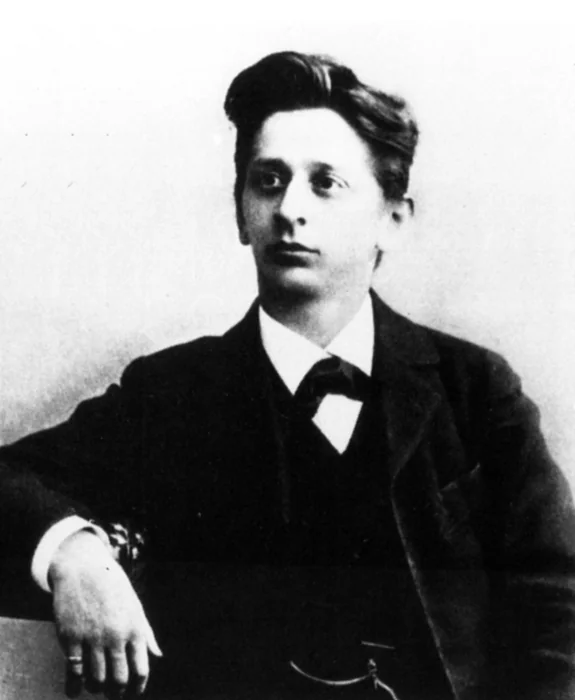
Image from Wikipedia
Image from Wikipedia
Alexander von Zemlinsky: The Quiet Revolutionary between Late Romanticism, Music Theatre, and Modernity
A composer of great depth, whose work had to wait long for rediscovery
Alexander von Zemlinsky was an Austrian composer and conductor, born on October 14, 1871, in Vienna and died on March 15, 1942, in Larchmont, New York. His name represents a musical career positioned between artistic refinement, the Fin-de-Siècle culture of Vienna, and a transition into modernity. Although he never experienced a major breakthrough during his lifetime, he is now regarded as one of the most fascinating voices of his era. ([de.wikipedia.org](https://de.wikipedia.org/wiki/Alexander_von_Zemlinsky?utm_source=openai))
Vienna as an Artistic Starting Point
Zemlinsky's musical socialization began in late 19th-century Vienna, the center where Late Romanticism, operetta culture, and the first signs of a new musical language overlapped. He displayed his talent early on as a pianist and musical accomplice, while his surroundings immersed him in the vibrant concert and theater world of the capital. His father, Adolf von Zemlinszky, shaped the familial background, placing Zemlinsky in an educated and culturally rich atmosphere. ([zemlinsky.at](https://www.zemlinsky.at/de/biographie/wien-1871-1882?utm_source=openai))
Critical for his artistic development was his closeness to a milieu where young composers, writers, and critics were interconnected. Zemlinsky moved in circles that included Brahms, Mahler, Hugo von Hofmannsthal, Richard Specht, and Arnold Schönberg. These connections were not just biographical details but part of his aesthetic profile: he was molded in a scene that took tradition seriously while simultaneously seeking new forms of expression. ([zemlinsky.at](https://www.zemlinsky.at/de/biographie/wien-1895-1911?utm_source=openai))
The Difficult Path to Breakthrough
Despite recognition in professional circles, Zemlinsky was long denied a major breakthrough. He worked as a conductor at the Carl-Theater and the Theater an der Wien, where he was primarily entrusted with operettas, an environment that did not immediately enhance his reputation as a serious composer. However, these years showcased his stage presence and practical competence in music theatre, which later resonated in his operas and orchestral works. ([zemlinsky.at](https://www.zemlinsky.at/de/biographie?utm_source=openai))
His career was marked by external disruptions, including political turmoil and later emigration. The Nazi takeover forced him to return to Vienna in 1933 and thwarted his emerging success as an opera composer in Germany. In 1938, he made a stop in Prague before eventually emigrating to the USA; his life ended in New York in 1942. ([deutsche-biographie.de](https://www.deutsche-biographie.de/sfz115259.html?utm_source=openai))
Musical Development between Late Romanticism and Intensified Expression
Zemlinsky's musical development shows a remarkable range. Early rooted in Late Romanticism, he increasingly opened himself to a more concentrated, psychologically nuanced musical language, in which harmony, instrumentation, and dramatic structure are more closely interwoven. His works embody the spirit of a transitional period: still rich in romantic breath, but already clearly oriented towards intensification and internal tension. ([zemlinsky.at](https://www.zemlinsky.at/de/biographie?utm_source=openai))
His contribution to music theatre is particularly prominent. Among his most famous works are the operas A Florentine Tragedy (1917), The Dwarf (1922), and The Chalk Circle (1933). This includes symphonic and chamber music works as well as the Lyrical Symphony of 1924, a key work that unfolds a highly condensed dialogue between voice and orchestra through its seven songs. ([universalis.fr](https://www.universalis.fr/encyclopedie/alexander-von-zemlinsky/?utm_source=openai))
Discography, Rediscovery, and Critical Reception
Since Zemlinsky was not a pop or jazz artist but a classical composer, there is no discography in the chart sense. His presence in the recording culture is rather tied to the recordings of central works that have made his significance in the 20th century newly visible. Especially after his posthumous rediscovery in the 1970s, operas and orchestral works were increasingly performed and recorded, which solidified his status in the repertoire. ([zemlinsky.at](https://www.zemlinsky.at/de/biographie?utm_source=openai))
Critical reception often highlights Zemlinsky as a composer who encapsulated the tensions of his time in a highly individual form. The Orel Foundation describes his work and activities as comprehensively documented and points to the special position of his music between tradition and modernity. Biographical retrospections also emphasize that his central importance does not lie in loud revolutions but in the fine condensation of half a century of musical developments. ([de.wikipedia.org](https://de.wikipedia.org/wiki/Alexander_von_Zemlinsky?utm_source=openai))
Style, Sound Language, and Cultural Influence
Zemlinsky's style is characterized by orchestral richness, psychological precision, and a distinctive balance of lyrical melody and dramatic intensity. His music is never merely decorative; it thinks characters, situations, and conflicts in sonic form. Particularly in the operas, it becomes evident how adept he was in handling form, voice, and orchestral dramaturgy, while his chamber and orchestral works unfold a sensitive, often melancholic modernity. ([treccani.it](https://www.treccani.it/enciclopedia/alexander-von-zemlinsky/?utm_source=openai))
Culturally, Zemlinsky stands at a crossroads where old Vienna, the aftermath of Brahms and Mahler, and the breakthroughs of modernity converge. His rediscovery since the 1970s has made it clear that his music is not a sidelined strand in music history but an independent contribution to European modernity. Today, the influence is less visible in mass popularity than in the high esteem among conductors, opera houses, and music-related professional circles. ([zemlinsky.at](https://www.zemlinsky.at/de/biographie?utm_source=openai))
Current Projects and Releases
As a composer who died in 1942, Alexander von Zemlinsky naturally has no current projects, new albums, or ongoing tours. His presence lies in the continued nurturing of his oeuvre by opera houses, orchestras, and labels that are reintroducing his works into the repertoire and onto recordings. Therefore, anyone searching for “current releases” today will find new interpretations, editions, and reissues of his music, rather than any active endeavors by the artist. ([zemlinsky.at](https://www.zemlinsky.at/de/biographie?utm_source=openai))
Conclusion: Why Alexander von Zemlinsky Continues to Captivate Today
Alexander von Zemlinsky is compelling because his music illuminates the space between tradition and innovation with extraordinary sensitivity. He combines musical substance, dramatic intelligence, and a distinctive sound language that resonates immediately in the concert hall as well as on the opera stage. Those seeking the depth of late Romantic compositions and the psychological power of the early 20th century should definitely experience Zemlinsky. ([zemlinsky.at](https://www.zemlinsky.at/de/biographie?utm_source=openai))
Official Channels of Alexander von Zemlinsky:
- Instagram: No official profile found
- Facebook: No official profile found
- YouTube: No official profile found
- Spotify: No official profile found
- TikTok: No official profile found
Sources:
- Wikipedia – Alexander von Zemlinsky
- Zemlinsky.at – Biography
- Zemlinsky.at – Vienna 1895–1911
- Deutsche Biographie – Zemlinsky, Alexander von
- Musicologie.org – Alexander von Zemlinsky (1871–1942)
- Warner Classics – Alexander Zemlinsky Releases
- Atlanta Symphony Orchestra – Alexander von Zemlinsky
- Orel Foundation – Alexander Zemlinsky Timeline