
Stapeltor 6, Duisburg
Stapeltor 6, 47051 Duisburg, Germany
Stapeltor Duisburg | Events & Directions
The Stapeltor in Duisburg is not a classic event venue with a fixed, smooth brand image, but an open, self-organized socio-cultural center that consciously creates space for encounters, culture, and personal ideas. The building is located at Stapeltor 6 in the heart of Duisburg and is supported by 47 e.V. It sees itself as a non-commercial free space, a place for local artists, neighbors, activists, and anyone who wants to not only consume culture but also help shape it. This is precisely why such diverse inquiries arise at this location: people are looking for the address and directions, parking, current events, rooms, capacities, photos, or specific formats like Hexenwerk, Dungeons & Dragons, KÜFA, workshops, or jam sessions. This mix is no coincidence but reflects the character of the house: The Stapeltor is a place where social openness, cultural practice, and practical usability come together. Those who come here find not just one event but often several layers of use, exchange, and participation. The official self-presentation emphasizes that the house supports initiatives and individuals with project ideas and provides resources for protected spaces. At the same time, access remains deliberately low-threshold so that the Stapeltor can function as a point of arrival for new people in Duisburg. ([stapeltor.de](https://www.stapeltor.de/about/))
Directions, Parking, and Location near the Main Train Station
The most sought-after and simultaneously practical information about the Stapeltor is its location itself. Officially, the address is Stapeltor 6, 47051 Duisburg. For many visitors, it is particularly important that Duisburg's main train station is about 1 kilometer away. According to the house, the walk takes about 15 minutes; alternatively, one can use the bus or tram. This central location is a real advantage for everyone traveling from Duisburg, the Ruhr area, or further away who do not want to rely on a car. At the same time, the Stapeltor makes it very clear that there are no parking spaces available. This is not marketing jargon but a direct, practical statement: Those arriving by car must expect very limited parking options. The best places can be found in the surrounding side streets or in the parking garages in the city center. For SEO and visitor-friendliness, this honesty is relevant because many searchers are already preparing a concrete decision with terms like directions, parking, or address. The Stapeltor consciously positions itself not as a location for comfortable arrival with its own parking space but as an urban cultural site best reached by public transport or on foot. Therefore, anyone planning or attending an event should check the route in advance, especially for evening appointments, parties, or workshops. For groups wanting to coordinate their arrival, the proximity to the main train station is a real plus as it simplifies travel for mixed visitor groups. ([stapeltor.de](https://www.stapeltor.de/information/))
Events, Program, and Typical Formats at the Stapeltor
If you are looking for Stapeltor events, Stapeltor programs, or specific formats like Hexenwerk, Dungeons & Dragons, or parties, you will find a house with a very broad range of uses. The official calendar shows that different scenes and target groups regularly meet there. The program includes KÜFA evenings, which are communal meals and chill sessions, open drawing rounds like Sketchy, technical and tinkering formats like Space47, experimental sound and improvisation formats like Open Soundlab and Parayok Jamsession, community and exchange formats like Family Café, political plenums, workshops as part of the Duisburg Accents, as well as parties and solidarity events. This is important because the Stapeltor cannot be reduced to a single genre. It is rather a multi-purpose free space for culture, education, community, and nightlife. Particularly striking are the open formats: At KÜFA, food is cooked and eaten for free; Space47 is aimed at people interested in 3D printing, CNC milling, amateur radio, programming, and digital topics; Sketchy creates space for communal drawing; the Parayok Jamsession offers musicians an open stage; and workshops like cyanotype or Family Café offerings focus on participation and shared experiences. The terms Hexenwerk and Dungeons & Dragons also fit well into this picture: the former represents a party-oriented, atmospheric night event, while the latter stands for a playful, communal role-playing format. Thus, the Stapeltor is less a house for passive consumption than a place where formats from scene, community, and subculture actively converge. This diversity explains why many inquiries contain not only general terms but also specific names of individual events. ([stapeltor.de](https://www.stapeltor.de/))
Rooms, Capacities, and Technical Equipment
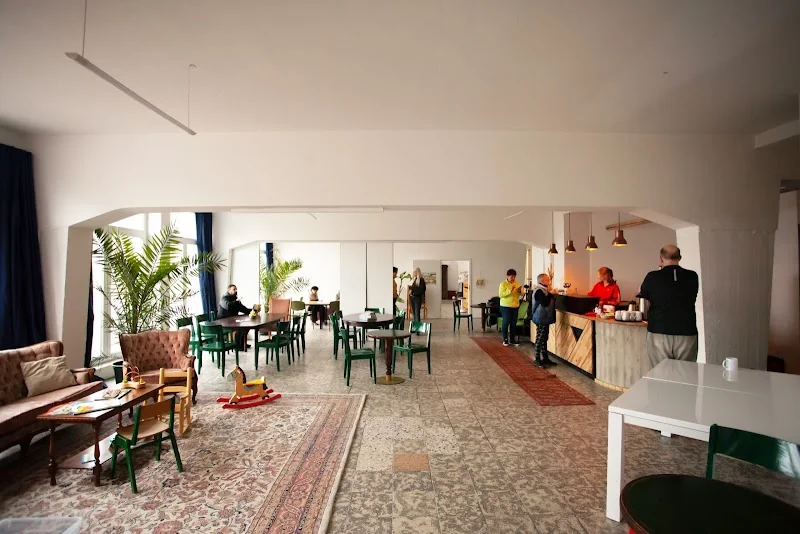
Another central aspect of searching and planning is the rooms themselves. The Stapeltor publishes specific usage and capacity information on its rooms page, which is helpful for organizers, groups, and visitors alike. Among other things, a seminar and movement room is mentioned with capacities for about 50 people or 30 people seated, a café with capacities for about 100 people or 64 people seated, and the Stapeltief as a party and bar area for 199 people. It becomes clear: The Stapeltor is not a place with a single, rigid hall size but a house with different zones for various event formats. This structure also explains why inquiries about seating plans, capacity, room plans, or spaces do not target a classic theater hall but a flexibly usable cultural house. Additionally, the Stapeltor publishes surprisingly specific technical equipment. For DJ setups, there are Pioneer players, an Allen & Heath Xone, and Technics turntables available. For band and stage formats, microphones, a drum kit, and other accessories are provided. In terms of sound, KS and Function-One systems, db Technologies, RCF speakers, a Behringer X32, and other audio equipment are mentioned. There are also a projector, a screen, and other aids for presentations or hybrid formats. The café area also shows the flexibility of the house: there are mobile partition walls, a bar, a living room-like atmosphere, all-gender and FLINTA toilets, a cloakroom, and a stair lift to the upper floor. This is valuable from an SEO perspective because searchers often want to know not only if the location exists but also if their specific format is even possible there. The Stapeltor answers this question with a clear yes for many cultural, educational, and party formats. ([stapeltor.de](https://www.stapeltor.de/raeume/))
History, Self-Understanding, and Participation
The Stapeltor has a history that is more closely tied to the development of socio-cultural infrastructure in Duisburg than it may seem at first glance. The official classification describes the house as a former textile department store that is now used as an open, non-commercial, and self-organized free space. The sponsor is 47 e.V., which has been accompanying the project since early 2020 and has developed a mix of self-programming and cultural participation through the city society on site. The house is therefore not simply a rented event space but part of a longer-evolving cultural-political history. The historical review in the Duisburg Yearbook makes it clear that the path to a socio-cultural center in Duisburg was long contested and that the Stapeltor can be understood as the result of an intensive search and testing phase. It also becomes visible that the project emerged during a phase in which reconstruction, testing, and concept development were closely linked. In today's self-presentation, a clear profile emerges from this history: The Stapeltor sees itself as emancipatory and egalitarian, positions itself against discrimination, and is oriented towards social, ecological, and economic justice. It wants to be a point of arrival for people who are new to Duisburg and become a home for local artists, neighbors, and activists. This is precisely why participation is not a marginal topic but the core of its identity. Initiatives and individuals are explicitly encouraged to contribute ideas, use spaces, and co-design events. This makes the Stapeltor particularly interesting for inquiries with terms like participation, cultural center, socio-cultural center, or propose a program. In practice, this means: If you have an idea, you will find here not just a hall but a house designed for participation, discussion, and joint experimentation. ([soziokultur-nrw.de](https://soziokultur-nrw.de/ueber-uns/mitglieder/))
Accessibility, Awareness, and a Safe Framework
For many visitors, the question of accessibility is at least as important as the program or address. The Stapeltor answers this question in a differentiated and honest manner: The rooms are accessible for wheelchair users but not fully barrier-free. Mentioned are an elevator, wide doors, large toilets; additionally, gender-neutral toilets are available, assistance dogs are allowed, and a parking space with a wide area and proximity to the entrance can be reserved if needed. At the same time, the house points out that there are no switches for door drives, no tactile guidance system, no sign language interpretation, and no induction technology can be offered, nor is childcare possible. This openness is important because it realistically informs users in advance and thus reduces disappointments on-site. The technical understanding of accessibility is complemented by an awareness and protection concept. There, the Stapeltor describes that the establishment of the house has been shaped from the beginning by discourses on structural discrimination, representation, and power critique. The goal is to create a as safe as possible, discrimination-sensitive place where transgressions, assaults, and sexual violence are not tolerated but actively addressed. For events, this means a clear framework that is not merely decorative but part of the self-understanding. This makes the Stapeltor particularly relevant for seekers who explicitly ask for accessibility, awareness, or a safe atmosphere. In practice, this means: Those who come here can expect a space that, while not perfectly barrier-free, openly names its limits and visibly works on safe, inclusive structures. For a cultural location in an urban environment, this is a strong quality feature. ([stapeltor.de](https://www.stapeltor.de/information/))
Photos, Atmosphere, and Practical Tips for Visiting
In inquiries like Stapeltor photos or cultural center Stapeltor Duisburg, it is often less about pure facts and more about an initial visual and atmospheric impression. The Stapeltor presents itself as a versatile house with several usage areas ranging from the café to the seminar room to the party and concert area. Even without a classic photo gallery with grand advertising promises, one can well derive from the official descriptions how the house feels: more open than sterile, more communal than exclusive, more improvised and lively than staged. The rooms are designed for use, not for distance. The café is described as flexible, with mobile partition walls, a bar, and a living room character; the Stapeltief is intended for nighttime formats with sound, light, and bar; the seminar and movement room is bright and flexible; and the calendar features formats that visually shape this open character, such as communal drawing, experimental listening, political meetings, family offerings, technical evenings, or solidarity parties. Therefore, those looking for photos of the Stapeltor are usually searching for images of a place that does not want to be polished smooth but makes cultural use visible. Practically for the visit, it is also advisable: plan the arrival not too late, especially for evening appointments; expect limited parking when arriving by car; contact early regarding accessibility questions or reservable parking spaces; and use the program email for your own ideas. The Stapeltor is thus a location that is not only diverse on paper but lives this diversity in everyday use. Those who visit the house find in Duisburg a place where events, participation, and urban community come together very concretely. ([stapeltor.de](https://www.stapeltor.de/raeume/))
Sources:
- Stapeltor Duisburg – About
- Stapeltor Duisburg – Information and Directions
- Stapeltor Duisburg – Rooms
- Stapeltor Duisburg – Awareness and Protection Concept
- Stapeltor Duisburg – Event Calendar
- Soziokultur NRW – Member Profile Stapeltor
- Duisburg Yearbook 2020 – The Stapeltor and the Look Back to the Future
- Duisburg Live – STAPELTOR socio-cultural center Duisburg
Show moreShow less
Stapeltor Duisburg | Events & Directions
The Stapeltor in Duisburg is not a classic event venue with a fixed, smooth brand image, but an open, self-organized socio-cultural center that consciously creates space for encounters, culture, and personal ideas. The building is located at Stapeltor 6 in the heart of Duisburg and is supported by 47 e.V. It sees itself as a non-commercial free space, a place for local artists, neighbors, activists, and anyone who wants to not only consume culture but also help shape it. This is precisely why such diverse inquiries arise at this location: people are looking for the address and directions, parking, current events, rooms, capacities, photos, or specific formats like Hexenwerk, Dungeons & Dragons, KÜFA, workshops, or jam sessions. This mix is no coincidence but reflects the character of the house: The Stapeltor is a place where social openness, cultural practice, and practical usability come together. Those who come here find not just one event but often several layers of use, exchange, and participation. The official self-presentation emphasizes that the house supports initiatives and individuals with project ideas and provides resources for protected spaces. At the same time, access remains deliberately low-threshold so that the Stapeltor can function as a point of arrival for new people in Duisburg. ([stapeltor.de](https://www.stapeltor.de/about/))
Directions, Parking, and Location near the Main Train Station
The most sought-after and simultaneously practical information about the Stapeltor is its location itself. Officially, the address is Stapeltor 6, 47051 Duisburg. For many visitors, it is particularly important that Duisburg's main train station is about 1 kilometer away. According to the house, the walk takes about 15 minutes; alternatively, one can use the bus or tram. This central location is a real advantage for everyone traveling from Duisburg, the Ruhr area, or further away who do not want to rely on a car. At the same time, the Stapeltor makes it very clear that there are no parking spaces available. This is not marketing jargon but a direct, practical statement: Those arriving by car must expect very limited parking options. The best places can be found in the surrounding side streets or in the parking garages in the city center. For SEO and visitor-friendliness, this honesty is relevant because many searchers are already preparing a concrete decision with terms like directions, parking, or address. The Stapeltor consciously positions itself not as a location for comfortable arrival with its own parking space but as an urban cultural site best reached by public transport or on foot. Therefore, anyone planning or attending an event should check the route in advance, especially for evening appointments, parties, or workshops. For groups wanting to coordinate their arrival, the proximity to the main train station is a real plus as it simplifies travel for mixed visitor groups. ([stapeltor.de](https://www.stapeltor.de/information/))
Events, Program, and Typical Formats at the Stapeltor
If you are looking for Stapeltor events, Stapeltor programs, or specific formats like Hexenwerk, Dungeons & Dragons, or parties, you will find a house with a very broad range of uses. The official calendar shows that different scenes and target groups regularly meet there. The program includes KÜFA evenings, which are communal meals and chill sessions, open drawing rounds like Sketchy, technical and tinkering formats like Space47, experimental sound and improvisation formats like Open Soundlab and Parayok Jamsession, community and exchange formats like Family Café, political plenums, workshops as part of the Duisburg Accents, as well as parties and solidarity events. This is important because the Stapeltor cannot be reduced to a single genre. It is rather a multi-purpose free space for culture, education, community, and nightlife. Particularly striking are the open formats: At KÜFA, food is cooked and eaten for free; Space47 is aimed at people interested in 3D printing, CNC milling, amateur radio, programming, and digital topics; Sketchy creates space for communal drawing; the Parayok Jamsession offers musicians an open stage; and workshops like cyanotype or Family Café offerings focus on participation and shared experiences. The terms Hexenwerk and Dungeons & Dragons also fit well into this picture: the former represents a party-oriented, atmospheric night event, while the latter stands for a playful, communal role-playing format. Thus, the Stapeltor is less a house for passive consumption than a place where formats from scene, community, and subculture actively converge. This diversity explains why many inquiries contain not only general terms but also specific names of individual events. ([stapeltor.de](https://www.stapeltor.de/))
Rooms, Capacities, and Technical Equipment
Another central aspect of searching and planning is the rooms themselves. The Stapeltor publishes specific usage and capacity information on its rooms page, which is helpful for organizers, groups, and visitors alike. Among other things, a seminar and movement room is mentioned with capacities for about 50 people or 30 people seated, a café with capacities for about 100 people or 64 people seated, and the Stapeltief as a party and bar area for 199 people. It becomes clear: The Stapeltor is not a place with a single, rigid hall size but a house with different zones for various event formats. This structure also explains why inquiries about seating plans, capacity, room plans, or spaces do not target a classic theater hall but a flexibly usable cultural house. Additionally, the Stapeltor publishes surprisingly specific technical equipment. For DJ setups, there are Pioneer players, an Allen & Heath Xone, and Technics turntables available. For band and stage formats, microphones, a drum kit, and other accessories are provided. In terms of sound, KS and Function-One systems, db Technologies, RCF speakers, a Behringer X32, and other audio equipment are mentioned. There are also a projector, a screen, and other aids for presentations or hybrid formats. The café area also shows the flexibility of the house: there are mobile partition walls, a bar, a living room-like atmosphere, all-gender and FLINTA toilets, a cloakroom, and a stair lift to the upper floor. This is valuable from an SEO perspective because searchers often want to know not only if the location exists but also if their specific format is even possible there. The Stapeltor answers this question with a clear yes for many cultural, educational, and party formats. ([stapeltor.de](https://www.stapeltor.de/raeume/))
History, Self-Understanding, and Participation
The Stapeltor has a history that is more closely tied to the development of socio-cultural infrastructure in Duisburg than it may seem at first glance. The official classification describes the house as a former textile department store that is now used as an open, non-commercial, and self-organized free space. The sponsor is 47 e.V., which has been accompanying the project since early 2020 and has developed a mix of self-programming and cultural participation through the city society on site. The house is therefore not simply a rented event space but part of a longer-evolving cultural-political history. The historical review in the Duisburg Yearbook makes it clear that the path to a socio-cultural center in Duisburg was long contested and that the Stapeltor can be understood as the result of an intensive search and testing phase. It also becomes visible that the project emerged during a phase in which reconstruction, testing, and concept development were closely linked. In today's self-presentation, a clear profile emerges from this history: The Stapeltor sees itself as emancipatory and egalitarian, positions itself against discrimination, and is oriented towards social, ecological, and economic justice. It wants to be a point of arrival for people who are new to Duisburg and become a home for local artists, neighbors, and activists. This is precisely why participation is not a marginal topic but the core of its identity. Initiatives and individuals are explicitly encouraged to contribute ideas, use spaces, and co-design events. This makes the Stapeltor particularly interesting for inquiries with terms like participation, cultural center, socio-cultural center, or propose a program. In practice, this means: If you have an idea, you will find here not just a hall but a house designed for participation, discussion, and joint experimentation. ([soziokultur-nrw.de](https://soziokultur-nrw.de/ueber-uns/mitglieder/))
Accessibility, Awareness, and a Safe Framework
For many visitors, the question of accessibility is at least as important as the program or address. The Stapeltor answers this question in a differentiated and honest manner: The rooms are accessible for wheelchair users but not fully barrier-free. Mentioned are an elevator, wide doors, large toilets; additionally, gender-neutral toilets are available, assistance dogs are allowed, and a parking space with a wide area and proximity to the entrance can be reserved if needed. At the same time, the house points out that there are no switches for door drives, no tactile guidance system, no sign language interpretation, and no induction technology can be offered, nor is childcare possible. This openness is important because it realistically informs users in advance and thus reduces disappointments on-site. The technical understanding of accessibility is complemented by an awareness and protection concept. There, the Stapeltor describes that the establishment of the house has been shaped from the beginning by discourses on structural discrimination, representation, and power critique. The goal is to create a as safe as possible, discrimination-sensitive place where transgressions, assaults, and sexual violence are not tolerated but actively addressed. For events, this means a clear framework that is not merely decorative but part of the self-understanding. This makes the Stapeltor particularly relevant for seekers who explicitly ask for accessibility, awareness, or a safe atmosphere. In practice, this means: Those who come here can expect a space that, while not perfectly barrier-free, openly names its limits and visibly works on safe, inclusive structures. For a cultural location in an urban environment, this is a strong quality feature. ([stapeltor.de](https://www.stapeltor.de/information/))
Photos, Atmosphere, and Practical Tips for Visiting
In inquiries like Stapeltor photos or cultural center Stapeltor Duisburg, it is often less about pure facts and more about an initial visual and atmospheric impression. The Stapeltor presents itself as a versatile house with several usage areas ranging from the café to the seminar room to the party and concert area. Even without a classic photo gallery with grand advertising promises, one can well derive from the official descriptions how the house feels: more open than sterile, more communal than exclusive, more improvised and lively than staged. The rooms are designed for use, not for distance. The café is described as flexible, with mobile partition walls, a bar, and a living room character; the Stapeltief is intended for nighttime formats with sound, light, and bar; the seminar and movement room is bright and flexible; and the calendar features formats that visually shape this open character, such as communal drawing, experimental listening, political meetings, family offerings, technical evenings, or solidarity parties. Therefore, those looking for photos of the Stapeltor are usually searching for images of a place that does not want to be polished smooth but makes cultural use visible. Practically for the visit, it is also advisable: plan the arrival not too late, especially for evening appointments; expect limited parking when arriving by car; contact early regarding accessibility questions or reservable parking spaces; and use the program email for your own ideas. The Stapeltor is thus a location that is not only diverse on paper but lives this diversity in everyday use. Those who visit the house find in Duisburg a place where events, participation, and urban community come together very concretely. ([stapeltor.de](https://www.stapeltor.de/raeume/))
Sources:
- Stapeltor Duisburg – About
- Stapeltor Duisburg – Information and Directions
- Stapeltor Duisburg – Rooms
- Stapeltor Duisburg – Awareness and Protection Concept
- Stapeltor Duisburg – Event Calendar
- Soziokultur NRW – Member Profile Stapeltor
- Duisburg Yearbook 2020 – The Stapeltor and the Look Back to the Future
- Duisburg Live – STAPELTOR socio-cultural center Duisburg
Stapeltor Duisburg | Events & Directions
The Stapeltor in Duisburg is not a classic event venue with a fixed, smooth brand image, but an open, self-organized socio-cultural center that consciously creates space for encounters, culture, and personal ideas. The building is located at Stapeltor 6 in the heart of Duisburg and is supported by 47 e.V. It sees itself as a non-commercial free space, a place for local artists, neighbors, activists, and anyone who wants to not only consume culture but also help shape it. This is precisely why such diverse inquiries arise at this location: people are looking for the address and directions, parking, current events, rooms, capacities, photos, or specific formats like Hexenwerk, Dungeons & Dragons, KÜFA, workshops, or jam sessions. This mix is no coincidence but reflects the character of the house: The Stapeltor is a place where social openness, cultural practice, and practical usability come together. Those who come here find not just one event but often several layers of use, exchange, and participation. The official self-presentation emphasizes that the house supports initiatives and individuals with project ideas and provides resources for protected spaces. At the same time, access remains deliberately low-threshold so that the Stapeltor can function as a point of arrival for new people in Duisburg. ([stapeltor.de](https://www.stapeltor.de/about/))
Directions, Parking, and Location near the Main Train Station
The most sought-after and simultaneously practical information about the Stapeltor is its location itself. Officially, the address is Stapeltor 6, 47051 Duisburg. For many visitors, it is particularly important that Duisburg's main train station is about 1 kilometer away. According to the house, the walk takes about 15 minutes; alternatively, one can use the bus or tram. This central location is a real advantage for everyone traveling from Duisburg, the Ruhr area, or further away who do not want to rely on a car. At the same time, the Stapeltor makes it very clear that there are no parking spaces available. This is not marketing jargon but a direct, practical statement: Those arriving by car must expect very limited parking options. The best places can be found in the surrounding side streets or in the parking garages in the city center. For SEO and visitor-friendliness, this honesty is relevant because many searchers are already preparing a concrete decision with terms like directions, parking, or address. The Stapeltor consciously positions itself not as a location for comfortable arrival with its own parking space but as an urban cultural site best reached by public transport or on foot. Therefore, anyone planning or attending an event should check the route in advance, especially for evening appointments, parties, or workshops. For groups wanting to coordinate their arrival, the proximity to the main train station is a real plus as it simplifies travel for mixed visitor groups. ([stapeltor.de](https://www.stapeltor.de/information/))
Events, Program, and Typical Formats at the Stapeltor
If you are looking for Stapeltor events, Stapeltor programs, or specific formats like Hexenwerk, Dungeons & Dragons, or parties, you will find a house with a very broad range of uses. The official calendar shows that different scenes and target groups regularly meet there. The program includes KÜFA evenings, which are communal meals and chill sessions, open drawing rounds like Sketchy, technical and tinkering formats like Space47, experimental sound and improvisation formats like Open Soundlab and Parayok Jamsession, community and exchange formats like Family Café, political plenums, workshops as part of the Duisburg Accents, as well as parties and solidarity events. This is important because the Stapeltor cannot be reduced to a single genre. It is rather a multi-purpose free space for culture, education, community, and nightlife. Particularly striking are the open formats: At KÜFA, food is cooked and eaten for free; Space47 is aimed at people interested in 3D printing, CNC milling, amateur radio, programming, and digital topics; Sketchy creates space for communal drawing; the Parayok Jamsession offers musicians an open stage; and workshops like cyanotype or Family Café offerings focus on participation and shared experiences. The terms Hexenwerk and Dungeons & Dragons also fit well into this picture: the former represents a party-oriented, atmospheric night event, while the latter stands for a playful, communal role-playing format. Thus, the Stapeltor is less a house for passive consumption than a place where formats from scene, community, and subculture actively converge. This diversity explains why many inquiries contain not only general terms but also specific names of individual events. ([stapeltor.de](https://www.stapeltor.de/))
Rooms, Capacities, and Technical Equipment
Another central aspect of searching and planning is the rooms themselves. The Stapeltor publishes specific usage and capacity information on its rooms page, which is helpful for organizers, groups, and visitors alike. Among other things, a seminar and movement room is mentioned with capacities for about 50 people or 30 people seated, a café with capacities for about 100 people or 64 people seated, and the Stapeltief as a party and bar area for 199 people. It becomes clear: The Stapeltor is not a place with a single, rigid hall size but a house with different zones for various event formats. This structure also explains why inquiries about seating plans, capacity, room plans, or spaces do not target a classic theater hall but a flexibly usable cultural house. Additionally, the Stapeltor publishes surprisingly specific technical equipment. For DJ setups, there are Pioneer players, an Allen & Heath Xone, and Technics turntables available. For band and stage formats, microphones, a drum kit, and other accessories are provided. In terms of sound, KS and Function-One systems, db Technologies, RCF speakers, a Behringer X32, and other audio equipment are mentioned. There are also a projector, a screen, and other aids for presentations or hybrid formats. The café area also shows the flexibility of the house: there are mobile partition walls, a bar, a living room-like atmosphere, all-gender and FLINTA toilets, a cloakroom, and a stair lift to the upper floor. This is valuable from an SEO perspective because searchers often want to know not only if the location exists but also if their specific format is even possible there. The Stapeltor answers this question with a clear yes for many cultural, educational, and party formats. ([stapeltor.de](https://www.stapeltor.de/raeume/))
History, Self-Understanding, and Participation
The Stapeltor has a history that is more closely tied to the development of socio-cultural infrastructure in Duisburg than it may seem at first glance. The official classification describes the house as a former textile department store that is now used as an open, non-commercial, and self-organized free space. The sponsor is 47 e.V., which has been accompanying the project since early 2020 and has developed a mix of self-programming and cultural participation through the city society on site. The house is therefore not simply a rented event space but part of a longer-evolving cultural-political history. The historical review in the Duisburg Yearbook makes it clear that the path to a socio-cultural center in Duisburg was long contested and that the Stapeltor can be understood as the result of an intensive search and testing phase. It also becomes visible that the project emerged during a phase in which reconstruction, testing, and concept development were closely linked. In today's self-presentation, a clear profile emerges from this history: The Stapeltor sees itself as emancipatory and egalitarian, positions itself against discrimination, and is oriented towards social, ecological, and economic justice. It wants to be a point of arrival for people who are new to Duisburg and become a home for local artists, neighbors, and activists. This is precisely why participation is not a marginal topic but the core of its identity. Initiatives and individuals are explicitly encouraged to contribute ideas, use spaces, and co-design events. This makes the Stapeltor particularly interesting for inquiries with terms like participation, cultural center, socio-cultural center, or propose a program. In practice, this means: If you have an idea, you will find here not just a hall but a house designed for participation, discussion, and joint experimentation. ([soziokultur-nrw.de](https://soziokultur-nrw.de/ueber-uns/mitglieder/))
Accessibility, Awareness, and a Safe Framework
For many visitors, the question of accessibility is at least as important as the program or address. The Stapeltor answers this question in a differentiated and honest manner: The rooms are accessible for wheelchair users but not fully barrier-free. Mentioned are an elevator, wide doors, large toilets; additionally, gender-neutral toilets are available, assistance dogs are allowed, and a parking space with a wide area and proximity to the entrance can be reserved if needed. At the same time, the house points out that there are no switches for door drives, no tactile guidance system, no sign language interpretation, and no induction technology can be offered, nor is childcare possible. This openness is important because it realistically informs users in advance and thus reduces disappointments on-site. The technical understanding of accessibility is complemented by an awareness and protection concept. There, the Stapeltor describes that the establishment of the house has been shaped from the beginning by discourses on structural discrimination, representation, and power critique. The goal is to create a as safe as possible, discrimination-sensitive place where transgressions, assaults, and sexual violence are not tolerated but actively addressed. For events, this means a clear framework that is not merely decorative but part of the self-understanding. This makes the Stapeltor particularly relevant for seekers who explicitly ask for accessibility, awareness, or a safe atmosphere. In practice, this means: Those who come here can expect a space that, while not perfectly barrier-free, openly names its limits and visibly works on safe, inclusive structures. For a cultural location in an urban environment, this is a strong quality feature. ([stapeltor.de](https://www.stapeltor.de/information/))
Photos, Atmosphere, and Practical Tips for Visiting
In inquiries like Stapeltor photos or cultural center Stapeltor Duisburg, it is often less about pure facts and more about an initial visual and atmospheric impression. The Stapeltor presents itself as a versatile house with several usage areas ranging from the café to the seminar room to the party and concert area. Even without a classic photo gallery with grand advertising promises, one can well derive from the official descriptions how the house feels: more open than sterile, more communal than exclusive, more improvised and lively than staged. The rooms are designed for use, not for distance. The café is described as flexible, with mobile partition walls, a bar, and a living room character; the Stapeltief is intended for nighttime formats with sound, light, and bar; the seminar and movement room is bright and flexible; and the calendar features formats that visually shape this open character, such as communal drawing, experimental listening, political meetings, family offerings, technical evenings, or solidarity parties. Therefore, those looking for photos of the Stapeltor are usually searching for images of a place that does not want to be polished smooth but makes cultural use visible. Practically for the visit, it is also advisable: plan the arrival not too late, especially for evening appointments; expect limited parking when arriving by car; contact early regarding accessibility questions or reservable parking spaces; and use the program email for your own ideas. The Stapeltor is thus a location that is not only diverse on paper but lives this diversity in everyday use. Those who visit the house find in Duisburg a place where events, participation, and urban community come together very concretely. ([stapeltor.de](https://www.stapeltor.de/raeume/))
Sources:
- Stapeltor Duisburg – About
- Stapeltor Duisburg – Information and Directions
- Stapeltor Duisburg – Rooms
- Stapeltor Duisburg – Awareness and Protection Concept
- Stapeltor Duisburg – Event Calendar
- Soziokultur NRW – Member Profile Stapeltor
- Duisburg Yearbook 2020 – The Stapeltor and the Look Back to the Future
- Duisburg Live – STAPELTOR socio-cultural center Duisburg
Upcoming Events
No events found
Frequently Asked Questions
Reviews
Hind
7. May 2024
Nice place.. I attended an event there that was pretty good
Ameertharaj Nagesparan
24. November 2023
Live jam sessions monthly here, amazing vibes
Markus lol
13. June 2022
Mega nice
Monir Alaeech
30. July 2022
Ihmmh
Suliman Askar
17. December 2022
Lovely