
Dinslaken
Rheinaue 45, 46535 Dinslaken, Deutschland
Rheinaue Walsum, Dinslaken Stairs | Nature & Parks
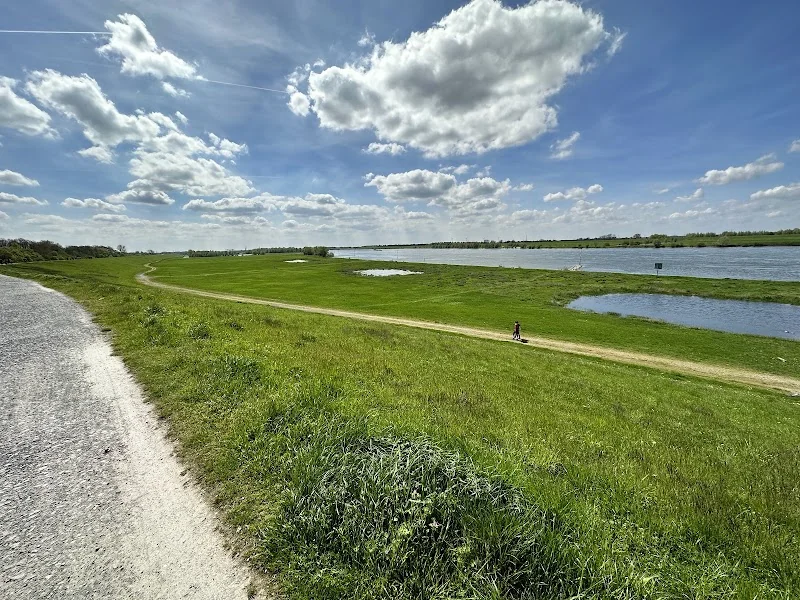
The Rheinaue Walsum, Dinslaken Stairs represents a place where the Rhine landscape, city outskirts, nature conservation, and excursion experiences come together in an unusually dense way. Those who come here quickly realize that this is not a classic event location, but a vast floodplain landscape with high ecological significance and great recreational value. The city of Duisburg describes the Rheinaue Walsum as a nature reserve of over 500 hectares, characterized by biodiversity, open meadows, pollard willows, observation huts, and wide paths. At the same time, the area lies on one of the most important migratory bird routes in Central Europe, making it a place where nature observation and quiet relaxation are closely intertwined. The contrast is also typical: on one side the green river floodplain, on the other industrial landmarks and the Rhine as a powerful backdrop. This very contrast makes the Rheinaue Walsum an attractive destination for both walks and longer bike tours. Visitors to the area experience not a staged park, but a real landscape with protection status, seasonal impressions, and its own rhythm. Practical advantages such as an accessible parking area, the Walsum-Orsoy ferry, and good integration into Duisburg's northern bank further enhance the experience. ([duisburg.de](https://www.duisburg.de/microsites/sieben_bezirke/walsum/alt-walsum/stadtteile_walsum/rheinaue-walsum-alt-walsum.php))
Nature, Birdwatching, and the Large Protected Area
The strongest search intent behind terms like Rheinaue Walsum, Rheinaue Dinslaken, or Rheinaue Duisburg Walsum is clearly nature. This is precisely where the area's special strength lies. The official Duisburg representation emphasizes that the Rheinaue Walsum is a nature reserve of over 500 hectares with a rich diversity of species, providing a home for birds along an important migratory route in Central Europe. The area is thus not only a beautiful place for walking but also a significant habitat where nature conservation is visible and tangible. The city's descriptions include Canada geese, wintering geese, horses, grazing cows, and sheep, as well as pollard willows, meadows, and open river landscapes. This mix of agricultural landscape and natural floodplain is typical for the Lower Rhine and contributes to the charm of the place. The landscape appears vast, calm, and yet vibrant, as it constantly changes with the water, light, and seasons. Especially in winter and at sunset, a quiet, expansive character emerges, while in spring, fields of rapeseed and open areas create different images. Those interested in birdwatching will find one of the best everyday accesses to nature in northern Duisburg. The combination of protected area, bird migration, and tranquility is the decisive reason for many visitors to specifically seek out the Rheinaue Walsum. ([duisburg.de](https://www.duisburg.de/microsites/sieben_bezirke/walsum/alt-walsum/stadtteile_walsum/rheinaue-walsum-alt-walsum.php))
Another practical advantage for nature lovers is that the Rheinaue is not only protected but also specifically developed for observation. The city of Duisburg explicitly points out special observation huts where animals can be observed and studied without entering sensitive areas. This is important because the area is part of an intact floodplain landscape where habitats, biotopes, and communities are to be particularly protected. The official nature reserve page mentions old water arms, old stream channels, and an agricultural cultural landscape with hedges, pollard tree rows, wooded strips, and fruit trees as characteristic elements. This creates a mosaic of open and structurally rich areas that benefits many animal and plant species. For visitors, this means: You do not enter a monotonous recreational area, but a landscape that is ecologically diverse and reveals new details with each walk. This is precisely why keywords like birdwatching, observation huts, pollard willows, and nature reserve are so relevant for this location. The Rheinaue is simultaneously a retreat for species and a quiet learning place for people who want to not only see nature but understand it. ([duisburg.de](https://www.duisburg.de/microsites/umwelt-natur-klima/natur/landschaftspflege/landschaftsplan/naturschutzgebiete))
Access, Parking, and Meeting Point at the Rheinaue
When searching for parking at Rheinaue or access to Rheinaue, it is important to distinguish between the nature reserve itself and the designated access points. The city of Duisburg names the Rheinaue parking lot at the corner of Kaiserstraße and Wiesenstraße as a meeting point for a nature event in the area in an official event program. Additionally, during a municipal company outing, the parking lot at the Rheinaue in Duisburg-Walsum was explicitly mentioned as the starting point. This shows that there is an established access point for visitors that serves as a starting point for walks and excursions. Those arriving by car should orient themselves to such designated points and not look for free parking spaces within the nature reserve itself. The Duisburg nature reserve rules are clear: vehicles are not allowed to enter the area, and parking off public roads is prohibited. This rule protects the sensitive areas from compaction, disturbance, and uncontrolled use. For SEO topics related to Rheinaue Dinslaken and Rheinaue 4 Dinslaken, it is therefore not only the question of the address that is important, but also the question of the correct starting point. Those using the parking lot have practical access to the floodplain and simultaneously avoid conflicts with nature conservation. ([duisburg.de](https://www.duisburg.de/microsites/umwelt-natur-klima/nachhaltigkeit/die-umweltwochen/veranstaltungsprogramm-2025?utm_source=openai))
The location is also attractive for cyclists, as the Rheinaue Walsum can be quickly and conveniently accessed by bike according to the city of Duisburg. The official city portal recommends continuing the hike or bike tour with the Walsum-Orsoy ferry, making the area particularly interesting for round trips. The wide paths along meadows and dike lines create a calm, spacious feeling of movement that many visitors appreciate. At the same time, the Rheinaue is not a place with massive infrastructure but is intentionally landscape-oriented. For this reason, careful travel planning is sensible: park at the designated meeting point, then continue on foot or by bike. Those planning a tour should also keep in mind the transition between nature and industry, as this very contrast is part of the experience on site. Orientation at fixed access points is therefore not only practical but also part of a respectful use of the area. For users searching for parking at Rheinaue or access to Rheinaue, the most important message is: Come through the designated entrances, use the official areas, and keep the actual floodplain landscape as undisturbed as possible. ([duisburg.de](https://www.duisburg.de/wohnenleben/florafauna/rheinaue-walsum.php?utm_source=openai))
Walsum-Orsoy Ferry: The Short Crossing with a Big Effect
Hardly any element shapes the perception of the Rheinaue Walsum as strongly as the Walsum-Orsoy ferry. The Duisburg city pages describe it as an important connection between Walsum and Orsoy, operated since 1958 by the motorized ferry Glück Auf. At the same time, the city points out that the ferry connection itself has existed for several hundred years. This makes the ferry more than just a means of transportation: it is a piece of regional continuity and an attractive excursion point at the same time. The official ferry page currently lists fixed departure times, which on weekdays during the summer season are from 6:15 AM to 8:00 PM, on Saturdays from 8:00 AM to 8:00 PM, and on Sundays from 10:00 AM to 8:00 PM; the crossing takes only a few minutes. For visitors, this is ideal because you experience the Rhine very directly without long distances or complicated logistics. The ferry transports vehicles, cyclists, pedestrians, and motorcycles, making it interesting for both pure leisure trips and combined round trips. Those visiting the Rheinaue can not only look at the Rhine but actively cross it. This is precisely what makes the search query Walsum Orsoy ferry so closely linked to the location. ([duisburg.de](https://www.duisburg.de/microsites/sieben_bezirke/walsum/alt-walsum/alt-walsum.php))
As an experience, the ferry also fits the mood of the Rheinaue: calm, direct, and with a clear connection to the water. On one side lie the green floodplain meadows, on the other the Rhine banks and the route to Orsoy. The city of Duisburg emphasizes that with the ferry, the left bank of the Rhine can be quickly and conveniently accessed by bike. This opens up entirely new tour options, as a visit to the Rheinaue can quickly turn into a longer round trip over the Rhine. For many cyclists, this combination of nature, short crossing, and new perspective is the real attraction. The official ferry page also lists specific fares, including rates for individuals, cyclists, cars, motorcycles, and vans, as well as weekly, monthly, and ten-trip tickets. This is useful for excursion planning because you can calculate the tour in advance. However, it remains important: the ferry is a real means of transportation with current times and rules, so you should always check the official schedule before arriving. Content-wise, it remains a highlight that turns a nature visit into a small Rhine adventure. ([duisburg.de](https://www.duisburg.de/microsites/sieben_bezirke/walsum/alt-walsum/stadtteile_walsum/rheinaue-walsum-alt-walsum.php))
Walks, Bike Tours, and Picnics by the Rhine
The Rheinaue Walsum is not a place for a tight, urban program, but for slow movement and wide views. The city of Duisburg describes an extensive network of paths along the floodplain landscape, characterized by pollard willows and meadows, offering pure relaxation. This is precisely why the location fits so well with search terms like hiking Rheinaue Walsum, cycling Walsum, or Rheinaue Dinslaken. Those who are out and about here experience a landscape where the Rhine has space and receives expansion area during high water without causing damage. This openness is part of the attraction. It allows for quiet walks, nature-oriented bike tours, and breaks with a wide view of the floodplain. The city even deliberately shows images like picnics by the Rhine, winter landscapes, horses, cows, and meadows to illustrate the diverse uses of the area. For visitors, this means: The Rheinaue is simultaneously local recreation, nature observation, and river landscape. Precisely because no classic event infrastructure dominates, one can be very self-determined here. You walk, cycle, observe, take breaks, and decide for yourself how long to stay. This is a strong counter-model to noisy leisure spots and one of the reasons why the location remains relevant in the long term. ([duisburg.de](https://www.duisburg.de/microsites/sieben_bezirke/walsum/alt-walsum/stadtteile_walsum/rheinaue-walsum-alt-walsum.php))
Especially interesting is the possibility of combining the tour with the ferry. The city of Duisburg explicitly recommends crossing the Rhine with the ferry and continuing the hike or bike tour on the other side. This quickly turns a simple walk into a small discovery round with a change of perspective. Duisburg's hiking tips and tourism pages also highlight the Rheinaue Walsum as a place where rare bird species, nostalgia, and nature meet. This is particularly valuable for SEO topics related to Rheinaue Duisburg Walsum or Rheinaue 4 Dinslaken, as the location functions not only locally but also as a starting point for longer distances. The charm lies in the slow pace: not rushing from A to B, but consciously along the river, past meadows, pastures, dike sections, and open views. Those seeking a quiet yet impressive nature experience will find a very credible offer here. And precisely because the place is so open and spacious, it remains interesting for repeated visits. Every time of day and every season shows different colors, different animals, and different light moods. ([duisburg.de](https://www.duisburg.de/wohnenleben/florafauna/rheinaue-walsum.php?utm_source=openai))
Location, History, and the Contrast Between City, Industry, and Floodplain
To understand the Rheinaue Walsum, one must also know its location within the urban structure. Alt-Walsum forms the northwestern end of Duisburg, with the Rhine running on the left side, and the district is characterized by its extensive Rhine floodplains. The city of Duisburg also describes Walsum as the northernmost district of the city; before 1975, Walsum belonged to the district of Dinslaken. This border location explains why search queries with Dinslaken and Duisburg fit together content-wise. The Rheinaue is not just a single park, but a large border area between cities, river, and floodplain landscape. At the same time, technical and industrial landmarks also shape the image. The Walsum power plant is located directly next to the Rhine and the ferry, and the former mining site and the headframe of the Franz-Lenze shaft remind us of the mining history of the district. The official Duisburg communication emphasizes this very contrast: green floodplain here, cooling tower and power plant backdrop there. This makes the Rheinaue a place where Ruhr area history and nature conservation do not exclude each other but are visibly present side by side. For content related to Rheinaue Walsum Dinslaken, this is important because the location is more than just a beautiful landscape. It is also a readable urban space with history and identity. ([duisburg.de](https://www.duisburg.de/microsites/sieben_bezirke/walsum/alt-walsum/alt-walsum.php))
Historically and geographically, the Rheinaue Walsum is also closely connected to the Rhine as a transport and nature axis. The city of Duisburg points out that the ferry connection between Walsum and Orsoy has existed for centuries, and the district text highlights the motorized ferry connection since 1958. This is a strong indication that a stable transition point has developed here over a long time, which is still in use today. Furthermore, Duisburg's environmental and open space planning locates the Rheinaue Walsum as an important open space in the city district, alongside Franz-Lenze-Platz and Driesenbusch, and names it as part of the Natura 2000 structures around the Rhine. The spatial embedding is therefore not random but planned and ecologically significant. For visitors, this is precisely what is exciting: you do not experience an anonymous riverbank, but a space with a long history of use, a clear protective function, and a strong connection to urban development. Therefore, those searching for the Rheinaue Walsum are also seeking a piece of Duisburg's northwestern identity and a landscape that extends to the Dinslaken border. This makes the location particularly strong in search terms and content-wise very stable for SEO. ([duisburg.de](https://www.duisburg.de/microsites/sieben_bezirke/walsum/alt-walsum/alt-walsum.php))
Protection Rules, Rangers, and Consideration in the Rheinaue Walsum
To maintain the special quality of the Rheinaue Walsum, clear rules apply. The Duisburg nature reserve page lists, among other things, a prohibition on driving off public roads, a parking ban outside designated areas, the prohibition of free-running dogs, fire and grilling bans, camping bans, and the prohibition of disturbing wildlife or damaging plants. These rules are not a bureaucratic detail but a prerequisite for keeping such a sensitive area functional despite high visitor numbers. Especially because the Rheinaue is a recreational area close to settlements, leisure interests and nature conservation come into direct conflict here. Therefore, those visiting the area should remain calm, stay on the paths, not feed animals, and not misunderstand the landscape as an event space. The official page also makes it clear that nature reserves can be accessible to the public as long as it is permitted by the purpose of protection. The Rheinaue Walsum is thus open but not arbitrarily usable. This balance is what gives it value. For visitors seeking practical information and rules, this is central: consideration is not only polite here but part of the experience. ([duisburg.de](https://www.duisburg.de/microsites/umwelt-natur-klima/natur/landschaftspflege/landschaftsplan/naturschutzgebiete))
Additionally, the city of Duisburg also employs rangers in the Rheinaue Walsum. According to the city portal, they are available as contact persons for those seeking recreation and simultaneously monitor compliance with the protection rules. The same report mentions that a sea eagle is nesting in the area and should raise its young undisturbed, which further underscores the area's worthiness of protection. For visitors, this is an important message: the Rheinaue is not an unattended natural area but a space with active supervision and clear responsibility. Therefore, those with questions can meet competent contact persons instead of having to navigate through a sensitive natural area alone. This combination of openness and protection also makes the location strong in the SEO context because it provides not only aesthetic but also credible practical information. In summary, the best way to visit the Rheinaue Walsum is simple, calm, and respectful: start at designated points, stay on the paths, observe nature, use the ferry, and consciously perceive the contrast between river, floodplain, and industry. This is where the special charm of this place lies. ([duisburg.de](https://www.duisburg.de/allgemein/fachbereiche/stadt.stimmen.storys/Ranger-und-Seeadler-in-der-Rheinaue-Walsum?utm_source=openai))
Sources:
- City of Duisburg – Rheinaue Walsum
- City of Duisburg – Nature Reserves
- City of Duisburg – Alt-Walsum
- Walsum Ferry – Timetable and Prices
- City of Duisburg – Glück Auf the Walsum Ferry Arrives
- City of Duisburg – Event Program Duisburg Environmental Weeks 2025
- City of Duisburg – Rangers and Sea Eagles in the Rheinaue Walsum
Show moreShow less
Rheinaue Walsum, Dinslaken Stairs | Nature & Parks
The Rheinaue Walsum, Dinslaken Stairs represents a place where the Rhine landscape, city outskirts, nature conservation, and excursion experiences come together in an unusually dense way. Those who come here quickly realize that this is not a classic event location, but a vast floodplain landscape with high ecological significance and great recreational value. The city of Duisburg describes the Rheinaue Walsum as a nature reserve of over 500 hectares, characterized by biodiversity, open meadows, pollard willows, observation huts, and wide paths. At the same time, the area lies on one of the most important migratory bird routes in Central Europe, making it a place where nature observation and quiet relaxation are closely intertwined. The contrast is also typical: on one side the green river floodplain, on the other industrial landmarks and the Rhine as a powerful backdrop. This very contrast makes the Rheinaue Walsum an attractive destination for both walks and longer bike tours. Visitors to the area experience not a staged park, but a real landscape with protection status, seasonal impressions, and its own rhythm. Practical advantages such as an accessible parking area, the Walsum-Orsoy ferry, and good integration into Duisburg's northern bank further enhance the experience. ([duisburg.de](https://www.duisburg.de/microsites/sieben_bezirke/walsum/alt-walsum/stadtteile_walsum/rheinaue-walsum-alt-walsum.php))
Nature, Birdwatching, and the Large Protected Area
The strongest search intent behind terms like Rheinaue Walsum, Rheinaue Dinslaken, or Rheinaue Duisburg Walsum is clearly nature. This is precisely where the area's special strength lies. The official Duisburg representation emphasizes that the Rheinaue Walsum is a nature reserve of over 500 hectares with a rich diversity of species, providing a home for birds along an important migratory route in Central Europe. The area is thus not only a beautiful place for walking but also a significant habitat where nature conservation is visible and tangible. The city's descriptions include Canada geese, wintering geese, horses, grazing cows, and sheep, as well as pollard willows, meadows, and open river landscapes. This mix of agricultural landscape and natural floodplain is typical for the Lower Rhine and contributes to the charm of the place. The landscape appears vast, calm, and yet vibrant, as it constantly changes with the water, light, and seasons. Especially in winter and at sunset, a quiet, expansive character emerges, while in spring, fields of rapeseed and open areas create different images. Those interested in birdwatching will find one of the best everyday accesses to nature in northern Duisburg. The combination of protected area, bird migration, and tranquility is the decisive reason for many visitors to specifically seek out the Rheinaue Walsum. ([duisburg.de](https://www.duisburg.de/microsites/sieben_bezirke/walsum/alt-walsum/stadtteile_walsum/rheinaue-walsum-alt-walsum.php))
Another practical advantage for nature lovers is that the Rheinaue is not only protected but also specifically developed for observation. The city of Duisburg explicitly points out special observation huts where animals can be observed and studied without entering sensitive areas. This is important because the area is part of an intact floodplain landscape where habitats, biotopes, and communities are to be particularly protected. The official nature reserve page mentions old water arms, old stream channels, and an agricultural cultural landscape with hedges, pollard tree rows, wooded strips, and fruit trees as characteristic elements. This creates a mosaic of open and structurally rich areas that benefits many animal and plant species. For visitors, this means: You do not enter a monotonous recreational area, but a landscape that is ecologically diverse and reveals new details with each walk. This is precisely why keywords like birdwatching, observation huts, pollard willows, and nature reserve are so relevant for this location. The Rheinaue is simultaneously a retreat for species and a quiet learning place for people who want to not only see nature but understand it. ([duisburg.de](https://www.duisburg.de/microsites/umwelt-natur-klima/natur/landschaftspflege/landschaftsplan/naturschutzgebiete))
Access, Parking, and Meeting Point at the Rheinaue
When searching for parking at Rheinaue or access to Rheinaue, it is important to distinguish between the nature reserve itself and the designated access points. The city of Duisburg names the Rheinaue parking lot at the corner of Kaiserstraße and Wiesenstraße as a meeting point for a nature event in the area in an official event program. Additionally, during a municipal company outing, the parking lot at the Rheinaue in Duisburg-Walsum was explicitly mentioned as the starting point. This shows that there is an established access point for visitors that serves as a starting point for walks and excursions. Those arriving by car should orient themselves to such designated points and not look for free parking spaces within the nature reserve itself. The Duisburg nature reserve rules are clear: vehicles are not allowed to enter the area, and parking off public roads is prohibited. This rule protects the sensitive areas from compaction, disturbance, and uncontrolled use. For SEO topics related to Rheinaue Dinslaken and Rheinaue 4 Dinslaken, it is therefore not only the question of the address that is important, but also the question of the correct starting point. Those using the parking lot have practical access to the floodplain and simultaneously avoid conflicts with nature conservation. ([duisburg.de](https://www.duisburg.de/microsites/umwelt-natur-klima/nachhaltigkeit/die-umweltwochen/veranstaltungsprogramm-2025?utm_source=openai))
The location is also attractive for cyclists, as the Rheinaue Walsum can be quickly and conveniently accessed by bike according to the city of Duisburg. The official city portal recommends continuing the hike or bike tour with the Walsum-Orsoy ferry, making the area particularly interesting for round trips. The wide paths along meadows and dike lines create a calm, spacious feeling of movement that many visitors appreciate. At the same time, the Rheinaue is not a place with massive infrastructure but is intentionally landscape-oriented. For this reason, careful travel planning is sensible: park at the designated meeting point, then continue on foot or by bike. Those planning a tour should also keep in mind the transition between nature and industry, as this very contrast is part of the experience on site. Orientation at fixed access points is therefore not only practical but also part of a respectful use of the area. For users searching for parking at Rheinaue or access to Rheinaue, the most important message is: Come through the designated entrances, use the official areas, and keep the actual floodplain landscape as undisturbed as possible. ([duisburg.de](https://www.duisburg.de/wohnenleben/florafauna/rheinaue-walsum.php?utm_source=openai))
Walsum-Orsoy Ferry: The Short Crossing with a Big Effect
Hardly any element shapes the perception of the Rheinaue Walsum as strongly as the Walsum-Orsoy ferry. The Duisburg city pages describe it as an important connection between Walsum and Orsoy, operated since 1958 by the motorized ferry Glück Auf. At the same time, the city points out that the ferry connection itself has existed for several hundred years. This makes the ferry more than just a means of transportation: it is a piece of regional continuity and an attractive excursion point at the same time. The official ferry page currently lists fixed departure times, which on weekdays during the summer season are from 6:15 AM to 8:00 PM, on Saturdays from 8:00 AM to 8:00 PM, and on Sundays from 10:00 AM to 8:00 PM; the crossing takes only a few minutes. For visitors, this is ideal because you experience the Rhine very directly without long distances or complicated logistics. The ferry transports vehicles, cyclists, pedestrians, and motorcycles, making it interesting for both pure leisure trips and combined round trips. Those visiting the Rheinaue can not only look at the Rhine but actively cross it. This is precisely what makes the search query Walsum Orsoy ferry so closely linked to the location. ([duisburg.de](https://www.duisburg.de/microsites/sieben_bezirke/walsum/alt-walsum/alt-walsum.php))
As an experience, the ferry also fits the mood of the Rheinaue: calm, direct, and with a clear connection to the water. On one side lie the green floodplain meadows, on the other the Rhine banks and the route to Orsoy. The city of Duisburg emphasizes that with the ferry, the left bank of the Rhine can be quickly and conveniently accessed by bike. This opens up entirely new tour options, as a visit to the Rheinaue can quickly turn into a longer round trip over the Rhine. For many cyclists, this combination of nature, short crossing, and new perspective is the real attraction. The official ferry page also lists specific fares, including rates for individuals, cyclists, cars, motorcycles, and vans, as well as weekly, monthly, and ten-trip tickets. This is useful for excursion planning because you can calculate the tour in advance. However, it remains important: the ferry is a real means of transportation with current times and rules, so you should always check the official schedule before arriving. Content-wise, it remains a highlight that turns a nature visit into a small Rhine adventure. ([duisburg.de](https://www.duisburg.de/microsites/sieben_bezirke/walsum/alt-walsum/stadtteile_walsum/rheinaue-walsum-alt-walsum.php))
Walks, Bike Tours, and Picnics by the Rhine
The Rheinaue Walsum is not a place for a tight, urban program, but for slow movement and wide views. The city of Duisburg describes an extensive network of paths along the floodplain landscape, characterized by pollard willows and meadows, offering pure relaxation. This is precisely why the location fits so well with search terms like hiking Rheinaue Walsum, cycling Walsum, or Rheinaue Dinslaken. Those who are out and about here experience a landscape where the Rhine has space and receives expansion area during high water without causing damage. This openness is part of the attraction. It allows for quiet walks, nature-oriented bike tours, and breaks with a wide view of the floodplain. The city even deliberately shows images like picnics by the Rhine, winter landscapes, horses, cows, and meadows to illustrate the diverse uses of the area. For visitors, this means: The Rheinaue is simultaneously local recreation, nature observation, and river landscape. Precisely because no classic event infrastructure dominates, one can be very self-determined here. You walk, cycle, observe, take breaks, and decide for yourself how long to stay. This is a strong counter-model to noisy leisure spots and one of the reasons why the location remains relevant in the long term. ([duisburg.de](https://www.duisburg.de/microsites/sieben_bezirke/walsum/alt-walsum/stadtteile_walsum/rheinaue-walsum-alt-walsum.php))
Especially interesting is the possibility of combining the tour with the ferry. The city of Duisburg explicitly recommends crossing the Rhine with the ferry and continuing the hike or bike tour on the other side. This quickly turns a simple walk into a small discovery round with a change of perspective. Duisburg's hiking tips and tourism pages also highlight the Rheinaue Walsum as a place where rare bird species, nostalgia, and nature meet. This is particularly valuable for SEO topics related to Rheinaue Duisburg Walsum or Rheinaue 4 Dinslaken, as the location functions not only locally but also as a starting point for longer distances. The charm lies in the slow pace: not rushing from A to B, but consciously along the river, past meadows, pastures, dike sections, and open views. Those seeking a quiet yet impressive nature experience will find a very credible offer here. And precisely because the place is so open and spacious, it remains interesting for repeated visits. Every time of day and every season shows different colors, different animals, and different light moods. ([duisburg.de](https://www.duisburg.de/wohnenleben/florafauna/rheinaue-walsum.php?utm_source=openai))
Location, History, and the Contrast Between City, Industry, and Floodplain
To understand the Rheinaue Walsum, one must also know its location within the urban structure. Alt-Walsum forms the northwestern end of Duisburg, with the Rhine running on the left side, and the district is characterized by its extensive Rhine floodplains. The city of Duisburg also describes Walsum as the northernmost district of the city; before 1975, Walsum belonged to the district of Dinslaken. This border location explains why search queries with Dinslaken and Duisburg fit together content-wise. The Rheinaue is not just a single park, but a large border area between cities, river, and floodplain landscape. At the same time, technical and industrial landmarks also shape the image. The Walsum power plant is located directly next to the Rhine and the ferry, and the former mining site and the headframe of the Franz-Lenze shaft remind us of the mining history of the district. The official Duisburg communication emphasizes this very contrast: green floodplain here, cooling tower and power plant backdrop there. This makes the Rheinaue a place where Ruhr area history and nature conservation do not exclude each other but are visibly present side by side. For content related to Rheinaue Walsum Dinslaken, this is important because the location is more than just a beautiful landscape. It is also a readable urban space with history and identity. ([duisburg.de](https://www.duisburg.de/microsites/sieben_bezirke/walsum/alt-walsum/alt-walsum.php))
Historically and geographically, the Rheinaue Walsum is also closely connected to the Rhine as a transport and nature axis. The city of Duisburg points out that the ferry connection between Walsum and Orsoy has existed for centuries, and the district text highlights the motorized ferry connection since 1958. This is a strong indication that a stable transition point has developed here over a long time, which is still in use today. Furthermore, Duisburg's environmental and open space planning locates the Rheinaue Walsum as an important open space in the city district, alongside Franz-Lenze-Platz and Driesenbusch, and names it as part of the Natura 2000 structures around the Rhine. The spatial embedding is therefore not random but planned and ecologically significant. For visitors, this is precisely what is exciting: you do not experience an anonymous riverbank, but a space with a long history of use, a clear protective function, and a strong connection to urban development. Therefore, those searching for the Rheinaue Walsum are also seeking a piece of Duisburg's northwestern identity and a landscape that extends to the Dinslaken border. This makes the location particularly strong in search terms and content-wise very stable for SEO. ([duisburg.de](https://www.duisburg.de/microsites/sieben_bezirke/walsum/alt-walsum/alt-walsum.php))
Protection Rules, Rangers, and Consideration in the Rheinaue Walsum
To maintain the special quality of the Rheinaue Walsum, clear rules apply. The Duisburg nature reserve page lists, among other things, a prohibition on driving off public roads, a parking ban outside designated areas, the prohibition of free-running dogs, fire and grilling bans, camping bans, and the prohibition of disturbing wildlife or damaging plants. These rules are not a bureaucratic detail but a prerequisite for keeping such a sensitive area functional despite high visitor numbers. Especially because the Rheinaue is a recreational area close to settlements, leisure interests and nature conservation come into direct conflict here. Therefore, those visiting the area should remain calm, stay on the paths, not feed animals, and not misunderstand the landscape as an event space. The official page also makes it clear that nature reserves can be accessible to the public as long as it is permitted by the purpose of protection. The Rheinaue Walsum is thus open but not arbitrarily usable. This balance is what gives it value. For visitors seeking practical information and rules, this is central: consideration is not only polite here but part of the experience. ([duisburg.de](https://www.duisburg.de/microsites/umwelt-natur-klima/natur/landschaftspflege/landschaftsplan/naturschutzgebiete))
Additionally, the city of Duisburg also employs rangers in the Rheinaue Walsum. According to the city portal, they are available as contact persons for those seeking recreation and simultaneously monitor compliance with the protection rules. The same report mentions that a sea eagle is nesting in the area and should raise its young undisturbed, which further underscores the area's worthiness of protection. For visitors, this is an important message: the Rheinaue is not an unattended natural area but a space with active supervision and clear responsibility. Therefore, those with questions can meet competent contact persons instead of having to navigate through a sensitive natural area alone. This combination of openness and protection also makes the location strong in the SEO context because it provides not only aesthetic but also credible practical information. In summary, the best way to visit the Rheinaue Walsum is simple, calm, and respectful: start at designated points, stay on the paths, observe nature, use the ferry, and consciously perceive the contrast between river, floodplain, and industry. This is where the special charm of this place lies. ([duisburg.de](https://www.duisburg.de/allgemein/fachbereiche/stadt.stimmen.storys/Ranger-und-Seeadler-in-der-Rheinaue-Walsum?utm_source=openai))
Sources:
- City of Duisburg – Rheinaue Walsum
- City of Duisburg – Nature Reserves
- City of Duisburg – Alt-Walsum
- Walsum Ferry – Timetable and Prices
- City of Duisburg – Glück Auf the Walsum Ferry Arrives
- City of Duisburg – Event Program Duisburg Environmental Weeks 2025
- City of Duisburg – Rangers and Sea Eagles in the Rheinaue Walsum
Rheinaue Walsum, Dinslaken Stairs | Nature & Parks
The Rheinaue Walsum, Dinslaken Stairs represents a place where the Rhine landscape, city outskirts, nature conservation, and excursion experiences come together in an unusually dense way. Those who come here quickly realize that this is not a classic event location, but a vast floodplain landscape with high ecological significance and great recreational value. The city of Duisburg describes the Rheinaue Walsum as a nature reserve of over 500 hectares, characterized by biodiversity, open meadows, pollard willows, observation huts, and wide paths. At the same time, the area lies on one of the most important migratory bird routes in Central Europe, making it a place where nature observation and quiet relaxation are closely intertwined. The contrast is also typical: on one side the green river floodplain, on the other industrial landmarks and the Rhine as a powerful backdrop. This very contrast makes the Rheinaue Walsum an attractive destination for both walks and longer bike tours. Visitors to the area experience not a staged park, but a real landscape with protection status, seasonal impressions, and its own rhythm. Practical advantages such as an accessible parking area, the Walsum-Orsoy ferry, and good integration into Duisburg's northern bank further enhance the experience. ([duisburg.de](https://www.duisburg.de/microsites/sieben_bezirke/walsum/alt-walsum/stadtteile_walsum/rheinaue-walsum-alt-walsum.php))
Nature, Birdwatching, and the Large Protected Area
The strongest search intent behind terms like Rheinaue Walsum, Rheinaue Dinslaken, or Rheinaue Duisburg Walsum is clearly nature. This is precisely where the area's special strength lies. The official Duisburg representation emphasizes that the Rheinaue Walsum is a nature reserve of over 500 hectares with a rich diversity of species, providing a home for birds along an important migratory route in Central Europe. The area is thus not only a beautiful place for walking but also a significant habitat where nature conservation is visible and tangible. The city's descriptions include Canada geese, wintering geese, horses, grazing cows, and sheep, as well as pollard willows, meadows, and open river landscapes. This mix of agricultural landscape and natural floodplain is typical for the Lower Rhine and contributes to the charm of the place. The landscape appears vast, calm, and yet vibrant, as it constantly changes with the water, light, and seasons. Especially in winter and at sunset, a quiet, expansive character emerges, while in spring, fields of rapeseed and open areas create different images. Those interested in birdwatching will find one of the best everyday accesses to nature in northern Duisburg. The combination of protected area, bird migration, and tranquility is the decisive reason for many visitors to specifically seek out the Rheinaue Walsum. ([duisburg.de](https://www.duisburg.de/microsites/sieben_bezirke/walsum/alt-walsum/stadtteile_walsum/rheinaue-walsum-alt-walsum.php))
Another practical advantage for nature lovers is that the Rheinaue is not only protected but also specifically developed for observation. The city of Duisburg explicitly points out special observation huts where animals can be observed and studied without entering sensitive areas. This is important because the area is part of an intact floodplain landscape where habitats, biotopes, and communities are to be particularly protected. The official nature reserve page mentions old water arms, old stream channels, and an agricultural cultural landscape with hedges, pollard tree rows, wooded strips, and fruit trees as characteristic elements. This creates a mosaic of open and structurally rich areas that benefits many animal and plant species. For visitors, this means: You do not enter a monotonous recreational area, but a landscape that is ecologically diverse and reveals new details with each walk. This is precisely why keywords like birdwatching, observation huts, pollard willows, and nature reserve are so relevant for this location. The Rheinaue is simultaneously a retreat for species and a quiet learning place for people who want to not only see nature but understand it. ([duisburg.de](https://www.duisburg.de/microsites/umwelt-natur-klima/natur/landschaftspflege/landschaftsplan/naturschutzgebiete))
Access, Parking, and Meeting Point at the Rheinaue
When searching for parking at Rheinaue or access to Rheinaue, it is important to distinguish between the nature reserve itself and the designated access points. The city of Duisburg names the Rheinaue parking lot at the corner of Kaiserstraße and Wiesenstraße as a meeting point for a nature event in the area in an official event program. Additionally, during a municipal company outing, the parking lot at the Rheinaue in Duisburg-Walsum was explicitly mentioned as the starting point. This shows that there is an established access point for visitors that serves as a starting point for walks and excursions. Those arriving by car should orient themselves to such designated points and not look for free parking spaces within the nature reserve itself. The Duisburg nature reserve rules are clear: vehicles are not allowed to enter the area, and parking off public roads is prohibited. This rule protects the sensitive areas from compaction, disturbance, and uncontrolled use. For SEO topics related to Rheinaue Dinslaken and Rheinaue 4 Dinslaken, it is therefore not only the question of the address that is important, but also the question of the correct starting point. Those using the parking lot have practical access to the floodplain and simultaneously avoid conflicts with nature conservation. ([duisburg.de](https://www.duisburg.de/microsites/umwelt-natur-klima/nachhaltigkeit/die-umweltwochen/veranstaltungsprogramm-2025?utm_source=openai))
The location is also attractive for cyclists, as the Rheinaue Walsum can be quickly and conveniently accessed by bike according to the city of Duisburg. The official city portal recommends continuing the hike or bike tour with the Walsum-Orsoy ferry, making the area particularly interesting for round trips. The wide paths along meadows and dike lines create a calm, spacious feeling of movement that many visitors appreciate. At the same time, the Rheinaue is not a place with massive infrastructure but is intentionally landscape-oriented. For this reason, careful travel planning is sensible: park at the designated meeting point, then continue on foot or by bike. Those planning a tour should also keep in mind the transition between nature and industry, as this very contrast is part of the experience on site. Orientation at fixed access points is therefore not only practical but also part of a respectful use of the area. For users searching for parking at Rheinaue or access to Rheinaue, the most important message is: Come through the designated entrances, use the official areas, and keep the actual floodplain landscape as undisturbed as possible. ([duisburg.de](https://www.duisburg.de/wohnenleben/florafauna/rheinaue-walsum.php?utm_source=openai))
Walsum-Orsoy Ferry: The Short Crossing with a Big Effect
Hardly any element shapes the perception of the Rheinaue Walsum as strongly as the Walsum-Orsoy ferry. The Duisburg city pages describe it as an important connection between Walsum and Orsoy, operated since 1958 by the motorized ferry Glück Auf. At the same time, the city points out that the ferry connection itself has existed for several hundred years. This makes the ferry more than just a means of transportation: it is a piece of regional continuity and an attractive excursion point at the same time. The official ferry page currently lists fixed departure times, which on weekdays during the summer season are from 6:15 AM to 8:00 PM, on Saturdays from 8:00 AM to 8:00 PM, and on Sundays from 10:00 AM to 8:00 PM; the crossing takes only a few minutes. For visitors, this is ideal because you experience the Rhine very directly without long distances or complicated logistics. The ferry transports vehicles, cyclists, pedestrians, and motorcycles, making it interesting for both pure leisure trips and combined round trips. Those visiting the Rheinaue can not only look at the Rhine but actively cross it. This is precisely what makes the search query Walsum Orsoy ferry so closely linked to the location. ([duisburg.de](https://www.duisburg.de/microsites/sieben_bezirke/walsum/alt-walsum/alt-walsum.php))
As an experience, the ferry also fits the mood of the Rheinaue: calm, direct, and with a clear connection to the water. On one side lie the green floodplain meadows, on the other the Rhine banks and the route to Orsoy. The city of Duisburg emphasizes that with the ferry, the left bank of the Rhine can be quickly and conveniently accessed by bike. This opens up entirely new tour options, as a visit to the Rheinaue can quickly turn into a longer round trip over the Rhine. For many cyclists, this combination of nature, short crossing, and new perspective is the real attraction. The official ferry page also lists specific fares, including rates for individuals, cyclists, cars, motorcycles, and vans, as well as weekly, monthly, and ten-trip tickets. This is useful for excursion planning because you can calculate the tour in advance. However, it remains important: the ferry is a real means of transportation with current times and rules, so you should always check the official schedule before arriving. Content-wise, it remains a highlight that turns a nature visit into a small Rhine adventure. ([duisburg.de](https://www.duisburg.de/microsites/sieben_bezirke/walsum/alt-walsum/stadtteile_walsum/rheinaue-walsum-alt-walsum.php))
Walks, Bike Tours, and Picnics by the Rhine
The Rheinaue Walsum is not a place for a tight, urban program, but for slow movement and wide views. The city of Duisburg describes an extensive network of paths along the floodplain landscape, characterized by pollard willows and meadows, offering pure relaxation. This is precisely why the location fits so well with search terms like hiking Rheinaue Walsum, cycling Walsum, or Rheinaue Dinslaken. Those who are out and about here experience a landscape where the Rhine has space and receives expansion area during high water without causing damage. This openness is part of the attraction. It allows for quiet walks, nature-oriented bike tours, and breaks with a wide view of the floodplain. The city even deliberately shows images like picnics by the Rhine, winter landscapes, horses, cows, and meadows to illustrate the diverse uses of the area. For visitors, this means: The Rheinaue is simultaneously local recreation, nature observation, and river landscape. Precisely because no classic event infrastructure dominates, one can be very self-determined here. You walk, cycle, observe, take breaks, and decide for yourself how long to stay. This is a strong counter-model to noisy leisure spots and one of the reasons why the location remains relevant in the long term. ([duisburg.de](https://www.duisburg.de/microsites/sieben_bezirke/walsum/alt-walsum/stadtteile_walsum/rheinaue-walsum-alt-walsum.php))
Especially interesting is the possibility of combining the tour with the ferry. The city of Duisburg explicitly recommends crossing the Rhine with the ferry and continuing the hike or bike tour on the other side. This quickly turns a simple walk into a small discovery round with a change of perspective. Duisburg's hiking tips and tourism pages also highlight the Rheinaue Walsum as a place where rare bird species, nostalgia, and nature meet. This is particularly valuable for SEO topics related to Rheinaue Duisburg Walsum or Rheinaue 4 Dinslaken, as the location functions not only locally but also as a starting point for longer distances. The charm lies in the slow pace: not rushing from A to B, but consciously along the river, past meadows, pastures, dike sections, and open views. Those seeking a quiet yet impressive nature experience will find a very credible offer here. And precisely because the place is so open and spacious, it remains interesting for repeated visits. Every time of day and every season shows different colors, different animals, and different light moods. ([duisburg.de](https://www.duisburg.de/wohnenleben/florafauna/rheinaue-walsum.php?utm_source=openai))
Location, History, and the Contrast Between City, Industry, and Floodplain
To understand the Rheinaue Walsum, one must also know its location within the urban structure. Alt-Walsum forms the northwestern end of Duisburg, with the Rhine running on the left side, and the district is characterized by its extensive Rhine floodplains. The city of Duisburg also describes Walsum as the northernmost district of the city; before 1975, Walsum belonged to the district of Dinslaken. This border location explains why search queries with Dinslaken and Duisburg fit together content-wise. The Rheinaue is not just a single park, but a large border area between cities, river, and floodplain landscape. At the same time, technical and industrial landmarks also shape the image. The Walsum power plant is located directly next to the Rhine and the ferry, and the former mining site and the headframe of the Franz-Lenze shaft remind us of the mining history of the district. The official Duisburg communication emphasizes this very contrast: green floodplain here, cooling tower and power plant backdrop there. This makes the Rheinaue a place where Ruhr area history and nature conservation do not exclude each other but are visibly present side by side. For content related to Rheinaue Walsum Dinslaken, this is important because the location is more than just a beautiful landscape. It is also a readable urban space with history and identity. ([duisburg.de](https://www.duisburg.de/microsites/sieben_bezirke/walsum/alt-walsum/alt-walsum.php))
Historically and geographically, the Rheinaue Walsum is also closely connected to the Rhine as a transport and nature axis. The city of Duisburg points out that the ferry connection between Walsum and Orsoy has existed for centuries, and the district text highlights the motorized ferry connection since 1958. This is a strong indication that a stable transition point has developed here over a long time, which is still in use today. Furthermore, Duisburg's environmental and open space planning locates the Rheinaue Walsum as an important open space in the city district, alongside Franz-Lenze-Platz and Driesenbusch, and names it as part of the Natura 2000 structures around the Rhine. The spatial embedding is therefore not random but planned and ecologically significant. For visitors, this is precisely what is exciting: you do not experience an anonymous riverbank, but a space with a long history of use, a clear protective function, and a strong connection to urban development. Therefore, those searching for the Rheinaue Walsum are also seeking a piece of Duisburg's northwestern identity and a landscape that extends to the Dinslaken border. This makes the location particularly strong in search terms and content-wise very stable for SEO. ([duisburg.de](https://www.duisburg.de/microsites/sieben_bezirke/walsum/alt-walsum/alt-walsum.php))
Protection Rules, Rangers, and Consideration in the Rheinaue Walsum
To maintain the special quality of the Rheinaue Walsum, clear rules apply. The Duisburg nature reserve page lists, among other things, a prohibition on driving off public roads, a parking ban outside designated areas, the prohibition of free-running dogs, fire and grilling bans, camping bans, and the prohibition of disturbing wildlife or damaging plants. These rules are not a bureaucratic detail but a prerequisite for keeping such a sensitive area functional despite high visitor numbers. Especially because the Rheinaue is a recreational area close to settlements, leisure interests and nature conservation come into direct conflict here. Therefore, those visiting the area should remain calm, stay on the paths, not feed animals, and not misunderstand the landscape as an event space. The official page also makes it clear that nature reserves can be accessible to the public as long as it is permitted by the purpose of protection. The Rheinaue Walsum is thus open but not arbitrarily usable. This balance is what gives it value. For visitors seeking practical information and rules, this is central: consideration is not only polite here but part of the experience. ([duisburg.de](https://www.duisburg.de/microsites/umwelt-natur-klima/natur/landschaftspflege/landschaftsplan/naturschutzgebiete))
Additionally, the city of Duisburg also employs rangers in the Rheinaue Walsum. According to the city portal, they are available as contact persons for those seeking recreation and simultaneously monitor compliance with the protection rules. The same report mentions that a sea eagle is nesting in the area and should raise its young undisturbed, which further underscores the area's worthiness of protection. For visitors, this is an important message: the Rheinaue is not an unattended natural area but a space with active supervision and clear responsibility. Therefore, those with questions can meet competent contact persons instead of having to navigate through a sensitive natural area alone. This combination of openness and protection also makes the location strong in the SEO context because it provides not only aesthetic but also credible practical information. In summary, the best way to visit the Rheinaue Walsum is simple, calm, and respectful: start at designated points, stay on the paths, observe nature, use the ferry, and consciously perceive the contrast between river, floodplain, and industry. This is where the special charm of this place lies. ([duisburg.de](https://www.duisburg.de/allgemein/fachbereiche/stadt.stimmen.storys/Ranger-und-Seeadler-in-der-Rheinaue-Walsum?utm_source=openai))
Sources:
- City of Duisburg – Rheinaue Walsum
- City of Duisburg – Nature Reserves
- City of Duisburg – Alt-Walsum
- Walsum Ferry – Timetable and Prices
- City of Duisburg – Glück Auf the Walsum Ferry Arrives
- City of Duisburg – Event Program Duisburg Environmental Weeks 2025
- City of Duisburg – Rangers and Sea Eagles in the Rheinaue Walsum
Upcoming Events
No events found
Frequently Asked Questions
Reviews
Nuchnalin Leerasantana
2. March 2022
My favorite running track in Duisburg! Flat walking path and always seeing the horizontal sky. You can feel the Duisburg identity that represents the combination of industrial and green spaces. There are benches available on the walkway.
Ariful Islam
30. May 2020
Nice place for sitting, walking, and cycling
シュミットマックス
12. June 2020
Relaxed area, great for walking, cycling, breathing :)
Manfred Hoppe
3. October 2019
Best view to the new delta - Die Rheinaue Walsum
David
30. May 2023
Very nice