

Homberg/Ruhrort/Baerl
Neumarkt, 47119 Duisburg-Homberg-Ruhrort-Baerl, Germany
Neumarkt Ruhrort | Weekly Market & Directions
The Neumarkt in Duisburg-Ruhrort is not an anonymous place, but a location with a clear identity. It is located in the historic harbor district of Ruhrort, where the city has been shaped by water, trade, and shipping for centuries. The city of Duisburg describes Ruhrort as a harbor district at the confluence of the Rhine and Ruhr; it is in this environment that a piece of urban everyday life has been preserved around the Neumarkt, which appears both traditional and vibrant. The square is anchored as a weekly market location in the Duisburg market statute, appears as a reference point in the official Ruhrort city map, and is also a fixed meeting point for tours of the district. Therefore, those who visit the Neumarkt experience not only a place to shop but also a starting point for Ruhrort with its romantic shipping history, short distances, and a dense mix of history, community, and maritime backdrop. ([duisburg.de](https://duisburg.de/microsites/sieben_bezirke/homberg_ruhrort_baerl/ruhrort/ruhrort.php))
Especially for inquiries about Neumarkt Ruhrort, weekly market, directions, and parking, the square is interesting because several everyday functions come together here. Not only market stalls and paths to the old town are located on the Neumarkt itself or in its immediate surroundings, but also the Gertrud-Reichardt-Haus, which used to be a high bunker, as well as other addresses like Das PLUS am Neumarkt / DU-Tours. This makes the place appear compact at first glance, but much more layered upon closer inspection. For visitors, this is practical: the Neumarkt can be easily connected on foot with sights, food, culture, and harbor motifs. For residents, it is a familiar meeting point in the district. And for all those discovering Ruhrort for the first time, it is a very good entry scene because it encapsulates the essence of the neighborhood in a small space. ([duisburg.de](https://www.duisburg.de/microsites/sieben_bezirke/homberg_ruhrort_baerl/ruhrort/bunker-neumarkt.php))
Weekly Market at Neumarkt in Ruhrort: When is it worth a visit?
The strongest substantive anchor of the Neumarkt is the weekly market. The Duisburg market statute explicitly lists the Ruhrort market at Neumarkt and states that market times are Wednesdays and Fridays from 08:00 to 13:00. This is important information because it clearly defines the square in everyday life: the Neumarkt is not just a waypoint or an urban area, but a clearly regulated market location with a recurring rhythm. Therefore, anyone who wants to experience fresh shopping, a lively environment, and typical Ruhrort everyday atmosphere should plan for these two mornings. The times are particularly attractive for those who want to combine their visit with a walk through Ruhrort, as the atmosphere is usually densest in the morning without the square becoming a mere thoroughfare. This creates exactly that mix of shopping, encounters, and neighborhood feeling that characterizes many weekly markets, but here in a very maritime setting. ([duisburg.de](https://duisburg.de/rathaus/rathausundpolitik/ortsrecht/S32.04-Marktsatzung_01.12.2023.pdf))
The Neumarkt benefits from its location in the heart of Ruhrort. The official city description states that around the Neumarkt and the shipping exchange, a piece of shipping romance is still palpable in the Ruhrort old town. This also helps to better place the mood of the market: it is not about grand event architecture, but about a square that is embedded in a historically grown neighborhood. Therefore, those who shop here or pass by do not only perceive goods but also urban spaces that are closely intertwined. The market fits well into the daily routine of the neighborhood because it harmonizes with the short distances to gastronomy, culture, and waterfront areas. For an SEO profile, this is important because search intentions like weekly market Ruhrort, Neumarkt Duisburg, or Ruhrort currently reflect this mix of practical information and local character. The official data clearly shows: the Neumarkt is particularly relevant on weekdays in the morning. ([duisburg.de](https://www.duisburg.de/tourismus/service/Duisburg_-_Stadt_von_Wasser_und_Feuer.pdf))
Directions to Neumarkt in Duisburg-Ruhrort: How to get there
The official Ruhrort orientation helps very concretely with directions. For driving by car, the local harmony site names the route via the A40, taking the Duisburg Häfen exit, then the road Am Brink to the roundabout, subsequently the third exit towards Ruhrort onto Ruhrorter Straße, continuing to the Tausendfensterhaus, then at the next traffic light left into Dr.-Hammacher-Straße, to the end, and finally right into Harmoniestraße, where parking is available at Neumarkt. The directions page of the Duisburg Fringe Festival describes the route similarly and additionally advises looking for a parking space along the way. For users who are navigating, the provided address Neumarkt 19, 47119 Duisburg is particularly helpful as it precisely locates the square in the urban space. The sources thus show one thing clearly: the Neumarkt is easily accessible, but it is not a place with a major traffic hub right at the door, but an urban square where one must orient oneself in the surroundings. ([lokal-harmonie.de](https://www.lokal-harmonie.de/anfahrt))
Ruhrort is also well connected by public transport. The Fringe directions page mentions the U-Bahn line 901 from Duisburg main station to Karlstraße, from there about a five-minute walk via Bergiusstraße and Harmoniestraße to Neumarkt. Additionally, bus lines 911 and 929 from Homberg and Moers to Ruhrort Friedrichsplatz are mentioned, as well as the RB 36 from Oberhausen and Meiderich to Ruhrort station. For visitors, this means: the Neumarkt is not a remote place, but accessible from several directions. Those who want to consciously experience the district can even understand the journey as part of the Ruhrort path, as the walk through the streets of the harbor district already provides an impression of the urban landscape. Especially for visits to the weekly market, tours, or a short stop, this combination of train, bus, and walking is very practical. From an SEO perspective, terms like Ruhrort directions, Ruhrort parking, and Neumarkt Duisburg are particularly fitting because they reflect the real usage intention. ([duisburgfringe.de](https://duisburgfringe.de/anfahrt/))
History of the Neumarkt and the Gertrud-Reichardt-Haus
The historical depth of the place is especially evident at the Gertrud-Reichardt-Haus directly at Neumarkt. The city of Duisburg documents a high bunker there that has stood at the square since 1942. After the war, windows were broken into the thick concrete walls, and thirteen two-room apartments were created. Since 2014, the building has been a listed building of the city and is used by the Diakoniewerk as Gertrud-Reichardt-Haus. This development is typical for Ruhrort: a structure that originally dates from the war period has later been transformed into a residential and usage model of everyday life. Thus, at Neumarkt, it becomes visible how the district has changed multiple times without losing its urban density. For visitors, the house is a strong symbol of the transformation from protective architecture to neighborhood history. It tells of continuity, reconstruction, and survival in public space. ([duisburg.de](https://www.duisburg.de/microsites/sieben_bezirke/homberg_ruhrort_baerl/ruhrort/bunker-neumarkt.php))
The Neumarkt is not isolated but is situated in a district with a long history of harbor and shipping. The official Ruhrort page describes Ruhrort as Duisburg's harbor district at the confluence of the Rhine and Ruhr and points out that in the 18th century, the Ruhrort ports laid the foundation for today's largest inland port in the world. This historical basis explains why Ruhrort also carries clear maritime traces in the urban landscape. Around the Neumarkt and the shipping exchange, a piece of shipping romance is still palpable, according to the city's tourism brochure. This is precisely where the special charm arises: the square is not only a historical backdrop but part of a vibrant neighborhood where harbor, living, market, and culture intertwine. Therefore, those who seek history at Neumarkt do not find an abstract narrative but a concretely readable urban landscape. This makes the place strong for content related to history, peculiarities, and background because it does not appear museum-like but stands right in the midst of today's Ruhrort everyday life. ([duisburg.de](https://duisburg.de/microsites/sieben_bezirke/homberg_ruhrort_baerl/ruhrort/ruhrort.php))
Sights around Neumarkt in Ruhrort
The Neumarkt is also interesting because it is embedded in a dense network of sights. In the official Ruhrort city map of the city of Duisburg, the Neumarkt is marked as a weekly market, and numerous destinations that shape the district touristically appear directly in the vicinity. These include the shipping exchange, the steam crane, the museum ships, the Museum of German Inland Shipping at Apostelstraße 84, the Vinckesäule, the Tausendfensterhaus, the Blaue Büdchen, the Mercatorinsel with the Echo of Poseidon, and the Ruhrort harbor ensemble. This density is typical for Ruhrort: instead of a single main attraction, there are many small places that can be reached in a short distance, which together shape the image of the district. This is precisely why the Neumarkt is excellent as a starting or stopping point for a walk. Those who arrive there have several directions open and can take in culture, harbor views, architecture, or simply the neighborhood atmosphere depending on their time and interest. ([duisburg.de](https://www.duisburg.de/tourismus/service/Duisburg-Hafenstadtteil-Ruhrort-2023.pdf))
Particularly valuable is the combination of everyday place and excursion destination. The Neumarkt stands in the midst of a neighborhood that, according to the official tourism description, still connects maritime and urban elements today. This makes the difference from many other marketplaces: here, paths to gastronomy, sightlines towards the harbor, historical facades, and small cultural places alternate immediately. The Ruhrort page of the city names, in addition to the Gertrud-Reichardt-Haus, the old Blaue Büdchen as one of the oldest drinking halls in the city and the harbor mouth with the anchor point for tugs and museum vessels. Even if one is only briefly at Neumarkt, one quickly gets a sense of why Ruhrort is considered a harbor district. For the search intention Ruhrort sights or shipping romance Ruhrort, this is perfect: the square is not a single eye-catcher but the hub of an entire urban landscape. ([duisburg.de](https://duisburg.de/microsites/sieben_bezirke/homberg_ruhrort_baerl/ruhrort/ruhrort.php))
Tours, Culture, and Daily Life in the Harbor District
The Neumarkt is not only a market and history but also an integral part of cultural Ruhrort. The official city map lists Das PLUS am Neumarkt / DU-Tours as a cultural and tourism address directly at Neumarkt 19. Additionally, the tour program of the city of Duisburg names the Neumarkt as a meeting point for a Ruhrort tour, where the district can be experienced with stories, everyday life, and light mood. This shows that the square has a very clear function in urban mediation: it is a place of arrival, departure, and storytelling. For visitors, this is ideal because one does not have to search complicatedly from here but can directly start into an organized tour or their own exploration. Ruhrort thus becomes experienceable as a neighborhood, not just as a map entry. ([duisburg.de](https://www.duisburg.de/tourismus/service/Duisburg-Hafenstadtteil-Ruhrort-2023.pdf))
The city of Duisburg also describes Ruhrort as a district where along the harbor life, between storage buildings, shipping, and small paths, there is a lot of atmosphere. The official district tour states that the walk leads past storage buildings, the inland shipping museum, old shipyards, and hidden corners with stories that only Ruhrort can tell. Such descriptions also help to properly place the Neumarkt: it is not an isolated traffic hub but part of the everyday and cultural happenings. According to the city map, galleries, studios, gastronomy, and various offerings for locals and guests can also be found in the Ruhrort surroundings. This mix of usage, culture, and community makes the place interesting in the long term. Therefore, those searching for Neumarkt current, Ruhrort current, or Neumarkt online often want to know if the square is lively, what happens there, and how it is used. The answer from the official sources is clear: it is very lively, but in a Ruhrort way, meaning more authentic than spectacular. ([duisburg.de](https://www.duisburg.de/tourismus/service/Duisburg-Hafenstadtteil-Ruhrort-2023.pdf))
Practical Tips for Your Visit to Neumarkt
For planning a visit, the day of the week is particularly decisive. Those who want to experience the Neumarkt in Ruhrort in its classic form should come on Wednesdays or Fridays between 08:00 and 13:00, as the weekly market takes place then. Those who prefer peace, clear views, and less public activity should travel outside these core times and use the square as a starting point for a walk through Ruhrort. Both options have their charm. On market mornings, the square is lively, close to everyday life, and well-suited for shopping and direct impressions. Outside market times, it is easier to observe how the Neumarkt functions as an urban space, how the paths open up to the neighboring streets, and how the district is organized between living, gastronomy, and culture. The special thing is not only what happens there but also the fact that the square takes on different roles throughout the day. This makes it interesting for visitors as well as for people who want to explore Ruhrort purposefully. ([duisburg.de](https://duisburg.de/rathaus/rathausundpolitik/ortsrecht/S32.04-Marktsatzung_01.12.2023.pdf))
It is also practical that the Neumarkt appears repeatedly as a reference point in official tours and city maps. This is a reliable sign that it can be well used as a starting point. For route, parking, and walking, the combination of the directions pages is particularly useful as they do not provide vague recommendations but specify concrete street sequences. Those who are still unsure can plan well with navigation, public transport, or on foot. Additionally, the compact structure of Ruhrort: many destinations are close together, so a visit to Neumarkt can quickly be combined with the shipping exchange, inland shipping museum, harbor view, or a small refreshment. For a longer exploration tour, it is worth discovering the district on foot at a leisurely pace, as this is where the mix of harbor, residential area, and history becomes most visible. Thus, the Neumarkt is not just a search term but a meaningful starting point for Ruhrort as a whole. ([duisburg.de](https://www.duisburg.de/tourismus/service/Duisburg-Hafenstadtteil-Ruhrort-2023.pdf))
Sources:
Show moreShow less
Neumarkt Ruhrort | Weekly Market & Directions
The Neumarkt in Duisburg-Ruhrort is not an anonymous place, but a location with a clear identity. It is located in the historic harbor district of Ruhrort, where the city has been shaped by water, trade, and shipping for centuries. The city of Duisburg describes Ruhrort as a harbor district at the confluence of the Rhine and Ruhr; it is in this environment that a piece of urban everyday life has been preserved around the Neumarkt, which appears both traditional and vibrant. The square is anchored as a weekly market location in the Duisburg market statute, appears as a reference point in the official Ruhrort city map, and is also a fixed meeting point for tours of the district. Therefore, those who visit the Neumarkt experience not only a place to shop but also a starting point for Ruhrort with its romantic shipping history, short distances, and a dense mix of history, community, and maritime backdrop. ([duisburg.de](https://duisburg.de/microsites/sieben_bezirke/homberg_ruhrort_baerl/ruhrort/ruhrort.php))
Especially for inquiries about Neumarkt Ruhrort, weekly market, directions, and parking, the square is interesting because several everyday functions come together here. Not only market stalls and paths to the old town are located on the Neumarkt itself or in its immediate surroundings, but also the Gertrud-Reichardt-Haus, which used to be a high bunker, as well as other addresses like Das PLUS am Neumarkt / DU-Tours. This makes the place appear compact at first glance, but much more layered upon closer inspection. For visitors, this is practical: the Neumarkt can be easily connected on foot with sights, food, culture, and harbor motifs. For residents, it is a familiar meeting point in the district. And for all those discovering Ruhrort for the first time, it is a very good entry scene because it encapsulates the essence of the neighborhood in a small space. ([duisburg.de](https://www.duisburg.de/microsites/sieben_bezirke/homberg_ruhrort_baerl/ruhrort/bunker-neumarkt.php))
Weekly Market at Neumarkt in Ruhrort: When is it worth a visit?
The strongest substantive anchor of the Neumarkt is the weekly market. The Duisburg market statute explicitly lists the Ruhrort market at Neumarkt and states that market times are Wednesdays and Fridays from 08:00 to 13:00. This is important information because it clearly defines the square in everyday life: the Neumarkt is not just a waypoint or an urban area, but a clearly regulated market location with a recurring rhythm. Therefore, anyone who wants to experience fresh shopping, a lively environment, and typical Ruhrort everyday atmosphere should plan for these two mornings. The times are particularly attractive for those who want to combine their visit with a walk through Ruhrort, as the atmosphere is usually densest in the morning without the square becoming a mere thoroughfare. This creates exactly that mix of shopping, encounters, and neighborhood feeling that characterizes many weekly markets, but here in a very maritime setting. ([duisburg.de](https://duisburg.de/rathaus/rathausundpolitik/ortsrecht/S32.04-Marktsatzung_01.12.2023.pdf))
The Neumarkt benefits from its location in the heart of Ruhrort. The official city description states that around the Neumarkt and the shipping exchange, a piece of shipping romance is still palpable in the Ruhrort old town. This also helps to better place the mood of the market: it is not about grand event architecture, but about a square that is embedded in a historically grown neighborhood. Therefore, those who shop here or pass by do not only perceive goods but also urban spaces that are closely intertwined. The market fits well into the daily routine of the neighborhood because it harmonizes with the short distances to gastronomy, culture, and waterfront areas. For an SEO profile, this is important because search intentions like weekly market Ruhrort, Neumarkt Duisburg, or Ruhrort currently reflect this mix of practical information and local character. The official data clearly shows: the Neumarkt is particularly relevant on weekdays in the morning. ([duisburg.de](https://www.duisburg.de/tourismus/service/Duisburg_-_Stadt_von_Wasser_und_Feuer.pdf))
Directions to Neumarkt in Duisburg-Ruhrort: How to get there
The official Ruhrort orientation helps very concretely with directions. For driving by car, the local harmony site names the route via the A40, taking the Duisburg Häfen exit, then the road Am Brink to the roundabout, subsequently the third exit towards Ruhrort onto Ruhrorter Straße, continuing to the Tausendfensterhaus, then at the next traffic light left into Dr.-Hammacher-Straße, to the end, and finally right into Harmoniestraße, where parking is available at Neumarkt. The directions page of the Duisburg Fringe Festival describes the route similarly and additionally advises looking for a parking space along the way. For users who are navigating, the provided address Neumarkt 19, 47119 Duisburg is particularly helpful as it precisely locates the square in the urban space. The sources thus show one thing clearly: the Neumarkt is easily accessible, but it is not a place with a major traffic hub right at the door, but an urban square where one must orient oneself in the surroundings. ([lokal-harmonie.de](https://www.lokal-harmonie.de/anfahrt))
Ruhrort is also well connected by public transport. The Fringe directions page mentions the U-Bahn line 901 from Duisburg main station to Karlstraße, from there about a five-minute walk via Bergiusstraße and Harmoniestraße to Neumarkt. Additionally, bus lines 911 and 929 from Homberg and Moers to Ruhrort Friedrichsplatz are mentioned, as well as the RB 36 from Oberhausen and Meiderich to Ruhrort station. For visitors, this means: the Neumarkt is not a remote place, but accessible from several directions. Those who want to consciously experience the district can even understand the journey as part of the Ruhrort path, as the walk through the streets of the harbor district already provides an impression of the urban landscape. Especially for visits to the weekly market, tours, or a short stop, this combination of train, bus, and walking is very practical. From an SEO perspective, terms like Ruhrort directions, Ruhrort parking, and Neumarkt Duisburg are particularly fitting because they reflect the real usage intention. ([duisburgfringe.de](https://duisburgfringe.de/anfahrt/))
History of the Neumarkt and the Gertrud-Reichardt-Haus
The historical depth of the place is especially evident at the Gertrud-Reichardt-Haus directly at Neumarkt. The city of Duisburg documents a high bunker there that has stood at the square since 1942. After the war, windows were broken into the thick concrete walls, and thirteen two-room apartments were created. Since 2014, the building has been a listed building of the city and is used by the Diakoniewerk as Gertrud-Reichardt-Haus. This development is typical for Ruhrort: a structure that originally dates from the war period has later been transformed into a residential and usage model of everyday life. Thus, at Neumarkt, it becomes visible how the district has changed multiple times without losing its urban density. For visitors, the house is a strong symbol of the transformation from protective architecture to neighborhood history. It tells of continuity, reconstruction, and survival in public space. ([duisburg.de](https://www.duisburg.de/microsites/sieben_bezirke/homberg_ruhrort_baerl/ruhrort/bunker-neumarkt.php))
The Neumarkt is not isolated but is situated in a district with a long history of harbor and shipping. The official Ruhrort page describes Ruhrort as Duisburg's harbor district at the confluence of the Rhine and Ruhr and points out that in the 18th century, the Ruhrort ports laid the foundation for today's largest inland port in the world. This historical basis explains why Ruhrort also carries clear maritime traces in the urban landscape. Around the Neumarkt and the shipping exchange, a piece of shipping romance is still palpable, according to the city's tourism brochure. This is precisely where the special charm arises: the square is not only a historical backdrop but part of a vibrant neighborhood where harbor, living, market, and culture intertwine. Therefore, those who seek history at Neumarkt do not find an abstract narrative but a concretely readable urban landscape. This makes the place strong for content related to history, peculiarities, and background because it does not appear museum-like but stands right in the midst of today's Ruhrort everyday life. ([duisburg.de](https://duisburg.de/microsites/sieben_bezirke/homberg_ruhrort_baerl/ruhrort/ruhrort.php))
Sights around Neumarkt in Ruhrort
The Neumarkt is also interesting because it is embedded in a dense network of sights. In the official Ruhrort city map of the city of Duisburg, the Neumarkt is marked as a weekly market, and numerous destinations that shape the district touristically appear directly in the vicinity. These include the shipping exchange, the steam crane, the museum ships, the Museum of German Inland Shipping at Apostelstraße 84, the Vinckesäule, the Tausendfensterhaus, the Blaue Büdchen, the Mercatorinsel with the Echo of Poseidon, and the Ruhrort harbor ensemble. This density is typical for Ruhrort: instead of a single main attraction, there are many small places that can be reached in a short distance, which together shape the image of the district. This is precisely why the Neumarkt is excellent as a starting or stopping point for a walk. Those who arrive there have several directions open and can take in culture, harbor views, architecture, or simply the neighborhood atmosphere depending on their time and interest. ([duisburg.de](https://www.duisburg.de/tourismus/service/Duisburg-Hafenstadtteil-Ruhrort-2023.pdf))
Particularly valuable is the combination of everyday place and excursion destination. The Neumarkt stands in the midst of a neighborhood that, according to the official tourism description, still connects maritime and urban elements today. This makes the difference from many other marketplaces: here, paths to gastronomy, sightlines towards the harbor, historical facades, and small cultural places alternate immediately. The Ruhrort page of the city names, in addition to the Gertrud-Reichardt-Haus, the old Blaue Büdchen as one of the oldest drinking halls in the city and the harbor mouth with the anchor point for tugs and museum vessels. Even if one is only briefly at Neumarkt, one quickly gets a sense of why Ruhrort is considered a harbor district. For the search intention Ruhrort sights or shipping romance Ruhrort, this is perfect: the square is not a single eye-catcher but the hub of an entire urban landscape. ([duisburg.de](https://duisburg.de/microsites/sieben_bezirke/homberg_ruhrort_baerl/ruhrort/ruhrort.php))
Tours, Culture, and Daily Life in the Harbor District
The Neumarkt is not only a market and history but also an integral part of cultural Ruhrort. The official city map lists Das PLUS am Neumarkt / DU-Tours as a cultural and tourism address directly at Neumarkt 19. Additionally, the tour program of the city of Duisburg names the Neumarkt as a meeting point for a Ruhrort tour, where the district can be experienced with stories, everyday life, and light mood. This shows that the square has a very clear function in urban mediation: it is a place of arrival, departure, and storytelling. For visitors, this is ideal because one does not have to search complicatedly from here but can directly start into an organized tour or their own exploration. Ruhrort thus becomes experienceable as a neighborhood, not just as a map entry. ([duisburg.de](https://www.duisburg.de/tourismus/service/Duisburg-Hafenstadtteil-Ruhrort-2023.pdf))
The city of Duisburg also describes Ruhrort as a district where along the harbor life, between storage buildings, shipping, and small paths, there is a lot of atmosphere. The official district tour states that the walk leads past storage buildings, the inland shipping museum, old shipyards, and hidden corners with stories that only Ruhrort can tell. Such descriptions also help to properly place the Neumarkt: it is not an isolated traffic hub but part of the everyday and cultural happenings. According to the city map, galleries, studios, gastronomy, and various offerings for locals and guests can also be found in the Ruhrort surroundings. This mix of usage, culture, and community makes the place interesting in the long term. Therefore, those searching for Neumarkt current, Ruhrort current, or Neumarkt online often want to know if the square is lively, what happens there, and how it is used. The answer from the official sources is clear: it is very lively, but in a Ruhrort way, meaning more authentic than spectacular. ([duisburg.de](https://www.duisburg.de/tourismus/service/Duisburg-Hafenstadtteil-Ruhrort-2023.pdf))
Practical Tips for Your Visit to Neumarkt
For planning a visit, the day of the week is particularly decisive. Those who want to experience the Neumarkt in Ruhrort in its classic form should come on Wednesdays or Fridays between 08:00 and 13:00, as the weekly market takes place then. Those who prefer peace, clear views, and less public activity should travel outside these core times and use the square as a starting point for a walk through Ruhrort. Both options have their charm. On market mornings, the square is lively, close to everyday life, and well-suited for shopping and direct impressions. Outside market times, it is easier to observe how the Neumarkt functions as an urban space, how the paths open up to the neighboring streets, and how the district is organized between living, gastronomy, and culture. The special thing is not only what happens there but also the fact that the square takes on different roles throughout the day. This makes it interesting for visitors as well as for people who want to explore Ruhrort purposefully. ([duisburg.de](https://duisburg.de/rathaus/rathausundpolitik/ortsrecht/S32.04-Marktsatzung_01.12.2023.pdf))
It is also practical that the Neumarkt appears repeatedly as a reference point in official tours and city maps. This is a reliable sign that it can be well used as a starting point. For route, parking, and walking, the combination of the directions pages is particularly useful as they do not provide vague recommendations but specify concrete street sequences. Those who are still unsure can plan well with navigation, public transport, or on foot. Additionally, the compact structure of Ruhrort: many destinations are close together, so a visit to Neumarkt can quickly be combined with the shipping exchange, inland shipping museum, harbor view, or a small refreshment. For a longer exploration tour, it is worth discovering the district on foot at a leisurely pace, as this is where the mix of harbor, residential area, and history becomes most visible. Thus, the Neumarkt is not just a search term but a meaningful starting point for Ruhrort as a whole. ([duisburg.de](https://www.duisburg.de/tourismus/service/Duisburg-Hafenstadtteil-Ruhrort-2023.pdf))
Sources:
Neumarkt Ruhrort | Weekly Market & Directions
The Neumarkt in Duisburg-Ruhrort is not an anonymous place, but a location with a clear identity. It is located in the historic harbor district of Ruhrort, where the city has been shaped by water, trade, and shipping for centuries. The city of Duisburg describes Ruhrort as a harbor district at the confluence of the Rhine and Ruhr; it is in this environment that a piece of urban everyday life has been preserved around the Neumarkt, which appears both traditional and vibrant. The square is anchored as a weekly market location in the Duisburg market statute, appears as a reference point in the official Ruhrort city map, and is also a fixed meeting point for tours of the district. Therefore, those who visit the Neumarkt experience not only a place to shop but also a starting point for Ruhrort with its romantic shipping history, short distances, and a dense mix of history, community, and maritime backdrop. ([duisburg.de](https://duisburg.de/microsites/sieben_bezirke/homberg_ruhrort_baerl/ruhrort/ruhrort.php))
Especially for inquiries about Neumarkt Ruhrort, weekly market, directions, and parking, the square is interesting because several everyday functions come together here. Not only market stalls and paths to the old town are located on the Neumarkt itself or in its immediate surroundings, but also the Gertrud-Reichardt-Haus, which used to be a high bunker, as well as other addresses like Das PLUS am Neumarkt / DU-Tours. This makes the place appear compact at first glance, but much more layered upon closer inspection. For visitors, this is practical: the Neumarkt can be easily connected on foot with sights, food, culture, and harbor motifs. For residents, it is a familiar meeting point in the district. And for all those discovering Ruhrort for the first time, it is a very good entry scene because it encapsulates the essence of the neighborhood in a small space. ([duisburg.de](https://www.duisburg.de/microsites/sieben_bezirke/homberg_ruhrort_baerl/ruhrort/bunker-neumarkt.php))
Weekly Market at Neumarkt in Ruhrort: When is it worth a visit?
The strongest substantive anchor of the Neumarkt is the weekly market. The Duisburg market statute explicitly lists the Ruhrort market at Neumarkt and states that market times are Wednesdays and Fridays from 08:00 to 13:00. This is important information because it clearly defines the square in everyday life: the Neumarkt is not just a waypoint or an urban area, but a clearly regulated market location with a recurring rhythm. Therefore, anyone who wants to experience fresh shopping, a lively environment, and typical Ruhrort everyday atmosphere should plan for these two mornings. The times are particularly attractive for those who want to combine their visit with a walk through Ruhrort, as the atmosphere is usually densest in the morning without the square becoming a mere thoroughfare. This creates exactly that mix of shopping, encounters, and neighborhood feeling that characterizes many weekly markets, but here in a very maritime setting. ([duisburg.de](https://duisburg.de/rathaus/rathausundpolitik/ortsrecht/S32.04-Marktsatzung_01.12.2023.pdf))
The Neumarkt benefits from its location in the heart of Ruhrort. The official city description states that around the Neumarkt and the shipping exchange, a piece of shipping romance is still palpable in the Ruhrort old town. This also helps to better place the mood of the market: it is not about grand event architecture, but about a square that is embedded in a historically grown neighborhood. Therefore, those who shop here or pass by do not only perceive goods but also urban spaces that are closely intertwined. The market fits well into the daily routine of the neighborhood because it harmonizes with the short distances to gastronomy, culture, and waterfront areas. For an SEO profile, this is important because search intentions like weekly market Ruhrort, Neumarkt Duisburg, or Ruhrort currently reflect this mix of practical information and local character. The official data clearly shows: the Neumarkt is particularly relevant on weekdays in the morning. ([duisburg.de](https://www.duisburg.de/tourismus/service/Duisburg_-_Stadt_von_Wasser_und_Feuer.pdf))
Directions to Neumarkt in Duisburg-Ruhrort: How to get there
The official Ruhrort orientation helps very concretely with directions. For driving by car, the local harmony site names the route via the A40, taking the Duisburg Häfen exit, then the road Am Brink to the roundabout, subsequently the third exit towards Ruhrort onto Ruhrorter Straße, continuing to the Tausendfensterhaus, then at the next traffic light left into Dr.-Hammacher-Straße, to the end, and finally right into Harmoniestraße, where parking is available at Neumarkt. The directions page of the Duisburg Fringe Festival describes the route similarly and additionally advises looking for a parking space along the way. For users who are navigating, the provided address Neumarkt 19, 47119 Duisburg is particularly helpful as it precisely locates the square in the urban space. The sources thus show one thing clearly: the Neumarkt is easily accessible, but it is not a place with a major traffic hub right at the door, but an urban square where one must orient oneself in the surroundings. ([lokal-harmonie.de](https://www.lokal-harmonie.de/anfahrt))
Ruhrort is also well connected by public transport. The Fringe directions page mentions the U-Bahn line 901 from Duisburg main station to Karlstraße, from there about a five-minute walk via Bergiusstraße and Harmoniestraße to Neumarkt. Additionally, bus lines 911 and 929 from Homberg and Moers to Ruhrort Friedrichsplatz are mentioned, as well as the RB 36 from Oberhausen and Meiderich to Ruhrort station. For visitors, this means: the Neumarkt is not a remote place, but accessible from several directions. Those who want to consciously experience the district can even understand the journey as part of the Ruhrort path, as the walk through the streets of the harbor district already provides an impression of the urban landscape. Especially for visits to the weekly market, tours, or a short stop, this combination of train, bus, and walking is very practical. From an SEO perspective, terms like Ruhrort directions, Ruhrort parking, and Neumarkt Duisburg are particularly fitting because they reflect the real usage intention. ([duisburgfringe.de](https://duisburgfringe.de/anfahrt/))
History of the Neumarkt and the Gertrud-Reichardt-Haus
The historical depth of the place is especially evident at the Gertrud-Reichardt-Haus directly at Neumarkt. The city of Duisburg documents a high bunker there that has stood at the square since 1942. After the war, windows were broken into the thick concrete walls, and thirteen two-room apartments were created. Since 2014, the building has been a listed building of the city and is used by the Diakoniewerk as Gertrud-Reichardt-Haus. This development is typical for Ruhrort: a structure that originally dates from the war period has later been transformed into a residential and usage model of everyday life. Thus, at Neumarkt, it becomes visible how the district has changed multiple times without losing its urban density. For visitors, the house is a strong symbol of the transformation from protective architecture to neighborhood history. It tells of continuity, reconstruction, and survival in public space. ([duisburg.de](https://www.duisburg.de/microsites/sieben_bezirke/homberg_ruhrort_baerl/ruhrort/bunker-neumarkt.php))
The Neumarkt is not isolated but is situated in a district with a long history of harbor and shipping. The official Ruhrort page describes Ruhrort as Duisburg's harbor district at the confluence of the Rhine and Ruhr and points out that in the 18th century, the Ruhrort ports laid the foundation for today's largest inland port in the world. This historical basis explains why Ruhrort also carries clear maritime traces in the urban landscape. Around the Neumarkt and the shipping exchange, a piece of shipping romance is still palpable, according to the city's tourism brochure. This is precisely where the special charm arises: the square is not only a historical backdrop but part of a vibrant neighborhood where harbor, living, market, and culture intertwine. Therefore, those who seek history at Neumarkt do not find an abstract narrative but a concretely readable urban landscape. This makes the place strong for content related to history, peculiarities, and background because it does not appear museum-like but stands right in the midst of today's Ruhrort everyday life. ([duisburg.de](https://duisburg.de/microsites/sieben_bezirke/homberg_ruhrort_baerl/ruhrort/ruhrort.php))
Sights around Neumarkt in Ruhrort
The Neumarkt is also interesting because it is embedded in a dense network of sights. In the official Ruhrort city map of the city of Duisburg, the Neumarkt is marked as a weekly market, and numerous destinations that shape the district touristically appear directly in the vicinity. These include the shipping exchange, the steam crane, the museum ships, the Museum of German Inland Shipping at Apostelstraße 84, the Vinckesäule, the Tausendfensterhaus, the Blaue Büdchen, the Mercatorinsel with the Echo of Poseidon, and the Ruhrort harbor ensemble. This density is typical for Ruhrort: instead of a single main attraction, there are many small places that can be reached in a short distance, which together shape the image of the district. This is precisely why the Neumarkt is excellent as a starting or stopping point for a walk. Those who arrive there have several directions open and can take in culture, harbor views, architecture, or simply the neighborhood atmosphere depending on their time and interest. ([duisburg.de](https://www.duisburg.de/tourismus/service/Duisburg-Hafenstadtteil-Ruhrort-2023.pdf))
Particularly valuable is the combination of everyday place and excursion destination. The Neumarkt stands in the midst of a neighborhood that, according to the official tourism description, still connects maritime and urban elements today. This makes the difference from many other marketplaces: here, paths to gastronomy, sightlines towards the harbor, historical facades, and small cultural places alternate immediately. The Ruhrort page of the city names, in addition to the Gertrud-Reichardt-Haus, the old Blaue Büdchen as one of the oldest drinking halls in the city and the harbor mouth with the anchor point for tugs and museum vessels. Even if one is only briefly at Neumarkt, one quickly gets a sense of why Ruhrort is considered a harbor district. For the search intention Ruhrort sights or shipping romance Ruhrort, this is perfect: the square is not a single eye-catcher but the hub of an entire urban landscape. ([duisburg.de](https://duisburg.de/microsites/sieben_bezirke/homberg_ruhrort_baerl/ruhrort/ruhrort.php))
Tours, Culture, and Daily Life in the Harbor District
The Neumarkt is not only a market and history but also an integral part of cultural Ruhrort. The official city map lists Das PLUS am Neumarkt / DU-Tours as a cultural and tourism address directly at Neumarkt 19. Additionally, the tour program of the city of Duisburg names the Neumarkt as a meeting point for a Ruhrort tour, where the district can be experienced with stories, everyday life, and light mood. This shows that the square has a very clear function in urban mediation: it is a place of arrival, departure, and storytelling. For visitors, this is ideal because one does not have to search complicatedly from here but can directly start into an organized tour or their own exploration. Ruhrort thus becomes experienceable as a neighborhood, not just as a map entry. ([duisburg.de](https://www.duisburg.de/tourismus/service/Duisburg-Hafenstadtteil-Ruhrort-2023.pdf))
The city of Duisburg also describes Ruhrort as a district where along the harbor life, between storage buildings, shipping, and small paths, there is a lot of atmosphere. The official district tour states that the walk leads past storage buildings, the inland shipping museum, old shipyards, and hidden corners with stories that only Ruhrort can tell. Such descriptions also help to properly place the Neumarkt: it is not an isolated traffic hub but part of the everyday and cultural happenings. According to the city map, galleries, studios, gastronomy, and various offerings for locals and guests can also be found in the Ruhrort surroundings. This mix of usage, culture, and community makes the place interesting in the long term. Therefore, those searching for Neumarkt current, Ruhrort current, or Neumarkt online often want to know if the square is lively, what happens there, and how it is used. The answer from the official sources is clear: it is very lively, but in a Ruhrort way, meaning more authentic than spectacular. ([duisburg.de](https://www.duisburg.de/tourismus/service/Duisburg-Hafenstadtteil-Ruhrort-2023.pdf))
Practical Tips for Your Visit to Neumarkt
For planning a visit, the day of the week is particularly decisive. Those who want to experience the Neumarkt in Ruhrort in its classic form should come on Wednesdays or Fridays between 08:00 and 13:00, as the weekly market takes place then. Those who prefer peace, clear views, and less public activity should travel outside these core times and use the square as a starting point for a walk through Ruhrort. Both options have their charm. On market mornings, the square is lively, close to everyday life, and well-suited for shopping and direct impressions. Outside market times, it is easier to observe how the Neumarkt functions as an urban space, how the paths open up to the neighboring streets, and how the district is organized between living, gastronomy, and culture. The special thing is not only what happens there but also the fact that the square takes on different roles throughout the day. This makes it interesting for visitors as well as for people who want to explore Ruhrort purposefully. ([duisburg.de](https://duisburg.de/rathaus/rathausundpolitik/ortsrecht/S32.04-Marktsatzung_01.12.2023.pdf))
It is also practical that the Neumarkt appears repeatedly as a reference point in official tours and city maps. This is a reliable sign that it can be well used as a starting point. For route, parking, and walking, the combination of the directions pages is particularly useful as they do not provide vague recommendations but specify concrete street sequences. Those who are still unsure can plan well with navigation, public transport, or on foot. Additionally, the compact structure of Ruhrort: many destinations are close together, so a visit to Neumarkt can quickly be combined with the shipping exchange, inland shipping museum, harbor view, or a small refreshment. For a longer exploration tour, it is worth discovering the district on foot at a leisurely pace, as this is where the mix of harbor, residential area, and history becomes most visible. Thus, the Neumarkt is not just a search term but a meaningful starting point for Ruhrort as a whole. ([duisburg.de](https://www.duisburg.de/tourismus/service/Duisburg-Hafenstadtteil-Ruhrort-2023.pdf))
Sources:
Upcoming Events

DARGEBOTEN | I See Faces - Exhibition Opening
Faces, bodies, and images in dialogue: I See Faces opens in Duisburg-Ruhrort. Photographs, painting, and installations await you. #Art
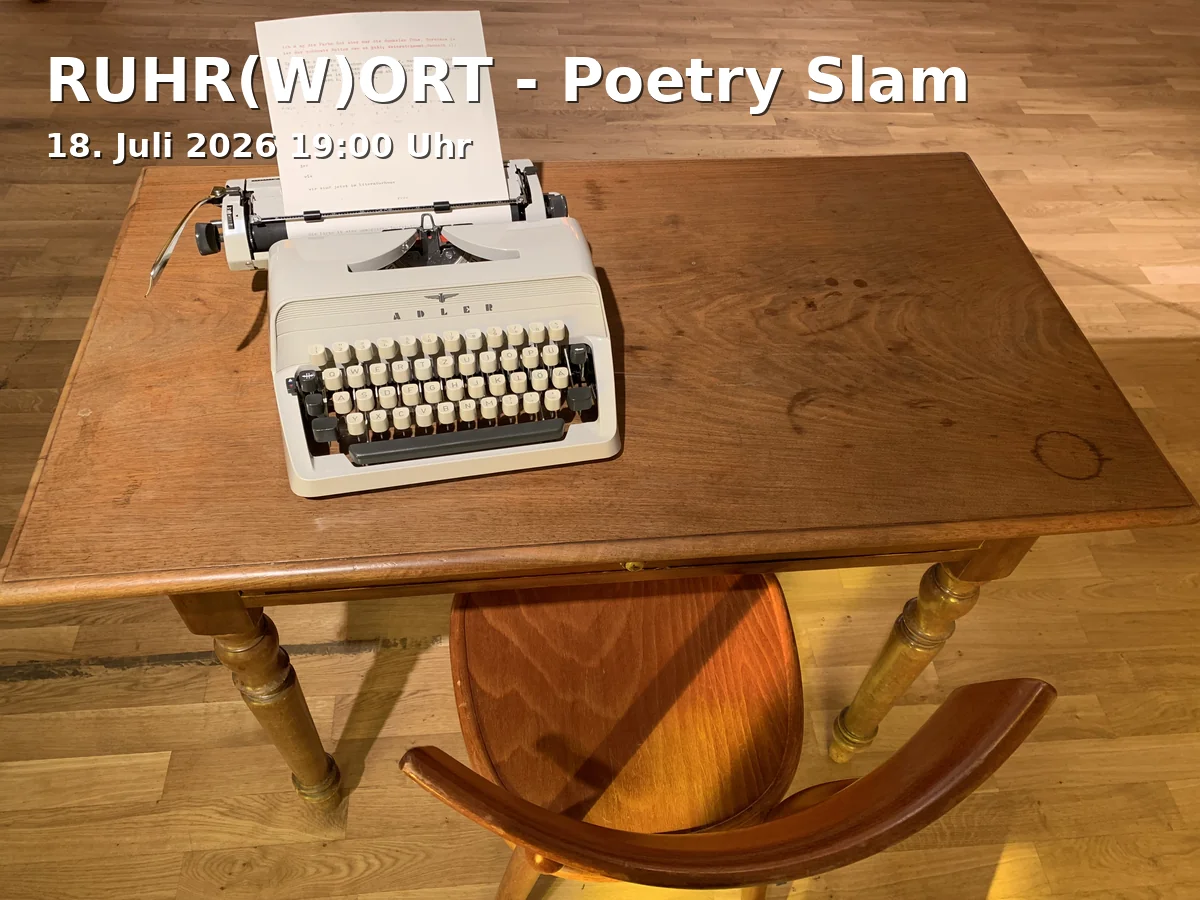
RUHR(W)ORT - Poetry Slam
An evening full of linguistic art in Duisburg-Ruhrort: RUHR(W)ORT - Poetry Slam combines poetry, comedy, and strong voices. 18.07.2026, 5 euros. #PoetrySlam #Duisburg
Frequently Asked Questions
Reviews
No reviews found