
Duisburg
König-Heinrich-Platz 3, 47051 Duisburg, Deutschland
Cultural Church Liebfrauen Duisburg | Photos & Directions
The Cultural Church Liebfrauen Duisburg is much more than a well-known address at König-Heinrich-Platz. It is a building with history, identity, and a very special dual function: below, a place of silence and prayer; above, a stage for culture, encounters, and events. Since 2014, the listed Liebfrauen Church has been available as a cultural venue in the center of Duisburg, combining religious, historical, and urban uses in one building. This very mix makes it interesting for visitors, organizers, and anyone searching for photos, directions, or background information about Cultural Church Liebfrauen Duisburg. The building is located in direct proximity to Theater Duisburg, CityPalais, Mercatorhalle, the district and regional courts, as well as the shopping center Forum, firmly anchoring it in the city center. ([liebfrauen-kulturkirche.de](https://liebfrauen-kulturkirche.de/willkommen))
Directions, Parking, and Location at König-Heinrich-Platz
Anyone visiting the Cultural Church Liebfrauen Duisburg quickly realizes how centrally located it is. The official address is König-Heinrich-Platz 3, 47051 Duisburg. According to the official website, the Cultural Church is excellently connected in terms of transport: Duisburg Central Station is about a 5-minute walk away, and there are subway and bus stops nearby. The Ruhrtriennale describes the journey even more specifically, mentioning that from Duisburg Central Station, one can take lines U79, 901, or 903 to the König-Heinrich-Platz stop; it is about 1.1 kilometers or roughly 13 minutes on foot. For those arriving by bicycle, the Ruhrtriennale also mentions the Bike Station 7411 at König-Heinrich-Platz. This location is a significant advantage because the church is not situated on an isolated edge of the city but in the midst of a vibrant cultural and administrative district. Therefore, those searching for terms like Cultural Church Liebfrauen Duisburg König-Heinrich-Platz Duisburg or directions to Cultural Church Liebfrauen will find very clear guidance here. ([liebfrauen-kulturkirche.de](https://liebfrauen-kulturkirche.de/kontakt))
Parking is also relatively comfortable for an inner-city building. The official site mentions more than sufficient parking space in the underground garage in front of the building. The Ruhrtriennale adds that the underground garages König-Heinrich-Platz and City Palais are in close proximity and offer evening and event rates. This is important for visitors arriving by car, as it allows for a combination of central city location and planned parking. At the same time, the path from the car to the event venue is short and easy to understand. In practice, this means: The Cultural Church is easily accessible for concerts, readings, exhibitions, or special receptions without having to plan long walks through the city center. This is a relevant advantage, especially for evening events. Therefore, those searching for parking at Cultural Church Liebfrauen or the best directions will find very concrete answers with the address at König-Heinrich-Platz and the nearby underground garages. ([liebfrauen-kulturkirche.de](https://liebfrauen-kulturkirche.de/willkommen))
The location at König-Heinrich-Platz further shapes the experience. The church stands between distinctive urban spaces and is framed by significant neighbors, including Theater Duisburg, CityPalais, and Mercatorhalle. This makes the visit not only practical but also atmospheric: one experiences the Cultural Church as part of an urban ensemble. The official website emphasizes this prominent location as a framework for extraordinary events. The Cultural Church is therefore not a hidden gem on the outskirts but a deliberately visible place in the heart of the city center. This positioning also explains why search queries with Duisburg Mitte, König-Heinrich-Platz, and Cultural Church Liebfrauen keep appearing together. Those looking for a destination that is both well-connected and architecturally striking make an excellent choice with this address. ([liebfrauen-kulturkirche.de](https://liebfrauen-kulturkirche.de/willkommen))
History of the Liebfrauen Church: From Medieval Origins to Cultural Church
The history of the Liebfrauen Church goes back much further than the current building at König-Heinrich-Platz. According to official sources, the beginnings of the community can be traced back to the year 1265. The old Liebfrauen Church originally stood in the historical center of Duisburg, near Burgplatz, Salvatorkirche, and the town hall. In the 19th century, the Catholic community grew significantly, driven by industrialization and population growth. Therefore, the then church was expanded or rebuilt in 1895/96: instead of a complete new building, the existing structure was supplemented in the neo-Gothic style with a large nave and a tower. The church became a defining part of the cityscape and was an important part of the Duisburg skyline with its silhouette. ([liebfrauen-kulturkirche.de](https://liebfrauen-kulturkirche.de/stiftung-brennender-dornbusch/geschichte))
The destruction of World War II changed everything. According to the official chronicle, the old church was largely destroyed in 1942 and 1943; since May 1943, the community had no space for services. After the war, the question arose whether the community should rebuild at the old site or move to the newly emerging center. The decision ultimately favored the city center and König-Heinrich-Platz. Between 1953 and 1955, the new building was prepared, and in 1956, the Klever architect Toni Hermanns won the planning competition. Construction began in 1957, the shell was completed by the end of 1958, the bells were consecrated in 1959, and on June 4, 1961, Bishop Franz Hengsbach consecrated the new Liebfrauen Church. This timeline shows how much the current building was conceived from the post-war years: not as a mere replacement but as a new center in a changing city. ([liebfrauen-kulturkirche.de](https://liebfrauen-kulturkirche.de/gebaeude/die-vorgeschichte))
The later development is also crucial for the current Cultural Church. In the early 2000s, the church was under significant pressure as declining membership numbers and cost-cutting measures by the diocese threatened its existence. A round table, citizen engagement, and finally the founding of the Brennender Dornbusch Foundation in 2007 secured the building in the long term. The listing as a monument on May 31, 2005, helped to steer the debate towards preservation and new use. In 2013, the reopened Cultural Church was finally able to resume operations. Since then, it has not only been a place of remembrance of the long history of the community but also an example of how a deconsecrated church can continue to live on in a modern urban context. Therefore, those searching for the history of Cultural Church Liebfrauen Duisburg will find a very clear pattern: medieval roots, industrial urban development, destruction, post-war reconstruction, and a later transformation into an open cultural space. ([liebfrauen-kulturkirche.de](https://liebfrauen-kulturkirche.de/stiftung-brennender-dornbusch/geschichte))
Architecture, Exterior, and Interior: Brutalism with Special Radiance
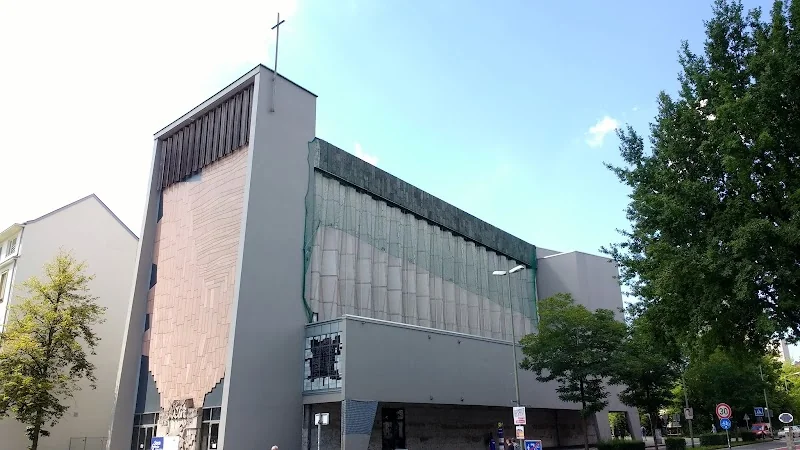
Architecturally, the Cultural Church Liebfrauen Duisburg is a building that immediately attracts attention. The official website describes the church as a listed architectural landmark, and on the building page, it is highlighted as an exemplary building from the 1950s to 1970s. In the church's history, the building is classified as a two-story reinforced concrete structure in the style of Brutalism. This description is important because it explains why the building appears so clear, powerful, and at the same time unusual. The house opts for visibility rather than restraint. The form does not follow the classic image of a traditional brick church but rather a modern post-war architecture that remains strongly present in Duisburg's urban space to this day. This makes the Cultural Church interesting not only as a venue but also as an object for anyone interested in architecture, church design, and monument preservation. ([liebfrauen-kulturkirche.de](https://liebfrauen-kulturkirche.de/stiftung-brennender-dornbusch/geschichte))
Especially striking are the translucent folding walls on the upper floor, which the official website explicitly mentions. Together with the interior design, they create a special light effect. Additionally, numerous exhibits from the Catholic pavilion of the 1958 World Expo in Brussels were integrated into the building. These include, according to official history, the altar, baldachin, and stained glass windows. This is an extraordinary detail because it allows a part of the World Expo culture to continue living in Duisburg. The building itself also tells a visual story: the east facade at König-Heinrich-Platz received its current shape only over several years, and the relief of Moses before the burning bush was added in 1965. Later, additional facade elements were added, including the slate cladding on the north, west, and south sides. Therefore, when viewed from the outside, one recognizes not only a single building but a multifaceted architectural development over decades. ([liebfrauen-kulturkirche.de](https://liebfrauen-kulturkirche.de/willkommen))
Inside, the Liebfrauen Church is also unusual. The official website emphasizes that the interior design allows for ample space for all conceivable occasions, even though the building appears architecturally strong and characterful. This is one of the reasons why the Cultural Church can be used so flexibly today. The image gallery documents, among other things, the entrance hall with baptismal font, the ascent to the upper church, the two-story structure, the celebration church from the ascent, the celebration church from the altar, the Breil organ, and the glass art walls. This mix of sacred heritage, modern post-war form, and cultural use creates a special charm. Those searching for photos of Cultural Church Liebfrauen Duisburg will find not only classic exterior shots but also strong interior perspectives that showcase the interplay of material, light, and space. Thus, the location is interesting for both event visitors and those seeking architectural and photographic motifs in an urban context. ([liebfrauen-kulturkirche.de](https://liebfrauen-kulturkirche.de/gebaeude/das-gebaeude-in-bildern))
Events, Concerts, Exhibitions, and Current Use
The current role of the Cultural Church Liebfrauen Duisburg is clearly oriented towards cultural use. The official website explicitly mentions concerts, exhibitions, meetings, and performances as formats for which the venue is available. At the same time, the building remains particularly special in its dual use: the lower church is still used by the Catholic parish community as a place for services and adoration chapel, while the upper church is open as an event and exhibition space. This creates a tension between contemplation and public culture that few places embody so clearly. For people searching for events, concerts, or exhibitions at Cultural Church Liebfrauen, this is a central reason to keep an eye on this place. ([liebfrauen-kulturkirche.de](https://liebfrauen-kulturkirche.de/willkommen))
Historically, the church was already a significant venue. The chronicle states that it was used for numerous concert and cultural events even in the decades before its repurposing. Particularly well-known were, according to official history, the traditional Hubertus masses with up to 1000 visitors. This shows that the Liebfrauen Church was already a place with high public resonance long before the name Cultural Church Liebfrauen Duisburg. The transition to its current use was therefore not a break but an evolution of an existing openness to large gatherings and cultural formats. This is exactly why the venue works so well for modern requirements: the architecture has dignity, but it is not rigid. It allows for use for very different event forms, from artistic presentations to discussion formats or special celebrations. ([liebfrauen-kulturkirche.de](https://liebfrauen-kulturkirche.de/stiftung-brennender-dornbusch/geschichte))
The Brennender Dornbusch Foundation was established with the aim of securing the church's existence as a spiritual and cultural center. After reopening in 2013, technical and functional adjustments were made, including new electrical and sanitary installations, an elevator, a kitchen, and fire protection measures. Although visitors may not consciously perceive this infrastructure, it is crucial for everyday use. It makes the church a place where cultural events are not only representative but also practically feasible. Additionally, the official website offers a section for renting the church and explicitly states that one can inquire about possibilities or contact directly. Therefore, anyone looking for a special location in Duisburg with history, strong architecture, and a central location will find a place that convincingly combines cultural presence and bookable use. ([liebfrauen-kulturkirche.de](https://liebfrauen-kulturkirche.de/gebaeude/umbau-zur-kulturkirche))
Photos, Tours, and Lower Church: The Best Way to Experience the Place
Those who want to get an idea before a visit will find a comprehensive section on the official site titled The Building in Pictures. There are, among other things, images of the church at König-Heinrich-Platz, the view from the city theater, the main facade with bell storey, Moses before the burning bush, the view from the city house arcade, the rear facade, the entrance hall with baptismal font, the ascent to the upper church, the two-story church, the celebration church, the Breil organ, and the glass art walls documented. For those searching for photos of Cultural Church Liebfrauen Duisburg, this is particularly valuable because it shows not just a single motif but a whole tour through the building. This way, the architecture can be spatially understood even before the visit. The image page also names Max Schulz as the photographer, making the visual documentation traceable. ([liebfrauen-kulturkirche.de](https://liebfrauen-kulturkirche.de/gebaeude/das-gebaeude-in-bildern))
Tours are also very helpful for accessing the location. The official site promises, under the motto More Seeing through More Knowledge, informative insights into architecture, art, and history. The duration is approximately 15 to 45 minutes by arrangement. This is practical for groups, interested individual visitors, or organizers who want to get to know the place better in advance. Those who want to see not only photos but also understand the backgrounds receive a compressed but well-founded introduction here. Especially with a building like this Cultural Church, it is worthwhile because many details can only be explained in context: the post-war architecture, the World Expo objects, the two-story structure, and the development from parish church to cultural church. Thus, a mere visit becomes a real understanding of the place. ([liebfrauen-kulturkirche.de](https://liebfrauen-kulturkirche.de/willkommen/fuehrungen))
Another interesting area is the lower church. The official site describes it as a place of silence, wonder, devotion, and prayer. It is accessible via the side entrance at the bus stop Stadttheater and is open from Monday to Friday from 9 a.m. to 3 p.m. This makes it a clear counterpoint to the lively upper church. This spatial separation is a special feature of the Cultural Church Liebfrauen Duisburg. Therefore, anyone looking for a location that not only focuses on events but also offers a quiet, spiritual space will find a rare interplay here. For visitors, this is an advantage because the place not only juxtaposes different types of use but also connects them in an architecturally exciting form. The lower church thus makes the Cultural Church a destination with depth and atmosphere beyond events. ([liebfrauen-kulturkirche.de](https://liebfrauen-kulturkirche.de/willkommen/unterkirche))
Renting the Church, Practical Planning, and Why the Location is So Popular
The official website offers a dedicated section for renting the church and points out that one can inquire about the house and its possibilities or contact directly. This is an important note for anyone looking for a special event space in Duisburg. The Cultural Church Liebfrauen is not an interchangeable event hall but a place with history, clear architectural identity, and a location that immediately stands out in the city center. This has several advantages for events: the address is easy to find, public transport is very close, parking is available, and the surroundings with theater, CityPalais, and Mercatorhalle create an urban, cultural climate. Therefore, anyone planning a venue for concerts, lectures, exhibitions, or special occasions receives not only space but also atmosphere here. ([liebfrauen-kulturkirche.de](https://liebfrauen-kulturkirche.de/willkommen/kirche-mieten))
Practically important is also that the Cultural Church offers different spatial experiences. The upper church is suitable for events and exhibitions, the lower church remains as a place of silence and prayer, and the official pages additionally refer to tours and the richly documented building. This speaks for a location that is not only booked for the short term but can also be accompanied in content. For organizers, this is interesting because the building itself becomes part of the program. For guests, it is interesting because the place has recognition value. Especially in a city like Duisburg, where cultural venues often have to be functional, the Liebfrauen Church stands out clearly with its strong history. It is bookable but not arbitrary; open but not interchangeable. ([liebfrauen-kulturkirche.de](https://liebfrauen-kulturkirche.de/willkommen/kirche-mieten))
For this reason, the Cultural Church Liebfrauen Duisburg is highly relevant for search queries related to photos, directions, parking, history, events, and tours. It unites many themes in a single location: historical significance, post-war architecture, sacred residual use, cultural openness, and a very central city location. Anyone who has seen the place quickly understands why it is so present among culture-interested visitors, organizers, and architecture fans. The interplay of equipment, location, spatial effect, and history is the actual USP. Therefore, anyone looking for not just a room but a memorable place with character will find one of the most distinctive addresses in Duisburg at Cultural Church Liebfrauen. ([liebfrauen-kulturkirche.de](https://liebfrauen-kulturkirche.de/willkommen))
Sources:
- Cultural Church Liebfrauen – Welcome
- Cultural Church Liebfrauen – The Building of the Liebfrauen Church
- Cultural Church Liebfrauen – Directions
- Cultural Church Liebfrauen – Tours
- Cultural Church Liebfrauen – The Building in Pictures
- FSGG Catering – Cultural Church Liebfrauen, Duisburg
- Ruhrtriennale – Cultural Church Liebfrauen Duisburg
Show moreShow less
Cultural Church Liebfrauen Duisburg | Photos & Directions
The Cultural Church Liebfrauen Duisburg is much more than a well-known address at König-Heinrich-Platz. It is a building with history, identity, and a very special dual function: below, a place of silence and prayer; above, a stage for culture, encounters, and events. Since 2014, the listed Liebfrauen Church has been available as a cultural venue in the center of Duisburg, combining religious, historical, and urban uses in one building. This very mix makes it interesting for visitors, organizers, and anyone searching for photos, directions, or background information about Cultural Church Liebfrauen Duisburg. The building is located in direct proximity to Theater Duisburg, CityPalais, Mercatorhalle, the district and regional courts, as well as the shopping center Forum, firmly anchoring it in the city center. ([liebfrauen-kulturkirche.de](https://liebfrauen-kulturkirche.de/willkommen))
Directions, Parking, and Location at König-Heinrich-Platz
Anyone visiting the Cultural Church Liebfrauen Duisburg quickly realizes how centrally located it is. The official address is König-Heinrich-Platz 3, 47051 Duisburg. According to the official website, the Cultural Church is excellently connected in terms of transport: Duisburg Central Station is about a 5-minute walk away, and there are subway and bus stops nearby. The Ruhrtriennale describes the journey even more specifically, mentioning that from Duisburg Central Station, one can take lines U79, 901, or 903 to the König-Heinrich-Platz stop; it is about 1.1 kilometers or roughly 13 minutes on foot. For those arriving by bicycle, the Ruhrtriennale also mentions the Bike Station 7411 at König-Heinrich-Platz. This location is a significant advantage because the church is not situated on an isolated edge of the city but in the midst of a vibrant cultural and administrative district. Therefore, those searching for terms like Cultural Church Liebfrauen Duisburg König-Heinrich-Platz Duisburg or directions to Cultural Church Liebfrauen will find very clear guidance here. ([liebfrauen-kulturkirche.de](https://liebfrauen-kulturkirche.de/kontakt))
Parking is also relatively comfortable for an inner-city building. The official site mentions more than sufficient parking space in the underground garage in front of the building. The Ruhrtriennale adds that the underground garages König-Heinrich-Platz and City Palais are in close proximity and offer evening and event rates. This is important for visitors arriving by car, as it allows for a combination of central city location and planned parking. At the same time, the path from the car to the event venue is short and easy to understand. In practice, this means: The Cultural Church is easily accessible for concerts, readings, exhibitions, or special receptions without having to plan long walks through the city center. This is a relevant advantage, especially for evening events. Therefore, those searching for parking at Cultural Church Liebfrauen or the best directions will find very concrete answers with the address at König-Heinrich-Platz and the nearby underground garages. ([liebfrauen-kulturkirche.de](https://liebfrauen-kulturkirche.de/willkommen))
The location at König-Heinrich-Platz further shapes the experience. The church stands between distinctive urban spaces and is framed by significant neighbors, including Theater Duisburg, CityPalais, and Mercatorhalle. This makes the visit not only practical but also atmospheric: one experiences the Cultural Church as part of an urban ensemble. The official website emphasizes this prominent location as a framework for extraordinary events. The Cultural Church is therefore not a hidden gem on the outskirts but a deliberately visible place in the heart of the city center. This positioning also explains why search queries with Duisburg Mitte, König-Heinrich-Platz, and Cultural Church Liebfrauen keep appearing together. Those looking for a destination that is both well-connected and architecturally striking make an excellent choice with this address. ([liebfrauen-kulturkirche.de](https://liebfrauen-kulturkirche.de/willkommen))
History of the Liebfrauen Church: From Medieval Origins to Cultural Church
The history of the Liebfrauen Church goes back much further than the current building at König-Heinrich-Platz. According to official sources, the beginnings of the community can be traced back to the year 1265. The old Liebfrauen Church originally stood in the historical center of Duisburg, near Burgplatz, Salvatorkirche, and the town hall. In the 19th century, the Catholic community grew significantly, driven by industrialization and population growth. Therefore, the then church was expanded or rebuilt in 1895/96: instead of a complete new building, the existing structure was supplemented in the neo-Gothic style with a large nave and a tower. The church became a defining part of the cityscape and was an important part of the Duisburg skyline with its silhouette. ([liebfrauen-kulturkirche.de](https://liebfrauen-kulturkirche.de/stiftung-brennender-dornbusch/geschichte))
The destruction of World War II changed everything. According to the official chronicle, the old church was largely destroyed in 1942 and 1943; since May 1943, the community had no space for services. After the war, the question arose whether the community should rebuild at the old site or move to the newly emerging center. The decision ultimately favored the city center and König-Heinrich-Platz. Between 1953 and 1955, the new building was prepared, and in 1956, the Klever architect Toni Hermanns won the planning competition. Construction began in 1957, the shell was completed by the end of 1958, the bells were consecrated in 1959, and on June 4, 1961, Bishop Franz Hengsbach consecrated the new Liebfrauen Church. This timeline shows how much the current building was conceived from the post-war years: not as a mere replacement but as a new center in a changing city. ([liebfrauen-kulturkirche.de](https://liebfrauen-kulturkirche.de/gebaeude/die-vorgeschichte))
The later development is also crucial for the current Cultural Church. In the early 2000s, the church was under significant pressure as declining membership numbers and cost-cutting measures by the diocese threatened its existence. A round table, citizen engagement, and finally the founding of the Brennender Dornbusch Foundation in 2007 secured the building in the long term. The listing as a monument on May 31, 2005, helped to steer the debate towards preservation and new use. In 2013, the reopened Cultural Church was finally able to resume operations. Since then, it has not only been a place of remembrance of the long history of the community but also an example of how a deconsecrated church can continue to live on in a modern urban context. Therefore, those searching for the history of Cultural Church Liebfrauen Duisburg will find a very clear pattern: medieval roots, industrial urban development, destruction, post-war reconstruction, and a later transformation into an open cultural space. ([liebfrauen-kulturkirche.de](https://liebfrauen-kulturkirche.de/stiftung-brennender-dornbusch/geschichte))
Architecture, Exterior, and Interior: Brutalism with Special Radiance
Architecturally, the Cultural Church Liebfrauen Duisburg is a building that immediately attracts attention. The official website describes the church as a listed architectural landmark, and on the building page, it is highlighted as an exemplary building from the 1950s to 1970s. In the church's history, the building is classified as a two-story reinforced concrete structure in the style of Brutalism. This description is important because it explains why the building appears so clear, powerful, and at the same time unusual. The house opts for visibility rather than restraint. The form does not follow the classic image of a traditional brick church but rather a modern post-war architecture that remains strongly present in Duisburg's urban space to this day. This makes the Cultural Church interesting not only as a venue but also as an object for anyone interested in architecture, church design, and monument preservation. ([liebfrauen-kulturkirche.de](https://liebfrauen-kulturkirche.de/stiftung-brennender-dornbusch/geschichte))
Especially striking are the translucent folding walls on the upper floor, which the official website explicitly mentions. Together with the interior design, they create a special light effect. Additionally, numerous exhibits from the Catholic pavilion of the 1958 World Expo in Brussels were integrated into the building. These include, according to official history, the altar, baldachin, and stained glass windows. This is an extraordinary detail because it allows a part of the World Expo culture to continue living in Duisburg. The building itself also tells a visual story: the east facade at König-Heinrich-Platz received its current shape only over several years, and the relief of Moses before the burning bush was added in 1965. Later, additional facade elements were added, including the slate cladding on the north, west, and south sides. Therefore, when viewed from the outside, one recognizes not only a single building but a multifaceted architectural development over decades. ([liebfrauen-kulturkirche.de](https://liebfrauen-kulturkirche.de/willkommen))
Inside, the Liebfrauen Church is also unusual. The official website emphasizes that the interior design allows for ample space for all conceivable occasions, even though the building appears architecturally strong and characterful. This is one of the reasons why the Cultural Church can be used so flexibly today. The image gallery documents, among other things, the entrance hall with baptismal font, the ascent to the upper church, the two-story structure, the celebration church from the ascent, the celebration church from the altar, the Breil organ, and the glass art walls. This mix of sacred heritage, modern post-war form, and cultural use creates a special charm. Those searching for photos of Cultural Church Liebfrauen Duisburg will find not only classic exterior shots but also strong interior perspectives that showcase the interplay of material, light, and space. Thus, the location is interesting for both event visitors and those seeking architectural and photographic motifs in an urban context. ([liebfrauen-kulturkirche.de](https://liebfrauen-kulturkirche.de/gebaeude/das-gebaeude-in-bildern))
Events, Concerts, Exhibitions, and Current Use
The current role of the Cultural Church Liebfrauen Duisburg is clearly oriented towards cultural use. The official website explicitly mentions concerts, exhibitions, meetings, and performances as formats for which the venue is available. At the same time, the building remains particularly special in its dual use: the lower church is still used by the Catholic parish community as a place for services and adoration chapel, while the upper church is open as an event and exhibition space. This creates a tension between contemplation and public culture that few places embody so clearly. For people searching for events, concerts, or exhibitions at Cultural Church Liebfrauen, this is a central reason to keep an eye on this place. ([liebfrauen-kulturkirche.de](https://liebfrauen-kulturkirche.de/willkommen))
Historically, the church was already a significant venue. The chronicle states that it was used for numerous concert and cultural events even in the decades before its repurposing. Particularly well-known were, according to official history, the traditional Hubertus masses with up to 1000 visitors. This shows that the Liebfrauen Church was already a place with high public resonance long before the name Cultural Church Liebfrauen Duisburg. The transition to its current use was therefore not a break but an evolution of an existing openness to large gatherings and cultural formats. This is exactly why the venue works so well for modern requirements: the architecture has dignity, but it is not rigid. It allows for use for very different event forms, from artistic presentations to discussion formats or special celebrations. ([liebfrauen-kulturkirche.de](https://liebfrauen-kulturkirche.de/stiftung-brennender-dornbusch/geschichte))
The Brennender Dornbusch Foundation was established with the aim of securing the church's existence as a spiritual and cultural center. After reopening in 2013, technical and functional adjustments were made, including new electrical and sanitary installations, an elevator, a kitchen, and fire protection measures. Although visitors may not consciously perceive this infrastructure, it is crucial for everyday use. It makes the church a place where cultural events are not only representative but also practically feasible. Additionally, the official website offers a section for renting the church and explicitly states that one can inquire about possibilities or contact directly. Therefore, anyone looking for a special location in Duisburg with history, strong architecture, and a central location will find a place that convincingly combines cultural presence and bookable use. ([liebfrauen-kulturkirche.de](https://liebfrauen-kulturkirche.de/gebaeude/umbau-zur-kulturkirche))
Photos, Tours, and Lower Church: The Best Way to Experience the Place
Those who want to get an idea before a visit will find a comprehensive section on the official site titled The Building in Pictures. There are, among other things, images of the church at König-Heinrich-Platz, the view from the city theater, the main facade with bell storey, Moses before the burning bush, the view from the city house arcade, the rear facade, the entrance hall with baptismal font, the ascent to the upper church, the two-story church, the celebration church, the Breil organ, and the glass art walls documented. For those searching for photos of Cultural Church Liebfrauen Duisburg, this is particularly valuable because it shows not just a single motif but a whole tour through the building. This way, the architecture can be spatially understood even before the visit. The image page also names Max Schulz as the photographer, making the visual documentation traceable. ([liebfrauen-kulturkirche.de](https://liebfrauen-kulturkirche.de/gebaeude/das-gebaeude-in-bildern))
Tours are also very helpful for accessing the location. The official site promises, under the motto More Seeing through More Knowledge, informative insights into architecture, art, and history. The duration is approximately 15 to 45 minutes by arrangement. This is practical for groups, interested individual visitors, or organizers who want to get to know the place better in advance. Those who want to see not only photos but also understand the backgrounds receive a compressed but well-founded introduction here. Especially with a building like this Cultural Church, it is worthwhile because many details can only be explained in context: the post-war architecture, the World Expo objects, the two-story structure, and the development from parish church to cultural church. Thus, a mere visit becomes a real understanding of the place. ([liebfrauen-kulturkirche.de](https://liebfrauen-kulturkirche.de/willkommen/fuehrungen))
Another interesting area is the lower church. The official site describes it as a place of silence, wonder, devotion, and prayer. It is accessible via the side entrance at the bus stop Stadttheater and is open from Monday to Friday from 9 a.m. to 3 p.m. This makes it a clear counterpoint to the lively upper church. This spatial separation is a special feature of the Cultural Church Liebfrauen Duisburg. Therefore, anyone looking for a location that not only focuses on events but also offers a quiet, spiritual space will find a rare interplay here. For visitors, this is an advantage because the place not only juxtaposes different types of use but also connects them in an architecturally exciting form. The lower church thus makes the Cultural Church a destination with depth and atmosphere beyond events. ([liebfrauen-kulturkirche.de](https://liebfrauen-kulturkirche.de/willkommen/unterkirche))
Renting the Church, Practical Planning, and Why the Location is So Popular
The official website offers a dedicated section for renting the church and points out that one can inquire about the house and its possibilities or contact directly. This is an important note for anyone looking for a special event space in Duisburg. The Cultural Church Liebfrauen is not an interchangeable event hall but a place with history, clear architectural identity, and a location that immediately stands out in the city center. This has several advantages for events: the address is easy to find, public transport is very close, parking is available, and the surroundings with theater, CityPalais, and Mercatorhalle create an urban, cultural climate. Therefore, anyone planning a venue for concerts, lectures, exhibitions, or special occasions receives not only space but also atmosphere here. ([liebfrauen-kulturkirche.de](https://liebfrauen-kulturkirche.de/willkommen/kirche-mieten))
Practically important is also that the Cultural Church offers different spatial experiences. The upper church is suitable for events and exhibitions, the lower church remains as a place of silence and prayer, and the official pages additionally refer to tours and the richly documented building. This speaks for a location that is not only booked for the short term but can also be accompanied in content. For organizers, this is interesting because the building itself becomes part of the program. For guests, it is interesting because the place has recognition value. Especially in a city like Duisburg, where cultural venues often have to be functional, the Liebfrauen Church stands out clearly with its strong history. It is bookable but not arbitrary; open but not interchangeable. ([liebfrauen-kulturkirche.de](https://liebfrauen-kulturkirche.de/willkommen/kirche-mieten))
For this reason, the Cultural Church Liebfrauen Duisburg is highly relevant for search queries related to photos, directions, parking, history, events, and tours. It unites many themes in a single location: historical significance, post-war architecture, sacred residual use, cultural openness, and a very central city location. Anyone who has seen the place quickly understands why it is so present among culture-interested visitors, organizers, and architecture fans. The interplay of equipment, location, spatial effect, and history is the actual USP. Therefore, anyone looking for not just a room but a memorable place with character will find one of the most distinctive addresses in Duisburg at Cultural Church Liebfrauen. ([liebfrauen-kulturkirche.de](https://liebfrauen-kulturkirche.de/willkommen))
Sources:
- Cultural Church Liebfrauen – Welcome
- Cultural Church Liebfrauen – The Building of the Liebfrauen Church
- Cultural Church Liebfrauen – Directions
- Cultural Church Liebfrauen – Tours
- Cultural Church Liebfrauen – The Building in Pictures
- FSGG Catering – Cultural Church Liebfrauen, Duisburg
- Ruhrtriennale – Cultural Church Liebfrauen Duisburg
Cultural Church Liebfrauen Duisburg | Photos & Directions
The Cultural Church Liebfrauen Duisburg is much more than a well-known address at König-Heinrich-Platz. It is a building with history, identity, and a very special dual function: below, a place of silence and prayer; above, a stage for culture, encounters, and events. Since 2014, the listed Liebfrauen Church has been available as a cultural venue in the center of Duisburg, combining religious, historical, and urban uses in one building. This very mix makes it interesting for visitors, organizers, and anyone searching for photos, directions, or background information about Cultural Church Liebfrauen Duisburg. The building is located in direct proximity to Theater Duisburg, CityPalais, Mercatorhalle, the district and regional courts, as well as the shopping center Forum, firmly anchoring it in the city center. ([liebfrauen-kulturkirche.de](https://liebfrauen-kulturkirche.de/willkommen))
Directions, Parking, and Location at König-Heinrich-Platz
Anyone visiting the Cultural Church Liebfrauen Duisburg quickly realizes how centrally located it is. The official address is König-Heinrich-Platz 3, 47051 Duisburg. According to the official website, the Cultural Church is excellently connected in terms of transport: Duisburg Central Station is about a 5-minute walk away, and there are subway and bus stops nearby. The Ruhrtriennale describes the journey even more specifically, mentioning that from Duisburg Central Station, one can take lines U79, 901, or 903 to the König-Heinrich-Platz stop; it is about 1.1 kilometers or roughly 13 minutes on foot. For those arriving by bicycle, the Ruhrtriennale also mentions the Bike Station 7411 at König-Heinrich-Platz. This location is a significant advantage because the church is not situated on an isolated edge of the city but in the midst of a vibrant cultural and administrative district. Therefore, those searching for terms like Cultural Church Liebfrauen Duisburg König-Heinrich-Platz Duisburg or directions to Cultural Church Liebfrauen will find very clear guidance here. ([liebfrauen-kulturkirche.de](https://liebfrauen-kulturkirche.de/kontakt))
Parking is also relatively comfortable for an inner-city building. The official site mentions more than sufficient parking space in the underground garage in front of the building. The Ruhrtriennale adds that the underground garages König-Heinrich-Platz and City Palais are in close proximity and offer evening and event rates. This is important for visitors arriving by car, as it allows for a combination of central city location and planned parking. At the same time, the path from the car to the event venue is short and easy to understand. In practice, this means: The Cultural Church is easily accessible for concerts, readings, exhibitions, or special receptions without having to plan long walks through the city center. This is a relevant advantage, especially for evening events. Therefore, those searching for parking at Cultural Church Liebfrauen or the best directions will find very concrete answers with the address at König-Heinrich-Platz and the nearby underground garages. ([liebfrauen-kulturkirche.de](https://liebfrauen-kulturkirche.de/willkommen))
The location at König-Heinrich-Platz further shapes the experience. The church stands between distinctive urban spaces and is framed by significant neighbors, including Theater Duisburg, CityPalais, and Mercatorhalle. This makes the visit not only practical but also atmospheric: one experiences the Cultural Church as part of an urban ensemble. The official website emphasizes this prominent location as a framework for extraordinary events. The Cultural Church is therefore not a hidden gem on the outskirts but a deliberately visible place in the heart of the city center. This positioning also explains why search queries with Duisburg Mitte, König-Heinrich-Platz, and Cultural Church Liebfrauen keep appearing together. Those looking for a destination that is both well-connected and architecturally striking make an excellent choice with this address. ([liebfrauen-kulturkirche.de](https://liebfrauen-kulturkirche.de/willkommen))
History of the Liebfrauen Church: From Medieval Origins to Cultural Church
The history of the Liebfrauen Church goes back much further than the current building at König-Heinrich-Platz. According to official sources, the beginnings of the community can be traced back to the year 1265. The old Liebfrauen Church originally stood in the historical center of Duisburg, near Burgplatz, Salvatorkirche, and the town hall. In the 19th century, the Catholic community grew significantly, driven by industrialization and population growth. Therefore, the then church was expanded or rebuilt in 1895/96: instead of a complete new building, the existing structure was supplemented in the neo-Gothic style with a large nave and a tower. The church became a defining part of the cityscape and was an important part of the Duisburg skyline with its silhouette. ([liebfrauen-kulturkirche.de](https://liebfrauen-kulturkirche.de/stiftung-brennender-dornbusch/geschichte))
The destruction of World War II changed everything. According to the official chronicle, the old church was largely destroyed in 1942 and 1943; since May 1943, the community had no space for services. After the war, the question arose whether the community should rebuild at the old site or move to the newly emerging center. The decision ultimately favored the city center and König-Heinrich-Platz. Between 1953 and 1955, the new building was prepared, and in 1956, the Klever architect Toni Hermanns won the planning competition. Construction began in 1957, the shell was completed by the end of 1958, the bells were consecrated in 1959, and on June 4, 1961, Bishop Franz Hengsbach consecrated the new Liebfrauen Church. This timeline shows how much the current building was conceived from the post-war years: not as a mere replacement but as a new center in a changing city. ([liebfrauen-kulturkirche.de](https://liebfrauen-kulturkirche.de/gebaeude/die-vorgeschichte))
The later development is also crucial for the current Cultural Church. In the early 2000s, the church was under significant pressure as declining membership numbers and cost-cutting measures by the diocese threatened its existence. A round table, citizen engagement, and finally the founding of the Brennender Dornbusch Foundation in 2007 secured the building in the long term. The listing as a monument on May 31, 2005, helped to steer the debate towards preservation and new use. In 2013, the reopened Cultural Church was finally able to resume operations. Since then, it has not only been a place of remembrance of the long history of the community but also an example of how a deconsecrated church can continue to live on in a modern urban context. Therefore, those searching for the history of Cultural Church Liebfrauen Duisburg will find a very clear pattern: medieval roots, industrial urban development, destruction, post-war reconstruction, and a later transformation into an open cultural space. ([liebfrauen-kulturkirche.de](https://liebfrauen-kulturkirche.de/stiftung-brennender-dornbusch/geschichte))
Architecture, Exterior, and Interior: Brutalism with Special Radiance
Architecturally, the Cultural Church Liebfrauen Duisburg is a building that immediately attracts attention. The official website describes the church as a listed architectural landmark, and on the building page, it is highlighted as an exemplary building from the 1950s to 1970s. In the church's history, the building is classified as a two-story reinforced concrete structure in the style of Brutalism. This description is important because it explains why the building appears so clear, powerful, and at the same time unusual. The house opts for visibility rather than restraint. The form does not follow the classic image of a traditional brick church but rather a modern post-war architecture that remains strongly present in Duisburg's urban space to this day. This makes the Cultural Church interesting not only as a venue but also as an object for anyone interested in architecture, church design, and monument preservation. ([liebfrauen-kulturkirche.de](https://liebfrauen-kulturkirche.de/stiftung-brennender-dornbusch/geschichte))
Especially striking are the translucent folding walls on the upper floor, which the official website explicitly mentions. Together with the interior design, they create a special light effect. Additionally, numerous exhibits from the Catholic pavilion of the 1958 World Expo in Brussels were integrated into the building. These include, according to official history, the altar, baldachin, and stained glass windows. This is an extraordinary detail because it allows a part of the World Expo culture to continue living in Duisburg. The building itself also tells a visual story: the east facade at König-Heinrich-Platz received its current shape only over several years, and the relief of Moses before the burning bush was added in 1965. Later, additional facade elements were added, including the slate cladding on the north, west, and south sides. Therefore, when viewed from the outside, one recognizes not only a single building but a multifaceted architectural development over decades. ([liebfrauen-kulturkirche.de](https://liebfrauen-kulturkirche.de/willkommen))
Inside, the Liebfrauen Church is also unusual. The official website emphasizes that the interior design allows for ample space for all conceivable occasions, even though the building appears architecturally strong and characterful. This is one of the reasons why the Cultural Church can be used so flexibly today. The image gallery documents, among other things, the entrance hall with baptismal font, the ascent to the upper church, the two-story structure, the celebration church from the ascent, the celebration church from the altar, the Breil organ, and the glass art walls. This mix of sacred heritage, modern post-war form, and cultural use creates a special charm. Those searching for photos of Cultural Church Liebfrauen Duisburg will find not only classic exterior shots but also strong interior perspectives that showcase the interplay of material, light, and space. Thus, the location is interesting for both event visitors and those seeking architectural and photographic motifs in an urban context. ([liebfrauen-kulturkirche.de](https://liebfrauen-kulturkirche.de/gebaeude/das-gebaeude-in-bildern))
Events, Concerts, Exhibitions, and Current Use
The current role of the Cultural Church Liebfrauen Duisburg is clearly oriented towards cultural use. The official website explicitly mentions concerts, exhibitions, meetings, and performances as formats for which the venue is available. At the same time, the building remains particularly special in its dual use: the lower church is still used by the Catholic parish community as a place for services and adoration chapel, while the upper church is open as an event and exhibition space. This creates a tension between contemplation and public culture that few places embody so clearly. For people searching for events, concerts, or exhibitions at Cultural Church Liebfrauen, this is a central reason to keep an eye on this place. ([liebfrauen-kulturkirche.de](https://liebfrauen-kulturkirche.de/willkommen))
Historically, the church was already a significant venue. The chronicle states that it was used for numerous concert and cultural events even in the decades before its repurposing. Particularly well-known were, according to official history, the traditional Hubertus masses with up to 1000 visitors. This shows that the Liebfrauen Church was already a place with high public resonance long before the name Cultural Church Liebfrauen Duisburg. The transition to its current use was therefore not a break but an evolution of an existing openness to large gatherings and cultural formats. This is exactly why the venue works so well for modern requirements: the architecture has dignity, but it is not rigid. It allows for use for very different event forms, from artistic presentations to discussion formats or special celebrations. ([liebfrauen-kulturkirche.de](https://liebfrauen-kulturkirche.de/stiftung-brennender-dornbusch/geschichte))
The Brennender Dornbusch Foundation was established with the aim of securing the church's existence as a spiritual and cultural center. After reopening in 2013, technical and functional adjustments were made, including new electrical and sanitary installations, an elevator, a kitchen, and fire protection measures. Although visitors may not consciously perceive this infrastructure, it is crucial for everyday use. It makes the church a place where cultural events are not only representative but also practically feasible. Additionally, the official website offers a section for renting the church and explicitly states that one can inquire about possibilities or contact directly. Therefore, anyone looking for a special location in Duisburg with history, strong architecture, and a central location will find a place that convincingly combines cultural presence and bookable use. ([liebfrauen-kulturkirche.de](https://liebfrauen-kulturkirche.de/gebaeude/umbau-zur-kulturkirche))
Photos, Tours, and Lower Church: The Best Way to Experience the Place
Those who want to get an idea before a visit will find a comprehensive section on the official site titled The Building in Pictures. There are, among other things, images of the church at König-Heinrich-Platz, the view from the city theater, the main facade with bell storey, Moses before the burning bush, the view from the city house arcade, the rear facade, the entrance hall with baptismal font, the ascent to the upper church, the two-story church, the celebration church, the Breil organ, and the glass art walls documented. For those searching for photos of Cultural Church Liebfrauen Duisburg, this is particularly valuable because it shows not just a single motif but a whole tour through the building. This way, the architecture can be spatially understood even before the visit. The image page also names Max Schulz as the photographer, making the visual documentation traceable. ([liebfrauen-kulturkirche.de](https://liebfrauen-kulturkirche.de/gebaeude/das-gebaeude-in-bildern))
Tours are also very helpful for accessing the location. The official site promises, under the motto More Seeing through More Knowledge, informative insights into architecture, art, and history. The duration is approximately 15 to 45 minutes by arrangement. This is practical for groups, interested individual visitors, or organizers who want to get to know the place better in advance. Those who want to see not only photos but also understand the backgrounds receive a compressed but well-founded introduction here. Especially with a building like this Cultural Church, it is worthwhile because many details can only be explained in context: the post-war architecture, the World Expo objects, the two-story structure, and the development from parish church to cultural church. Thus, a mere visit becomes a real understanding of the place. ([liebfrauen-kulturkirche.de](https://liebfrauen-kulturkirche.de/willkommen/fuehrungen))
Another interesting area is the lower church. The official site describes it as a place of silence, wonder, devotion, and prayer. It is accessible via the side entrance at the bus stop Stadttheater and is open from Monday to Friday from 9 a.m. to 3 p.m. This makes it a clear counterpoint to the lively upper church. This spatial separation is a special feature of the Cultural Church Liebfrauen Duisburg. Therefore, anyone looking for a location that not only focuses on events but also offers a quiet, spiritual space will find a rare interplay here. For visitors, this is an advantage because the place not only juxtaposes different types of use but also connects them in an architecturally exciting form. The lower church thus makes the Cultural Church a destination with depth and atmosphere beyond events. ([liebfrauen-kulturkirche.de](https://liebfrauen-kulturkirche.de/willkommen/unterkirche))
Renting the Church, Practical Planning, and Why the Location is So Popular
The official website offers a dedicated section for renting the church and points out that one can inquire about the house and its possibilities or contact directly. This is an important note for anyone looking for a special event space in Duisburg. The Cultural Church Liebfrauen is not an interchangeable event hall but a place with history, clear architectural identity, and a location that immediately stands out in the city center. This has several advantages for events: the address is easy to find, public transport is very close, parking is available, and the surroundings with theater, CityPalais, and Mercatorhalle create an urban, cultural climate. Therefore, anyone planning a venue for concerts, lectures, exhibitions, or special occasions receives not only space but also atmosphere here. ([liebfrauen-kulturkirche.de](https://liebfrauen-kulturkirche.de/willkommen/kirche-mieten))
Practically important is also that the Cultural Church offers different spatial experiences. The upper church is suitable for events and exhibitions, the lower church remains as a place of silence and prayer, and the official pages additionally refer to tours and the richly documented building. This speaks for a location that is not only booked for the short term but can also be accompanied in content. For organizers, this is interesting because the building itself becomes part of the program. For guests, it is interesting because the place has recognition value. Especially in a city like Duisburg, where cultural venues often have to be functional, the Liebfrauen Church stands out clearly with its strong history. It is bookable but not arbitrary; open but not interchangeable. ([liebfrauen-kulturkirche.de](https://liebfrauen-kulturkirche.de/willkommen/kirche-mieten))
For this reason, the Cultural Church Liebfrauen Duisburg is highly relevant for search queries related to photos, directions, parking, history, events, and tours. It unites many themes in a single location: historical significance, post-war architecture, sacred residual use, cultural openness, and a very central city location. Anyone who has seen the place quickly understands why it is so present among culture-interested visitors, organizers, and architecture fans. The interplay of equipment, location, spatial effect, and history is the actual USP. Therefore, anyone looking for not just a room but a memorable place with character will find one of the most distinctive addresses in Duisburg at Cultural Church Liebfrauen. ([liebfrauen-kulturkirche.de](https://liebfrauen-kulturkirche.de/willkommen))
Sources:
- Cultural Church Liebfrauen – Welcome
- Cultural Church Liebfrauen – The Building of the Liebfrauen Church
- Cultural Church Liebfrauen – Directions
- Cultural Church Liebfrauen – Tours
- Cultural Church Liebfrauen – The Building in Pictures
- FSGG Catering – Cultural Church Liebfrauen, Duisburg
- Ruhrtriennale – Cultural Church Liebfrauen Duisburg
Upcoming Events
No events found
Frequently Asked Questions
Reviews
Necati Secim
2. September 2023
One of the good examples of modern church architecture I've seen in Germany. The building's architecture uses exposed concrete, fiberglass, stone, and wood. It has a simple, functional layout. A large part is currently used for museum purposes, but a section is reserved for worship. I visited the Urbane Künst Rhur "MyBodyIsNotAnIsland" event. The arrangements and performances for the event were impressive, I liked them.
ali haydar
15. September 2024
In architectural terms, it has a different design compared to the classic church buildings we know. I found it quite interesting.
Ma Ja
1. October 2024
Very beautiful church right in the middle of Duisburg city, across from the theater. You can attend great concerts and events here. I would love to come back.
Peter Kristensen
29. April 2020
Really special church. Fantastic light even though it's half underground. Great exhibitions when we were there.
Eliane H.
9. July 2023
I was here for a concert. The building is really beautiful and interesting because it looks so different from 'normal' churches. I took one point off because I didn't like the hall that much. I preferred the acoustics in other churches, but the modern design is great.