Duisburg
Ehinger Str. 200, 47259 Duisburg, Deutschland
Krupp Mannesmann Steelworks | Directions & Training
Krupp Mannesmann Steelworks, abbreviated as HKM, is not a classic event venue but a large industrial steel site in the southern part of Duisburg. This explains why people frequently search for images, reviews, career opportunities, training options, Gate 3, email contacts, or company facts: HKM represents a facility that appears as a visible industrial point in Duisburg's everyday life for many applicants, suppliers, neighbors, and industry enthusiasts. The official presentation describes HKM as an integrated steelworks that produces steel and semi-finished products for the processing industry. At the same time, the company emphasizes its role as a modern steel partner with technical development, quality standards, and environmental protection measures. The location data, plant structure, and production figures show that this is not a small factory but an extensive industrial unit with its own process chain and clear access points. For users seeking quick orientation, it is therefore particularly important: Where is HKM located exactly, how do you get there, which gate is intended for cars or trucks, and what makes the site particularly significant from a business perspective? The answers can be found directly in the official company information. HKM has been producing steel at the Duisburg-Huckingen site for many decades for internal processing and for the shareholders who further process the material in their own operations. The company itself refers to its long tradition since the early 20th century and its current role as a firmly established part of the steel industry. Therefore, those searching for HKM online are often looking for a comprehensive picture of industrial history, the world of work, directions, training, and company size. This comprehensive picture is reflected in the following description. ([hkm.de](https://hkm.de/))
Directions, Gate 3, and Parking at HKM
Directions are one of the most important search topics at HKM because the plant is a large, functionally organized industrial area with several access points. The official address is Ehinger Straße 200, 47259 Duisburg. It is particularly helpful for visitors that HKM clearly separates the paths to the individual plant gates: Gate 1 is open only for pedestrians, Gate 2 is the entrance for cars, and Gate 3 is designated for trucks on Mannesmannstraße. Additionally, the company mentions Gate 4 as a point for registrations; the parking spaces for registration are located on the right side in front of Gate 4. This is important for first-time visitors because orientation on a site of this size is not comparable to a regular street address. Therefore, those arriving by car do not simply use any gate, but follow the designated access exactly. HKM describes the access from the A3 coming via the Breitscheid interchange to the A524 towards Krefeld and after the Duisburg-Huckingen exit continues via the B288 or Krefelder Straße. From there, it continues via Uerdinger Straße or Mannesmannstraße to the respective gate. Coming from the A57, the route leads via the B57, the Rhine bridge, and the B288. For trucks, the orientation is even clearer: Gate 3 is located on Mannesmannstraße, about 1.5 kilometers after turning onto this street. Those who prefer public transport will also find a specific indication: Tram line 903 stops at the Mannesmann Gate 1. This shows that HKM is not only a production site but also a well-connected industrial complex. For seekers, this is relevant because the keywords surrounding Gate 3, parking, and directions reflect a genuine need for information: people want to know not only that HKM is located in Duisburg but also how to practically reach the plant and which entrance is intended for which purpose. ([hkm.de](https://hkm.de/kontakt/kontakt-anfahrt/))
Career and Training at HKM
A second strong search impulse around HKM concerns careers, training, and applications. This is logical, as a company with nearly 3,000 employees, its own job portal, and several training areas attracts not only industry enthusiasts but also skilled workers, students, and trainees. On the career page, HKM explicitly invites individuals to become part of the team and refers to the job portal for applications. The training area shows that the company specifically prepares young talent for technical professions and offers various entry points. The areas of metal & mechanics, electrical engineering, chemistry & laboratory, IT & computer science, and plant fire department are particularly visible. Additionally, there are dual study programs, including in electrical engineering and mechanical engineering. This combination is interesting for search engines and users because it targets not only traditional apprenticeships but also a connection between practical training and study. For example, in the metal & mechanics section, it is explained on the website that trainees learn to shape, connect metal parts, and maintain machines and systems. In the field of electrical engineering, it is about the networking and control of the plant, meaning the technical infrastructure that must function around the clock in a steelworks. IT & computer science is also part of the offering, showing that HKM thinks about modern production environments not only mechanically but also digitally. For seekers looking for training opportunities, it is also important that HKM lists seven training professions on its website. This makes the site a relevant employer for technical professions in the Duisburg area. The keywords related to careers, training, LinkedIn, or Kununu reflect this interest: users want not only facts about the plant but also an assessment as an employer, insights into job profiles, and a direct path to the application process. HKM meets this need with a clearly structured career world, a reference to the job portal, and a wide range of technical and industrial professions. ([hkm.de](https://hkm.de/karriere/))
Number of Employees, Revenue, and Plant Size
Among the most common search queries related to HKM are the number of employees, revenue, and plant size, which are exactly the key figures that can classify the economic significance of an industrial company. HKM states on its official website that it has nearly 3,000 employees, a revenue of around 3 billion euros, and an annual raw steel quantity of about 4.2 million tons. Additionally, the operating area is given as 2.5 square kilometers, along with a road network of 42 kilometers and a rail network of 85 kilometers. For a plant of this type, such figures are more than mere statistics: they describe the logistical and organizational depth of the site. A 42-kilometer-long road network on the plant site shows how structured the internal movement of materials, personnel, raw materials, and finished products must be. The 85 kilometers of rail network make it clear that rail logistics is a central factor. Equally relevant is the number of up to 2,000 types of steel that HKM produces according to its own representation. This is a strong sign of specialization and flexibility, as different customers and downstream production processes require different qualities and dimensions. The website also mentions around 1,500 external service providers and seven training professions. Together, this creates the image of an industrial company that functions not only as a pure production site but as a complex ecosystem with internal teams, external partners, logistics, maintenance, training, and industrial development. Therefore, those searching for the number of employees often want to know more than just a number: they want to understand how large the operation is, what economic significance it has, and how strongly it is anchored in the southern part of Duisburg. HKM itself provides this classification with its key figures. For SEO, this is particularly valuable because terms like number of employees, revenue, plant size, types of steel, and service providers cover real information needs and position the location page not only as a contact page but as a well-founded company page. ([hkm.de](https://hkm.de/))
Production, Coking Plant, and Blast Furnaces
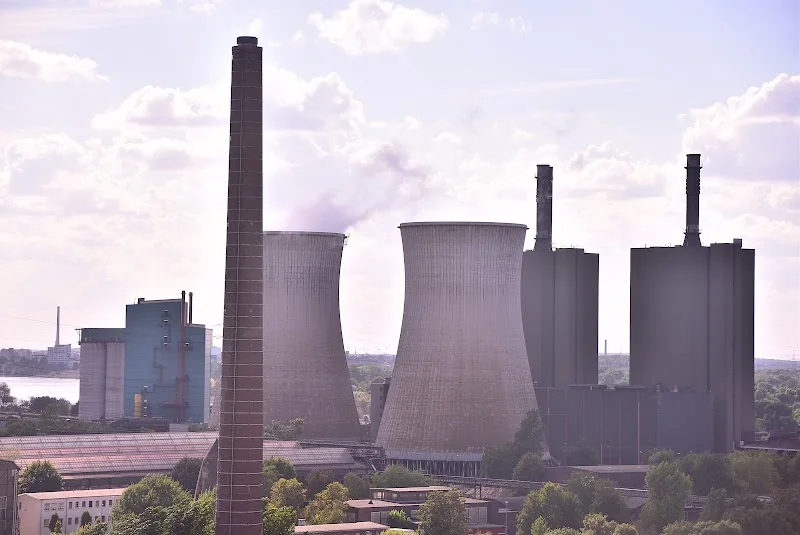
HKM describes its core service as the production of steel and semi-finished products for the processing industry. Particularly important is the vertically integrated structure of the plant. The website mentions its own coking plant, a sinter plant, and two blast furnaces where pig iron is produced. Additionally, HKM specializes in slab and round casting in various dimensions. This combination shows that the site unites several production stages under one roof: from raw materials and semi-finished products, an industrial material flow is created that is tailored to the requirements of the shareholders and their further processing. This is interesting for seekers because the terms slabs, round casting, coking plant, or blast furnace are often only known from specialized contexts, but HKM concretely connects them with a real site. The company also emphasizes that it continuously works on the processes for steel production and faces the challenges of metallurgy. In its external presentation, the sustainability aspect also plays a role: steel is described as a material that is 100 percent recyclable, and HKM points out that work is being done on the green transformation. This fits with a site that combines traditional heavy industry with modern environmental and efficiency issues. For SEO considerations, these features are important because they not only provide technical facts but also make unique selling points visible. An integrated steelworks with two blast furnace routes, its own coking plant, sinter plant, and a wide range of steel grades is not an interchangeable industrial area but a highly specialized production site. The official website also states that the shareholders further process the produced steel grades. This makes it clear that HKM acts as a supplier of raw materials for the steel industry and that its products play a role in further industrial chains. Those searching for photos or impressions often want to recognize exactly this dimension: the size of the facilities, the logic of the production steps, and the special atmosphere of a plant that has been shaping the southern part of Duisburg for decades. ([hkm.de](https://hkm.de/))
History and Shareholders of HKM
The history of HKM dates back, according to the company’s website, to the early 20th century, even though the company itself was only founded in 1990. The official history mentions the construction of a steelworks in Duisburg-Huckingen in 1909 by Schulz-Knaudt. In 1914, Mannesmann took over the plant, and in 1929, among other things, the commissioning of the sinter plant and blast furnaces 1 and 2 followed. Later milestones included the coking plant, the LD steelworks, blast furnace A and blast furnace B, slab 1, later investments in the coking plant, and new facilities. The founding of Krupp Mannesmann Steelworks as a company took place in 1990 after Krupp and Mannesmann merged their Duisburg steel sites. This gives the plant a dual identity: on one hand, a historical site with a long industrial tradition, and on the other hand, a modern company with today’s ownership and production structure. The shareholders are also clearly named: thyssenkrupp Steel Europe AG, Salzgitter Mannesmann GmbH, and Vallourec Tubes S.A.S. The history thus shows that HKM has emerged from significant names in the German and European steel industry and continues to function as a link between raw steel production and industrial processing. For people searching for North Data, company profiles, or background information, this historical and corporate legal classification is relevant. They want to know how the company originated, who is behind it, and how stable the industrial base of the site is. HKM answers these questions with a clear timeline, a reference to the long tradition in the southern part of Duisburg, and a description of current ownership structures. The history is therefore not only a retrospective but also an important SEO topic because it builds trust and places the site in a larger industrial context. Understanding today’s production figures, training offers, and the logistical size of the plant also reveals why historical development continues to play a central role in corporate communication. ([hkm.de](https://hkm.de/unternehmen/geschichte/?utm_source=openai))
Photos, Reviews, and Digital Contact Paths
The search terms related to photos, reviews, LinkedIn, Kununu, North Data, and email show that many users view HKM not only as a production site but as an information object on the web. They want a comprehensive picture: What does the plant look like, how reputable is the company, where can I find contact information, and how can I obtain official facts without detours? The HKM website provides a solid foundation for exactly this. The homepage offers insights into the company’s daily operations and refers to social media content, career paths, and current topics such as sustainability. At the same time, the contact page provides the most important direct contacts: the general email address post@hkm.de, the press address kommunikation@hkm.de, the telephone switchboard, and the location in Duisburg-Huckingen. This is particularly valuable for seekers because it bridges the gap between digital research and real plant visits. Those looking for photos will find visual impressions of the site and the industrial context on the official website; those needing an email get it directly; those interested in jobs reach the job portal; and those searching for Gate 3 or parking receive precise directions. This combination makes the site useful for applicants, suppliers, partners, and residents. From an SEO perspective, this is important because search queries related to reviews or company profiles often aim for quick trust-building. Users do not want to research for long but want to understand whether the site is genuine, active, and accessible. HKM meets this need with clear contact details, a transparent site description, and a career world that presents the operation as a modern employer. The use of platforms like LinkedIn, Kununu, or company directories is an additional research path for users; however, the official website remains the most reliable starting point for solid company data. Particularly for a large industrial company, this clarity is important because photos and short reviews alone cannot capture the complexity of a steelworks. Therefore, those wanting to classify HKM seriously should always use the official contact details, location information, and company facts as a basis. ([hkm.de](https://hkm.de/))
Sources:
Show moreShow less
Krupp Mannesmann Steelworks | Directions & Training
Krupp Mannesmann Steelworks, abbreviated as HKM, is not a classic event venue but a large industrial steel site in the southern part of Duisburg. This explains why people frequently search for images, reviews, career opportunities, training options, Gate 3, email contacts, or company facts: HKM represents a facility that appears as a visible industrial point in Duisburg's everyday life for many applicants, suppliers, neighbors, and industry enthusiasts. The official presentation describes HKM as an integrated steelworks that produces steel and semi-finished products for the processing industry. At the same time, the company emphasizes its role as a modern steel partner with technical development, quality standards, and environmental protection measures. The location data, plant structure, and production figures show that this is not a small factory but an extensive industrial unit with its own process chain and clear access points. For users seeking quick orientation, it is therefore particularly important: Where is HKM located exactly, how do you get there, which gate is intended for cars or trucks, and what makes the site particularly significant from a business perspective? The answers can be found directly in the official company information. HKM has been producing steel at the Duisburg-Huckingen site for many decades for internal processing and for the shareholders who further process the material in their own operations. The company itself refers to its long tradition since the early 20th century and its current role as a firmly established part of the steel industry. Therefore, those searching for HKM online are often looking for a comprehensive picture of industrial history, the world of work, directions, training, and company size. This comprehensive picture is reflected in the following description. ([hkm.de](https://hkm.de/))
Directions, Gate 3, and Parking at HKM
Directions are one of the most important search topics at HKM because the plant is a large, functionally organized industrial area with several access points. The official address is Ehinger Straße 200, 47259 Duisburg. It is particularly helpful for visitors that HKM clearly separates the paths to the individual plant gates: Gate 1 is open only for pedestrians, Gate 2 is the entrance for cars, and Gate 3 is designated for trucks on Mannesmannstraße. Additionally, the company mentions Gate 4 as a point for registrations; the parking spaces for registration are located on the right side in front of Gate 4. This is important for first-time visitors because orientation on a site of this size is not comparable to a regular street address. Therefore, those arriving by car do not simply use any gate, but follow the designated access exactly. HKM describes the access from the A3 coming via the Breitscheid interchange to the A524 towards Krefeld and after the Duisburg-Huckingen exit continues via the B288 or Krefelder Straße. From there, it continues via Uerdinger Straße or Mannesmannstraße to the respective gate. Coming from the A57, the route leads via the B57, the Rhine bridge, and the B288. For trucks, the orientation is even clearer: Gate 3 is located on Mannesmannstraße, about 1.5 kilometers after turning onto this street. Those who prefer public transport will also find a specific indication: Tram line 903 stops at the Mannesmann Gate 1. This shows that HKM is not only a production site but also a well-connected industrial complex. For seekers, this is relevant because the keywords surrounding Gate 3, parking, and directions reflect a genuine need for information: people want to know not only that HKM is located in Duisburg but also how to practically reach the plant and which entrance is intended for which purpose. ([hkm.de](https://hkm.de/kontakt/kontakt-anfahrt/))
Career and Training at HKM
A second strong search impulse around HKM concerns careers, training, and applications. This is logical, as a company with nearly 3,000 employees, its own job portal, and several training areas attracts not only industry enthusiasts but also skilled workers, students, and trainees. On the career page, HKM explicitly invites individuals to become part of the team and refers to the job portal for applications. The training area shows that the company specifically prepares young talent for technical professions and offers various entry points. The areas of metal & mechanics, electrical engineering, chemistry & laboratory, IT & computer science, and plant fire department are particularly visible. Additionally, there are dual study programs, including in electrical engineering and mechanical engineering. This combination is interesting for search engines and users because it targets not only traditional apprenticeships but also a connection between practical training and study. For example, in the metal & mechanics section, it is explained on the website that trainees learn to shape, connect metal parts, and maintain machines and systems. In the field of electrical engineering, it is about the networking and control of the plant, meaning the technical infrastructure that must function around the clock in a steelworks. IT & computer science is also part of the offering, showing that HKM thinks about modern production environments not only mechanically but also digitally. For seekers looking for training opportunities, it is also important that HKM lists seven training professions on its website. This makes the site a relevant employer for technical professions in the Duisburg area. The keywords related to careers, training, LinkedIn, or Kununu reflect this interest: users want not only facts about the plant but also an assessment as an employer, insights into job profiles, and a direct path to the application process. HKM meets this need with a clearly structured career world, a reference to the job portal, and a wide range of technical and industrial professions. ([hkm.de](https://hkm.de/karriere/))
Number of Employees, Revenue, and Plant Size
Among the most common search queries related to HKM are the number of employees, revenue, and plant size, which are exactly the key figures that can classify the economic significance of an industrial company. HKM states on its official website that it has nearly 3,000 employees, a revenue of around 3 billion euros, and an annual raw steel quantity of about 4.2 million tons. Additionally, the operating area is given as 2.5 square kilometers, along with a road network of 42 kilometers and a rail network of 85 kilometers. For a plant of this type, such figures are more than mere statistics: they describe the logistical and organizational depth of the site. A 42-kilometer-long road network on the plant site shows how structured the internal movement of materials, personnel, raw materials, and finished products must be. The 85 kilometers of rail network make it clear that rail logistics is a central factor. Equally relevant is the number of up to 2,000 types of steel that HKM produces according to its own representation. This is a strong sign of specialization and flexibility, as different customers and downstream production processes require different qualities and dimensions. The website also mentions around 1,500 external service providers and seven training professions. Together, this creates the image of an industrial company that functions not only as a pure production site but as a complex ecosystem with internal teams, external partners, logistics, maintenance, training, and industrial development. Therefore, those searching for the number of employees often want to know more than just a number: they want to understand how large the operation is, what economic significance it has, and how strongly it is anchored in the southern part of Duisburg. HKM itself provides this classification with its key figures. For SEO, this is particularly valuable because terms like number of employees, revenue, plant size, types of steel, and service providers cover real information needs and position the location page not only as a contact page but as a well-founded company page. ([hkm.de](https://hkm.de/))
Production, Coking Plant, and Blast Furnaces
HKM describes its core service as the production of steel and semi-finished products for the processing industry. Particularly important is the vertically integrated structure of the plant. The website mentions its own coking plant, a sinter plant, and two blast furnaces where pig iron is produced. Additionally, HKM specializes in slab and round casting in various dimensions. This combination shows that the site unites several production stages under one roof: from raw materials and semi-finished products, an industrial material flow is created that is tailored to the requirements of the shareholders and their further processing. This is interesting for seekers because the terms slabs, round casting, coking plant, or blast furnace are often only known from specialized contexts, but HKM concretely connects them with a real site. The company also emphasizes that it continuously works on the processes for steel production and faces the challenges of metallurgy. In its external presentation, the sustainability aspect also plays a role: steel is described as a material that is 100 percent recyclable, and HKM points out that work is being done on the green transformation. This fits with a site that combines traditional heavy industry with modern environmental and efficiency issues. For SEO considerations, these features are important because they not only provide technical facts but also make unique selling points visible. An integrated steelworks with two blast furnace routes, its own coking plant, sinter plant, and a wide range of steel grades is not an interchangeable industrial area but a highly specialized production site. The official website also states that the shareholders further process the produced steel grades. This makes it clear that HKM acts as a supplier of raw materials for the steel industry and that its products play a role in further industrial chains. Those searching for photos or impressions often want to recognize exactly this dimension: the size of the facilities, the logic of the production steps, and the special atmosphere of a plant that has been shaping the southern part of Duisburg for decades. ([hkm.de](https://hkm.de/))
History and Shareholders of HKM
The history of HKM dates back, according to the company’s website, to the early 20th century, even though the company itself was only founded in 1990. The official history mentions the construction of a steelworks in Duisburg-Huckingen in 1909 by Schulz-Knaudt. In 1914, Mannesmann took over the plant, and in 1929, among other things, the commissioning of the sinter plant and blast furnaces 1 and 2 followed. Later milestones included the coking plant, the LD steelworks, blast furnace A and blast furnace B, slab 1, later investments in the coking plant, and new facilities. The founding of Krupp Mannesmann Steelworks as a company took place in 1990 after Krupp and Mannesmann merged their Duisburg steel sites. This gives the plant a dual identity: on one hand, a historical site with a long industrial tradition, and on the other hand, a modern company with today’s ownership and production structure. The shareholders are also clearly named: thyssenkrupp Steel Europe AG, Salzgitter Mannesmann GmbH, and Vallourec Tubes S.A.S. The history thus shows that HKM has emerged from significant names in the German and European steel industry and continues to function as a link between raw steel production and industrial processing. For people searching for North Data, company profiles, or background information, this historical and corporate legal classification is relevant. They want to know how the company originated, who is behind it, and how stable the industrial base of the site is. HKM answers these questions with a clear timeline, a reference to the long tradition in the southern part of Duisburg, and a description of current ownership structures. The history is therefore not only a retrospective but also an important SEO topic because it builds trust and places the site in a larger industrial context. Understanding today’s production figures, training offers, and the logistical size of the plant also reveals why historical development continues to play a central role in corporate communication. ([hkm.de](https://hkm.de/unternehmen/geschichte/?utm_source=openai))
Photos, Reviews, and Digital Contact Paths
The search terms related to photos, reviews, LinkedIn, Kununu, North Data, and email show that many users view HKM not only as a production site but as an information object on the web. They want a comprehensive picture: What does the plant look like, how reputable is the company, where can I find contact information, and how can I obtain official facts without detours? The HKM website provides a solid foundation for exactly this. The homepage offers insights into the company’s daily operations and refers to social media content, career paths, and current topics such as sustainability. At the same time, the contact page provides the most important direct contacts: the general email address post@hkm.de, the press address kommunikation@hkm.de, the telephone switchboard, and the location in Duisburg-Huckingen. This is particularly valuable for seekers because it bridges the gap between digital research and real plant visits. Those looking for photos will find visual impressions of the site and the industrial context on the official website; those needing an email get it directly; those interested in jobs reach the job portal; and those searching for Gate 3 or parking receive precise directions. This combination makes the site useful for applicants, suppliers, partners, and residents. From an SEO perspective, this is important because search queries related to reviews or company profiles often aim for quick trust-building. Users do not want to research for long but want to understand whether the site is genuine, active, and accessible. HKM meets this need with clear contact details, a transparent site description, and a career world that presents the operation as a modern employer. The use of platforms like LinkedIn, Kununu, or company directories is an additional research path for users; however, the official website remains the most reliable starting point for solid company data. Particularly for a large industrial company, this clarity is important because photos and short reviews alone cannot capture the complexity of a steelworks. Therefore, those wanting to classify HKM seriously should always use the official contact details, location information, and company facts as a basis. ([hkm.de](https://hkm.de/))
Sources:
Krupp Mannesmann Steelworks | Directions & Training
Krupp Mannesmann Steelworks, abbreviated as HKM, is not a classic event venue but a large industrial steel site in the southern part of Duisburg. This explains why people frequently search for images, reviews, career opportunities, training options, Gate 3, email contacts, or company facts: HKM represents a facility that appears as a visible industrial point in Duisburg's everyday life for many applicants, suppliers, neighbors, and industry enthusiasts. The official presentation describes HKM as an integrated steelworks that produces steel and semi-finished products for the processing industry. At the same time, the company emphasizes its role as a modern steel partner with technical development, quality standards, and environmental protection measures. The location data, plant structure, and production figures show that this is not a small factory but an extensive industrial unit with its own process chain and clear access points. For users seeking quick orientation, it is therefore particularly important: Where is HKM located exactly, how do you get there, which gate is intended for cars or trucks, and what makes the site particularly significant from a business perspective? The answers can be found directly in the official company information. HKM has been producing steel at the Duisburg-Huckingen site for many decades for internal processing and for the shareholders who further process the material in their own operations. The company itself refers to its long tradition since the early 20th century and its current role as a firmly established part of the steel industry. Therefore, those searching for HKM online are often looking for a comprehensive picture of industrial history, the world of work, directions, training, and company size. This comprehensive picture is reflected in the following description. ([hkm.de](https://hkm.de/))
Directions, Gate 3, and Parking at HKM
Directions are one of the most important search topics at HKM because the plant is a large, functionally organized industrial area with several access points. The official address is Ehinger Straße 200, 47259 Duisburg. It is particularly helpful for visitors that HKM clearly separates the paths to the individual plant gates: Gate 1 is open only for pedestrians, Gate 2 is the entrance for cars, and Gate 3 is designated for trucks on Mannesmannstraße. Additionally, the company mentions Gate 4 as a point for registrations; the parking spaces for registration are located on the right side in front of Gate 4. This is important for first-time visitors because orientation on a site of this size is not comparable to a regular street address. Therefore, those arriving by car do not simply use any gate, but follow the designated access exactly. HKM describes the access from the A3 coming via the Breitscheid interchange to the A524 towards Krefeld and after the Duisburg-Huckingen exit continues via the B288 or Krefelder Straße. From there, it continues via Uerdinger Straße or Mannesmannstraße to the respective gate. Coming from the A57, the route leads via the B57, the Rhine bridge, and the B288. For trucks, the orientation is even clearer: Gate 3 is located on Mannesmannstraße, about 1.5 kilometers after turning onto this street. Those who prefer public transport will also find a specific indication: Tram line 903 stops at the Mannesmann Gate 1. This shows that HKM is not only a production site but also a well-connected industrial complex. For seekers, this is relevant because the keywords surrounding Gate 3, parking, and directions reflect a genuine need for information: people want to know not only that HKM is located in Duisburg but also how to practically reach the plant and which entrance is intended for which purpose. ([hkm.de](https://hkm.de/kontakt/kontakt-anfahrt/))
Career and Training at HKM
A second strong search impulse around HKM concerns careers, training, and applications. This is logical, as a company with nearly 3,000 employees, its own job portal, and several training areas attracts not only industry enthusiasts but also skilled workers, students, and trainees. On the career page, HKM explicitly invites individuals to become part of the team and refers to the job portal for applications. The training area shows that the company specifically prepares young talent for technical professions and offers various entry points. The areas of metal & mechanics, electrical engineering, chemistry & laboratory, IT & computer science, and plant fire department are particularly visible. Additionally, there are dual study programs, including in electrical engineering and mechanical engineering. This combination is interesting for search engines and users because it targets not only traditional apprenticeships but also a connection between practical training and study. For example, in the metal & mechanics section, it is explained on the website that trainees learn to shape, connect metal parts, and maintain machines and systems. In the field of electrical engineering, it is about the networking and control of the plant, meaning the technical infrastructure that must function around the clock in a steelworks. IT & computer science is also part of the offering, showing that HKM thinks about modern production environments not only mechanically but also digitally. For seekers looking for training opportunities, it is also important that HKM lists seven training professions on its website. This makes the site a relevant employer for technical professions in the Duisburg area. The keywords related to careers, training, LinkedIn, or Kununu reflect this interest: users want not only facts about the plant but also an assessment as an employer, insights into job profiles, and a direct path to the application process. HKM meets this need with a clearly structured career world, a reference to the job portal, and a wide range of technical and industrial professions. ([hkm.de](https://hkm.de/karriere/))
Number of Employees, Revenue, and Plant Size
Among the most common search queries related to HKM are the number of employees, revenue, and plant size, which are exactly the key figures that can classify the economic significance of an industrial company. HKM states on its official website that it has nearly 3,000 employees, a revenue of around 3 billion euros, and an annual raw steel quantity of about 4.2 million tons. Additionally, the operating area is given as 2.5 square kilometers, along with a road network of 42 kilometers and a rail network of 85 kilometers. For a plant of this type, such figures are more than mere statistics: they describe the logistical and organizational depth of the site. A 42-kilometer-long road network on the plant site shows how structured the internal movement of materials, personnel, raw materials, and finished products must be. The 85 kilometers of rail network make it clear that rail logistics is a central factor. Equally relevant is the number of up to 2,000 types of steel that HKM produces according to its own representation. This is a strong sign of specialization and flexibility, as different customers and downstream production processes require different qualities and dimensions. The website also mentions around 1,500 external service providers and seven training professions. Together, this creates the image of an industrial company that functions not only as a pure production site but as a complex ecosystem with internal teams, external partners, logistics, maintenance, training, and industrial development. Therefore, those searching for the number of employees often want to know more than just a number: they want to understand how large the operation is, what economic significance it has, and how strongly it is anchored in the southern part of Duisburg. HKM itself provides this classification with its key figures. For SEO, this is particularly valuable because terms like number of employees, revenue, plant size, types of steel, and service providers cover real information needs and position the location page not only as a contact page but as a well-founded company page. ([hkm.de](https://hkm.de/))
Production, Coking Plant, and Blast Furnaces
HKM describes its core service as the production of steel and semi-finished products for the processing industry. Particularly important is the vertically integrated structure of the plant. The website mentions its own coking plant, a sinter plant, and two blast furnaces where pig iron is produced. Additionally, HKM specializes in slab and round casting in various dimensions. This combination shows that the site unites several production stages under one roof: from raw materials and semi-finished products, an industrial material flow is created that is tailored to the requirements of the shareholders and their further processing. This is interesting for seekers because the terms slabs, round casting, coking plant, or blast furnace are often only known from specialized contexts, but HKM concretely connects them with a real site. The company also emphasizes that it continuously works on the processes for steel production and faces the challenges of metallurgy. In its external presentation, the sustainability aspect also plays a role: steel is described as a material that is 100 percent recyclable, and HKM points out that work is being done on the green transformation. This fits with a site that combines traditional heavy industry with modern environmental and efficiency issues. For SEO considerations, these features are important because they not only provide technical facts but also make unique selling points visible. An integrated steelworks with two blast furnace routes, its own coking plant, sinter plant, and a wide range of steel grades is not an interchangeable industrial area but a highly specialized production site. The official website also states that the shareholders further process the produced steel grades. This makes it clear that HKM acts as a supplier of raw materials for the steel industry and that its products play a role in further industrial chains. Those searching for photos or impressions often want to recognize exactly this dimension: the size of the facilities, the logic of the production steps, and the special atmosphere of a plant that has been shaping the southern part of Duisburg for decades. ([hkm.de](https://hkm.de/))
History and Shareholders of HKM
The history of HKM dates back, according to the company’s website, to the early 20th century, even though the company itself was only founded in 1990. The official history mentions the construction of a steelworks in Duisburg-Huckingen in 1909 by Schulz-Knaudt. In 1914, Mannesmann took over the plant, and in 1929, among other things, the commissioning of the sinter plant and blast furnaces 1 and 2 followed. Later milestones included the coking plant, the LD steelworks, blast furnace A and blast furnace B, slab 1, later investments in the coking plant, and new facilities. The founding of Krupp Mannesmann Steelworks as a company took place in 1990 after Krupp and Mannesmann merged their Duisburg steel sites. This gives the plant a dual identity: on one hand, a historical site with a long industrial tradition, and on the other hand, a modern company with today’s ownership and production structure. The shareholders are also clearly named: thyssenkrupp Steel Europe AG, Salzgitter Mannesmann GmbH, and Vallourec Tubes S.A.S. The history thus shows that HKM has emerged from significant names in the German and European steel industry and continues to function as a link between raw steel production and industrial processing. For people searching for North Data, company profiles, or background information, this historical and corporate legal classification is relevant. They want to know how the company originated, who is behind it, and how stable the industrial base of the site is. HKM answers these questions with a clear timeline, a reference to the long tradition in the southern part of Duisburg, and a description of current ownership structures. The history is therefore not only a retrospective but also an important SEO topic because it builds trust and places the site in a larger industrial context. Understanding today’s production figures, training offers, and the logistical size of the plant also reveals why historical development continues to play a central role in corporate communication. ([hkm.de](https://hkm.de/unternehmen/geschichte/?utm_source=openai))
Photos, Reviews, and Digital Contact Paths
The search terms related to photos, reviews, LinkedIn, Kununu, North Data, and email show that many users view HKM not only as a production site but as an information object on the web. They want a comprehensive picture: What does the plant look like, how reputable is the company, where can I find contact information, and how can I obtain official facts without detours? The HKM website provides a solid foundation for exactly this. The homepage offers insights into the company’s daily operations and refers to social media content, career paths, and current topics such as sustainability. At the same time, the contact page provides the most important direct contacts: the general email address post@hkm.de, the press address kommunikation@hkm.de, the telephone switchboard, and the location in Duisburg-Huckingen. This is particularly valuable for seekers because it bridges the gap between digital research and real plant visits. Those looking for photos will find visual impressions of the site and the industrial context on the official website; those needing an email get it directly; those interested in jobs reach the job portal; and those searching for Gate 3 or parking receive precise directions. This combination makes the site useful for applicants, suppliers, partners, and residents. From an SEO perspective, this is important because search queries related to reviews or company profiles often aim for quick trust-building. Users do not want to research for long but want to understand whether the site is genuine, active, and accessible. HKM meets this need with clear contact details, a transparent site description, and a career world that presents the operation as a modern employer. The use of platforms like LinkedIn, Kununu, or company directories is an additional research path for users; however, the official website remains the most reliable starting point for solid company data. Particularly for a large industrial company, this clarity is important because photos and short reviews alone cannot capture the complexity of a steelworks. Therefore, those wanting to classify HKM seriously should always use the official contact details, location information, and company facts as a basis. ([hkm.de](https://hkm.de/))
Sources:
Upcoming Events
No events found
Frequently Asked Questions
Reviews
Veenit Panchal
19. January 2017
Power Plant.
Eduard Dehgraf
4. October 2017
The tour of the steelworks is definitely worth recommending. Besides the impressive factory, it was especially the incredibly authentic guide that made it worthwhile. The history and daily life of the steelworkers was shared with us not by an outsider, but by someone who was part of this story and still is today. A thousand thanks! Visit date: 30.09.17 P.S. We would be very happy if the gentleman (on the left; who conducted the tour) also pays attention to this message!
KatzeKatze
16. June 2025
Is it necessary for the trains to honk so often, especially in the middle of the night? It can't be right that they honk at least 20 times between 1 and 2.
Maurice
22. June 2023
As a supplier, you're completely lost here. I was supposed to be there at 7:00 for unloading, entering through gate 3 was no problem. But finding the unloading point is an art. No one answers the phone, and you just stand around because hardly anything is signposted. So I will refuse the next deliveries because my time is too precious!
Arek Święcicki “Arek Sandomierz”
9. June 2023
For unloading, you usually have to go to gate 3, so here - 51.362275,6.706818. At the gate, they check the documents and instruct you to go straight to the scale. You drive onto the scale and go to the office, where you receive the documents and they tell you where to unload. The unloading process is very quick. Afterwards, you go to the scale, to the office, and to the exit gate, where they check the vehicle's registration number against the documents.