
Franz-Haniel-Platz 3, Homberg-Ruhrort-Baerl
Franz-Haniel-Platz 3, 47119 Duisburg, Germany
Haniel Museum | Opening Hours & Tours
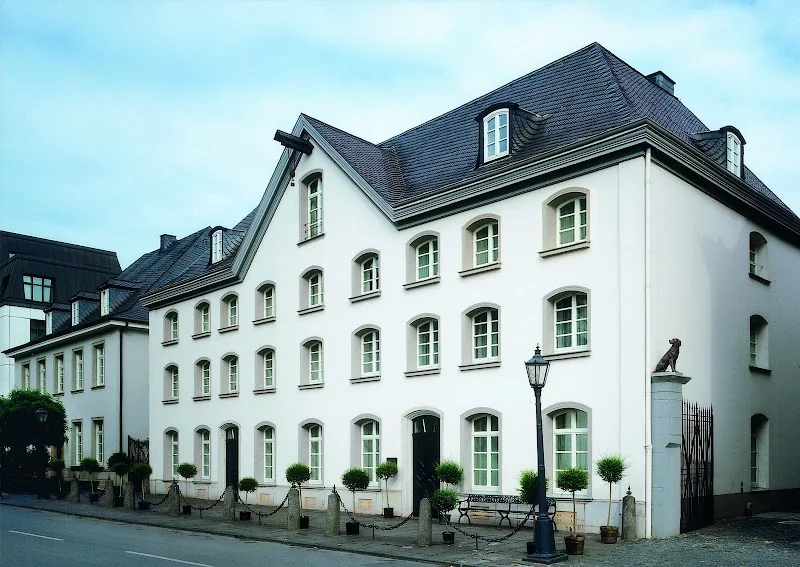
The Haniel Museum in Duisburg-Ruhrort is not an ordinary museum, but a place where corporate history, city history, and the development of the Ruhr area merge very directly. Those who find their way to Franz-Haniel-Platz enter a historic environment closely connected with the Haniel family and the beginnings of a significant German family business. In the old warehouse, visitors experience on three floors how a local trading company developed over time into an internationally active corporate group. Original documents, historical furniture, and carefully restored living and working spaces are on display, preserving the character of the place and vividly illustrating its history. Because the museum consciously remains small and personal, a dense atmosphere is created where every detail matters. This makes the visit particularly interesting for anyone interested in industrial culture, economic history, Ruhrort, or the history of the Haniel entrepreneurial family. At the same time, it is a place for visitors who want to experience not just exhibits but a concrete historical site. The house conveys how closely economic change, family history, and the development of an entire district can be interconnected. ([duisburg.de](https://www.duisburg.de/tourismus/stadt_erleben/museen/haniel-museum))
Haniel Museum Opening Hours and Tours
When planning the visit, the most important information is quickly clear: The Haniel Museum cannot be visited freely and at any time, but only as part of a guided tour. According to the Duisburg city portal, guided 90-minute tours take place on every third Thursday of the month, except in August. The two daily times are at 3:00 PM and 5:00 PM. The official Haniel information also confirms that the museum has been accessible to visitor groups since February 2026. In practice, this means: Those who want to secure a spot should plan early, as there are only a few fixed dates each month, and demand can rise quickly, especially for smaller groups. The tours are intentionally compact and allow for experiencing the historical rooms without haste. It is also noted in the official press release that a maximum group size of 20 people is mentioned. For visitors with children, it is also important that the city portal mentions a discount for children up to and including 13 years. So, if you plan the visit as a family outing or a small group tour, you should check the dates in good time and not postpone the booking. The structure of the museum is thus clearly designed for a guided, focused, and personal conveyance, which underscores the character of the house well. ([duisburg.de](https://www.duisburg.de/tourismus/stadt_erleben/museen/haniel-museum))
The nature of the opening is also part of the special experience. Instead of an open tour with arbitrary duration, the Haniel Museum focuses on guided exploration through the historic building. This makes sense because the rooms in the warehouse are not large, and the history of the house is closely linked to the individual floors, furniture, and documents. Visitors benefit from a structured tour that brings the most important stations of the place into a comprehensible order. Those who inform themselves in advance can better combine the appointment with a journey to Duisburg-Ruhrort, a stay at the Haniel Campus, or a visit to the district. This makes the tour not just a museum visit but a well-planned cultural appointment. Because the tours only take place once a month, the visit also has a certain rarity value. This increases the appeal for all those specifically searching for Haniel Museum opening hours, Haniel Museum tours, or Haniel Museum tickets. The limited dates ensure a consciously decelerated experience that is much closer to an exclusive tour than to a classic museum tour. ([duisburg.de](https://www.duisburg.de/tourismus/stadt_erleben/museen/haniel-museum))
Directions and Parking at the Haniel Museum in Duisburg-Ruhrort
The Haniel Museum is located at Franz-Haniel-Platz 3 in 47119 Duisburg, thus in Duisburg-Ruhrort and in a district that is strongly shaped by harbor, shipping, and industrial history. For those arriving by car, Haniel provides several clear routes. Via the A42, you go to the Duisburg-Nord interchange and then continue on the A59 towards Duisburg, exit 8 Duisburg-Ruhrort/Obermeiderich. From there, the route leads towards Ruhrort until the roundabout, then further via Hafenstraße and Dr.-Hammacher-Straße to the outer gate of Franz-Haniel-Platz. Those coming via the A40 use exit 12 Duisburg-Häfen/Ruhrort and also follow the signs towards Ruhrort until the roundabout and further to Dr.-Hammacher-Straße. Also from the direction of Moers and Duisburg-Homberg, Haniel describes an arrival via B60 or L140 with subsequent travel via Rheindeichstraße and Hafenstraße. These specific details show that the museum is well connected within the urban and traffic structure, while still remaining a destination in a rather historical harbor area. For visitors, this is helpful as they can prepare their route well and do not have to search for the correct access on site. ([haniel.de](https://www.haniel.de/kontakt/))
There is also clear, official information regarding parking: Parking facilities are available at Franz-Haniel-Platz. For those arriving by public transport, the Duisburg city portal recommends taking the subway or tram line 901 from the main station towards Obermarxloh to the Tausendfensterhaus stop. From there, the route leads on foot to the left into Dr.-Hammacher-Straße and further to the outer gate of Franz-Haniel-Platz. This is particularly useful for guests arriving without a car or who want to combine their visit with a trip through the northern part of Duisburg. Additionally, the city portal mentions another access to the square via the outer gate on Dr. Hammacher-Straße or through the small gate on Hafenstraße opposite house number 5. This may sound unremarkable, but in practice, it is very important because historical sites often have multiple accesses, and the routing on site is not always self-explanatory. Those who check the access and parking in advance can avoid stress and focus more on the actual museum visit. For the search intent Haniel Museum directions or Haniel Museum parking, the official information thus provides a very reliable basis. ([haniel.de](https://www.haniel.de/kontakt/))
Exhibition, Warehouse, and History of the Haniel Museum
The heart of the Haniel Museum is the historic warehouse, whose roots date back to 1756. The official Haniel press release explains that the building was erected outside the gates of Ruhrort and served in the 18th century both as a storage facility for colonial goods such as spices, tobacco, coffee, and cotton, as well as a residential and office building for the Haniel family. It was in this building that Franz Haniel was born in 1779. Thus, the house is much more than just an exhibition space; it is itself a central historical document. The history of the building can be traced back to Aletta Haniel, née Noot, and her father Jan Willem Noot. According to corporate history, the family took over the Ruhrorter warehouse in 1772 and operated it as a trading house from then on. Later, from this origin, a corporate development emerged that shaped Haniel over generations. Therefore, when visiting the museum, one does not just enter an exhibition space but the birthplace and starting environment of a long entrepreneurial history. This connection of an authentic place and historical narrative is what makes the house particularly appealing. While many museums reconstruct history, the Haniel Museum shows history at the original site. This makes the conveyance tangible, spatially comprehensible, and emotionally much stronger. ([haniel.de](https://www.haniel.de/fileadmin/content/pressemeldungen/20260127_Haniel_PM__DE_.pdf))
The exhibition itself tells the development from a local trading company to an internationally active corporate group and simultaneously shows how closely Haniel's history is connected to the economic and industrial history of the Ruhr area. The Duisburg city portal emphasizes that the museum documents how Haniel drove industrialization and operated at the Ruhrort location. This connection is interesting for visitors as it places the local family history in a larger regional context. On three floors, original documents, historical furniture, and restored living and working spaces are presented. This is not an abstract corporate museum, but a house that shows through concrete objects how the world of work, living, trade, and entrepreneurship has changed over the centuries. The official description also mentions more than 270 years of corporate and Ruhr area history. This is a remarkably long period that illustrates the historical depth of this place. Those interested in Franz Haniel Museum, Haniel exhibition, or Haniel history will find here not a superficial summary but a place where economic change, regional identity, and family biography closely overlap. ([duisburg.de](https://www.duisburg.de/tourismus/stadt_erleben/museen/haniel-museum))
Especially impressive is that the exhibition not only provides information but also works through the original rooms themselves. Restored living and working spaces, historical furniture, and old documents create an atmosphere that preserves the historical character of the building. This creates access to history that relies less on grand staging and more on authenticity and materiality. One does not just see data and connections but moves through spaces where trade, family, and business came together for a long time. This mix makes the Haniel Museum an exciting destination for people who do not just understand industrial culture as a buzzword but as a lived historical experience. The connection to Ruhrort's harbor and trading history is central, as the museum also reflects the development of the district. In this respect, the house is simultaneously a family museum, a corporate museum, and a piece of Ruhr area archaeology in indoor spaces. Those looking for a place where the beginnings of a significant company remain visible directly in the building itself will find a very convincing example in the Haniel Museum. ([duisburg.de](https://www.duisburg.de/tourismus/stadt_erleben/museen/haniel-museum))
Original Rooms, Haniel Campus, and Visitor Experience
A visit to the Haniel Museum can be well combined with the Haniel Campus, as the Duisburg city portal explicitly points out that visitors can combine their museum experience with lunch at the Haniel Campus restaurant. There, lunch as well as coffee and cake are available from 11:45 AM to 2:00 PM, with a cozy outdoor area additionally in the summer. This is practical for all who do not want to limit their outing to the tour but wish to spend some time on site before or after the tour. Especially in the context of Ruhrort, whose character is shaped by work, harbor, and change, such a complementary place fits very well. It turns the visit into a half-day outing and offers the opportunity to let the impressions of the tour resonate in peace. The campus thus complements the museum not merely as an extra but as a meaningful extension of the place. Those attending a tour in the afternoon can combine their stay before or after with a meal, coffee, or a walk in the surroundings. This also strengthens the impression that Haniel not only preserves a historical place here but integrates it into a current visitor experience. ([duisburg.de](https://www.duisburg.de/tourismus/stadt_erleben/museen/haniel-museum))
It is also practically important that the Haniel Museum is not barrier-free. This information is clearly stated on the city portal and should be taken into account when planning. Equally important is the note that animals are not allowed, except for assistance and guide dogs. For families, small groups, and individual visitors, the museum is therefore primarily suitable for a consciously prepared participation. Those organizing the visit should also consider that the house is designed for smaller groups and guided processes. This fits with the narrow historical rooms and the limited group size. Precisely for this reason, the tour is so intimate and detailed. Instead of a large audience, one moves in a manageable framework where the tour can respond to the rooms. For searching visitors looking for Haniel Museum Ruhrort, Haniel Museum Duisburg Ruhrort, or Haniel Museum directions, this is an important part of the overall information. Because not only the place itself but also the visit logic differs from classical museums. The Haniel Museum is consciously small, historical, and guided. Those who appreciate exactly this form of experience are offered a very clear and authentic museum form here. ([duisburg.de](https://www.duisburg.de/tourismus/stadt_erleben/museen/haniel-museum))
Tickets, Group Size, and Practical Notes
For ticket planning, it is crucial that the visit is only possible through the official booking channel of the city of Duisburg. The information about the Haniel Museum is bundled on the Duisburg tourism page, where dates, notes, and booking methods are also provided. The official press release from Haniel adds that tours are generally designed for groups of up to 20 people. This is helpful because it can be inferred that a small and personal atmosphere is intended. Those wishing to come with a larger group should therefore plan particularly early and not assume that a spontaneous appointment will be readily available. The timing of the tours also suggests organizing the visit in advance. Since the tours only take place on a fixed date each month and are suspended in August, the Haniel Museum is among the places where timely reservation is practically indispensable. For visitors with children or for groups wishing to combine the outing with meals and travel, good planning is therefore not only pleasant but actually necessary. This is especially true if one wants to incorporate the visit specifically as part of a Ruhr area tour or a cultural week. ([duisburg.de](https://www.duisburg.de/tourismus/stadt_erleben/museen/haniel-museum))
Those visiting the Haniel Museum should also understand the appointment as a curated experience. The tour is not simply a normal museum visit but a guided tour through a historic building with a clear temporal structure. The 90 minutes provide enough space for explanations, impressions, and questions, but they are also compact enough to focus attention on the essentials. Especially with topics such as the history of the Haniel family, the economic development of Ruhrort, and the industrialization of the Ruhr area, this form is very appropriate. It brings historical facts, architecture, and original rooms into a balanced relationship. Thus, the house fulfills exactly the search intents behind terms like Haniel Museum tickets, Haniel Museum tours, Haniel Museum opening hours, and Haniel exhibition. Those who prepare for this receive a calm, focused, and content-rich visit in a special historical environment. As a result, the Haniel Museum is particularly recommended for guests who love authentic places, prefer concrete history over abstract presentation, and wish to trace the development of a well-known family business at its origin. ([duisburg.de](https://www.duisburg.de/tourismus/stadt_erleben/museen/haniel-museum))
Sources:
Show moreShow less
Haniel Museum | Opening Hours & Tours
The Haniel Museum in Duisburg-Ruhrort is not an ordinary museum, but a place where corporate history, city history, and the development of the Ruhr area merge very directly. Those who find their way to Franz-Haniel-Platz enter a historic environment closely connected with the Haniel family and the beginnings of a significant German family business. In the old warehouse, visitors experience on three floors how a local trading company developed over time into an internationally active corporate group. Original documents, historical furniture, and carefully restored living and working spaces are on display, preserving the character of the place and vividly illustrating its history. Because the museum consciously remains small and personal, a dense atmosphere is created where every detail matters. This makes the visit particularly interesting for anyone interested in industrial culture, economic history, Ruhrort, or the history of the Haniel entrepreneurial family. At the same time, it is a place for visitors who want to experience not just exhibits but a concrete historical site. The house conveys how closely economic change, family history, and the development of an entire district can be interconnected. ([duisburg.de](https://www.duisburg.de/tourismus/stadt_erleben/museen/haniel-museum))
Haniel Museum Opening Hours and Tours
When planning the visit, the most important information is quickly clear: The Haniel Museum cannot be visited freely and at any time, but only as part of a guided tour. According to the Duisburg city portal, guided 90-minute tours take place on every third Thursday of the month, except in August. The two daily times are at 3:00 PM and 5:00 PM. The official Haniel information also confirms that the museum has been accessible to visitor groups since February 2026. In practice, this means: Those who want to secure a spot should plan early, as there are only a few fixed dates each month, and demand can rise quickly, especially for smaller groups. The tours are intentionally compact and allow for experiencing the historical rooms without haste. It is also noted in the official press release that a maximum group size of 20 people is mentioned. For visitors with children, it is also important that the city portal mentions a discount for children up to and including 13 years. So, if you plan the visit as a family outing or a small group tour, you should check the dates in good time and not postpone the booking. The structure of the museum is thus clearly designed for a guided, focused, and personal conveyance, which underscores the character of the house well. ([duisburg.de](https://www.duisburg.de/tourismus/stadt_erleben/museen/haniel-museum))
The nature of the opening is also part of the special experience. Instead of an open tour with arbitrary duration, the Haniel Museum focuses on guided exploration through the historic building. This makes sense because the rooms in the warehouse are not large, and the history of the house is closely linked to the individual floors, furniture, and documents. Visitors benefit from a structured tour that brings the most important stations of the place into a comprehensible order. Those who inform themselves in advance can better combine the appointment with a journey to Duisburg-Ruhrort, a stay at the Haniel Campus, or a visit to the district. This makes the tour not just a museum visit but a well-planned cultural appointment. Because the tours only take place once a month, the visit also has a certain rarity value. This increases the appeal for all those specifically searching for Haniel Museum opening hours, Haniel Museum tours, or Haniel Museum tickets. The limited dates ensure a consciously decelerated experience that is much closer to an exclusive tour than to a classic museum tour. ([duisburg.de](https://www.duisburg.de/tourismus/stadt_erleben/museen/haniel-museum))
Directions and Parking at the Haniel Museum in Duisburg-Ruhrort
The Haniel Museum is located at Franz-Haniel-Platz 3 in 47119 Duisburg, thus in Duisburg-Ruhrort and in a district that is strongly shaped by harbor, shipping, and industrial history. For those arriving by car, Haniel provides several clear routes. Via the A42, you go to the Duisburg-Nord interchange and then continue on the A59 towards Duisburg, exit 8 Duisburg-Ruhrort/Obermeiderich. From there, the route leads towards Ruhrort until the roundabout, then further via Hafenstraße and Dr.-Hammacher-Straße to the outer gate of Franz-Haniel-Platz. Those coming via the A40 use exit 12 Duisburg-Häfen/Ruhrort and also follow the signs towards Ruhrort until the roundabout and further to Dr.-Hammacher-Straße. Also from the direction of Moers and Duisburg-Homberg, Haniel describes an arrival via B60 or L140 with subsequent travel via Rheindeichstraße and Hafenstraße. These specific details show that the museum is well connected within the urban and traffic structure, while still remaining a destination in a rather historical harbor area. For visitors, this is helpful as they can prepare their route well and do not have to search for the correct access on site. ([haniel.de](https://www.haniel.de/kontakt/))
There is also clear, official information regarding parking: Parking facilities are available at Franz-Haniel-Platz. For those arriving by public transport, the Duisburg city portal recommends taking the subway or tram line 901 from the main station towards Obermarxloh to the Tausendfensterhaus stop. From there, the route leads on foot to the left into Dr.-Hammacher-Straße and further to the outer gate of Franz-Haniel-Platz. This is particularly useful for guests arriving without a car or who want to combine their visit with a trip through the northern part of Duisburg. Additionally, the city portal mentions another access to the square via the outer gate on Dr. Hammacher-Straße or through the small gate on Hafenstraße opposite house number 5. This may sound unremarkable, but in practice, it is very important because historical sites often have multiple accesses, and the routing on site is not always self-explanatory. Those who check the access and parking in advance can avoid stress and focus more on the actual museum visit. For the search intent Haniel Museum directions or Haniel Museum parking, the official information thus provides a very reliable basis. ([haniel.de](https://www.haniel.de/kontakt/))
Exhibition, Warehouse, and History of the Haniel Museum
The heart of the Haniel Museum is the historic warehouse, whose roots date back to 1756. The official Haniel press release explains that the building was erected outside the gates of Ruhrort and served in the 18th century both as a storage facility for colonial goods such as spices, tobacco, coffee, and cotton, as well as a residential and office building for the Haniel family. It was in this building that Franz Haniel was born in 1779. Thus, the house is much more than just an exhibition space; it is itself a central historical document. The history of the building can be traced back to Aletta Haniel, née Noot, and her father Jan Willem Noot. According to corporate history, the family took over the Ruhrorter warehouse in 1772 and operated it as a trading house from then on. Later, from this origin, a corporate development emerged that shaped Haniel over generations. Therefore, when visiting the museum, one does not just enter an exhibition space but the birthplace and starting environment of a long entrepreneurial history. This connection of an authentic place and historical narrative is what makes the house particularly appealing. While many museums reconstruct history, the Haniel Museum shows history at the original site. This makes the conveyance tangible, spatially comprehensible, and emotionally much stronger. ([haniel.de](https://www.haniel.de/fileadmin/content/pressemeldungen/20260127_Haniel_PM__DE_.pdf))
The exhibition itself tells the development from a local trading company to an internationally active corporate group and simultaneously shows how closely Haniel's history is connected to the economic and industrial history of the Ruhr area. The Duisburg city portal emphasizes that the museum documents how Haniel drove industrialization and operated at the Ruhrort location. This connection is interesting for visitors as it places the local family history in a larger regional context. On three floors, original documents, historical furniture, and restored living and working spaces are presented. This is not an abstract corporate museum, but a house that shows through concrete objects how the world of work, living, trade, and entrepreneurship has changed over the centuries. The official description also mentions more than 270 years of corporate and Ruhr area history. This is a remarkably long period that illustrates the historical depth of this place. Those interested in Franz Haniel Museum, Haniel exhibition, or Haniel history will find here not a superficial summary but a place where economic change, regional identity, and family biography closely overlap. ([duisburg.de](https://www.duisburg.de/tourismus/stadt_erleben/museen/haniel-museum))
Especially impressive is that the exhibition not only provides information but also works through the original rooms themselves. Restored living and working spaces, historical furniture, and old documents create an atmosphere that preserves the historical character of the building. This creates access to history that relies less on grand staging and more on authenticity and materiality. One does not just see data and connections but moves through spaces where trade, family, and business came together for a long time. This mix makes the Haniel Museum an exciting destination for people who do not just understand industrial culture as a buzzword but as a lived historical experience. The connection to Ruhrort's harbor and trading history is central, as the museum also reflects the development of the district. In this respect, the house is simultaneously a family museum, a corporate museum, and a piece of Ruhr area archaeology in indoor spaces. Those looking for a place where the beginnings of a significant company remain visible directly in the building itself will find a very convincing example in the Haniel Museum. ([duisburg.de](https://www.duisburg.de/tourismus/stadt_erleben/museen/haniel-museum))
Original Rooms, Haniel Campus, and Visitor Experience
A visit to the Haniel Museum can be well combined with the Haniel Campus, as the Duisburg city portal explicitly points out that visitors can combine their museum experience with lunch at the Haniel Campus restaurant. There, lunch as well as coffee and cake are available from 11:45 AM to 2:00 PM, with a cozy outdoor area additionally in the summer. This is practical for all who do not want to limit their outing to the tour but wish to spend some time on site before or after the tour. Especially in the context of Ruhrort, whose character is shaped by work, harbor, and change, such a complementary place fits very well. It turns the visit into a half-day outing and offers the opportunity to let the impressions of the tour resonate in peace. The campus thus complements the museum not merely as an extra but as a meaningful extension of the place. Those attending a tour in the afternoon can combine their stay before or after with a meal, coffee, or a walk in the surroundings. This also strengthens the impression that Haniel not only preserves a historical place here but integrates it into a current visitor experience. ([duisburg.de](https://www.duisburg.de/tourismus/stadt_erleben/museen/haniel-museum))
It is also practically important that the Haniel Museum is not barrier-free. This information is clearly stated on the city portal and should be taken into account when planning. Equally important is the note that animals are not allowed, except for assistance and guide dogs. For families, small groups, and individual visitors, the museum is therefore primarily suitable for a consciously prepared participation. Those organizing the visit should also consider that the house is designed for smaller groups and guided processes. This fits with the narrow historical rooms and the limited group size. Precisely for this reason, the tour is so intimate and detailed. Instead of a large audience, one moves in a manageable framework where the tour can respond to the rooms. For searching visitors looking for Haniel Museum Ruhrort, Haniel Museum Duisburg Ruhrort, or Haniel Museum directions, this is an important part of the overall information. Because not only the place itself but also the visit logic differs from classical museums. The Haniel Museum is consciously small, historical, and guided. Those who appreciate exactly this form of experience are offered a very clear and authentic museum form here. ([duisburg.de](https://www.duisburg.de/tourismus/stadt_erleben/museen/haniel-museum))
Tickets, Group Size, and Practical Notes
For ticket planning, it is crucial that the visit is only possible through the official booking channel of the city of Duisburg. The information about the Haniel Museum is bundled on the Duisburg tourism page, where dates, notes, and booking methods are also provided. The official press release from Haniel adds that tours are generally designed for groups of up to 20 people. This is helpful because it can be inferred that a small and personal atmosphere is intended. Those wishing to come with a larger group should therefore plan particularly early and not assume that a spontaneous appointment will be readily available. The timing of the tours also suggests organizing the visit in advance. Since the tours only take place on a fixed date each month and are suspended in August, the Haniel Museum is among the places where timely reservation is practically indispensable. For visitors with children or for groups wishing to combine the outing with meals and travel, good planning is therefore not only pleasant but actually necessary. This is especially true if one wants to incorporate the visit specifically as part of a Ruhr area tour or a cultural week. ([duisburg.de](https://www.duisburg.de/tourismus/stadt_erleben/museen/haniel-museum))
Those visiting the Haniel Museum should also understand the appointment as a curated experience. The tour is not simply a normal museum visit but a guided tour through a historic building with a clear temporal structure. The 90 minutes provide enough space for explanations, impressions, and questions, but they are also compact enough to focus attention on the essentials. Especially with topics such as the history of the Haniel family, the economic development of Ruhrort, and the industrialization of the Ruhr area, this form is very appropriate. It brings historical facts, architecture, and original rooms into a balanced relationship. Thus, the house fulfills exactly the search intents behind terms like Haniel Museum tickets, Haniel Museum tours, Haniel Museum opening hours, and Haniel exhibition. Those who prepare for this receive a calm, focused, and content-rich visit in a special historical environment. As a result, the Haniel Museum is particularly recommended for guests who love authentic places, prefer concrete history over abstract presentation, and wish to trace the development of a well-known family business at its origin. ([duisburg.de](https://www.duisburg.de/tourismus/stadt_erleben/museen/haniel-museum))
Sources:
Haniel Museum | Opening Hours & Tours
The Haniel Museum in Duisburg-Ruhrort is not an ordinary museum, but a place where corporate history, city history, and the development of the Ruhr area merge very directly. Those who find their way to Franz-Haniel-Platz enter a historic environment closely connected with the Haniel family and the beginnings of a significant German family business. In the old warehouse, visitors experience on three floors how a local trading company developed over time into an internationally active corporate group. Original documents, historical furniture, and carefully restored living and working spaces are on display, preserving the character of the place and vividly illustrating its history. Because the museum consciously remains small and personal, a dense atmosphere is created where every detail matters. This makes the visit particularly interesting for anyone interested in industrial culture, economic history, Ruhrort, or the history of the Haniel entrepreneurial family. At the same time, it is a place for visitors who want to experience not just exhibits but a concrete historical site. The house conveys how closely economic change, family history, and the development of an entire district can be interconnected. ([duisburg.de](https://www.duisburg.de/tourismus/stadt_erleben/museen/haniel-museum))
Haniel Museum Opening Hours and Tours
When planning the visit, the most important information is quickly clear: The Haniel Museum cannot be visited freely and at any time, but only as part of a guided tour. According to the Duisburg city portal, guided 90-minute tours take place on every third Thursday of the month, except in August. The two daily times are at 3:00 PM and 5:00 PM. The official Haniel information also confirms that the museum has been accessible to visitor groups since February 2026. In practice, this means: Those who want to secure a spot should plan early, as there are only a few fixed dates each month, and demand can rise quickly, especially for smaller groups. The tours are intentionally compact and allow for experiencing the historical rooms without haste. It is also noted in the official press release that a maximum group size of 20 people is mentioned. For visitors with children, it is also important that the city portal mentions a discount for children up to and including 13 years. So, if you plan the visit as a family outing or a small group tour, you should check the dates in good time and not postpone the booking. The structure of the museum is thus clearly designed for a guided, focused, and personal conveyance, which underscores the character of the house well. ([duisburg.de](https://www.duisburg.de/tourismus/stadt_erleben/museen/haniel-museum))
The nature of the opening is also part of the special experience. Instead of an open tour with arbitrary duration, the Haniel Museum focuses on guided exploration through the historic building. This makes sense because the rooms in the warehouse are not large, and the history of the house is closely linked to the individual floors, furniture, and documents. Visitors benefit from a structured tour that brings the most important stations of the place into a comprehensible order. Those who inform themselves in advance can better combine the appointment with a journey to Duisburg-Ruhrort, a stay at the Haniel Campus, or a visit to the district. This makes the tour not just a museum visit but a well-planned cultural appointment. Because the tours only take place once a month, the visit also has a certain rarity value. This increases the appeal for all those specifically searching for Haniel Museum opening hours, Haniel Museum tours, or Haniel Museum tickets. The limited dates ensure a consciously decelerated experience that is much closer to an exclusive tour than to a classic museum tour. ([duisburg.de](https://www.duisburg.de/tourismus/stadt_erleben/museen/haniel-museum))
Directions and Parking at the Haniel Museum in Duisburg-Ruhrort
The Haniel Museum is located at Franz-Haniel-Platz 3 in 47119 Duisburg, thus in Duisburg-Ruhrort and in a district that is strongly shaped by harbor, shipping, and industrial history. For those arriving by car, Haniel provides several clear routes. Via the A42, you go to the Duisburg-Nord interchange and then continue on the A59 towards Duisburg, exit 8 Duisburg-Ruhrort/Obermeiderich. From there, the route leads towards Ruhrort until the roundabout, then further via Hafenstraße and Dr.-Hammacher-Straße to the outer gate of Franz-Haniel-Platz. Those coming via the A40 use exit 12 Duisburg-Häfen/Ruhrort and also follow the signs towards Ruhrort until the roundabout and further to Dr.-Hammacher-Straße. Also from the direction of Moers and Duisburg-Homberg, Haniel describes an arrival via B60 or L140 with subsequent travel via Rheindeichstraße and Hafenstraße. These specific details show that the museum is well connected within the urban and traffic structure, while still remaining a destination in a rather historical harbor area. For visitors, this is helpful as they can prepare their route well and do not have to search for the correct access on site. ([haniel.de](https://www.haniel.de/kontakt/))
There is also clear, official information regarding parking: Parking facilities are available at Franz-Haniel-Platz. For those arriving by public transport, the Duisburg city portal recommends taking the subway or tram line 901 from the main station towards Obermarxloh to the Tausendfensterhaus stop. From there, the route leads on foot to the left into Dr.-Hammacher-Straße and further to the outer gate of Franz-Haniel-Platz. This is particularly useful for guests arriving without a car or who want to combine their visit with a trip through the northern part of Duisburg. Additionally, the city portal mentions another access to the square via the outer gate on Dr. Hammacher-Straße or through the small gate on Hafenstraße opposite house number 5. This may sound unremarkable, but in practice, it is very important because historical sites often have multiple accesses, and the routing on site is not always self-explanatory. Those who check the access and parking in advance can avoid stress and focus more on the actual museum visit. For the search intent Haniel Museum directions or Haniel Museum parking, the official information thus provides a very reliable basis. ([haniel.de](https://www.haniel.de/kontakt/))
Exhibition, Warehouse, and History of the Haniel Museum
The heart of the Haniel Museum is the historic warehouse, whose roots date back to 1756. The official Haniel press release explains that the building was erected outside the gates of Ruhrort and served in the 18th century both as a storage facility for colonial goods such as spices, tobacco, coffee, and cotton, as well as a residential and office building for the Haniel family. It was in this building that Franz Haniel was born in 1779. Thus, the house is much more than just an exhibition space; it is itself a central historical document. The history of the building can be traced back to Aletta Haniel, née Noot, and her father Jan Willem Noot. According to corporate history, the family took over the Ruhrorter warehouse in 1772 and operated it as a trading house from then on. Later, from this origin, a corporate development emerged that shaped Haniel over generations. Therefore, when visiting the museum, one does not just enter an exhibition space but the birthplace and starting environment of a long entrepreneurial history. This connection of an authentic place and historical narrative is what makes the house particularly appealing. While many museums reconstruct history, the Haniel Museum shows history at the original site. This makes the conveyance tangible, spatially comprehensible, and emotionally much stronger. ([haniel.de](https://www.haniel.de/fileadmin/content/pressemeldungen/20260127_Haniel_PM__DE_.pdf))
The exhibition itself tells the development from a local trading company to an internationally active corporate group and simultaneously shows how closely Haniel's history is connected to the economic and industrial history of the Ruhr area. The Duisburg city portal emphasizes that the museum documents how Haniel drove industrialization and operated at the Ruhrort location. This connection is interesting for visitors as it places the local family history in a larger regional context. On three floors, original documents, historical furniture, and restored living and working spaces are presented. This is not an abstract corporate museum, but a house that shows through concrete objects how the world of work, living, trade, and entrepreneurship has changed over the centuries. The official description also mentions more than 270 years of corporate and Ruhr area history. This is a remarkably long period that illustrates the historical depth of this place. Those interested in Franz Haniel Museum, Haniel exhibition, or Haniel history will find here not a superficial summary but a place where economic change, regional identity, and family biography closely overlap. ([duisburg.de](https://www.duisburg.de/tourismus/stadt_erleben/museen/haniel-museum))
Especially impressive is that the exhibition not only provides information but also works through the original rooms themselves. Restored living and working spaces, historical furniture, and old documents create an atmosphere that preserves the historical character of the building. This creates access to history that relies less on grand staging and more on authenticity and materiality. One does not just see data and connections but moves through spaces where trade, family, and business came together for a long time. This mix makes the Haniel Museum an exciting destination for people who do not just understand industrial culture as a buzzword but as a lived historical experience. The connection to Ruhrort's harbor and trading history is central, as the museum also reflects the development of the district. In this respect, the house is simultaneously a family museum, a corporate museum, and a piece of Ruhr area archaeology in indoor spaces. Those looking for a place where the beginnings of a significant company remain visible directly in the building itself will find a very convincing example in the Haniel Museum. ([duisburg.de](https://www.duisburg.de/tourismus/stadt_erleben/museen/haniel-museum))
Original Rooms, Haniel Campus, and Visitor Experience
A visit to the Haniel Museum can be well combined with the Haniel Campus, as the Duisburg city portal explicitly points out that visitors can combine their museum experience with lunch at the Haniel Campus restaurant. There, lunch as well as coffee and cake are available from 11:45 AM to 2:00 PM, with a cozy outdoor area additionally in the summer. This is practical for all who do not want to limit their outing to the tour but wish to spend some time on site before or after the tour. Especially in the context of Ruhrort, whose character is shaped by work, harbor, and change, such a complementary place fits very well. It turns the visit into a half-day outing and offers the opportunity to let the impressions of the tour resonate in peace. The campus thus complements the museum not merely as an extra but as a meaningful extension of the place. Those attending a tour in the afternoon can combine their stay before or after with a meal, coffee, or a walk in the surroundings. This also strengthens the impression that Haniel not only preserves a historical place here but integrates it into a current visitor experience. ([duisburg.de](https://www.duisburg.de/tourismus/stadt_erleben/museen/haniel-museum))
It is also practically important that the Haniel Museum is not barrier-free. This information is clearly stated on the city portal and should be taken into account when planning. Equally important is the note that animals are not allowed, except for assistance and guide dogs. For families, small groups, and individual visitors, the museum is therefore primarily suitable for a consciously prepared participation. Those organizing the visit should also consider that the house is designed for smaller groups and guided processes. This fits with the narrow historical rooms and the limited group size. Precisely for this reason, the tour is so intimate and detailed. Instead of a large audience, one moves in a manageable framework where the tour can respond to the rooms. For searching visitors looking for Haniel Museum Ruhrort, Haniel Museum Duisburg Ruhrort, or Haniel Museum directions, this is an important part of the overall information. Because not only the place itself but also the visit logic differs from classical museums. The Haniel Museum is consciously small, historical, and guided. Those who appreciate exactly this form of experience are offered a very clear and authentic museum form here. ([duisburg.de](https://www.duisburg.de/tourismus/stadt_erleben/museen/haniel-museum))
Tickets, Group Size, and Practical Notes
For ticket planning, it is crucial that the visit is only possible through the official booking channel of the city of Duisburg. The information about the Haniel Museum is bundled on the Duisburg tourism page, where dates, notes, and booking methods are also provided. The official press release from Haniel adds that tours are generally designed for groups of up to 20 people. This is helpful because it can be inferred that a small and personal atmosphere is intended. Those wishing to come with a larger group should therefore plan particularly early and not assume that a spontaneous appointment will be readily available. The timing of the tours also suggests organizing the visit in advance. Since the tours only take place on a fixed date each month and are suspended in August, the Haniel Museum is among the places where timely reservation is practically indispensable. For visitors with children or for groups wishing to combine the outing with meals and travel, good planning is therefore not only pleasant but actually necessary. This is especially true if one wants to incorporate the visit specifically as part of a Ruhr area tour or a cultural week. ([duisburg.de](https://www.duisburg.de/tourismus/stadt_erleben/museen/haniel-museum))
Those visiting the Haniel Museum should also understand the appointment as a curated experience. The tour is not simply a normal museum visit but a guided tour through a historic building with a clear temporal structure. The 90 minutes provide enough space for explanations, impressions, and questions, but they are also compact enough to focus attention on the essentials. Especially with topics such as the history of the Haniel family, the economic development of Ruhrort, and the industrialization of the Ruhr area, this form is very appropriate. It brings historical facts, architecture, and original rooms into a balanced relationship. Thus, the house fulfills exactly the search intents behind terms like Haniel Museum tickets, Haniel Museum tours, Haniel Museum opening hours, and Haniel exhibition. Those who prepare for this receive a calm, focused, and content-rich visit in a special historical environment. As a result, the Haniel Museum is particularly recommended for guests who love authentic places, prefer concrete history over abstract presentation, and wish to trace the development of a well-known family business at its origin. ([duisburg.de](https://www.duisburg.de/tourismus/stadt_erleben/museen/haniel-museum))
Sources:
Upcoming Events
No events found
Frequently Asked Questions
Reviews
Sabine Jordan
20. March 2026
The guided tour of the museum was very interesting and highly recommended. Unfortunately, with 16 people, we were clearly too many for the small rooms.
Julia Heitmann
12. March 2026