
Duisburg
Am Parallelhafen 12, 47059 Duisburg, Deutschland
Hafenkult Ateliers & Schauraum | Workshops & Exhibitions
Hafenkult Ateliers & Schauraum is one of the most distinctive creative addresses in Duisburg's Parallel Harbor. The building combines the rough charm of an industrial port with a place where art, design, and collaborative work become visible. Between cranes, containers, ships, and chimneys, an atelier house has emerged that does not resemble a classic event location but rather a vibrant workspace where production, exchange, and presentation are closely intertwined. Since 2010, Hafenkult has been anchored in the Parallel Harbor; according to official statements, 18 artists work there across three floors in studios, communal, exhibition, and workshop spaces. This mix of harbor atmosphere, creative diversity, and open attitude makes the place as interesting for visitors as for people who want to create, learn, or be inspired. ([hafenkult.de](https://www.hafenkult.de/))
Open Studios, Workshops, and Events at Hafenkult
Those looking for current events, open studios, or workshops will find that Hafenkult does not offer a rigid standard program with permanently fixed times, but rather a dynamic format that is oriented around dates and occasions. The official contact page explicitly states that there are no fixed opening hours. Instead, events, exhibitions, workshops, and other activities are announced in advance on the website as well as through Facebook and Instagram. For visitors, this means: Hafenkult is not a place where you can simply walk through a regular door at any time, but a house that consciously opens at selected moments. This selective openness fits its role as an atelier house, where not only is work shown, but also created and experimented with. Anyone planning to experience the place should always check the calendar and current notices first, rather than assuming classic museum or gallery hours. This makes the search for terms like program, open studios, or workshops particularly relevant, as they are directly linked to the actual use of the house. ([hafenkult.de](https://www.hafenkult.de/kontakt))
A very good example of this vibrant program culture is the Harbor Spring 2026, which the homepage announces for Sunday, April 26, from 12 to 6 PM. On this day, the rooms open across three floors, showcasing what is being created there: film, photography, printmaking, jewelry design, puppet theater, sculpture, illustration, comics, animation, drawing, painting, collage, words, textile design, and much more. Additionally, live music and guest artists are scheduled for 2 PM and 4 PM. This mix of studio visits, exhibition character, and spontaneous encounters is typical for Hafenkult. Previous formats like the Open Studio in Duisburg also appear in the urban event context, demonstrating that the place is firmly rooted in the local cultural scene. For SEO planning, terms like Open Studios, Vernissage, exhibitions, program, and workshops are particularly important, as they not only describe search motives but also the real usage logic of the house. ([hafenkult.de](https://www.hafenkult.de/?utm_source=openai))
Directions, Parking, and Location at Parallel Harbor in Duisburg-Neuenkamp
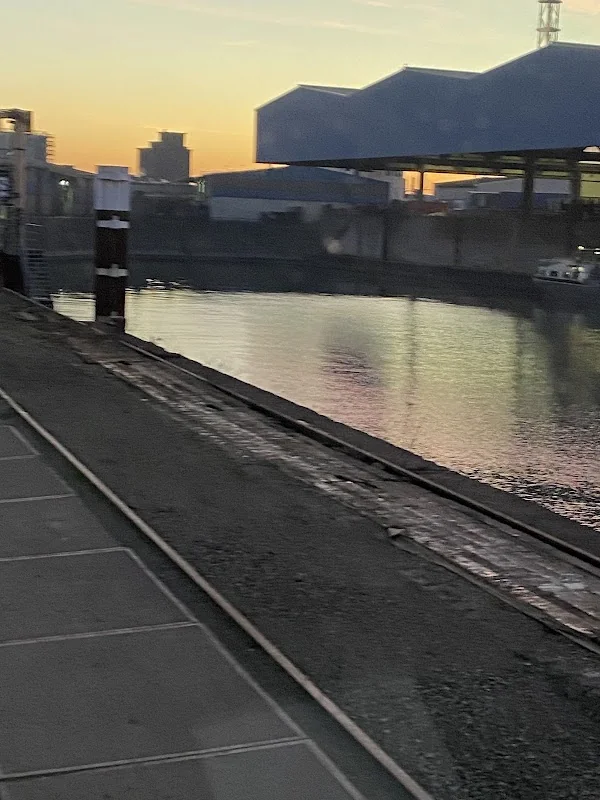
The location of Hafenkult is a central feature of its identity. The address Am Parallelhafen 12, 47059 Duisburg leads right into the harbor area of Neuenkamp, a city space characterized by industrial backdrop, water, logistics, and wide sightlines. This environment is repeatedly emphasized by official and tourist descriptions, as it constitutes the special charm of the place. For directions, specific and practical routes are mentioned on tourism pages: Hafenkult is accessible by bus via line 933, stop Duisburg-Am Schlütershof. By car, the journey is via the A40, exit Duisburg-Häfen. Ruhr Tourism additionally mentions available parking spaces and a direct bus stop, making the visit relatively uncomplicated, even though the place is located in the middle of a harbor area. Therefore, those looking for directions, parking, or location will find that Hafenkult is not a complicated urban location but a clearly described address with realistic routes for car and public transport. ([bochum-tourismus.de](https://www.bochum-tourismus.de/destination-one-liste/einzelansicht/hafenkult-ateliers-und-schauraum.html))
For visitors from Duisburg, the Ruhr area, or the Lower Rhine, orientation is therefore simple: Hafenkult is not hidden in an inner-city back area, but in a clearly named harbor area that consciously defines itself through its industrial surroundings. The city of Duisburg also assigns the place to the district of Neuenkamp and describes it as an atelier house in the middle of the harbor area. This is important for search intent, as many users search for combinations like Hafenkult directions, Hafenkult parking, or Parallel Harbor Duisburg as soon as they plan a specific visit. Even though the house itself does not set permanent opening hours, the available parking options and direct bus connections facilitate spontaneous participation in events as soon as a date is announced. Anyone planning a creative tour through Duisburg can easily combine the visit with other destinations in the harbor or city center area, turning a studio visit into a whole cultural stroll. ([duisburg.de](https://www.duisburg.de/microsites/sieben_bezirke/mitte/sehenwuerdigkeiten/hafenkult-neuenkamp.php))
Studios and Exhibition Space on Three Floors
The spatial concept of Hafenkult is closely linked to its development. The building is officially described as a former freight forwarding building from the 1970s, which has been used as an atelier house in Duisburg's Parallel Harbor since 2010. Across three floors, resident artists have space for their creative work, mutual exchange, and the presentation of their works. In addition to their own studios, there are communal, exhibition, and workshop spaces that elevate the place far beyond a mere collection of workrooms. Particularly important is the idea that not only are objects presented here, but the creation process itself is part of the experience. The architecture and industrial origins of the house contribute to an atmosphere that is simultaneously robust, open, and inspiring. This fits well with a house that consciously positions itself between production, encounter, and exhibition space, clearly distinguishing itself from classic white-cube concepts. ([hafenkult.de](https://www.hafenkult.de/))
In 2020, an additional floor was added, allowing Hafenkult to gain more space. The homepage states that six additional studios were added to the initial 12, as well as a large workshop room with a view of the Parallel Harbor. This view is more than just a nice detail: it shows how much the place thrives on its location. The light-flooded rooms, which tourism and culture pages speak of, are ideal for workshops, open formats, and exhibitions where visitors can not only observe but also actively participate. The house explicitly invites people to try something under professional guidance. This creates a concept in which workspaces, exhibition space, and learning environment intertwine. Therefore, anyone searching for terms like studios, exhibition space, workshop space, or room rental will find a location that derives its character not from event technology but from the connection of architecture, art production, and harbor view. ([hafenkult.de](https://www.hafenkult.de/hafenkult))
History, Self-Organization, and Artistic Profile
The history of Hafenkult is primarily a story of initiative and self-effort. The official website describes the place as the result of passion, courage, and tenacity that allowed something unconventional to emerge in an extraordinary building at an extraordinary location. Through constant cooperative self-effort, Hafenkult has developed into a professional place that possesses a stable foundation not only on an artistic level but also on an organizational level. This description is important because it explains why Hafenkult appears so authentic: it is not a culture product imposed from the outside but a grown community that has built its structure itself. According to Creative Stage Ruhr, the business graduate Katja Zappe realized her artistic dream at Am Parallelhafen 12 in early 2010, set up studios and exhibition space, and named the artist house Hafenkult. Although different portraits emphasize individual details differently, the core message remains the same: the place emerged from a personal vision, a clear idea, and a lot of collaborative work. ([hafenkult.de](https://www.hafenkult.de/hafenkult))
This self-organization also shapes the artistic profile. Hafenkult sees itself as an anchor point for art and design enthusiasts, where thinking, working, supporting, and exhibiting takes place. The spectrum of disciplines represented there is broad and includes painting, sculpture, plastic arts, object art, and photography, as well as graphic design, illustration, textile design, stage design, jewelry design, animation, printmaking, comic art, and puppet theater. This diversity makes the place interesting for search queries related to art and design in Duisburg, atelier house Neuenkamp, or creative location Ruhr area. A look at individual studio pages also shows how unique the profiles are: from illustration to textile design and screen printing to painting, graphic design, photography, puppet theater, and visual communication. This heterogeneity is not a weakness but the actual quality feature of the house. Here, a uniform cultural place does not emerge, but an open network of different styles, working methods, and perspectives that mutually reinforce each other within the shared house. ([hafenkult.de](https://www.hafenkult.de/hafenkult))
Planning a Visit: Opening Hours, Contact, and Practical Information
Anyone wishing to visit Hafenkult should align their planning with the actual use of the house. There are no fixed opening hours, but rather dates for events, exhibitions, workshops, and other activities that are announced in advance. The contact page recommends the website, Facebook, and Instagram for this purpose; there is also the option to directly contact the creators on-site and arrange individual appointments. For practical planning, it is also helpful that Ruhr Tourism describes admission as free. This makes a visit particularly accessible, as there is no classic commercial admission barrier. At the same time, the place remains a workspace, which means that a respectful and schedule-oriented approach is important. This tension between openness and atelier everyday life defines the character of Hafenkult. Therefore, anyone searching for opening hours, contact, admission, or visiting modalities should not expect a standardized ticket operation but rather a house that intentionally opens its doors at suitable occasions. ([hafenkult.de](https://www.hafenkult.de/kontakt))
For the visiting logic, the strong anchoring in the local cultural landscape is also important. The city of Duisburg lists Hafenkult as a sight in Neuenkamp, while Ruhr Tourism and Bochum Tourism describe it as a special art place with 18 artists, parking options, and direct bus connections. Therefore, those visiting the place for the first time can start well with a look at the travel options, current events, and the schedule. Especially for formats like open studios or the Harbor Spring, early planning is worthwhile, as the rooms then open across several levels, allowing for an intense impression of the house. A newsletter is also offered on the contact page, making Hafenkult interesting for regular visitors. In short: the best visit is the one that is adapted to the published program point. This way, you not only experience rooms but also a grown artist community in its natural rhythm. ([duisburg.de](https://www.duisburg.de/microsites/sieben_bezirke/mitte/sehenwuerdigkeiten/hafenkult-neuenkamp.php))
Hafenkult is thus much more than a single address in Duisburg's harbor. It is an atelier house, exhibition space, workshop venue, meeting point, and creative workspace all in one. Its strength lies not only in the extraordinary location but also in the mix of self-organization, artistic diversity, and openly designed visiting formats. Anyone searching for an authentic place for art and design in the Ruhr area will find a location that does not rely on grand staging and is impressive precisely because of that. The combination of harbor backdrop, lived community, and changing formats makes Hafenkult a place that one does not just visit once but best discovers anew time and again. ([hafenkult.de](https://www.hafenkult.de/))
Sources:
Show moreShow less
Hafenkult Ateliers & Schauraum | Workshops & Exhibitions
Hafenkult Ateliers & Schauraum is one of the most distinctive creative addresses in Duisburg's Parallel Harbor. The building combines the rough charm of an industrial port with a place where art, design, and collaborative work become visible. Between cranes, containers, ships, and chimneys, an atelier house has emerged that does not resemble a classic event location but rather a vibrant workspace where production, exchange, and presentation are closely intertwined. Since 2010, Hafenkult has been anchored in the Parallel Harbor; according to official statements, 18 artists work there across three floors in studios, communal, exhibition, and workshop spaces. This mix of harbor atmosphere, creative diversity, and open attitude makes the place as interesting for visitors as for people who want to create, learn, or be inspired. ([hafenkult.de](https://www.hafenkult.de/))
Open Studios, Workshops, and Events at Hafenkult
Those looking for current events, open studios, or workshops will find that Hafenkult does not offer a rigid standard program with permanently fixed times, but rather a dynamic format that is oriented around dates and occasions. The official contact page explicitly states that there are no fixed opening hours. Instead, events, exhibitions, workshops, and other activities are announced in advance on the website as well as through Facebook and Instagram. For visitors, this means: Hafenkult is not a place where you can simply walk through a regular door at any time, but a house that consciously opens at selected moments. This selective openness fits its role as an atelier house, where not only is work shown, but also created and experimented with. Anyone planning to experience the place should always check the calendar and current notices first, rather than assuming classic museum or gallery hours. This makes the search for terms like program, open studios, or workshops particularly relevant, as they are directly linked to the actual use of the house. ([hafenkult.de](https://www.hafenkult.de/kontakt))
A very good example of this vibrant program culture is the Harbor Spring 2026, which the homepage announces for Sunday, April 26, from 12 to 6 PM. On this day, the rooms open across three floors, showcasing what is being created there: film, photography, printmaking, jewelry design, puppet theater, sculpture, illustration, comics, animation, drawing, painting, collage, words, textile design, and much more. Additionally, live music and guest artists are scheduled for 2 PM and 4 PM. This mix of studio visits, exhibition character, and spontaneous encounters is typical for Hafenkult. Previous formats like the Open Studio in Duisburg also appear in the urban event context, demonstrating that the place is firmly rooted in the local cultural scene. For SEO planning, terms like Open Studios, Vernissage, exhibitions, program, and workshops are particularly important, as they not only describe search motives but also the real usage logic of the house. ([hafenkult.de](https://www.hafenkult.de/?utm_source=openai))
Directions, Parking, and Location at Parallel Harbor in Duisburg-Neuenkamp
The location of Hafenkult is a central feature of its identity. The address Am Parallelhafen 12, 47059 Duisburg leads right into the harbor area of Neuenkamp, a city space characterized by industrial backdrop, water, logistics, and wide sightlines. This environment is repeatedly emphasized by official and tourist descriptions, as it constitutes the special charm of the place. For directions, specific and practical routes are mentioned on tourism pages: Hafenkult is accessible by bus via line 933, stop Duisburg-Am Schlütershof. By car, the journey is via the A40, exit Duisburg-Häfen. Ruhr Tourism additionally mentions available parking spaces and a direct bus stop, making the visit relatively uncomplicated, even though the place is located in the middle of a harbor area. Therefore, those looking for directions, parking, or location will find that Hafenkult is not a complicated urban location but a clearly described address with realistic routes for car and public transport. ([bochum-tourismus.de](https://www.bochum-tourismus.de/destination-one-liste/einzelansicht/hafenkult-ateliers-und-schauraum.html))
For visitors from Duisburg, the Ruhr area, or the Lower Rhine, orientation is therefore simple: Hafenkult is not hidden in an inner-city back area, but in a clearly named harbor area that consciously defines itself through its industrial surroundings. The city of Duisburg also assigns the place to the district of Neuenkamp and describes it as an atelier house in the middle of the harbor area. This is important for search intent, as many users search for combinations like Hafenkult directions, Hafenkult parking, or Parallel Harbor Duisburg as soon as they plan a specific visit. Even though the house itself does not set permanent opening hours, the available parking options and direct bus connections facilitate spontaneous participation in events as soon as a date is announced. Anyone planning a creative tour through Duisburg can easily combine the visit with other destinations in the harbor or city center area, turning a studio visit into a whole cultural stroll. ([duisburg.de](https://www.duisburg.de/microsites/sieben_bezirke/mitte/sehenwuerdigkeiten/hafenkult-neuenkamp.php))
Studios and Exhibition Space on Three Floors
The spatial concept of Hafenkult is closely linked to its development. The building is officially described as a former freight forwarding building from the 1970s, which has been used as an atelier house in Duisburg's Parallel Harbor since 2010. Across three floors, resident artists have space for their creative work, mutual exchange, and the presentation of their works. In addition to their own studios, there are communal, exhibition, and workshop spaces that elevate the place far beyond a mere collection of workrooms. Particularly important is the idea that not only are objects presented here, but the creation process itself is part of the experience. The architecture and industrial origins of the house contribute to an atmosphere that is simultaneously robust, open, and inspiring. This fits well with a house that consciously positions itself between production, encounter, and exhibition space, clearly distinguishing itself from classic white-cube concepts. ([hafenkult.de](https://www.hafenkult.de/))
In 2020, an additional floor was added, allowing Hafenkult to gain more space. The homepage states that six additional studios were added to the initial 12, as well as a large workshop room with a view of the Parallel Harbor. This view is more than just a nice detail: it shows how much the place thrives on its location. The light-flooded rooms, which tourism and culture pages speak of, are ideal for workshops, open formats, and exhibitions where visitors can not only observe but also actively participate. The house explicitly invites people to try something under professional guidance. This creates a concept in which workspaces, exhibition space, and learning environment intertwine. Therefore, anyone searching for terms like studios, exhibition space, workshop space, or room rental will find a location that derives its character not from event technology but from the connection of architecture, art production, and harbor view. ([hafenkult.de](https://www.hafenkult.de/hafenkult))
History, Self-Organization, and Artistic Profile
The history of Hafenkult is primarily a story of initiative and self-effort. The official website describes the place as the result of passion, courage, and tenacity that allowed something unconventional to emerge in an extraordinary building at an extraordinary location. Through constant cooperative self-effort, Hafenkult has developed into a professional place that possesses a stable foundation not only on an artistic level but also on an organizational level. This description is important because it explains why Hafenkult appears so authentic: it is not a culture product imposed from the outside but a grown community that has built its structure itself. According to Creative Stage Ruhr, the business graduate Katja Zappe realized her artistic dream at Am Parallelhafen 12 in early 2010, set up studios and exhibition space, and named the artist house Hafenkult. Although different portraits emphasize individual details differently, the core message remains the same: the place emerged from a personal vision, a clear idea, and a lot of collaborative work. ([hafenkult.de](https://www.hafenkult.de/hafenkult))
This self-organization also shapes the artistic profile. Hafenkult sees itself as an anchor point for art and design enthusiasts, where thinking, working, supporting, and exhibiting takes place. The spectrum of disciplines represented there is broad and includes painting, sculpture, plastic arts, object art, and photography, as well as graphic design, illustration, textile design, stage design, jewelry design, animation, printmaking, comic art, and puppet theater. This diversity makes the place interesting for search queries related to art and design in Duisburg, atelier house Neuenkamp, or creative location Ruhr area. A look at individual studio pages also shows how unique the profiles are: from illustration to textile design and screen printing to painting, graphic design, photography, puppet theater, and visual communication. This heterogeneity is not a weakness but the actual quality feature of the house. Here, a uniform cultural place does not emerge, but an open network of different styles, working methods, and perspectives that mutually reinforce each other within the shared house. ([hafenkult.de](https://www.hafenkult.de/hafenkult))
Planning a Visit: Opening Hours, Contact, and Practical Information
Anyone wishing to visit Hafenkult should align their planning with the actual use of the house. There are no fixed opening hours, but rather dates for events, exhibitions, workshops, and other activities that are announced in advance. The contact page recommends the website, Facebook, and Instagram for this purpose; there is also the option to directly contact the creators on-site and arrange individual appointments. For practical planning, it is also helpful that Ruhr Tourism describes admission as free. This makes a visit particularly accessible, as there is no classic commercial admission barrier. At the same time, the place remains a workspace, which means that a respectful and schedule-oriented approach is important. This tension between openness and atelier everyday life defines the character of Hafenkult. Therefore, anyone searching for opening hours, contact, admission, or visiting modalities should not expect a standardized ticket operation but rather a house that intentionally opens its doors at suitable occasions. ([hafenkult.de](https://www.hafenkult.de/kontakt))
For the visiting logic, the strong anchoring in the local cultural landscape is also important. The city of Duisburg lists Hafenkult as a sight in Neuenkamp, while Ruhr Tourism and Bochum Tourism describe it as a special art place with 18 artists, parking options, and direct bus connections. Therefore, those visiting the place for the first time can start well with a look at the travel options, current events, and the schedule. Especially for formats like open studios or the Harbor Spring, early planning is worthwhile, as the rooms then open across several levels, allowing for an intense impression of the house. A newsletter is also offered on the contact page, making Hafenkult interesting for regular visitors. In short: the best visit is the one that is adapted to the published program point. This way, you not only experience rooms but also a grown artist community in its natural rhythm. ([duisburg.de](https://www.duisburg.de/microsites/sieben_bezirke/mitte/sehenwuerdigkeiten/hafenkult-neuenkamp.php))
Hafenkult is thus much more than a single address in Duisburg's harbor. It is an atelier house, exhibition space, workshop venue, meeting point, and creative workspace all in one. Its strength lies not only in the extraordinary location but also in the mix of self-organization, artistic diversity, and openly designed visiting formats. Anyone searching for an authentic place for art and design in the Ruhr area will find a location that does not rely on grand staging and is impressive precisely because of that. The combination of harbor backdrop, lived community, and changing formats makes Hafenkult a place that one does not just visit once but best discovers anew time and again. ([hafenkult.de](https://www.hafenkult.de/))
Sources:
Hafenkult Ateliers & Schauraum | Workshops & Exhibitions
Hafenkult Ateliers & Schauraum is one of the most distinctive creative addresses in Duisburg's Parallel Harbor. The building combines the rough charm of an industrial port with a place where art, design, and collaborative work become visible. Between cranes, containers, ships, and chimneys, an atelier house has emerged that does not resemble a classic event location but rather a vibrant workspace where production, exchange, and presentation are closely intertwined. Since 2010, Hafenkult has been anchored in the Parallel Harbor; according to official statements, 18 artists work there across three floors in studios, communal, exhibition, and workshop spaces. This mix of harbor atmosphere, creative diversity, and open attitude makes the place as interesting for visitors as for people who want to create, learn, or be inspired. ([hafenkult.de](https://www.hafenkult.de/))
Open Studios, Workshops, and Events at Hafenkult
Those looking for current events, open studios, or workshops will find that Hafenkult does not offer a rigid standard program with permanently fixed times, but rather a dynamic format that is oriented around dates and occasions. The official contact page explicitly states that there are no fixed opening hours. Instead, events, exhibitions, workshops, and other activities are announced in advance on the website as well as through Facebook and Instagram. For visitors, this means: Hafenkult is not a place where you can simply walk through a regular door at any time, but a house that consciously opens at selected moments. This selective openness fits its role as an atelier house, where not only is work shown, but also created and experimented with. Anyone planning to experience the place should always check the calendar and current notices first, rather than assuming classic museum or gallery hours. This makes the search for terms like program, open studios, or workshops particularly relevant, as they are directly linked to the actual use of the house. ([hafenkult.de](https://www.hafenkult.de/kontakt))
A very good example of this vibrant program culture is the Harbor Spring 2026, which the homepage announces for Sunday, April 26, from 12 to 6 PM. On this day, the rooms open across three floors, showcasing what is being created there: film, photography, printmaking, jewelry design, puppet theater, sculpture, illustration, comics, animation, drawing, painting, collage, words, textile design, and much more. Additionally, live music and guest artists are scheduled for 2 PM and 4 PM. This mix of studio visits, exhibition character, and spontaneous encounters is typical for Hafenkult. Previous formats like the Open Studio in Duisburg also appear in the urban event context, demonstrating that the place is firmly rooted in the local cultural scene. For SEO planning, terms like Open Studios, Vernissage, exhibitions, program, and workshops are particularly important, as they not only describe search motives but also the real usage logic of the house. ([hafenkult.de](https://www.hafenkult.de/?utm_source=openai))
Directions, Parking, and Location at Parallel Harbor in Duisburg-Neuenkamp
The location of Hafenkult is a central feature of its identity. The address Am Parallelhafen 12, 47059 Duisburg leads right into the harbor area of Neuenkamp, a city space characterized by industrial backdrop, water, logistics, and wide sightlines. This environment is repeatedly emphasized by official and tourist descriptions, as it constitutes the special charm of the place. For directions, specific and practical routes are mentioned on tourism pages: Hafenkult is accessible by bus via line 933, stop Duisburg-Am Schlütershof. By car, the journey is via the A40, exit Duisburg-Häfen. Ruhr Tourism additionally mentions available parking spaces and a direct bus stop, making the visit relatively uncomplicated, even though the place is located in the middle of a harbor area. Therefore, those looking for directions, parking, or location will find that Hafenkult is not a complicated urban location but a clearly described address with realistic routes for car and public transport. ([bochum-tourismus.de](https://www.bochum-tourismus.de/destination-one-liste/einzelansicht/hafenkult-ateliers-und-schauraum.html))
For visitors from Duisburg, the Ruhr area, or the Lower Rhine, orientation is therefore simple: Hafenkult is not hidden in an inner-city back area, but in a clearly named harbor area that consciously defines itself through its industrial surroundings. The city of Duisburg also assigns the place to the district of Neuenkamp and describes it as an atelier house in the middle of the harbor area. This is important for search intent, as many users search for combinations like Hafenkult directions, Hafenkult parking, or Parallel Harbor Duisburg as soon as they plan a specific visit. Even though the house itself does not set permanent opening hours, the available parking options and direct bus connections facilitate spontaneous participation in events as soon as a date is announced. Anyone planning a creative tour through Duisburg can easily combine the visit with other destinations in the harbor or city center area, turning a studio visit into a whole cultural stroll. ([duisburg.de](https://www.duisburg.de/microsites/sieben_bezirke/mitte/sehenwuerdigkeiten/hafenkult-neuenkamp.php))
Studios and Exhibition Space on Three Floors
The spatial concept of Hafenkult is closely linked to its development. The building is officially described as a former freight forwarding building from the 1970s, which has been used as an atelier house in Duisburg's Parallel Harbor since 2010. Across three floors, resident artists have space for their creative work, mutual exchange, and the presentation of their works. In addition to their own studios, there are communal, exhibition, and workshop spaces that elevate the place far beyond a mere collection of workrooms. Particularly important is the idea that not only are objects presented here, but the creation process itself is part of the experience. The architecture and industrial origins of the house contribute to an atmosphere that is simultaneously robust, open, and inspiring. This fits well with a house that consciously positions itself between production, encounter, and exhibition space, clearly distinguishing itself from classic white-cube concepts. ([hafenkult.de](https://www.hafenkult.de/))
In 2020, an additional floor was added, allowing Hafenkult to gain more space. The homepage states that six additional studios were added to the initial 12, as well as a large workshop room with a view of the Parallel Harbor. This view is more than just a nice detail: it shows how much the place thrives on its location. The light-flooded rooms, which tourism and culture pages speak of, are ideal for workshops, open formats, and exhibitions where visitors can not only observe but also actively participate. The house explicitly invites people to try something under professional guidance. This creates a concept in which workspaces, exhibition space, and learning environment intertwine. Therefore, anyone searching for terms like studios, exhibition space, workshop space, or room rental will find a location that derives its character not from event technology but from the connection of architecture, art production, and harbor view. ([hafenkult.de](https://www.hafenkult.de/hafenkult))
History, Self-Organization, and Artistic Profile
The history of Hafenkult is primarily a story of initiative and self-effort. The official website describes the place as the result of passion, courage, and tenacity that allowed something unconventional to emerge in an extraordinary building at an extraordinary location. Through constant cooperative self-effort, Hafenkult has developed into a professional place that possesses a stable foundation not only on an artistic level but also on an organizational level. This description is important because it explains why Hafenkult appears so authentic: it is not a culture product imposed from the outside but a grown community that has built its structure itself. According to Creative Stage Ruhr, the business graduate Katja Zappe realized her artistic dream at Am Parallelhafen 12 in early 2010, set up studios and exhibition space, and named the artist house Hafenkult. Although different portraits emphasize individual details differently, the core message remains the same: the place emerged from a personal vision, a clear idea, and a lot of collaborative work. ([hafenkult.de](https://www.hafenkult.de/hafenkult))
This self-organization also shapes the artistic profile. Hafenkult sees itself as an anchor point for art and design enthusiasts, where thinking, working, supporting, and exhibiting takes place. The spectrum of disciplines represented there is broad and includes painting, sculpture, plastic arts, object art, and photography, as well as graphic design, illustration, textile design, stage design, jewelry design, animation, printmaking, comic art, and puppet theater. This diversity makes the place interesting for search queries related to art and design in Duisburg, atelier house Neuenkamp, or creative location Ruhr area. A look at individual studio pages also shows how unique the profiles are: from illustration to textile design and screen printing to painting, graphic design, photography, puppet theater, and visual communication. This heterogeneity is not a weakness but the actual quality feature of the house. Here, a uniform cultural place does not emerge, but an open network of different styles, working methods, and perspectives that mutually reinforce each other within the shared house. ([hafenkult.de](https://www.hafenkult.de/hafenkult))
Planning a Visit: Opening Hours, Contact, and Practical Information
Anyone wishing to visit Hafenkult should align their planning with the actual use of the house. There are no fixed opening hours, but rather dates for events, exhibitions, workshops, and other activities that are announced in advance. The contact page recommends the website, Facebook, and Instagram for this purpose; there is also the option to directly contact the creators on-site and arrange individual appointments. For practical planning, it is also helpful that Ruhr Tourism describes admission as free. This makes a visit particularly accessible, as there is no classic commercial admission barrier. At the same time, the place remains a workspace, which means that a respectful and schedule-oriented approach is important. This tension between openness and atelier everyday life defines the character of Hafenkult. Therefore, anyone searching for opening hours, contact, admission, or visiting modalities should not expect a standardized ticket operation but rather a house that intentionally opens its doors at suitable occasions. ([hafenkult.de](https://www.hafenkult.de/kontakt))
For the visiting logic, the strong anchoring in the local cultural landscape is also important. The city of Duisburg lists Hafenkult as a sight in Neuenkamp, while Ruhr Tourism and Bochum Tourism describe it as a special art place with 18 artists, parking options, and direct bus connections. Therefore, those visiting the place for the first time can start well with a look at the travel options, current events, and the schedule. Especially for formats like open studios or the Harbor Spring, early planning is worthwhile, as the rooms then open across several levels, allowing for an intense impression of the house. A newsletter is also offered on the contact page, making Hafenkult interesting for regular visitors. In short: the best visit is the one that is adapted to the published program point. This way, you not only experience rooms but also a grown artist community in its natural rhythm. ([duisburg.de](https://www.duisburg.de/microsites/sieben_bezirke/mitte/sehenwuerdigkeiten/hafenkult-neuenkamp.php))
Hafenkult is thus much more than a single address in Duisburg's harbor. It is an atelier house, exhibition space, workshop venue, meeting point, and creative workspace all in one. Its strength lies not only in the extraordinary location but also in the mix of self-organization, artistic diversity, and openly designed visiting formats. Anyone searching for an authentic place for art and design in the Ruhr area will find a location that does not rely on grand staging and is impressive precisely because of that. The combination of harbor backdrop, lived community, and changing formats makes Hafenkult a place that one does not just visit once but best discovers anew time and again. ([hafenkult.de](https://www.hafenkult.de/))
Sources:
Upcoming Events
No events found
Frequently Asked Questions
Reviews
No reviews found