
Duisburg
Duisburger Str. 174, 47166 Duisburg, Deutschland
Friedenskirche Hamborn | Service & Concert
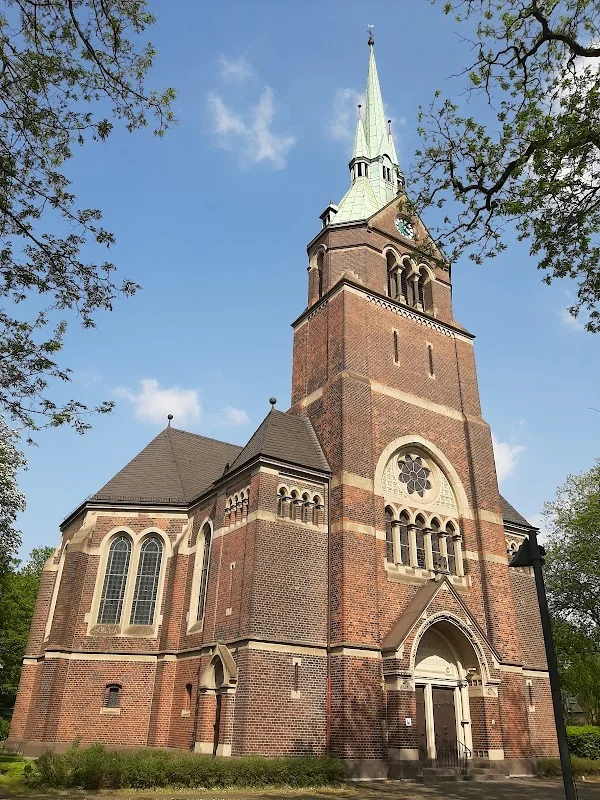
The Friedenskirche Hamborn is a distinctive church location in the northern part of Duisburg, asserting itself as a place for services, concerts, and a historical monument alike. It belongs to the Evangelical Church Community of Hamborn, is located at Duisburger Straße 174, and is situated in the area of Obermarxloh in the district of Hamborn. This makes it not only a religious center but also a visible landmark for anyone searching for Friedenskirche Hamborn photos, current services, concerts, or practical information such as directions and parking. The church is part of the Duisburg church district of the Evangelical Church in the Rhineland and is listed in official directories as the Protestant church in Hamborn. ([kirche-duisburg.de](https://kirche-duisburg.de/inhalt/hamborn/))
For visitors, a rare blend of tradition and vibrant present emerges here: The community calendar regularly shows services, Taizé services, confirmations, lectures, and other formats, while the church is also used for musical evenings, summer concerts, and cultural events. Those who experience the Friedenskirche Hamborn at an event see not only a historical building but also a community that actively uses and fills its spaces with life. This connection of history, music, and community life makes the location particularly relevant for search queries related to friedenskirche duisburg hamborn, kirchengemeinde hamborn, and friedenskirche hamborn concert. ([kirche-duisburg.de](https://kirche-duisburg.de/inhalt/hamborn/))
Service and Community Life in the Friedenskirche Hamborn
When users search for friedenskirche hamborn service, they usually want to know two things: When is the next service, and how vibrant is the community life on site? The calendar of the Evangelical Church Community of Hamborn provides a clear answer. For 2026, it lists services with communion, Taizé services, confirmations, regional services with church café, image exchange days, and organ café dates. This shows that the Friedenskirche is not only used on Sundays but is a diverse place for spiritual, social, and communal formats. The connection of liturgy and encounter is an important feature: A service here is not just an appointment but often the starting point for exchange, communal coffee drinking, or thematic community events. ([kirche-duisburg.de](https://kirche-duisburg.de/inhalt/hamborn/))
The Friedenskirche also plays a central role in the everyday organization of the community. The official community overview of the Duisburg church district lists not only the church itself but also the community address, the Protestant kindergarten Hamborn, and the Protestant cemetery Hamborn. This spatial proximity shows how strongly the Friedenskirche is integrated into the structure of the community. Therefore, anyone attending an event does not experience an isolated church building but a whole community field with short distances, interconnected responsibilities, and close ties to the neighborhood. For the search intent friedenskirche hamborn, this is important: The church is not a museum piece but a functioning place of faith, pastoral care, and community life. ([kirche-duisburg.de](https://kirche-duisburg.de/inhalt/hamborn/))
Concerts, Organ, and Musical Events
Another strong search cluster is friedenskirche hamborn concert. There are good reasons for this, as the Friedenskirche has been a place for church music and cultural events for decades. The Evangelical Church District of Duisburg announced a series of six organ concerts for the summer of 2025, which took place on Wednesday evenings at 7:30 PM and included not only classical organ music but also other instruments. The opening program featured works by Bach, Mozart, Guilmant, Franck, and Piazzolla; other evenings musically took the audience to Ireland, the French capital, or Scandinavia. This shows the range of the musical profile and explains why the Friedenskirche is perceived as a concert venue beyond Hamborn. ([kirche-duisburg.de](https://kirche-duisburg.de/inhalt/sommerkonzerte-hamborn-2025/))
Additionally, there are individual concert dates that make the location interesting for an audience specifically looking for vibrant cultural formats. For 2024, the church district lists a concert by the duo ParTwo! with a focus on tango and klezmer, explicitly with free admission. The combination of a historic church, open acoustics, and musical diversity is a central advantage of this location. This is further enhanced by the organ itself: According to available organ documentation, it is a new build from the Eule organ workshop from 1974 with two manuals and 22 stops. For search queries like friedenskirche hamborn organ or summer concerts, this is an important argument because the church is not only a beautiful space but a sonically specialized place with its own musical tradition. ([kirche-duisburg.de](https://kirche-duisburg.de/inhalt/kalender?ID=769424))
History of the Friedenskirche Hamborn: Construction, Renovation, and Monument Protection
The history of the Friedenskirche Hamborn begins in the context of the industrialization of the late 19th century. The Evangelical Church Community of Hamborn was established in 1893, and after using provisional meeting places, the desire for a dignified place of worship grew. The foundation stone was laid on October 31, 1895, and the church was consecrated on July 22, 1897. It was designed by the Berlin architect Karl Doflein; the construction was predominantly financed by donations and cost 117,000 marks. The city of Duisburg also points out in its monument context that the then community and mayor's office of Hamborn had only a few public buildings around 1900, including the new Protestant church, today's Friedenskirche. These facts make it clear how closely the emergence of the church building is linked to the economic and social upheaval of northern Duisburg. ([de.wikipedia.org](https://de.wikipedia.org/wiki/Friedenskirche_%28Duisburg%29))
In the 20th century, the Friedenskirche underwent several changes and was repeatedly protected. After the old bells had to be handed over for armaments purposes in 1942, three new bronze bells were put into operation in 1953. On March 8, 1985, the Friedenskirche was entered under number 12 in the monument list of the city of Duisburg. Particularly important for today's impression is the renovation from 2003 to 2006: After severe damage, the church was extensively renewed and was put back into use on August 20, 2006. For seekers looking for friedenskirche hamborn monument or friedenskirche hamburg, this history is important because it explains the quality of the building, its state of preservation, and its role as cultural heritage. The Friedenskirche is thus not only old but has been consciously brought into the present through renovation and monument preservation. ([de.wikipedia.org](https://de.wikipedia.org/wiki/Friedenskirche_%28Duisburg%29))
Architecture, Interior, and the Special Atmosphere
Architecturally, the Friedenskirche Hamborn is among the more interesting Protestant church buildings in the Ruhr area. The design was based on the Wiesbaden church building program and contemporary models; the design combines brick with a clearly structured facade and spatial effect. In the basement, small windows and strong walls dominate, while large arched windows are found on the upper floor. The church space itself is not a classic longhouse in the medieval style but rather a theater-like central space with a cross-shaped basic idea and narrow side aisles. Particularly striking is the seating arrangement: The benches form a semicircle open to the altar, the pulpit, and the organ without a central aisle. This creates a very communal view, where the community and liturgy come together closely. ([de.wikipedia.org](https://de.wikipedia.org/wiki/Friedenskirche_%28Duisburg%29))
The interior has also been described in the monument descriptions as exceptionally readable. It features curved wooden pews, a surrounding gallery with wooden columns, a wooden pulpit with a symmetrical staircase, and original stained glass windows. The Day of Open Monuments also emphasizes that architect Karl Doflein was inspired by major motifs such as the Berlin Cathedral and the Wiesbaden church building program. This blend of representative form, functional spatial arrangement, and preserved furnishings shapes the atmosphere of the Friedenskirche. Those searching for friedenskirche hamborn photos often seek this impression: not just an external church image but a view of an interior that radiates historical dignity and community closeness at the same time. ([stiftung-kiba.de](https://www.stiftung-kiba.de/kirchen/friedenskirche-duisburg-hamborn))
Directions, Address, and Parking at the Friedenskirche Hamborn
Practical orientation is crucial for many search queries. The Friedenskirche Hamborn is located at Duisburger Straße 174 in 47166 Duisburg. Officially, it is listed with this address both in the community overview of the church district and on other monument and church portals. For directions, it is particularly important that the church is situated on a central axis in northern Duisburg and is directly linked to the surroundings of the cemetery. Therefore, anyone searching for friedenskirche hamborn directions finds a clear arrival point in the district of Hamborn. ([kirche-duisburg.de](https://kirche-duisburg.de/inhalt/hamborn/))
Parking is also relatively clearly described. The cemetery portal mentions parking options directly at the cemetery and at the Friedenskirche; access is via Duisburger Straße. Additionally, the Feuerwache stop of tram line 903 is mentioned nearby. This makes the location easily accessible for both car traffic and public transport. Especially for services, concerts, or community festivals, this combination of central location and public transport connection is a real advantage. Furthermore, the Protestant cemetery Hamborn is located immediately behind the Friedenskirche, directly adjoining the municipal northern cemetery. This creates a historically and urbanistically dense place where church use, culture of remembrance, and accessibility come together. ([friedhoefe-duisburg.de](https://friedhoefe-duisburg.de/friedhof-hamborn-duisburg.html))
Photos, Surroundings, and Visitor Tips for Hamborn
In search queries like friedenskirche hamborn photos, it often concerns the first visual impression, and there are reliable points of reference for this as well. On the website of the Evangelical Church District of Duisburg, the Friedenskirche is presented with photos by Tanja Pickartz. The Day of Open Monuments also showcases the church with images and offers guided tours on certain dates. For 2025, a visiting window with a tour of the church and individual graves at the cemetery was announced, along with information about parking and public transport. Therefore, those who want to get to know the Friedenskirche not only online but also on-site have a good entry point through such events. ([kirche-duisburg.de](https://kirche-duisburg.de/inhalt/hamborn/))
The surroundings meaningfully complement the experience. Directly behind the Friedenskirche lies the Protestant cemetery Hamborn, which, according to the cemetery portal, is understood as a small community cemetery with a close connection to the large municipal northern cemetery and reflects the eventful history of the once independent mining and industrial city of Hamborn. For a visit, this means: The church can be experienced not in isolation but in an urban context, with brick, street space, cemetery axis, and community reference. Those wanting to take photos thus receive not only a church motif but an ensemble of architecture, history, and neighborhood. This is precisely why the Friedenskirche Hamborn is equally exciting for searches related to photos, history, service, concert, directions, and parking. ([friedhoefe-duisburg.de](https://friedhoefe-duisburg.de/friedhof-hamborn-duisburg.html))
Sources:
- Hamborn - Evangelical Church District Duisburg
- Musical Country Tour at the Summer Concerts in the Friedenskirche - Evangelical Church District Duisburg
- There's something going on... Calendar - Evangelical Church District Duisburg
- Arts and Crafts and Lots of Entertainment at the Spring Market - Evangelical Church District Duisburg
- Friedenskirche Hamborn - Day of Open Monuments
- Protestant Cemetery of the Church Community Hamborn in Duisburg
- Friedenskirche Duisburg-Hamborn - KiBa Foundation
- Friedenskirche (Duisburg) - Wikipedia
- Duisburg Monument Themes - City of Duisburg PDF
Show moreShow less
Friedenskirche Hamborn | Service & Concert
The Friedenskirche Hamborn is a distinctive church location in the northern part of Duisburg, asserting itself as a place for services, concerts, and a historical monument alike. It belongs to the Evangelical Church Community of Hamborn, is located at Duisburger Straße 174, and is situated in the area of Obermarxloh in the district of Hamborn. This makes it not only a religious center but also a visible landmark for anyone searching for Friedenskirche Hamborn photos, current services, concerts, or practical information such as directions and parking. The church is part of the Duisburg church district of the Evangelical Church in the Rhineland and is listed in official directories as the Protestant church in Hamborn. ([kirche-duisburg.de](https://kirche-duisburg.de/inhalt/hamborn/))
For visitors, a rare blend of tradition and vibrant present emerges here: The community calendar regularly shows services, Taizé services, confirmations, lectures, and other formats, while the church is also used for musical evenings, summer concerts, and cultural events. Those who experience the Friedenskirche Hamborn at an event see not only a historical building but also a community that actively uses and fills its spaces with life. This connection of history, music, and community life makes the location particularly relevant for search queries related to friedenskirche duisburg hamborn, kirchengemeinde hamborn, and friedenskirche hamborn concert. ([kirche-duisburg.de](https://kirche-duisburg.de/inhalt/hamborn/))
Service and Community Life in the Friedenskirche Hamborn
When users search for friedenskirche hamborn service, they usually want to know two things: When is the next service, and how vibrant is the community life on site? The calendar of the Evangelical Church Community of Hamborn provides a clear answer. For 2026, it lists services with communion, Taizé services, confirmations, regional services with church café, image exchange days, and organ café dates. This shows that the Friedenskirche is not only used on Sundays but is a diverse place for spiritual, social, and communal formats. The connection of liturgy and encounter is an important feature: A service here is not just an appointment but often the starting point for exchange, communal coffee drinking, or thematic community events. ([kirche-duisburg.de](https://kirche-duisburg.de/inhalt/hamborn/))
The Friedenskirche also plays a central role in the everyday organization of the community. The official community overview of the Duisburg church district lists not only the church itself but also the community address, the Protestant kindergarten Hamborn, and the Protestant cemetery Hamborn. This spatial proximity shows how strongly the Friedenskirche is integrated into the structure of the community. Therefore, anyone attending an event does not experience an isolated church building but a whole community field with short distances, interconnected responsibilities, and close ties to the neighborhood. For the search intent friedenskirche hamborn, this is important: The church is not a museum piece but a functioning place of faith, pastoral care, and community life. ([kirche-duisburg.de](https://kirche-duisburg.de/inhalt/hamborn/))
Concerts, Organ, and Musical Events
Another strong search cluster is friedenskirche hamborn concert. There are good reasons for this, as the Friedenskirche has been a place for church music and cultural events for decades. The Evangelical Church District of Duisburg announced a series of six organ concerts for the summer of 2025, which took place on Wednesday evenings at 7:30 PM and included not only classical organ music but also other instruments. The opening program featured works by Bach, Mozart, Guilmant, Franck, and Piazzolla; other evenings musically took the audience to Ireland, the French capital, or Scandinavia. This shows the range of the musical profile and explains why the Friedenskirche is perceived as a concert venue beyond Hamborn. ([kirche-duisburg.de](https://kirche-duisburg.de/inhalt/sommerkonzerte-hamborn-2025/))
Additionally, there are individual concert dates that make the location interesting for an audience specifically looking for vibrant cultural formats. For 2024, the church district lists a concert by the duo ParTwo! with a focus on tango and klezmer, explicitly with free admission. The combination of a historic church, open acoustics, and musical diversity is a central advantage of this location. This is further enhanced by the organ itself: According to available organ documentation, it is a new build from the Eule organ workshop from 1974 with two manuals and 22 stops. For search queries like friedenskirche hamborn organ or summer concerts, this is an important argument because the church is not only a beautiful space but a sonically specialized place with its own musical tradition. ([kirche-duisburg.de](https://kirche-duisburg.de/inhalt/kalender?ID=769424))
History of the Friedenskirche Hamborn: Construction, Renovation, and Monument Protection
The history of the Friedenskirche Hamborn begins in the context of the industrialization of the late 19th century. The Evangelical Church Community of Hamborn was established in 1893, and after using provisional meeting places, the desire for a dignified place of worship grew. The foundation stone was laid on October 31, 1895, and the church was consecrated on July 22, 1897. It was designed by the Berlin architect Karl Doflein; the construction was predominantly financed by donations and cost 117,000 marks. The city of Duisburg also points out in its monument context that the then community and mayor's office of Hamborn had only a few public buildings around 1900, including the new Protestant church, today's Friedenskirche. These facts make it clear how closely the emergence of the church building is linked to the economic and social upheaval of northern Duisburg. ([de.wikipedia.org](https://de.wikipedia.org/wiki/Friedenskirche_%28Duisburg%29))
In the 20th century, the Friedenskirche underwent several changes and was repeatedly protected. After the old bells had to be handed over for armaments purposes in 1942, three new bronze bells were put into operation in 1953. On March 8, 1985, the Friedenskirche was entered under number 12 in the monument list of the city of Duisburg. Particularly important for today's impression is the renovation from 2003 to 2006: After severe damage, the church was extensively renewed and was put back into use on August 20, 2006. For seekers looking for friedenskirche hamborn monument or friedenskirche hamburg, this history is important because it explains the quality of the building, its state of preservation, and its role as cultural heritage. The Friedenskirche is thus not only old but has been consciously brought into the present through renovation and monument preservation. ([de.wikipedia.org](https://de.wikipedia.org/wiki/Friedenskirche_%28Duisburg%29))
Architecture, Interior, and the Special Atmosphere
Architecturally, the Friedenskirche Hamborn is among the more interesting Protestant church buildings in the Ruhr area. The design was based on the Wiesbaden church building program and contemporary models; the design combines brick with a clearly structured facade and spatial effect. In the basement, small windows and strong walls dominate, while large arched windows are found on the upper floor. The church space itself is not a classic longhouse in the medieval style but rather a theater-like central space with a cross-shaped basic idea and narrow side aisles. Particularly striking is the seating arrangement: The benches form a semicircle open to the altar, the pulpit, and the organ without a central aisle. This creates a very communal view, where the community and liturgy come together closely. ([de.wikipedia.org](https://de.wikipedia.org/wiki/Friedenskirche_%28Duisburg%29))
The interior has also been described in the monument descriptions as exceptionally readable. It features curved wooden pews, a surrounding gallery with wooden columns, a wooden pulpit with a symmetrical staircase, and original stained glass windows. The Day of Open Monuments also emphasizes that architect Karl Doflein was inspired by major motifs such as the Berlin Cathedral and the Wiesbaden church building program. This blend of representative form, functional spatial arrangement, and preserved furnishings shapes the atmosphere of the Friedenskirche. Those searching for friedenskirche hamborn photos often seek this impression: not just an external church image but a view of an interior that radiates historical dignity and community closeness at the same time. ([stiftung-kiba.de](https://www.stiftung-kiba.de/kirchen/friedenskirche-duisburg-hamborn))
Directions, Address, and Parking at the Friedenskirche Hamborn
Practical orientation is crucial for many search queries. The Friedenskirche Hamborn is located at Duisburger Straße 174 in 47166 Duisburg. Officially, it is listed with this address both in the community overview of the church district and on other monument and church portals. For directions, it is particularly important that the church is situated on a central axis in northern Duisburg and is directly linked to the surroundings of the cemetery. Therefore, anyone searching for friedenskirche hamborn directions finds a clear arrival point in the district of Hamborn. ([kirche-duisburg.de](https://kirche-duisburg.de/inhalt/hamborn/))
Parking is also relatively clearly described. The cemetery portal mentions parking options directly at the cemetery and at the Friedenskirche; access is via Duisburger Straße. Additionally, the Feuerwache stop of tram line 903 is mentioned nearby. This makes the location easily accessible for both car traffic and public transport. Especially for services, concerts, or community festivals, this combination of central location and public transport connection is a real advantage. Furthermore, the Protestant cemetery Hamborn is located immediately behind the Friedenskirche, directly adjoining the municipal northern cemetery. This creates a historically and urbanistically dense place where church use, culture of remembrance, and accessibility come together. ([friedhoefe-duisburg.de](https://friedhoefe-duisburg.de/friedhof-hamborn-duisburg.html))
Photos, Surroundings, and Visitor Tips for Hamborn
In search queries like friedenskirche hamborn photos, it often concerns the first visual impression, and there are reliable points of reference for this as well. On the website of the Evangelical Church District of Duisburg, the Friedenskirche is presented with photos by Tanja Pickartz. The Day of Open Monuments also showcases the church with images and offers guided tours on certain dates. For 2025, a visiting window with a tour of the church and individual graves at the cemetery was announced, along with information about parking and public transport. Therefore, those who want to get to know the Friedenskirche not only online but also on-site have a good entry point through such events. ([kirche-duisburg.de](https://kirche-duisburg.de/inhalt/hamborn/))
The surroundings meaningfully complement the experience. Directly behind the Friedenskirche lies the Protestant cemetery Hamborn, which, according to the cemetery portal, is understood as a small community cemetery with a close connection to the large municipal northern cemetery and reflects the eventful history of the once independent mining and industrial city of Hamborn. For a visit, this means: The church can be experienced not in isolation but in an urban context, with brick, street space, cemetery axis, and community reference. Those wanting to take photos thus receive not only a church motif but an ensemble of architecture, history, and neighborhood. This is precisely why the Friedenskirche Hamborn is equally exciting for searches related to photos, history, service, concert, directions, and parking. ([friedhoefe-duisburg.de](https://friedhoefe-duisburg.de/friedhof-hamborn-duisburg.html))
Sources:
- Hamborn - Evangelical Church District Duisburg
- Musical Country Tour at the Summer Concerts in the Friedenskirche - Evangelical Church District Duisburg
- There's something going on... Calendar - Evangelical Church District Duisburg
- Arts and Crafts and Lots of Entertainment at the Spring Market - Evangelical Church District Duisburg
- Friedenskirche Hamborn - Day of Open Monuments
- Protestant Cemetery of the Church Community Hamborn in Duisburg
- Friedenskirche Duisburg-Hamborn - KiBa Foundation
- Friedenskirche (Duisburg) - Wikipedia
- Duisburg Monument Themes - City of Duisburg PDF
Friedenskirche Hamborn | Service & Concert
The Friedenskirche Hamborn is a distinctive church location in the northern part of Duisburg, asserting itself as a place for services, concerts, and a historical monument alike. It belongs to the Evangelical Church Community of Hamborn, is located at Duisburger Straße 174, and is situated in the area of Obermarxloh in the district of Hamborn. This makes it not only a religious center but also a visible landmark for anyone searching for Friedenskirche Hamborn photos, current services, concerts, or practical information such as directions and parking. The church is part of the Duisburg church district of the Evangelical Church in the Rhineland and is listed in official directories as the Protestant church in Hamborn. ([kirche-duisburg.de](https://kirche-duisburg.de/inhalt/hamborn/))
For visitors, a rare blend of tradition and vibrant present emerges here: The community calendar regularly shows services, Taizé services, confirmations, lectures, and other formats, while the church is also used for musical evenings, summer concerts, and cultural events. Those who experience the Friedenskirche Hamborn at an event see not only a historical building but also a community that actively uses and fills its spaces with life. This connection of history, music, and community life makes the location particularly relevant for search queries related to friedenskirche duisburg hamborn, kirchengemeinde hamborn, and friedenskirche hamborn concert. ([kirche-duisburg.de](https://kirche-duisburg.de/inhalt/hamborn/))
Service and Community Life in the Friedenskirche Hamborn
When users search for friedenskirche hamborn service, they usually want to know two things: When is the next service, and how vibrant is the community life on site? The calendar of the Evangelical Church Community of Hamborn provides a clear answer. For 2026, it lists services with communion, Taizé services, confirmations, regional services with church café, image exchange days, and organ café dates. This shows that the Friedenskirche is not only used on Sundays but is a diverse place for spiritual, social, and communal formats. The connection of liturgy and encounter is an important feature: A service here is not just an appointment but often the starting point for exchange, communal coffee drinking, or thematic community events. ([kirche-duisburg.de](https://kirche-duisburg.de/inhalt/hamborn/))
The Friedenskirche also plays a central role in the everyday organization of the community. The official community overview of the Duisburg church district lists not only the church itself but also the community address, the Protestant kindergarten Hamborn, and the Protestant cemetery Hamborn. This spatial proximity shows how strongly the Friedenskirche is integrated into the structure of the community. Therefore, anyone attending an event does not experience an isolated church building but a whole community field with short distances, interconnected responsibilities, and close ties to the neighborhood. For the search intent friedenskirche hamborn, this is important: The church is not a museum piece but a functioning place of faith, pastoral care, and community life. ([kirche-duisburg.de](https://kirche-duisburg.de/inhalt/hamborn/))
Concerts, Organ, and Musical Events
Another strong search cluster is friedenskirche hamborn concert. There are good reasons for this, as the Friedenskirche has been a place for church music and cultural events for decades. The Evangelical Church District of Duisburg announced a series of six organ concerts for the summer of 2025, which took place on Wednesday evenings at 7:30 PM and included not only classical organ music but also other instruments. The opening program featured works by Bach, Mozart, Guilmant, Franck, and Piazzolla; other evenings musically took the audience to Ireland, the French capital, or Scandinavia. This shows the range of the musical profile and explains why the Friedenskirche is perceived as a concert venue beyond Hamborn. ([kirche-duisburg.de](https://kirche-duisburg.de/inhalt/sommerkonzerte-hamborn-2025/))
Additionally, there are individual concert dates that make the location interesting for an audience specifically looking for vibrant cultural formats. For 2024, the church district lists a concert by the duo ParTwo! with a focus on tango and klezmer, explicitly with free admission. The combination of a historic church, open acoustics, and musical diversity is a central advantage of this location. This is further enhanced by the organ itself: According to available organ documentation, it is a new build from the Eule organ workshop from 1974 with two manuals and 22 stops. For search queries like friedenskirche hamborn organ or summer concerts, this is an important argument because the church is not only a beautiful space but a sonically specialized place with its own musical tradition. ([kirche-duisburg.de](https://kirche-duisburg.de/inhalt/kalender?ID=769424))
History of the Friedenskirche Hamborn: Construction, Renovation, and Monument Protection
The history of the Friedenskirche Hamborn begins in the context of the industrialization of the late 19th century. The Evangelical Church Community of Hamborn was established in 1893, and after using provisional meeting places, the desire for a dignified place of worship grew. The foundation stone was laid on October 31, 1895, and the church was consecrated on July 22, 1897. It was designed by the Berlin architect Karl Doflein; the construction was predominantly financed by donations and cost 117,000 marks. The city of Duisburg also points out in its monument context that the then community and mayor's office of Hamborn had only a few public buildings around 1900, including the new Protestant church, today's Friedenskirche. These facts make it clear how closely the emergence of the church building is linked to the economic and social upheaval of northern Duisburg. ([de.wikipedia.org](https://de.wikipedia.org/wiki/Friedenskirche_%28Duisburg%29))
In the 20th century, the Friedenskirche underwent several changes and was repeatedly protected. After the old bells had to be handed over for armaments purposes in 1942, three new bronze bells were put into operation in 1953. On March 8, 1985, the Friedenskirche was entered under number 12 in the monument list of the city of Duisburg. Particularly important for today's impression is the renovation from 2003 to 2006: After severe damage, the church was extensively renewed and was put back into use on August 20, 2006. For seekers looking for friedenskirche hamborn monument or friedenskirche hamburg, this history is important because it explains the quality of the building, its state of preservation, and its role as cultural heritage. The Friedenskirche is thus not only old but has been consciously brought into the present through renovation and monument preservation. ([de.wikipedia.org](https://de.wikipedia.org/wiki/Friedenskirche_%28Duisburg%29))
Architecture, Interior, and the Special Atmosphere
Architecturally, the Friedenskirche Hamborn is among the more interesting Protestant church buildings in the Ruhr area. The design was based on the Wiesbaden church building program and contemporary models; the design combines brick with a clearly structured facade and spatial effect. In the basement, small windows and strong walls dominate, while large arched windows are found on the upper floor. The church space itself is not a classic longhouse in the medieval style but rather a theater-like central space with a cross-shaped basic idea and narrow side aisles. Particularly striking is the seating arrangement: The benches form a semicircle open to the altar, the pulpit, and the organ without a central aisle. This creates a very communal view, where the community and liturgy come together closely. ([de.wikipedia.org](https://de.wikipedia.org/wiki/Friedenskirche_%28Duisburg%29))
The interior has also been described in the monument descriptions as exceptionally readable. It features curved wooden pews, a surrounding gallery with wooden columns, a wooden pulpit with a symmetrical staircase, and original stained glass windows. The Day of Open Monuments also emphasizes that architect Karl Doflein was inspired by major motifs such as the Berlin Cathedral and the Wiesbaden church building program. This blend of representative form, functional spatial arrangement, and preserved furnishings shapes the atmosphere of the Friedenskirche. Those searching for friedenskirche hamborn photos often seek this impression: not just an external church image but a view of an interior that radiates historical dignity and community closeness at the same time. ([stiftung-kiba.de](https://www.stiftung-kiba.de/kirchen/friedenskirche-duisburg-hamborn))
Directions, Address, and Parking at the Friedenskirche Hamborn
Practical orientation is crucial for many search queries. The Friedenskirche Hamborn is located at Duisburger Straße 174 in 47166 Duisburg. Officially, it is listed with this address both in the community overview of the church district and on other monument and church portals. For directions, it is particularly important that the church is situated on a central axis in northern Duisburg and is directly linked to the surroundings of the cemetery. Therefore, anyone searching for friedenskirche hamborn directions finds a clear arrival point in the district of Hamborn. ([kirche-duisburg.de](https://kirche-duisburg.de/inhalt/hamborn/))
Parking is also relatively clearly described. The cemetery portal mentions parking options directly at the cemetery and at the Friedenskirche; access is via Duisburger Straße. Additionally, the Feuerwache stop of tram line 903 is mentioned nearby. This makes the location easily accessible for both car traffic and public transport. Especially for services, concerts, or community festivals, this combination of central location and public transport connection is a real advantage. Furthermore, the Protestant cemetery Hamborn is located immediately behind the Friedenskirche, directly adjoining the municipal northern cemetery. This creates a historically and urbanistically dense place where church use, culture of remembrance, and accessibility come together. ([friedhoefe-duisburg.de](https://friedhoefe-duisburg.de/friedhof-hamborn-duisburg.html))
Photos, Surroundings, and Visitor Tips for Hamborn
In search queries like friedenskirche hamborn photos, it often concerns the first visual impression, and there are reliable points of reference for this as well. On the website of the Evangelical Church District of Duisburg, the Friedenskirche is presented with photos by Tanja Pickartz. The Day of Open Monuments also showcases the church with images and offers guided tours on certain dates. For 2025, a visiting window with a tour of the church and individual graves at the cemetery was announced, along with information about parking and public transport. Therefore, those who want to get to know the Friedenskirche not only online but also on-site have a good entry point through such events. ([kirche-duisburg.de](https://kirche-duisburg.de/inhalt/hamborn/))
The surroundings meaningfully complement the experience. Directly behind the Friedenskirche lies the Protestant cemetery Hamborn, which, according to the cemetery portal, is understood as a small community cemetery with a close connection to the large municipal northern cemetery and reflects the eventful history of the once independent mining and industrial city of Hamborn. For a visit, this means: The church can be experienced not in isolation but in an urban context, with brick, street space, cemetery axis, and community reference. Those wanting to take photos thus receive not only a church motif but an ensemble of architecture, history, and neighborhood. This is precisely why the Friedenskirche Hamborn is equally exciting for searches related to photos, history, service, concert, directions, and parking. ([friedhoefe-duisburg.de](https://friedhoefe-duisburg.de/friedhof-hamborn-duisburg.html))
Sources:
- Hamborn - Evangelical Church District Duisburg
- Musical Country Tour at the Summer Concerts in the Friedenskirche - Evangelical Church District Duisburg
- There's something going on... Calendar - Evangelical Church District Duisburg
- Arts and Crafts and Lots of Entertainment at the Spring Market - Evangelical Church District Duisburg
- Friedenskirche Hamborn - Day of Open Monuments
- Protestant Cemetery of the Church Community Hamborn in Duisburg
- Friedenskirche Duisburg-Hamborn - KiBa Foundation
- Friedenskirche (Duisburg) - Wikipedia
- Duisburg Monument Themes - City of Duisburg PDF
Upcoming Events
ORANJE! | Summer Organ Concert
An evening full of organ magic in Duisburg-Hamborn: Ansgar Schlei opens the summer concerts with Dutch sound art. 22.07.2026, 19:30, 10 Euros. #OrganConcert #Duisburg
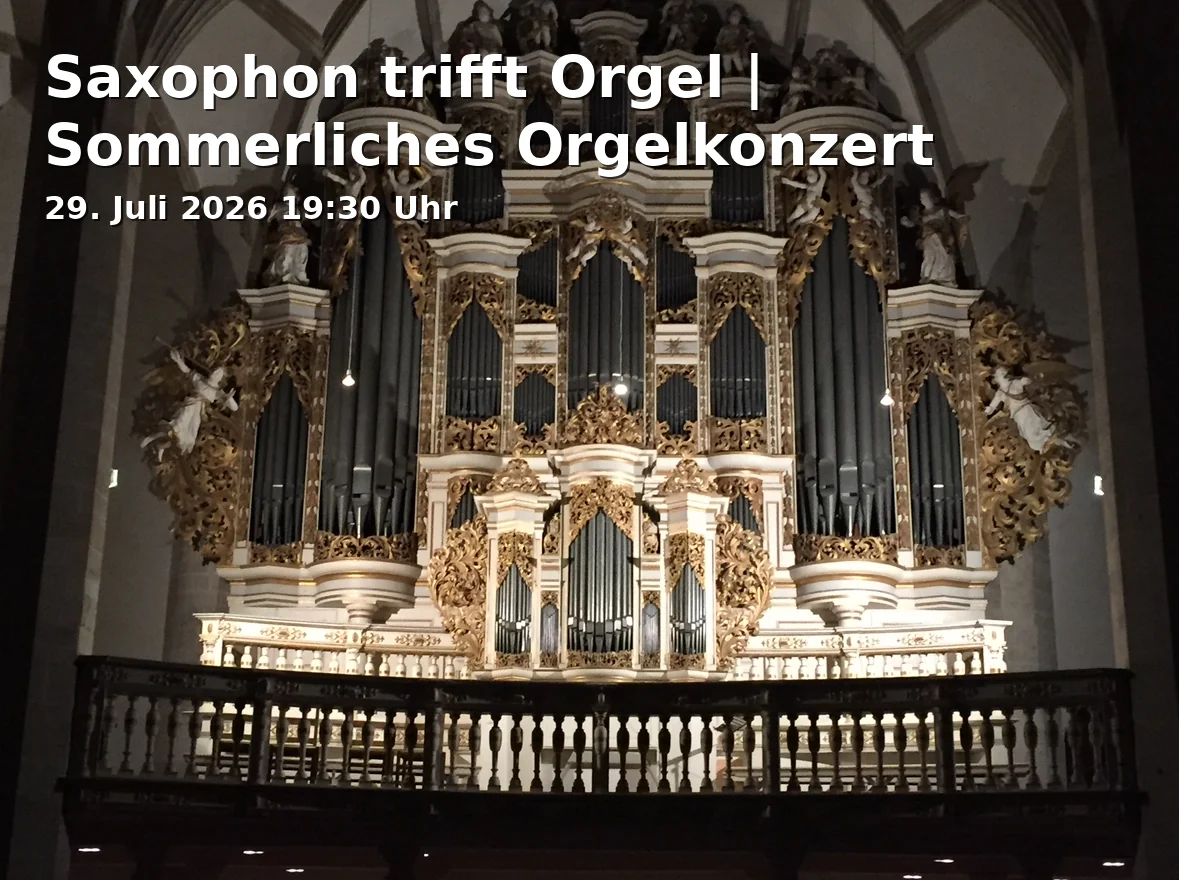
Saxophone Meets Organ | Summer Organ Concert
An evening full of sound colors in the Friedenskirche Hamborn: Saxophone and organ merge into a special live experience in Duisburg. #Concert
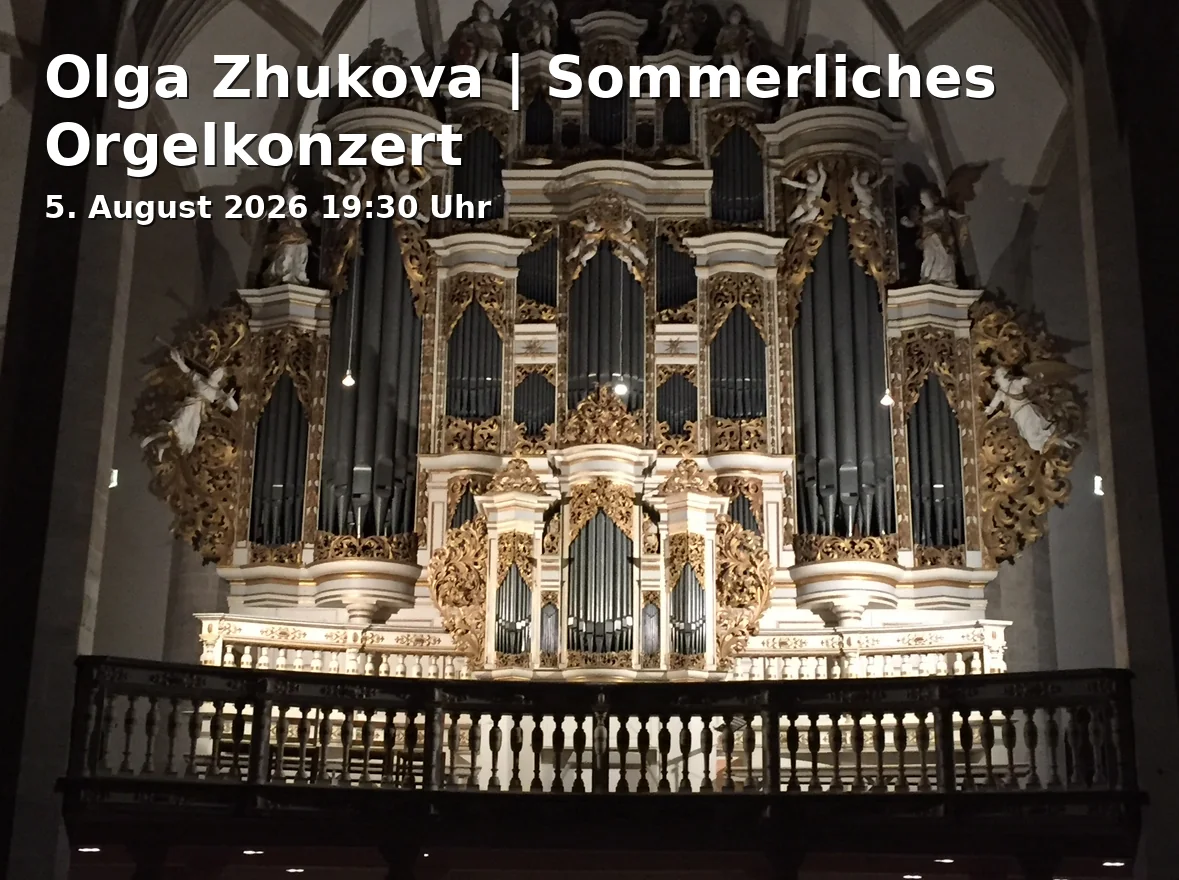
Olga Zhukova | Summer Organ Concert
A summer evening full of organ sound in Hamborn: Olga Zhukova brings virtuous depth and solemn atmosphere to Duisburg. 5.8.2026, 7:30 PM. #Classical
Frequently Asked Questions
Reviews
Bernd Krischok
26. November 2025
I visited my church again after 40 years. It was smaller than I remembered. Simple but beautiful. Memorial service for the deceased. It was beautifully done. Compliments to Pastor Nell.
Logo
31. January 2024
Interesting service 🛐 afterwards there's coffee and cake, or another refreshment 👌 for a donation 😍 I'm already looking forward to the Christmas mass.
Klaus Schuster
18. July 2025
A very beautiful and unique church with a special organ from Eule, Bautzen from 1974. Challenging concerts in summer.
Markus Burgdorf
17. March 2025
Beautiful premises and a restroom building next door for visitors, very clean!
Marcel Samel
31. October 2021
Neo-Gothic in Gründerzeit style. Seating and balustrade in baroque colors. A bit dark down there... but it feels more protective. Nice community. Cultural program. Restroom available (which is rare in churches).