
Duisburg
47 Duisburg, Deutschland
Duisburg | Attractions & Port
Duisburg is a city of contrasts, and it is precisely from this that it draws its special appeal. Between the Ruhr area and the Lower Rhine, industrial history and green recreational landscapes, urban dynamism and surprisingly much water, a cityscape emerges that immediately piques curiosity. Officially, Duisburg describes itself as a city of water & fire, and this mix is not just a sympathetic slogan but is visible in many areas of everyday life: on the Rhine, at the canals, at the port, in the large cultural and sports venues, and in the neighborhoods that continually reinvent themselves. Those who visit Duisburg do not experience a smoothly staged postcard city, but a place with character, depth, and a very own Ruhrpott tone. This is exactly why so many people search for Duisburg attractions, Duisburg port, Duisburg Zoo, or Duisburg Hbf when preparing for a visit. Duisburg is well connected, easily accessible by road, rail, and proximity to several airports, and at the same time compact enough to experience a lot in one day or over a weekend. ([duisburg.de](https://www.duisburg.de/tourismus/))
The size and diversity of the city are also remarkable. According to the current structural monitoring, 507,876 people lived in Duisburg in December 2024. About 180,000 residents have a migration background, and people from 163 nations live in the city. This explains why Duisburg appears so distinctive not only as a business location but also as a living space and travel destination. For guests, this is practical, as many different worlds of experience are condensed in a single city: port and inner harbor, zoo and landscape park, sports and culture, tradition and new beginnings. Those looking for current dates, events, tickets, or tourist information will find good initial orientation on the official city pages and at the Tourist Information. Duisburg is thus interesting for both spontaneous city trips and carefully planned city travels. ([duisburg.de](https://www.duisburg.de/microsites/wirtschaft/projekte-themen/branchenreports-und-marktanalysen.php.media/638049/ONLINE-Strukturmonitoring-2025-Wirtschaftliche-Entwicklung-in-Duisburg.pdf))
Duisburg's Attractions between Water, Change, and Industrial Backdrop
When summarizing the most well-known attractions in Duisburg, it quickly becomes apparent: The city does not live off a single monument but from its diversity. On the official tourism site, the Landscape Park Duisburg-Nord, Tiger & Turtle, the inner harbor, and other destinations are frequently mentioned, showcasing this tension between industry, nature, and urban experience. Duisburg is not a place where one simply visits an old town and has seen everything. Rather, the city unfolds in layers. There are the water locations on the Rhine and at the ports, the green excursion spots on the outskirts, the old industrial buildings with new uses, and the vibrant neighborhoods where everyday life and history are closely intertwined. Thus, those searching for Duisburg attractions do not just receive a list of places but a complete narrative model of the city: from work to leisure, from harbor to walking paths, from steelworks to cultural spaces. This mix makes Duisburg so strong and explains why the city remains in the minds of many guests, precisely because it does not seem interchangeable. ([duisburg.de](https://www.duisburg.de/tourismus/))
A particularly impressive example of this change is the Landscape Park Duisburg-Nord. Officially, it is described as a place where an ironworks once stood and today more than a million people experience leisure, sports, culture, and nature each year. The park is open around the clock, admission is free, and it offers a density of experiences that far exceeds that of a classic green space, with its industrial history trail, artificial diving gasometer, climbing garden in the bunker, blast furnace viewpoint, and nighttime light installation. For visitors seeking industrial culture, this is one of the strongest Duisburg moments ever. Here, one stands not only before a former production landscape but in a new urban landscape that makes the past visible while simultaneously showcasing the future. Therefore, the Landscape Park is one of the most important answers to the question of what makes Duisburg special. ([duisburg.de](https://www.duisburg.de/microsites/visit_duisburg/discover_the_city/industrial_heritage/landschaftspark-duisburg-nord))
The water connection also strongly shapes the city. The city of Duisburg is one of the water-richest cities in Germany, with rivers, lakes, and canals. This is not a detail but a central principle of urban life here. The Rhine, the harbor basins, the inner harbor, the Six Lakes Plateau, and the regatta course connect leisure, mobility, and cityscape in an unusually close manner. This is ideal for walks, bike tours, and short breaks, as one can quickly move from dense development to open water and green spaces in Duisburg. Those who only know Duisburg as an industrial location overlook this second character trait. The city thrives on the balance between hard infrastructure and soft landscapes, and from this arises a travel experience that differs from many other Ruhr area cities. ([duisburg.de](https://www.duisburg.de/wohnenleben/wasser/wasser.php))
Duisburg Port and Inner Harbor: from Transshipment Point to Experience Mile
The Duisburg port is the heart of the city's identity. Officially, it is described as the largest inland port in the world. Around 36,000 people work in the approximately 250 resident companies, the port area extends from Ruhrort upstream on the Rhine to Rheinhausen, and the logistics hub is internationally connected. In addition, there are 22 harbor basins, around 180 hectares of water surface, and a massive transshipment volume. These figures explain why Duisburg is immediately associated with the port and trade in many minds. The port is not just a backdrop here but an economic reality, urban memory, and a symbol of global goods traffic. Therefore, standing by the water, one does not just see ships, cranes, and basins but one of the most important European hubs for transport and logistics. This is exactly what makes the port so interesting for visitors: it is not museum-like frozen but remains lively, productive, and of international importance. ([duisburg.de](https://www.duisburg.de/wohnenleben/wasser/hafen))
Particularly appealing for guests are the harbor tours. From the end of March to the end of October, the dimensions and processes can be observed from the ship, and the tours last between two and three and a half hours, depending on the offer. This is a good opportunity to not only understand the port as a term but to experience it in its actual dimension. The history also includes the 10-meter-high sculpture The Echo of Poseidon on Mercator Island, which welcomes arriving ships at the northernmost point of the port. Such details show that Duisburg understands the port not only functionally but also culturally and symbolically. Therefore, those who visit the port experience a mix of logistics, history, and urban staging that is hard to surpass in the Ruhr area. ([duisburg.de](https://www.duisburg.de/wohnenleben/wasser/hafen))
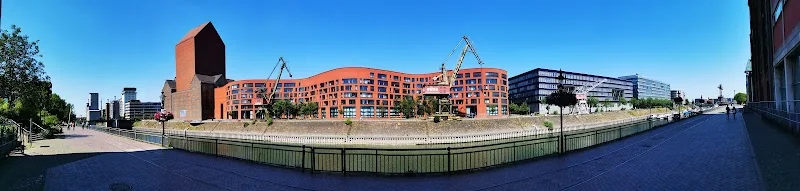
Even more urban, even more focused on stay and encounter is the Duisburg inner harbor. Officially, it is described as one of the most visible examples of successful structural change in the Ruhr area. In the past, grain was loaded here; today, bistros, restaurants, modern architecture, museums, and walking paths meet by the water. The inner harbor is within walking distance of the city center, making it particularly attractive: one can walk directly from the city center to the water and experience a different, quieter, architecturally exciting side of Duisburg. Especially for visitors looking for Duisburg attractions, Duisburg news, or current highlights, the inner harbor is a place where urban life, culture, and relaxation come together in a compact space. It is neither a purely nightlife district nor a purely museum area but a hybrid urban space that vividly tells the story of Duisburg's development. ([duisburg.de](https://www.duisburg.de/microsites/visit_duisburg/discover_the_city/industrial_heritage/duisburg-inner-harbour.php))
The inner harbor also shows how confidently Duisburg has become in dealing with its past. Where once warehouses stood and goods were transshipped, architecturally striking buildings, workplaces, exhibition spaces, and places for locals and guests now stand. The district is thus not only a beautiful photo spot but also a teaching example of how a city does not suppress its history but repurposes it. Those who want to understand the structural change of the Ruhr area will find one of the most striking places for it here. Together with the port, a complete picture emerges that makes Duisburg unmistakable: a city where water does not just adorn but shapes; not only separates but connects; not only transports but tells stories. ([duisburg.de](https://www.duisburg.de/microsites/visit_duisburg/discover_the_city/industrial_heritage/duisburg-inner-harbour.php))
Duisburg Zoo: Koalas, Animal Worlds, and Family Outings
The Duisburg Zoo is one of the major attractions of the city. Officially, the city speaks of a green adventure park with over 5,000 animals, a children's playground, and many offerings for families. The special highlight is the koalas. Duisburg was the first zoo in Europe to successfully breed koalas, and today the zoo even coordinates the European breeding program. This role makes the zoo much more than just a nice excursion destination. It is also a place of species protection, education, and international zoological cooperation. For families, school classes, and animal lovers, this is a strong argument, as the visit is not only entertaining but also rich in content. Therefore, those searching for Duisburg Zoo often seek not just animals but an experience that combines nature, knowledge, and closeness. ([duisburg.de](https://www.duisburg.de/tourismus/stadt_erleben/freizeitundaktiv/zoo-duisburg.php))
The zoo is also very diverse in its layout. In addition to the koalas, there are spacious outdoor enclosures, a petting zoo, playgrounds, a pirate ship, and a low ropes course. Additionally, there are guided feedings and evening safaris, which are particularly exciting when animals that tend to be more reserved during the day can be observed. The zoo is open daily throughout the year, ticket times are regulated seasonally, and the animal houses close earlier or later depending on the season. This makes the outing planable yet flexible. Those traveling with children will find plenty of variety for several hours without the day becoming hectic. Particularly appealing is that the zoo emphasizes not only entertainment but also education, sustainability, and conservation programs. This combination of fun and substance makes it a staple of many guests' visits to Duisburg. ([duisburg.de](https://www.duisburg.de/tourismus/stadt_erleben/freizeitundaktiv/zoo-duisburg.php))
Getting there is also uncomplicated. From Duisburg Central Station, tram line 901 towards Mülheim/Zoo goes directly to the Zoo stop; alternatively, bus lines 924 and 933 take visitors to Universität/Zoo or Monning. This makes the zoo easily accessible for travelers without a car. This is important for a city like Duisburg, as many highlights can be easily combined with public transport. Therefore, those arriving by train, tram, or bus can easily integrate the zoo into a day plan. Particularly in conjunction with the inner harbor, city center, and central station, this results in a very practical city visit that works even without a car. ([duisburg.de](https://www.duisburg.de/tourismus/stadt_erleben/freizeitundaktiv/zoo-duisburg.php))
Duisburg Hbf, Arrival and Parking: Well Connected in the Middle of the Rhine and Ruhr
Those searching for Duisburg Hbf or Duisburg Central Station usually think of orientation, arrival, and onward travel. This is where the city scores. Duisburg is located in the heart of Europe, is excellently connected to the rail and motorway network, and is easily accessible via the airports of Düsseldorf, Weeze, and Dortmund. For the city trip, this means: Duisburg is quickly reached and is also an ideal starting point to explore the Rhine and Ruhr. The Tourist Information also explicitly points out that it provides advice on arrival, parking options, and mobility on-site. This is particularly helpful for visitors who want to switch between the zoo, port, city center, or arena. Duisburg thus functions not only as a destination but also as a hub. This fits the character of the city, as many paths indeed converge here. ([duisburg.de](https://www.duisburg.de/tourismus/service/lage-und-anreise.php))
At the central station itself, there is a very practical service point with the bike station. Bicycles are monitored, serviced, and rented there, and the station is located on the ground floor of the parking garage and cinema building at the east entrance. For cyclists, commuters, and day visitors, this is a real plus, as mobility in Duisburg works well not only by car or train but also by bike. This is complemented by other bike service stations in the city area, including at the main station-PortsMouthplatz, at the east entrance, and at the inner harbor. This shows how strongly the city relies on combined routes. For example, those arriving by train and then wanting to go to the inner harbor, zoo, or city center find good conditions for this. The parking issue is also simplified, as not every visit necessarily has to be planned with a car. ([duisburg.de](https://www.duisburg.de/microsites/pbv/verkehr/radstationen))
The tourist infrastructure around the station is also well developed. The Tourist Information Duisburg at Königstraße 86 issues tickets for events, offers brochures and maps, assists in planning group offerings, and is open on weekdays and Saturdays. This is particularly valuable for guests who arrive spontaneously. Duisburg is a city that can be well discovered on one’s own, but a quick look at the official offerings often provides a better overview. This applies not only to tours and boat trips but also to topics like city maps, mobility, or current events. Therefore, those who connect Duisburg Hbf with arrival, onward travel, and city experience have the best chances for a relaxed start to the day. ([duisburg.de](https://www.duisburg.de/tourismus/service/tourist-information-duisburg?utm_source=openai))
MSV Duisburg, Sports Park, and Schauinsland-Reisen-Arena
Duisburg is not only a port and cultural city but also a true sports city. This is particularly evident around MSV Duisburg and the Schauinsland-Reisen-Arena. Officially, the arena is described as the home of MSV Duisburg and the football club Rhein Fire, as well as a versatile event location. It is located in the Duisburg district of Neudorf in the Duisburg Sports Park, one of the most well-known sports and recreational areas in the region. Thus, the arena is more than just a football stadium. It is a place where top-level sports, events, and urban recreational landscapes mutually reinforce each other. Therefore, those searching for football in Duisburg quickly land at this arena and with MSV as the identity-forming club of the city. ([duisburg.de](https://duisburg.de/sport/schauinslandreisen_arena/schauinslandreisen-arena.php))
The numbers are impressive: the arena offers a total of 31,418 seats and was built between 2003 and 2005 on the site of the former Wedau Stadium. The facility is completely covered and designed to be suitable for both football matches and events and rentals. The connection is also practical: several bus lines go directly from the central station towards the arena, and there are around 2,000 parking spaces on site for drivers. This makes the visit uncomplicated, even when larger events take place. This is a plus for day visitors who want to combine sports and city visits. One can walk through the city center or to the inner harbor in the morning and experience a game or event in the arena in the afternoon. Duisburg clearly shows how closely urban experience and sports culture are intertwined. ([duisburg.de](https://duisburg.de/sport/schauinslandreisen_arena/schauinslandreisen-arena.php))
The larger framework around the arena is also exciting. The Six Lakes Plateau and the adjacent Duisburg Sports Park form a sports and recreational landscape of around 500 hectares, just a few kilometers from the city center. At the same time, the Wedau Sports Park itself is described as a 200-hectare sports and local recreation area. This combination of water, forest, sports, and stadium makes the entire area one of the most versatile recreational spots in the city. The regatta course complex is internationally known, and the place where MSV Duisburg plays its home games is familiar to many people through televised sports and stadium visits. For travelers, this means: those who want to experience Duisburg's sporting side will find not just a stadium but an entire sports quarter with its own dynamics. ([duisburg.de](https://www.duisburg.de/microsites/visit_duisburg/discover_the_city/activities_and_entertainment/sechs-seen-platte-und-sportpark-duisburg.php))
TANZtage, Festivals, and a Calendar Full of Life
Those looking for programs, events, or seasonal highlights in Duisburg will quickly come across the TANZtage. Officially, they are described as Germany's largest dance festival for non-professionals. More than 5,000 dancers participate in various styles, from hip-hop to show dance to ballet and street dance. The finale takes place at the Duisburg Theater, giving the competition an even more special stage. The TANZtage are thus not only an event for dance fans but also an important cultural sign of the city. They show that Duisburg can do much more than just harbor and industry. The city is also a place where young talents, clubs, schools, and dance groups become visible every year and reach a large audience. For many searches for Duisburg TANZtage, Duisburg news, or Duisburg messages, this vibrant event image is the actual core. ([duisburg.de](https://www.duisburg.de/tourismus/stadt_erleben/stadt_der_kultur/festivals-und-feste))
In addition, Duisburg offers an astonishingly dense cultural calendar. On the official tourism site, events such as the Traumzeit Festival in Landscape Park Duisburg-Nord, the Duisburg City Festival, the Wine Festival, the Ruhrort Harbor Festival, and the Duisburg Film Week are highlighted. The city's festival office also coordinates formats such as Duisburg Accents, TANZtage, Children's Culture Festival, and Traumzeit Festival. For visitors, this is exciting because it means that there is almost an occasion for a visit in every season. Whether music under blast furnaces, conversations at Dellplatz, wine enjoyment in the city, or harbor festival in Ruhrort: Duisburg offers a wide range of urban life that does not only target a single audience. This mix makes the city attractive for guests with different interests. ([duisburg.de](https://www.duisburg.de/tourismus/stadt_erleben/stadt_der_kultur/))
Particularly important is the idea of structural change as a cultural experience. In Duisburg, festivals are not simply organized on areas but often at places that tell a story themselves: in the landscape park between steel and light, in the theater in the middle of the city, by the water in Ruhrort harbor, or on Königstraße during the city festival. This creates an event profile that feels authentic and fits the city. Visitors thus experience Duisburg not only as a backdrop but as an active cultural space. Therefore, those searching for an appointment that goes beyond classic sightseeing will usually find several simultaneously fitting options in Duisburg. For families, music fans, dance enthusiasts, and friends of industrial culture, this is a strong argument for a visit. ([duisburg.de](https://www.duisburg.de/tourismus/stadt_erleben/stadt_der_kultur/festivals-und-feste))
Marxloh and Hochfeld: Districts with History, Diversity, and Future
Duisburg can be understood not only through its major landmarks but also through its districts. Marxloh is a good example of this. Officially, the district lies north of Duisburg's city center in the Hamborn district and had over 20,000 residents as of 2016. Historically, Marxloh grew through coal and steel industry; later, upheavals, structural change, and new uses shaped the district. The urban side today shows how closely history, trade, religious life, engagement, and neighborhood are interconnected here. For visitors, Marxloh is therefore not just a name from the news but a district with its own identity, its own history, and a lot of lived everyday life. Those searching for Duisburg Marxloh will find a place that is much more than a prejudice or a headline. ([duisburg.de](https://duisburg.de/wohnenleben/geografisch/stadtbezirke/marxloh.php))
Hochfeld is also an exciting district because urban development becomes very visible there. The city of Duisburg launched its own Hochfeld website in 2026, where current dates, participation opportunities, district development, and discovery offerings are bundled. Additionally, the City Living Park is described as a model project intended as a living and language space and is located in Hochfeld, a district with particular renewal needs. These facts show that Duisburg not only has historical or tourist highlights but is also actively working on the future, participation, and local identity in the neighborhoods. For searches like Duisburg Hochfeld or Duisburg residents, this is important because it makes the city recognizable as socially and spatially multifaceted. Duisburg is not just a city center or a port but a sum of different living spaces. ([duisburg.de](https://www.duisburg.de/pressemitteilungen/pm/2026/januar/hochfeld-hat-jetzt-eine-eigene-stadtteil-website))
The urban diversity is also reflected in the population. Around 180,000 people in Duisburg have a migration background, and people from 163 nations live together here. This is more than a statistical value. It explains the mix of neighborhoods, shops, clubs, festivals, and social initiatives that shape everyday life in Duisburg. Marxloh, Hochfeld, and other districts show that change in Duisburg is not abstract but takes place in the street scene, in the neighborhood, and in public life. This connection of big city, industrial culture, and diverse neighborhoods makes Duisburg an interesting travel destination. Those who reduce the city to the port and zoo miss its actual charm: the many different perspectives that together create a very distinctive overall picture. ([duisburg.de](https://www.duisburg.de/microsites/wir_sind_du/du_ist_bunt/neuzuwanderung.php))
Duisburg is thus a city for explorers who like to look between the lines. It is best to start with the big themes like the port, landscape park, zoo, or arena and then work towards the neighborhoods, festivals, and everyday places. It is precisely there that the liveliness of the city truly shows. Those needing current info, tours, tickets, or hints about arrival and mobility should keep an eye on the official tourism and city pages. This way, a mere search query quickly turns into a real city visit. Duisburg is worth it not despite its contrasts but precisely because of them. ([duisburg.de](https://www.duisburg.de/tourismus/service/tourist-information-duisburg?utm_source=openai))
Sources:
- Welcome to Duisburg - Duisburg City Portal
- Water - Duisburg City Portal
- Duisburg Port - Duisburg City Portal
- Duisburg Zoo - Duisburg City Portal
- Landscape Park Duisburg-Nord - Visit Duisburg
- Schauinsland-Reisen-Arena - Duisburg City
- Festivals and Fairs - Duisburg City Portal
- Marxloh - Duisburg City
- Hochfeld now has its own district website - Duisburg City
Mehr anzeigenWeniger anzeigen
Duisburg | Attractions & Port
Duisburg is a city of contrasts, and it is precisely from this that it draws its special appeal. Between the Ruhr area and the Lower Rhine, industrial history and green recreational landscapes, urban dynamism and surprisingly much water, a cityscape emerges that immediately piques curiosity. Officially, Duisburg describes itself as a city of water & fire, and this mix is not just a sympathetic slogan but is visible in many areas of everyday life: on the Rhine, at the canals, at the port, in the large cultural and sports venues, and in the neighborhoods that continually reinvent themselves. Those who visit Duisburg do not experience a smoothly staged postcard city, but a place with character, depth, and a very own Ruhrpott tone. This is exactly why so many people search for Duisburg attractions, Duisburg port, Duisburg Zoo, or Duisburg Hbf when preparing for a visit. Duisburg is well connected, easily accessible by road, rail, and proximity to several airports, and at the same time compact enough to experience a lot in one day or over a weekend. ([duisburg.de](https://www.duisburg.de/tourismus/))
The size and diversity of the city are also remarkable. According to the current structural monitoring, 507,876 people lived in Duisburg in December 2024. About 180,000 residents have a migration background, and people from 163 nations live in the city. This explains why Duisburg appears so distinctive not only as a business location but also as a living space and travel destination. For guests, this is practical, as many different worlds of experience are condensed in a single city: port and inner harbor, zoo and landscape park, sports and culture, tradition and new beginnings. Those looking for current dates, events, tickets, or tourist information will find good initial orientation on the official city pages and at the Tourist Information. Duisburg is thus interesting for both spontaneous city trips and carefully planned city travels. ([duisburg.de](https://www.duisburg.de/microsites/wirtschaft/projekte-themen/branchenreports-und-marktanalysen.php.media/638049/ONLINE-Strukturmonitoring-2025-Wirtschaftliche-Entwicklung-in-Duisburg.pdf))
Duisburg's Attractions between Water, Change, and Industrial Backdrop
When summarizing the most well-known attractions in Duisburg, it quickly becomes apparent: The city does not live off a single monument but from its diversity. On the official tourism site, the Landscape Park Duisburg-Nord, Tiger & Turtle, the inner harbor, and other destinations are frequently mentioned, showcasing this tension between industry, nature, and urban experience. Duisburg is not a place where one simply visits an old town and has seen everything. Rather, the city unfolds in layers. There are the water locations on the Rhine and at the ports, the green excursion spots on the outskirts, the old industrial buildings with new uses, and the vibrant neighborhoods where everyday life and history are closely intertwined. Thus, those searching for Duisburg attractions do not just receive a list of places but a complete narrative model of the city: from work to leisure, from harbor to walking paths, from steelworks to cultural spaces. This mix makes Duisburg so strong and explains why the city remains in the minds of many guests, precisely because it does not seem interchangeable. ([duisburg.de](https://www.duisburg.de/tourismus/))
A particularly impressive example of this change is the Landscape Park Duisburg-Nord. Officially, it is described as a place where an ironworks once stood and today more than a million people experience leisure, sports, culture, and nature each year. The park is open around the clock, admission is free, and it offers a density of experiences that far exceeds that of a classic green space, with its industrial history trail, artificial diving gasometer, climbing garden in the bunker, blast furnace viewpoint, and nighttime light installation. For visitors seeking industrial culture, this is one of the strongest Duisburg moments ever. Here, one stands not only before a former production landscape but in a new urban landscape that makes the past visible while simultaneously showcasing the future. Therefore, the Landscape Park is one of the most important answers to the question of what makes Duisburg special. ([duisburg.de](https://www.duisburg.de/microsites/visit_duisburg/discover_the_city/industrial_heritage/landschaftspark-duisburg-nord))
The water connection also strongly shapes the city. The city of Duisburg is one of the water-richest cities in Germany, with rivers, lakes, and canals. This is not a detail but a central principle of urban life here. The Rhine, the harbor basins, the inner harbor, the Six Lakes Plateau, and the regatta course connect leisure, mobility, and cityscape in an unusually close manner. This is ideal for walks, bike tours, and short breaks, as one can quickly move from dense development to open water and green spaces in Duisburg. Those who only know Duisburg as an industrial location overlook this second character trait. The city thrives on the balance between hard infrastructure and soft landscapes, and from this arises a travel experience that differs from many other Ruhr area cities. ([duisburg.de](https://www.duisburg.de/wohnenleben/wasser/wasser.php))
Duisburg Port and Inner Harbor: from Transshipment Point to Experience Mile
The Duisburg port is the heart of the city's identity. Officially, it is described as the largest inland port in the world. Around 36,000 people work in the approximately 250 resident companies, the port area extends from Ruhrort upstream on the Rhine to Rheinhausen, and the logistics hub is internationally connected. In addition, there are 22 harbor basins, around 180 hectares of water surface, and a massive transshipment volume. These figures explain why Duisburg is immediately associated with the port and trade in many minds. The port is not just a backdrop here but an economic reality, urban memory, and a symbol of global goods traffic. Therefore, standing by the water, one does not just see ships, cranes, and basins but one of the most important European hubs for transport and logistics. This is exactly what makes the port so interesting for visitors: it is not museum-like frozen but remains lively, productive, and of international importance. ([duisburg.de](https://www.duisburg.de/wohnenleben/wasser/hafen))
Particularly appealing for guests are the harbor tours. From the end of March to the end of October, the dimensions and processes can be observed from the ship, and the tours last between two and three and a half hours, depending on the offer. This is a good opportunity to not only understand the port as a term but to experience it in its actual dimension. The history also includes the 10-meter-high sculpture The Echo of Poseidon on Mercator Island, which welcomes arriving ships at the northernmost point of the port. Such details show that Duisburg understands the port not only functionally but also culturally and symbolically. Therefore, those who visit the port experience a mix of logistics, history, and urban staging that is hard to surpass in the Ruhr area. ([duisburg.de](https://www.duisburg.de/wohnenleben/wasser/hafen))
Even more urban, even more focused on stay and encounter is the Duisburg inner harbor. Officially, it is described as one of the most visible examples of successful structural change in the Ruhr area. In the past, grain was loaded here; today, bistros, restaurants, modern architecture, museums, and walking paths meet by the water. The inner harbor is within walking distance of the city center, making it particularly attractive: one can walk directly from the city center to the water and experience a different, quieter, architecturally exciting side of Duisburg. Especially for visitors looking for Duisburg attractions, Duisburg news, or current highlights, the inner harbor is a place where urban life, culture, and relaxation come together in a compact space. It is neither a purely nightlife district nor a purely museum area but a hybrid urban space that vividly tells the story of Duisburg's development. ([duisburg.de](https://www.duisburg.de/microsites/visit_duisburg/discover_the_city/industrial_heritage/duisburg-inner-harbour.php))
The inner harbor also shows how confidently Duisburg has become in dealing with its past. Where once warehouses stood and goods were transshipped, architecturally striking buildings, workplaces, exhibition spaces, and places for locals and guests now stand. The district is thus not only a beautiful photo spot but also a teaching example of how a city does not suppress its history but repurposes it. Those who want to understand the structural change of the Ruhr area will find one of the most striking places for it here. Together with the port, a complete picture emerges that makes Duisburg unmistakable: a city where water does not just adorn but shapes; not only separates but connects; not only transports but tells stories. ([duisburg.de](https://www.duisburg.de/microsites/visit_duisburg/discover_the_city/industrial_heritage/duisburg-inner-harbour.php))
Duisburg Zoo: Koalas, Animal Worlds, and Family Outings
The Duisburg Zoo is one of the major attractions of the city. Officially, the city speaks of a green adventure park with over 5,000 animals, a children's playground, and many offerings for families. The special highlight is the koalas. Duisburg was the first zoo in Europe to successfully breed koalas, and today the zoo even coordinates the European breeding program. This role makes the zoo much more than just a nice excursion destination. It is also a place of species protection, education, and international zoological cooperation. For families, school classes, and animal lovers, this is a strong argument, as the visit is not only entertaining but also rich in content. Therefore, those searching for Duisburg Zoo often seek not just animals but an experience that combines nature, knowledge, and closeness. ([duisburg.de](https://www.duisburg.de/tourismus/stadt_erleben/freizeitundaktiv/zoo-duisburg.php))
The zoo is also very diverse in its layout. In addition to the koalas, there are spacious outdoor enclosures, a petting zoo, playgrounds, a pirate ship, and a low ropes course. Additionally, there are guided feedings and evening safaris, which are particularly exciting when animals that tend to be more reserved during the day can be observed. The zoo is open daily throughout the year, ticket times are regulated seasonally, and the animal houses close earlier or later depending on the season. This makes the outing planable yet flexible. Those traveling with children will find plenty of variety for several hours without the day becoming hectic. Particularly appealing is that the zoo emphasizes not only entertainment but also education, sustainability, and conservation programs. This combination of fun and substance makes it a staple of many guests' visits to Duisburg. ([duisburg.de](https://www.duisburg.de/tourismus/stadt_erleben/freizeitundaktiv/zoo-duisburg.php))
Getting there is also uncomplicated. From Duisburg Central Station, tram line 901 towards Mülheim/Zoo goes directly to the Zoo stop; alternatively, bus lines 924 and 933 take visitors to Universität/Zoo or Monning. This makes the zoo easily accessible for travelers without a car. This is important for a city like Duisburg, as many highlights can be easily combined with public transport. Therefore, those arriving by train, tram, or bus can easily integrate the zoo into a day plan. Particularly in conjunction with the inner harbor, city center, and central station, this results in a very practical city visit that works even without a car. ([duisburg.de](https://www.duisburg.de/tourismus/stadt_erleben/freizeitundaktiv/zoo-duisburg.php))
Duisburg Hbf, Arrival and Parking: Well Connected in the Middle of the Rhine and Ruhr
Those searching for Duisburg Hbf or Duisburg Central Station usually think of orientation, arrival, and onward travel. This is where the city scores. Duisburg is located in the heart of Europe, is excellently connected to the rail and motorway network, and is easily accessible via the airports of Düsseldorf, Weeze, and Dortmund. For the city trip, this means: Duisburg is quickly reached and is also an ideal starting point to explore the Rhine and Ruhr. The Tourist Information also explicitly points out that it provides advice on arrival, parking options, and mobility on-site. This is particularly helpful for visitors who want to switch between the zoo, port, city center, or arena. Duisburg thus functions not only as a destination but also as a hub. This fits the character of the city, as many paths indeed converge here. ([duisburg.de](https://www.duisburg.de/tourismus/service/lage-und-anreise.php))
At the central station itself, there is a very practical service point with the bike station. Bicycles are monitored, serviced, and rented there, and the station is located on the ground floor of the parking garage and cinema building at the east entrance. For cyclists, commuters, and day visitors, this is a real plus, as mobility in Duisburg works well not only by car or train but also by bike. This is complemented by other bike service stations in the city area, including at the main station-PortsMouthplatz, at the east entrance, and at the inner harbor. This shows how strongly the city relies on combined routes. For example, those arriving by train and then wanting to go to the inner harbor, zoo, or city center find good conditions for this. The parking issue is also simplified, as not every visit necessarily has to be planned with a car. ([duisburg.de](https://www.duisburg.de/microsites/pbv/verkehr/radstationen))
The tourist infrastructure around the station is also well developed. The Tourist Information Duisburg at Königstraße 86 issues tickets for events, offers brochures and maps, assists in planning group offerings, and is open on weekdays and Saturdays. This is particularly valuable for guests who arrive spontaneously. Duisburg is a city that can be well discovered on one’s own, but a quick look at the official offerings often provides a better overview. This applies not only to tours and boat trips but also to topics like city maps, mobility, or current events. Therefore, those who connect Duisburg Hbf with arrival, onward travel, and city experience have the best chances for a relaxed start to the day. ([duisburg.de](https://www.duisburg.de/tourismus/service/tourist-information-duisburg?utm_source=openai))
MSV Duisburg, Sports Park, and Schauinsland-Reisen-Arena
Duisburg is not only a port and cultural city but also a true sports city. This is particularly evident around MSV Duisburg and the Schauinsland-Reisen-Arena. Officially, the arena is described as the home of MSV Duisburg and the football club Rhein Fire, as well as a versatile event location. It is located in the Duisburg district of Neudorf in the Duisburg Sports Park, one of the most well-known sports and recreational areas in the region. Thus, the arena is more than just a football stadium. It is a place where top-level sports, events, and urban recreational landscapes mutually reinforce each other. Therefore, those searching for football in Duisburg quickly land at this arena and with MSV as the identity-forming club of the city. ([duisburg.de](https://duisburg.de/sport/schauinslandreisen_arena/schauinslandreisen-arena.php))
The numbers are impressive: the arena offers a total of 31,418 seats and was built between 2003 and 2005 on the site of the former Wedau Stadium. The facility is completely covered and designed to be suitable for both football matches and events and rentals. The connection is also practical: several bus lines go directly from the central station towards the arena, and there are around 2,000 parking spaces on site for drivers. This makes the visit uncomplicated, even when larger events take place. This is a plus for day visitors who want to combine sports and city visits. One can walk through the city center or to the inner harbor in the morning and experience a game or event in the arena in the afternoon. Duisburg clearly shows how closely urban experience and sports culture are intertwined. ([duisburg.de](https://duisburg.de/sport/schauinslandreisen_arena/schauinslandreisen-arena.php))
The larger framework around the arena is also exciting. The Six Lakes Plateau and the adjacent Duisburg Sports Park form a sports and recreational landscape of around 500 hectares, just a few kilometers from the city center. At the same time, the Wedau Sports Park itself is described as a 200-hectare sports and local recreation area. This combination of water, forest, sports, and stadium makes the entire area one of the most versatile recreational spots in the city. The regatta course complex is internationally known, and the place where MSV Duisburg plays its home games is familiar to many people through televised sports and stadium visits. For travelers, this means: those who want to experience Duisburg's sporting side will find not just a stadium but an entire sports quarter with its own dynamics. ([duisburg.de](https://www.duisburg.de/microsites/visit_duisburg/discover_the_city/activities_and_entertainment/sechs-seen-platte-und-sportpark-duisburg.php))
TANZtage, Festivals, and a Calendar Full of Life
Those looking for programs, events, or seasonal highlights in Duisburg will quickly come across the TANZtage. Officially, they are described as Germany's largest dance festival for non-professionals. More than 5,000 dancers participate in various styles, from hip-hop to show dance to ballet and street dance. The finale takes place at the Duisburg Theater, giving the competition an even more special stage. The TANZtage are thus not only an event for dance fans but also an important cultural sign of the city. They show that Duisburg can do much more than just harbor and industry. The city is also a place where young talents, clubs, schools, and dance groups become visible every year and reach a large audience. For many searches for Duisburg TANZtage, Duisburg news, or Duisburg messages, this vibrant event image is the actual core. ([duisburg.de](https://www.duisburg.de/tourismus/stadt_erleben/stadt_der_kultur/festivals-und-feste))
In addition, Duisburg offers an astonishingly dense cultural calendar. On the official tourism site, events such as the Traumzeit Festival in Landscape Park Duisburg-Nord, the Duisburg City Festival, the Wine Festival, the Ruhrort Harbor Festival, and the Duisburg Film Week are highlighted. The city's festival office also coordinates formats such as Duisburg Accents, TANZtage, Children's Culture Festival, and Traumzeit Festival. For visitors, this is exciting because it means that there is almost an occasion for a visit in every season. Whether music under blast furnaces, conversations at Dellplatz, wine enjoyment in the city, or harbor festival in Ruhrort: Duisburg offers a wide range of urban life that does not only target a single audience. This mix makes the city attractive for guests with different interests. ([duisburg.de](https://www.duisburg.de/tourismus/stadt_erleben/stadt_der_kultur/))
Particularly important is the idea of structural change as a cultural experience. In Duisburg, festivals are not simply organized on areas but often at places that tell a story themselves: in the landscape park between steel and light, in the theater in the middle of the city, by the water in Ruhrort harbor, or on Königstraße during the city festival. This creates an event profile that feels authentic and fits the city. Visitors thus experience Duisburg not only as a backdrop but as an active cultural space. Therefore, those searching for an appointment that goes beyond classic sightseeing will usually find several simultaneously fitting options in Duisburg. For families, music fans, dance enthusiasts, and friends of industrial culture, this is a strong argument for a visit. ([duisburg.de](https://www.duisburg.de/tourismus/stadt_erleben/stadt_der_kultur/festivals-und-feste))
Marxloh and Hochfeld: Districts with History, Diversity, and Future
Duisburg can be understood not only through its major landmarks but also through its districts. Marxloh is a good example of this. Officially, the district lies north of Duisburg's city center in the Hamborn district and had over 20,000 residents as of 2016. Historically, Marxloh grew through coal and steel industry; later, upheavals, structural change, and new uses shaped the district. The urban side today shows how closely history, trade, religious life, engagement, and neighborhood are interconnected here. For visitors, Marxloh is therefore not just a name from the news but a district with its own identity, its own history, and a lot of lived everyday life. Those searching for Duisburg Marxloh will find a place that is much more than a prejudice or a headline. ([duisburg.de](https://duisburg.de/wohnenleben/geografisch/stadtbezirke/marxloh.php))
Hochfeld is also an exciting district because urban development becomes very visible there. The city of Duisburg launched its own Hochfeld website in 2026, where current dates, participation opportunities, district development, and discovery offerings are bundled. Additionally, the City Living Park is described as a model project intended as a living and language space and is located in Hochfeld, a district with particular renewal needs. These facts show that Duisburg not only has historical or tourist highlights but is also actively working on the future, participation, and local identity in the neighborhoods. For searches like Duisburg Hochfeld or Duisburg residents, this is important because it makes the city recognizable as socially and spatially multifaceted. Duisburg is not just a city center or a port but a sum of different living spaces. ([duisburg.de](https://www.duisburg.de/pressemitteilungen/pm/2026/januar/hochfeld-hat-jetzt-eine-eigene-stadtteil-website))
The urban diversity is also reflected in the population. Around 180,000 people in Duisburg have a migration background, and people from 163 nations live together here. This is more than a statistical value. It explains the mix of neighborhoods, shops, clubs, festivals, and social initiatives that shape everyday life in Duisburg. Marxloh, Hochfeld, and other districts show that change in Duisburg is not abstract but takes place in the street scene, in the neighborhood, and in public life. This connection of big city, industrial culture, and diverse neighborhoods makes Duisburg an interesting travel destination. Those who reduce the city to the port and zoo miss its actual charm: the many different perspectives that together create a very distinctive overall picture. ([duisburg.de](https://www.duisburg.de/microsites/wir_sind_du/du_ist_bunt/neuzuwanderung.php))
Duisburg is thus a city for explorers who like to look between the lines. It is best to start with the big themes like the port, landscape park, zoo, or arena and then work towards the neighborhoods, festivals, and everyday places. It is precisely there that the liveliness of the city truly shows. Those needing current info, tours, tickets, or hints about arrival and mobility should keep an eye on the official tourism and city pages. This way, a mere search query quickly turns into a real city visit. Duisburg is worth it not despite its contrasts but precisely because of them. ([duisburg.de](https://www.duisburg.de/tourismus/service/tourist-information-duisburg?utm_source=openai))
Sources:
- Welcome to Duisburg - Duisburg City Portal
- Water - Duisburg City Portal
- Duisburg Port - Duisburg City Portal
- Duisburg Zoo - Duisburg City Portal
- Landscape Park Duisburg-Nord - Visit Duisburg
- Schauinsland-Reisen-Arena - Duisburg City
- Festivals and Fairs - Duisburg City Portal
- Marxloh - Duisburg City
- Hochfeld now has its own district website - Duisburg City
Duisburg | Attractions & Port
Duisburg is a city of contrasts, and it is precisely from this that it draws its special appeal. Between the Ruhr area and the Lower Rhine, industrial history and green recreational landscapes, urban dynamism and surprisingly much water, a cityscape emerges that immediately piques curiosity. Officially, Duisburg describes itself as a city of water & fire, and this mix is not just a sympathetic slogan but is visible in many areas of everyday life: on the Rhine, at the canals, at the port, in the large cultural and sports venues, and in the neighborhoods that continually reinvent themselves. Those who visit Duisburg do not experience a smoothly staged postcard city, but a place with character, depth, and a very own Ruhrpott tone. This is exactly why so many people search for Duisburg attractions, Duisburg port, Duisburg Zoo, or Duisburg Hbf when preparing for a visit. Duisburg is well connected, easily accessible by road, rail, and proximity to several airports, and at the same time compact enough to experience a lot in one day or over a weekend. ([duisburg.de](https://www.duisburg.de/tourismus/))
The size and diversity of the city are also remarkable. According to the current structural monitoring, 507,876 people lived in Duisburg in December 2024. About 180,000 residents have a migration background, and people from 163 nations live in the city. This explains why Duisburg appears so distinctive not only as a business location but also as a living space and travel destination. For guests, this is practical, as many different worlds of experience are condensed in a single city: port and inner harbor, zoo and landscape park, sports and culture, tradition and new beginnings. Those looking for current dates, events, tickets, or tourist information will find good initial orientation on the official city pages and at the Tourist Information. Duisburg is thus interesting for both spontaneous city trips and carefully planned city travels. ([duisburg.de](https://www.duisburg.de/microsites/wirtschaft/projekte-themen/branchenreports-und-marktanalysen.php.media/638049/ONLINE-Strukturmonitoring-2025-Wirtschaftliche-Entwicklung-in-Duisburg.pdf))
Duisburg's Attractions between Water, Change, and Industrial Backdrop
When summarizing the most well-known attractions in Duisburg, it quickly becomes apparent: The city does not live off a single monument but from its diversity. On the official tourism site, the Landscape Park Duisburg-Nord, Tiger & Turtle, the inner harbor, and other destinations are frequently mentioned, showcasing this tension between industry, nature, and urban experience. Duisburg is not a place where one simply visits an old town and has seen everything. Rather, the city unfolds in layers. There are the water locations on the Rhine and at the ports, the green excursion spots on the outskirts, the old industrial buildings with new uses, and the vibrant neighborhoods where everyday life and history are closely intertwined. Thus, those searching for Duisburg attractions do not just receive a list of places but a complete narrative model of the city: from work to leisure, from harbor to walking paths, from steelworks to cultural spaces. This mix makes Duisburg so strong and explains why the city remains in the minds of many guests, precisely because it does not seem interchangeable. ([duisburg.de](https://www.duisburg.de/tourismus/))
A particularly impressive example of this change is the Landscape Park Duisburg-Nord. Officially, it is described as a place where an ironworks once stood and today more than a million people experience leisure, sports, culture, and nature each year. The park is open around the clock, admission is free, and it offers a density of experiences that far exceeds that of a classic green space, with its industrial history trail, artificial diving gasometer, climbing garden in the bunker, blast furnace viewpoint, and nighttime light installation. For visitors seeking industrial culture, this is one of the strongest Duisburg moments ever. Here, one stands not only before a former production landscape but in a new urban landscape that makes the past visible while simultaneously showcasing the future. Therefore, the Landscape Park is one of the most important answers to the question of what makes Duisburg special. ([duisburg.de](https://www.duisburg.de/microsites/visit_duisburg/discover_the_city/industrial_heritage/landschaftspark-duisburg-nord))
The water connection also strongly shapes the city. The city of Duisburg is one of the water-richest cities in Germany, with rivers, lakes, and canals. This is not a detail but a central principle of urban life here. The Rhine, the harbor basins, the inner harbor, the Six Lakes Plateau, and the regatta course connect leisure, mobility, and cityscape in an unusually close manner. This is ideal for walks, bike tours, and short breaks, as one can quickly move from dense development to open water and green spaces in Duisburg. Those who only know Duisburg as an industrial location overlook this second character trait. The city thrives on the balance between hard infrastructure and soft landscapes, and from this arises a travel experience that differs from many other Ruhr area cities. ([duisburg.de](https://www.duisburg.de/wohnenleben/wasser/wasser.php))
Duisburg Port and Inner Harbor: from Transshipment Point to Experience Mile
The Duisburg port is the heart of the city's identity. Officially, it is described as the largest inland port in the world. Around 36,000 people work in the approximately 250 resident companies, the port area extends from Ruhrort upstream on the Rhine to Rheinhausen, and the logistics hub is internationally connected. In addition, there are 22 harbor basins, around 180 hectares of water surface, and a massive transshipment volume. These figures explain why Duisburg is immediately associated with the port and trade in many minds. The port is not just a backdrop here but an economic reality, urban memory, and a symbol of global goods traffic. Therefore, standing by the water, one does not just see ships, cranes, and basins but one of the most important European hubs for transport and logistics. This is exactly what makes the port so interesting for visitors: it is not museum-like frozen but remains lively, productive, and of international importance. ([duisburg.de](https://www.duisburg.de/wohnenleben/wasser/hafen))
Particularly appealing for guests are the harbor tours. From the end of March to the end of October, the dimensions and processes can be observed from the ship, and the tours last between two and three and a half hours, depending on the offer. This is a good opportunity to not only understand the port as a term but to experience it in its actual dimension. The history also includes the 10-meter-high sculpture The Echo of Poseidon on Mercator Island, which welcomes arriving ships at the northernmost point of the port. Such details show that Duisburg understands the port not only functionally but also culturally and symbolically. Therefore, those who visit the port experience a mix of logistics, history, and urban staging that is hard to surpass in the Ruhr area. ([duisburg.de](https://www.duisburg.de/wohnenleben/wasser/hafen))
Even more urban, even more focused on stay and encounter is the Duisburg inner harbor. Officially, it is described as one of the most visible examples of successful structural change in the Ruhr area. In the past, grain was loaded here; today, bistros, restaurants, modern architecture, museums, and walking paths meet by the water. The inner harbor is within walking distance of the city center, making it particularly attractive: one can walk directly from the city center to the water and experience a different, quieter, architecturally exciting side of Duisburg. Especially for visitors looking for Duisburg attractions, Duisburg news, or current highlights, the inner harbor is a place where urban life, culture, and relaxation come together in a compact space. It is neither a purely nightlife district nor a purely museum area but a hybrid urban space that vividly tells the story of Duisburg's development. ([duisburg.de](https://www.duisburg.de/microsites/visit_duisburg/discover_the_city/industrial_heritage/duisburg-inner-harbour.php))
The inner harbor also shows how confidently Duisburg has become in dealing with its past. Where once warehouses stood and goods were transshipped, architecturally striking buildings, workplaces, exhibition spaces, and places for locals and guests now stand. The district is thus not only a beautiful photo spot but also a teaching example of how a city does not suppress its history but repurposes it. Those who want to understand the structural change of the Ruhr area will find one of the most striking places for it here. Together with the port, a complete picture emerges that makes Duisburg unmistakable: a city where water does not just adorn but shapes; not only separates but connects; not only transports but tells stories. ([duisburg.de](https://www.duisburg.de/microsites/visit_duisburg/discover_the_city/industrial_heritage/duisburg-inner-harbour.php))
Duisburg Zoo: Koalas, Animal Worlds, and Family Outings
The Duisburg Zoo is one of the major attractions of the city. Officially, the city speaks of a green adventure park with over 5,000 animals, a children's playground, and many offerings for families. The special highlight is the koalas. Duisburg was the first zoo in Europe to successfully breed koalas, and today the zoo even coordinates the European breeding program. This role makes the zoo much more than just a nice excursion destination. It is also a place of species protection, education, and international zoological cooperation. For families, school classes, and animal lovers, this is a strong argument, as the visit is not only entertaining but also rich in content. Therefore, those searching for Duisburg Zoo often seek not just animals but an experience that combines nature, knowledge, and closeness. ([duisburg.de](https://www.duisburg.de/tourismus/stadt_erleben/freizeitundaktiv/zoo-duisburg.php))
The zoo is also very diverse in its layout. In addition to the koalas, there are spacious outdoor enclosures, a petting zoo, playgrounds, a pirate ship, and a low ropes course. Additionally, there are guided feedings and evening safaris, which are particularly exciting when animals that tend to be more reserved during the day can be observed. The zoo is open daily throughout the year, ticket times are regulated seasonally, and the animal houses close earlier or later depending on the season. This makes the outing planable yet flexible. Those traveling with children will find plenty of variety for several hours without the day becoming hectic. Particularly appealing is that the zoo emphasizes not only entertainment but also education, sustainability, and conservation programs. This combination of fun and substance makes it a staple of many guests' visits to Duisburg. ([duisburg.de](https://www.duisburg.de/tourismus/stadt_erleben/freizeitundaktiv/zoo-duisburg.php))
Getting there is also uncomplicated. From Duisburg Central Station, tram line 901 towards Mülheim/Zoo goes directly to the Zoo stop; alternatively, bus lines 924 and 933 take visitors to Universität/Zoo or Monning. This makes the zoo easily accessible for travelers without a car. This is important for a city like Duisburg, as many highlights can be easily combined with public transport. Therefore, those arriving by train, tram, or bus can easily integrate the zoo into a day plan. Particularly in conjunction with the inner harbor, city center, and central station, this results in a very practical city visit that works even without a car. ([duisburg.de](https://www.duisburg.de/tourismus/stadt_erleben/freizeitundaktiv/zoo-duisburg.php))
Duisburg Hbf, Arrival and Parking: Well Connected in the Middle of the Rhine and Ruhr
Those searching for Duisburg Hbf or Duisburg Central Station usually think of orientation, arrival, and onward travel. This is where the city scores. Duisburg is located in the heart of Europe, is excellently connected to the rail and motorway network, and is easily accessible via the airports of Düsseldorf, Weeze, and Dortmund. For the city trip, this means: Duisburg is quickly reached and is also an ideal starting point to explore the Rhine and Ruhr. The Tourist Information also explicitly points out that it provides advice on arrival, parking options, and mobility on-site. This is particularly helpful for visitors who want to switch between the zoo, port, city center, or arena. Duisburg thus functions not only as a destination but also as a hub. This fits the character of the city, as many paths indeed converge here. ([duisburg.de](https://www.duisburg.de/tourismus/service/lage-und-anreise.php))
At the central station itself, there is a very practical service point with the bike station. Bicycles are monitored, serviced, and rented there, and the station is located on the ground floor of the parking garage and cinema building at the east entrance. For cyclists, commuters, and day visitors, this is a real plus, as mobility in Duisburg works well not only by car or train but also by bike. This is complemented by other bike service stations in the city area, including at the main station-PortsMouthplatz, at the east entrance, and at the inner harbor. This shows how strongly the city relies on combined routes. For example, those arriving by train and then wanting to go to the inner harbor, zoo, or city center find good conditions for this. The parking issue is also simplified, as not every visit necessarily has to be planned with a car. ([duisburg.de](https://www.duisburg.de/microsites/pbv/verkehr/radstationen))
The tourist infrastructure around the station is also well developed. The Tourist Information Duisburg at Königstraße 86 issues tickets for events, offers brochures and maps, assists in planning group offerings, and is open on weekdays and Saturdays. This is particularly valuable for guests who arrive spontaneously. Duisburg is a city that can be well discovered on one’s own, but a quick look at the official offerings often provides a better overview. This applies not only to tours and boat trips but also to topics like city maps, mobility, or current events. Therefore, those who connect Duisburg Hbf with arrival, onward travel, and city experience have the best chances for a relaxed start to the day. ([duisburg.de](https://www.duisburg.de/tourismus/service/tourist-information-duisburg?utm_source=openai))
MSV Duisburg, Sports Park, and Schauinsland-Reisen-Arena
Duisburg is not only a port and cultural city but also a true sports city. This is particularly evident around MSV Duisburg and the Schauinsland-Reisen-Arena. Officially, the arena is described as the home of MSV Duisburg and the football club Rhein Fire, as well as a versatile event location. It is located in the Duisburg district of Neudorf in the Duisburg Sports Park, one of the most well-known sports and recreational areas in the region. Thus, the arena is more than just a football stadium. It is a place where top-level sports, events, and urban recreational landscapes mutually reinforce each other. Therefore, those searching for football in Duisburg quickly land at this arena and with MSV as the identity-forming club of the city. ([duisburg.de](https://duisburg.de/sport/schauinslandreisen_arena/schauinslandreisen-arena.php))
The numbers are impressive: the arena offers a total of 31,418 seats and was built between 2003 and 2005 on the site of the former Wedau Stadium. The facility is completely covered and designed to be suitable for both football matches and events and rentals. The connection is also practical: several bus lines go directly from the central station towards the arena, and there are around 2,000 parking spaces on site for drivers. This makes the visit uncomplicated, even when larger events take place. This is a plus for day visitors who want to combine sports and city visits. One can walk through the city center or to the inner harbor in the morning and experience a game or event in the arena in the afternoon. Duisburg clearly shows how closely urban experience and sports culture are intertwined. ([duisburg.de](https://duisburg.de/sport/schauinslandreisen_arena/schauinslandreisen-arena.php))
The larger framework around the arena is also exciting. The Six Lakes Plateau and the adjacent Duisburg Sports Park form a sports and recreational landscape of around 500 hectares, just a few kilometers from the city center. At the same time, the Wedau Sports Park itself is described as a 200-hectare sports and local recreation area. This combination of water, forest, sports, and stadium makes the entire area one of the most versatile recreational spots in the city. The regatta course complex is internationally known, and the place where MSV Duisburg plays its home games is familiar to many people through televised sports and stadium visits. For travelers, this means: those who want to experience Duisburg's sporting side will find not just a stadium but an entire sports quarter with its own dynamics. ([duisburg.de](https://www.duisburg.de/microsites/visit_duisburg/discover_the_city/activities_and_entertainment/sechs-seen-platte-und-sportpark-duisburg.php))
TANZtage, Festivals, and a Calendar Full of Life
Those looking for programs, events, or seasonal highlights in Duisburg will quickly come across the TANZtage. Officially, they are described as Germany's largest dance festival for non-professionals. More than 5,000 dancers participate in various styles, from hip-hop to show dance to ballet and street dance. The finale takes place at the Duisburg Theater, giving the competition an even more special stage. The TANZtage are thus not only an event for dance fans but also an important cultural sign of the city. They show that Duisburg can do much more than just harbor and industry. The city is also a place where young talents, clubs, schools, and dance groups become visible every year and reach a large audience. For many searches for Duisburg TANZtage, Duisburg news, or Duisburg messages, this vibrant event image is the actual core. ([duisburg.de](https://www.duisburg.de/tourismus/stadt_erleben/stadt_der_kultur/festivals-und-feste))
In addition, Duisburg offers an astonishingly dense cultural calendar. On the official tourism site, events such as the Traumzeit Festival in Landscape Park Duisburg-Nord, the Duisburg City Festival, the Wine Festival, the Ruhrort Harbor Festival, and the Duisburg Film Week are highlighted. The city's festival office also coordinates formats such as Duisburg Accents, TANZtage, Children's Culture Festival, and Traumzeit Festival. For visitors, this is exciting because it means that there is almost an occasion for a visit in every season. Whether music under blast furnaces, conversations at Dellplatz, wine enjoyment in the city, or harbor festival in Ruhrort: Duisburg offers a wide range of urban life that does not only target a single audience. This mix makes the city attractive for guests with different interests. ([duisburg.de](https://www.duisburg.de/tourismus/stadt_erleben/stadt_der_kultur/))
Particularly important is the idea of structural change as a cultural experience. In Duisburg, festivals are not simply organized on areas but often at places that tell a story themselves: in the landscape park between steel and light, in the theater in the middle of the city, by the water in Ruhrort harbor, or on Königstraße during the city festival. This creates an event profile that feels authentic and fits the city. Visitors thus experience Duisburg not only as a backdrop but as an active cultural space. Therefore, those searching for an appointment that goes beyond classic sightseeing will usually find several simultaneously fitting options in Duisburg. For families, music fans, dance enthusiasts, and friends of industrial culture, this is a strong argument for a visit. ([duisburg.de](https://www.duisburg.de/tourismus/stadt_erleben/stadt_der_kultur/festivals-und-feste))
Marxloh and Hochfeld: Districts with History, Diversity, and Future
Duisburg can be understood not only through its major landmarks but also through its districts. Marxloh is a good example of this. Officially, the district lies north of Duisburg's city center in the Hamborn district and had over 20,000 residents as of 2016. Historically, Marxloh grew through coal and steel industry; later, upheavals, structural change, and new uses shaped the district. The urban side today shows how closely history, trade, religious life, engagement, and neighborhood are interconnected here. For visitors, Marxloh is therefore not just a name from the news but a district with its own identity, its own history, and a lot of lived everyday life. Those searching for Duisburg Marxloh will find a place that is much more than a prejudice or a headline. ([duisburg.de](https://duisburg.de/wohnenleben/geografisch/stadtbezirke/marxloh.php))
Hochfeld is also an exciting district because urban development becomes very visible there. The city of Duisburg launched its own Hochfeld website in 2026, where current dates, participation opportunities, district development, and discovery offerings are bundled. Additionally, the City Living Park is described as a model project intended as a living and language space and is located in Hochfeld, a district with particular renewal needs. These facts show that Duisburg not only has historical or tourist highlights but is also actively working on the future, participation, and local identity in the neighborhoods. For searches like Duisburg Hochfeld or Duisburg residents, this is important because it makes the city recognizable as socially and spatially multifaceted. Duisburg is not just a city center or a port but a sum of different living spaces. ([duisburg.de](https://www.duisburg.de/pressemitteilungen/pm/2026/januar/hochfeld-hat-jetzt-eine-eigene-stadtteil-website))
The urban diversity is also reflected in the population. Around 180,000 people in Duisburg have a migration background, and people from 163 nations live together here. This is more than a statistical value. It explains the mix of neighborhoods, shops, clubs, festivals, and social initiatives that shape everyday life in Duisburg. Marxloh, Hochfeld, and other districts show that change in Duisburg is not abstract but takes place in the street scene, in the neighborhood, and in public life. This connection of big city, industrial culture, and diverse neighborhoods makes Duisburg an interesting travel destination. Those who reduce the city to the port and zoo miss its actual charm: the many different perspectives that together create a very distinctive overall picture. ([duisburg.de](https://www.duisburg.de/microsites/wir_sind_du/du_ist_bunt/neuzuwanderung.php))
Duisburg is thus a city for explorers who like to look between the lines. It is best to start with the big themes like the port, landscape park, zoo, or arena and then work towards the neighborhoods, festivals, and everyday places. It is precisely there that the liveliness of the city truly shows. Those needing current info, tours, tickets, or hints about arrival and mobility should keep an eye on the official tourism and city pages. This way, a mere search query quickly turns into a real city visit. Duisburg is worth it not despite its contrasts but precisely because of them. ([duisburg.de](https://www.duisburg.de/tourismus/service/tourist-information-duisburg?utm_source=openai))
Sources:
- Welcome to Duisburg - Duisburg City Portal
- Water - Duisburg City Portal
- Duisburg Port - Duisburg City Portal
- Duisburg Zoo - Duisburg City Portal
- Landscape Park Duisburg-Nord - Visit Duisburg
- Schauinsland-Reisen-Arena - Duisburg City
- Festivals and Fairs - Duisburg City Portal
- Marxloh - Duisburg City
- Hochfeld now has its own district website - Duisburg City
Upcoming Events

STADTRADELN Duisburg 2026
Duisburg gets on the bike: 21 days of team spirit, climate action, and city route pure. Free kickoff on June 27, 2026, at Opera Square. #STADTRADELN
Weekly Program Play Center South 06.07.2026- 10.07.2026
Five days full of play, movement, and creativity in Duisburg-Großenbaum: The weekly program at the Play Center South offers children free admission and plenty of summer joy. #FamilyTime

Open House
Open doors, creative minds, and after-work vibes at KS36 Duisburg: The Open House brings coworking and exchange together. 08.07.2026, free entry. #Duisburg

Ultimate Frisbee for Kids in Duisburg
Children aged 8 and older experience a free sports afternoon full of speed, team spirit, and fair play in Duisburg. On 08.07.2026 at 5 PM at PSV Duisburg. #FamilyExperience
Darts at TKD Duisburg
Precision over chance: At Darts at TKD Duisburg, technique, concentration, and club atmosphere come together. 8.7.2026, 6:00 PM. #Darts #Duisburg

Day of Duisburg Career Exploration
Duisburg displays career worlds within reach: At the Inner Harbor, practical experiences, conversations, and future ideas await. 09.07.2026, free admission. #Duisburg

Japan's Politics on Climate and Environmental Issues
Japan meets Climate Policy: In Duisburg, Prof. Dr. Axel Klein gives exciting insights into environmental issues of Japanese politics. 09.07.2026, free entry. #Duisburg #ClimatePolicy

Franziska Dannheim – 100th Birthday Marilyn Monroe
Marilyn Monroe in a New Light: Franziska Dannheim Brings Duisburg to Life on 9.7.2026. Music, Biography, and Stage Magic at the Haniel Campus. #Duisburg #Culture

Yoga & Lamas
Yoga and Lamas & Alpaca – Deceleration on four legs
Opening of the Campus Marxloh
Marxloh gets a new place to arrive and celebrate together: Campus opening with neighborhood school festival, participatory actions, and free admission. #Duisburg #Marxloh
Frequently Asked Questions
Reviews
No reviews found