
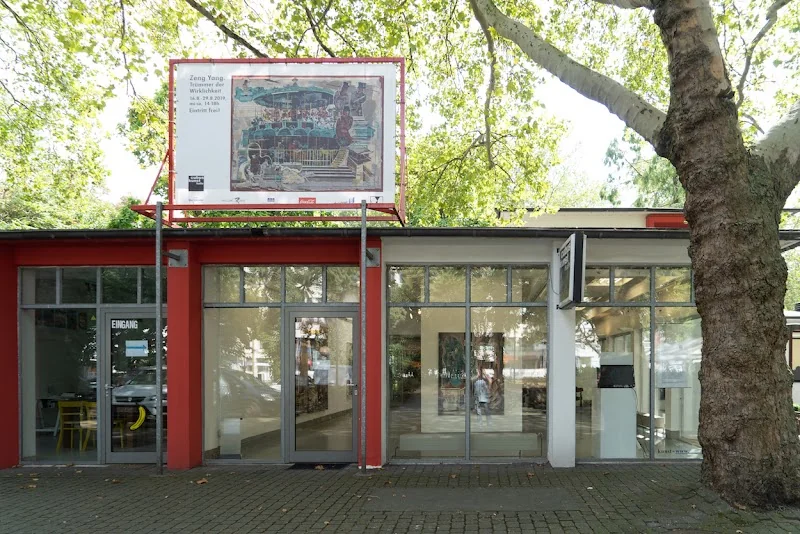
Friedrich-Wilhelm-Straße 64, Duisburg
Friedrich-Wilhelm-Straße 64, 47051 Duisburg, Germany
Cubus Kunsthalle | Exhibition & Opening Hours
The Cubus Kunsthalle in Duisburg is not a closed white cube, but an open house for contemporary art on the edge of the city center, in Kantpark and in direct proximity to the Duisburg Museum Mile with the Lehmbruck Museum and the private Museum DKM. The city of Duisburg describes the place as a creative resonance space where architecture, nature, and art intertwine; that is exactly why the art hall feels so approachable and yet special to visitors. The building itself features light-filled rooms, a glass façade, and views into the greenery of the park, complemented by the Café Museum, which offers a real break between the exhibition impressions. ([duisburg.de](https://www.duisburg.de/tourismus/stadt_erleben/museen/cubus-kunsthalle))
For the search intent behind terms like exhibition, opening hours, parking, photos, or reviews, the Cubus Kunsthalle is a grateful destination, as it consolidates many practical answers in one place: usually free admission, a clear visiting period, good accessibility by train and car, as well as a program that ranges from classic exhibitions to workshops, talks, and performances. Additionally, it serves as an event location, making the art hall interesting for private and business occasions. Those looking for photos in advance can already see exterior and interior views on the official city page; those seeking reviews quickly encounter the impression of an open, accessible art space in the middle of Duisburg. ([duisburg.de](https://www.duisburg.de/microsites/visit_duisburg/discover_the_city/museums/cubus-kunsthalle.php?utm_source=openai))
Current Exhibitions, Art Market, and Participation Programs
The Cubus Kunsthalle showcases different positions of contemporary art without a fixed style direction and focuses on young artists who bring new approaches. This open curation approach is one of the reasons why the art hall is so relevant for search queries like exhibition, program, or current art. The program logic includes not only pure exhibition displays but also concerts under the title cubus culture club, workshops, talks, and learning opportunities for children and young people. The city of Duisburg explicitly emphasizes that the art hall relies on different forms of expression and builds bridges between the scene, urban space, and society. ([duisburg.de](https://www.duisburg.de/microsites/bildungsregion_duisburg/projekte/ausserschulische-lernorte/cubus-kunsthalle.php))
Particularly strong is the current focus on the program for 2026. The city page of the education region names several specific exhibitions: NoMobbing as an initiative by and for Duisburg schools from March 23 to April 19, 2026, DU stickert – Homage to (K)life from February 22 to March 22, 2026, colorful.cheeky.wonderful. Female Perspectives from January 23 to April 10, 2026, and despite everything – Animals in the Anthropocene from April 17 to June 7, 2026. These titles show very well how broadly the Cubus Kunsthalle thinks: from social issues to urban sticker culture to female perspectives and the relationship between humans and animals in the Anthropocene. ([duisburg.de](https://www.duisburg.de/microsites/bildungsregion_duisburg/projekte/ausserschulische-lernorte/aktuelles-aus-der-cubus-kunsthalle))
What many search under the keyword art market is also firmly connected to this place in Duisburg. The Art Market 25 was described as a publicly visible format with a wide range of painting, graphics, plastic, sculpture, street art, and digital art. According to the event announcement, the works could be sold and taken home directly on site; empty spots in the exhibition were filled again over time, keeping the show dynamic. This connection of market, exhibition, and encounter is typical for the Cubus Kunsthalle, as it not only shows art but also brings it into a lively exchange with the audience, collectors, and regional artists. ([duesseldorfer-kuenstlerinnen.de](https://www.duesseldorfer-kuenstlerinnen.de/aktuelles?utm_source=openai))
That this concept works is also evidenced by the institutional information from the LVR: it mentions six to eight changing exhibitions per year and around 25,000 to 30,000 visitors annually. The Cubus Kunsthalle is thus not just a single exhibition venue but a continuously operating cultural house with a wide reach in Duisburg and far beyond. For SEO and user search, this is important because terms like exhibition Cubus Kunsthalle Duisburg or art market Cubus Kunsthalle Duisburg do not target a single event but a place with ongoing, changing, and clearly recognizable regional programming. ([rheinische-museen.lvr.de](https://www.rheinische-museen.lvr.de/museum/act0002729?utm_source=openai))
Opening Hours, Admission, and Visit Planning
Those wishing to visit the Cubus Kunsthalle will find a very clear basic structure: opening hours are usually indicated from Wednesday to Sunday from 2:00 PM to 6:00 PM. Additionally, there is the crucial advantage that exhibitions can usually be visited free of charge. This combination of free admission, well-planned times, and a central location makes the art hall interesting for spontaneous visits as well as for targeted excursions on weekends. Both the city of Duisburg and the tourism page refer to these opening hours and free access. ([duisburg.de](https://www.duisburg.de/microsites/visit_duisburg/discover_the_city/museums/cubus-kunsthalle.php?utm_source=openai))
For visit planning, it is also important that different opening hours may apply between exhibition changes. This is quite normal in an art hall with an ongoing program, but from a user perspective, it is crucial because the search query opening hours often arises precisely when someone is planning a specific visit. Therefore, those who want to be sure should check the current program or announcements for ongoing exhibitions in advance. Especially for formats like participatory exhibitions, art markets, or thematic shows, durations, openings, and special dates can determine the ideal time for a visit. ([rheinische-museen.lvr.de](https://www.rheinische-museen.lvr.de/museum/act0002729?utm_source=openai))
The experience also includes the Café Museum within the Cubus Kunsthalle. The city of Duisburg describes it as a place for a break between art visits and explicitly highlights the popular pancakes. For families, groups, and art walks, this is more than a side aspect, as the house thus functions not only as an exhibition hall but also as a place to stay. Those planning longer visits can easily combine an art afternoon in Kantpark with a coffee break, thus slowing down the visit. This makes the art hall not only content-wise but also practically pleasantly accessible. ([duisburg.de](https://www.duisburg.de/microsites/visit_duisburg/discover_the_city/museums/cubus-kunsthalle.php?utm_source=openai))
Directions, Proximity to Main Station, and Parking at the Cubus Kunsthalle
The Cubus Kunsthalle is located at Friedrich-Wilhelm-Straße 64 in 47051 Duisburg, directly at Kantpark and near the main train station. The official tourism page mentions the location in the inner-city Kantpark and refers to the museum mile, while the event location info emphasizes the proximity of just two minutes' walk to Duisburg's main station. This is a tremendous advantage for visitors, as the art hall is thus very quickly accessible from both the city center and by train. For the SEO query regarding directions, main station, or Friedrich-Wilhelm-Straße, the location provides a clear, recognizable reference point. ([duisburg.de](https://www.duisburg.de/microsites/visit_duisburg/discover_the_city/museums/cubus-kunsthalle.php?utm_source=openai))
Public transport is also clearly represented. In the tourism PDF of the city of Duisburg, line 924 with the stop Tonhallenstraße is mentioned; additionally, a footpath of about 400 meters from Duisburg's main station is indicated. For guests arriving without a car, this is practical, as the location can be easily planned via the train station and the short walk towards Kantpark. Those traveling by tram or bus can thus easily combine their visit with other destinations in the city center. ([duisburg.de](https://www.duisburg.de/tourismus/service/Duisburg_-_Museen.pdf?utm_source=openai))
For drivers, the parking information is also concrete. The site plan for the Café Museum and the Cubus Kunsthalle lists parking options on Tonhallenstraße, Düsseldorfer Straße, and König-Wilhelm-Straße. Additionally, there is a note about the A59 and the exit Duisburg-Center. This information is particularly valuable for the search query parking, as it shows that while the approach is urban, parking does not have to be left to chance. Those arriving early will find several options in the vicinity and can start their visit more relaxed. ([msm.uni-due.de](https://www.msm.uni-due.de/fileadmin/Dateien/VDWI/Cafe_Museum.pdf))
The location in the vicinity of Kantpark makes the way additionally attractive. Friedrich-Wilhelm-Straße is an important axis between the station and the city center, and the park itself has been described as a central cultural location. For guests, this means: visiting the Cubus Kunsthalle is not an isolated event but can be integrated into a small art and city walk. Those who first visit the art hall and then continue towards the museum mile or city center experience Duisburg's cultural space in a compact area without long transitions. ([www-aufbau.duisburg.de](https://www-aufbau.duisburg.de/microsites/pbv/verkehr/friedrich-wilhelm-strasse?utm_source=openai))
Photos, Facebook, and the First Impression on Site
Many users today search for the Cubus Kunsthalle not only by address and opening hours but also for photos, Facebook, or general impressions. This is understandable, as an art location sells itself visually particularly strongly. The official city page shows both exterior and interior views and additionally links to the Facebook page of the Cubus Kunsthalle. This creates a very clear picture even before the visit: glass façade, light-filled rooms, park connection, and an open architecture that makes the place immediately recognizable. ([duisburg.de](https://www.duisburg.de/tourismus/stadt_erleben/museen/cubus-kunsthalle))
This visual openness is also part of the Cubus Kunsthalle brand. The city of Duisburg explicitly describes the building not as an elitist art temple but as an open place for real encounters with art and the people who create it. For search queries like photos or Facebook, this means: visitors not only get a few beautiful motifs in advance but also a real impression of attitude and atmosphere. The architecture is thus not just a mere background image but part of the message. Art, nature, and public life are visibly brought together, which works very well in the digital first contact. ([duisburg.de](https://www.duisburg.de/tourismus/stadt_erleben/museen/cubus-kunsthalle))
Reviews also fit this picture, even if they naturally remain subjective. The frequent perception of an open, accessible, and rather unpretentious art space can be well connected with the official self-description. Those searching for reviews usually want to know if the visit is worthwhile, whether the atmosphere is friendly, and if the journey is uncomplicated. This is where the Cubus Kunsthalle excels: with free admission, a central location, café, changing program, and the opportunity to experience art not distantly but in an approachable manner. This turns a simple search query into a real reason to visit. ([duisburg.de](https://www.duisburg.de/microsites/visit_duisburg/discover_the_city/museums/cubus-kunsthalle.php?utm_source=openai))
For social media and Google Discover, the art hall is also ideal because it offers strong visual motifs: exterior view in greenery, bright interiors, artworks with regional references, and the special atmosphere of Kantpark. Those searching online for impressions thus receive not only aesthetic images but also a clear classification of what the place stands for. This combination of visual quality and content openness explains why search terms like photos, Facebook, and reviews frequently appear together for the Cubus Kunsthalle. ([duisburg.de](https://www.duisburg.de/tourismus/stadt_erleben/museen/cubus-kunsthalle))
Event Location Cubus Kunsthalle: Rooms, Capacity, and Equipment
The Cubus Kunsthalle is not only an exhibition venue but also a versatile event location. According to event location info, the light-filled room on the upper floor can accommodate up to 200 people. This size makes the art hall interesting for company parties, readings, small concerts, receptions, presentations, or private celebrations. Particularly exciting is that the room does not feel sterile but works with the changing exhibition backdrop. Those planning an event thus utilize not only space but also atmosphere. ([eventinc.de](https://www.eventinc.de/eventlocation/duisburg/cubus-kunsthalle))
The equipment is described as very practical for events: lighting technology, Wi-Fi, screen or projector, stage, high current, and a lectern are available. Additionally, blackout options are mentioned, making the room flexible for presentations, performances, or evening events. The lounge can serve as a reception, bar, or catering area when booking the banquet hall. This combination of art and event logic is particularly important for the keyword relevance of Event Location Cubus Kunsthalle, as it shows that the place not only looks beautiful but is also functionally versatile. ([eventinc.de](https://www.eventinc.de/eventlocation/duisburg/cubus-kunsthalle))
Regarding catering and logistics, the art hall is also prepared for events. According to the event location page, both catering with service staff and self-catering are possible. Additionally, parking spaces, access for trucks, outdoor areas, cloakroom, and daylight are mentioned as features. For organizers, this is a strong argument, as setup, guest flow, and technical implementation are easier to plan. There is also the possibility to combine an event with a tour of the current exhibition. This is where the special added value of the Cubus Kunsthalle arises: event, culture, and art visit intertwine instead of running alongside each other. ([eventinc.de](https://www.eventinc.de/eventlocation/duisburg/cubus-kunsthalle))
For visitors and renters, the location is also a plus point. The art hall is located at Kantpark and in close proximity to the main train station, allowing guests to arrive without complicated routes. For event planning, this is especially valuable when participants come from different cities or when an evening program with an art visit, reception, and subsequent event is to be combined. The Cubus Kunsthalle thus fulfills several roles: exhibition venue, cultural address, and flexible event location with good access to the urban environment. ([eventinc.de](https://www.eventinc.de/eventlocation/duisburg/cubus-kunsthalle))
History, Architecture, and Kantpark
The history of the Cubus Kunsthalle begins with Claudia Schaefer, who founded the cubus gallery in Duisburg-Duissern in 1987, according to the LVR. In 1994, the art hall moved into the building complex of the former Niederrhein Museum in Kantpark; in 1995, the building was opened as the Cubus Kunsthalle after extensive renovations. In 1996, the non-profit support association was added to enable exhibition projects. This chronology is important because it shows that the art hall did not emerge from a classical state museum building but from a civic and private initiative with long-term commitment. ([rheinland-ausgezeichnet.lvr.de](https://rheinland-ausgezeichnet.lvr.de/de/lvr_preise/rheinlandtaler/rheinlandtaler.html))
This model continues to shape the building today. The LVR describes the Cubus Kunsthalle as an unusual cultural management model in Germany, which enables culture through a form of public-private partnership in the face of empty budgets without burdening the municipal budget. The rental income from individual segments of the building serves to maintain and cover operating costs. At the same time, the art hall has been a place of encounter with visual art and culture for decades, where exhibitions, education, and mediation are closely linked. For local cultural history, this is a central point: the Cubus Kunsthalle is not only an exhibition venue but an example of how cultural infrastructure can be supported by civil society. ([rheinische-museen.lvr.de](https://www.rheinische-museen.lvr.de/museum/act0002729?utm_source=openai))
Architecturally, the place is also striking. The city of Duisburg describes the art hall as a glass house with a transparent façade, light-filled rooms, and views into the greenery. The building thus stands exactly between city and park, between openness and concentration. In Kantpark itself, the art hall is part of a larger cultural political space, which, together with the Lehmbruck Museum and the DKM Museum, is considered an important location for NRW. The park was redesigned in 2019 and further developed as an open city garden with various usage islands, which opens the entire area around the art hall even more to the city. ([duisburg.de](https://www.duisburg.de/tourismus/stadt_erleben/museen/cubus-kunsthalle))
This also explains why the Cubus Kunsthalle works so well online and offline: it combines a specific address, a strong location, a clear artistic identity, and a historically grown cultural function. The search terms from the autocomplete list reflect exactly this complexity. Those searching for exhibitions want the program. Those searching for parking need directions. Those searching for photos or Facebook want the first impression. Those searching for event locations want space and equipment. And those searching for the art market seek exchange, discovery, and a place where art does not remain abstract but becomes practically experienceable in Duisburg. ([duisburg.de](https://www.duisburg.de/tourismus/stadt_erleben/museen/cubus-kunsthalle))
Sources:
- City of Duisburg - cubus kunsthalle
- City of Duisburg - Cubus Kunsthalle as an extracurricular learning location
- City of Duisburg - Kantpark
- LVR Rheinlandtaler - Cubus Kunsthalle
- MSM Uni-Due - Café Museum and Parking Options
- Event Inc - Cubus Kunsthalle as an Event Location
- Düsseldorf Artists - Art Market 25 at the Cubus Kunsthalle
Show moreShow less
Cubus Kunsthalle | Exhibition & Opening Hours
The Cubus Kunsthalle in Duisburg is not a closed white cube, but an open house for contemporary art on the edge of the city center, in Kantpark and in direct proximity to the Duisburg Museum Mile with the Lehmbruck Museum and the private Museum DKM. The city of Duisburg describes the place as a creative resonance space where architecture, nature, and art intertwine; that is exactly why the art hall feels so approachable and yet special to visitors. The building itself features light-filled rooms, a glass façade, and views into the greenery of the park, complemented by the Café Museum, which offers a real break between the exhibition impressions. ([duisburg.de](https://www.duisburg.de/tourismus/stadt_erleben/museen/cubus-kunsthalle))
For the search intent behind terms like exhibition, opening hours, parking, photos, or reviews, the Cubus Kunsthalle is a grateful destination, as it consolidates many practical answers in one place: usually free admission, a clear visiting period, good accessibility by train and car, as well as a program that ranges from classic exhibitions to workshops, talks, and performances. Additionally, it serves as an event location, making the art hall interesting for private and business occasions. Those looking for photos in advance can already see exterior and interior views on the official city page; those seeking reviews quickly encounter the impression of an open, accessible art space in the middle of Duisburg. ([duisburg.de](https://www.duisburg.de/microsites/visit_duisburg/discover_the_city/museums/cubus-kunsthalle.php?utm_source=openai))
Current Exhibitions, Art Market, and Participation Programs
The Cubus Kunsthalle showcases different positions of contemporary art without a fixed style direction and focuses on young artists who bring new approaches. This open curation approach is one of the reasons why the art hall is so relevant for search queries like exhibition, program, or current art. The program logic includes not only pure exhibition displays but also concerts under the title cubus culture club, workshops, talks, and learning opportunities for children and young people. The city of Duisburg explicitly emphasizes that the art hall relies on different forms of expression and builds bridges between the scene, urban space, and society. ([duisburg.de](https://www.duisburg.de/microsites/bildungsregion_duisburg/projekte/ausserschulische-lernorte/cubus-kunsthalle.php))
Particularly strong is the current focus on the program for 2026. The city page of the education region names several specific exhibitions: NoMobbing as an initiative by and for Duisburg schools from March 23 to April 19, 2026, DU stickert – Homage to (K)life from February 22 to March 22, 2026, colorful.cheeky.wonderful. Female Perspectives from January 23 to April 10, 2026, and despite everything – Animals in the Anthropocene from April 17 to June 7, 2026. These titles show very well how broadly the Cubus Kunsthalle thinks: from social issues to urban sticker culture to female perspectives and the relationship between humans and animals in the Anthropocene. ([duisburg.de](https://www.duisburg.de/microsites/bildungsregion_duisburg/projekte/ausserschulische-lernorte/aktuelles-aus-der-cubus-kunsthalle))
What many search under the keyword art market is also firmly connected to this place in Duisburg. The Art Market 25 was described as a publicly visible format with a wide range of painting, graphics, plastic, sculpture, street art, and digital art. According to the event announcement, the works could be sold and taken home directly on site; empty spots in the exhibition were filled again over time, keeping the show dynamic. This connection of market, exhibition, and encounter is typical for the Cubus Kunsthalle, as it not only shows art but also brings it into a lively exchange with the audience, collectors, and regional artists. ([duesseldorfer-kuenstlerinnen.de](https://www.duesseldorfer-kuenstlerinnen.de/aktuelles?utm_source=openai))
That this concept works is also evidenced by the institutional information from the LVR: it mentions six to eight changing exhibitions per year and around 25,000 to 30,000 visitors annually. The Cubus Kunsthalle is thus not just a single exhibition venue but a continuously operating cultural house with a wide reach in Duisburg and far beyond. For SEO and user search, this is important because terms like exhibition Cubus Kunsthalle Duisburg or art market Cubus Kunsthalle Duisburg do not target a single event but a place with ongoing, changing, and clearly recognizable regional programming. ([rheinische-museen.lvr.de](https://www.rheinische-museen.lvr.de/museum/act0002729?utm_source=openai))
Opening Hours, Admission, and Visit Planning
Those wishing to visit the Cubus Kunsthalle will find a very clear basic structure: opening hours are usually indicated from Wednesday to Sunday from 2:00 PM to 6:00 PM. Additionally, there is the crucial advantage that exhibitions can usually be visited free of charge. This combination of free admission, well-planned times, and a central location makes the art hall interesting for spontaneous visits as well as for targeted excursions on weekends. Both the city of Duisburg and the tourism page refer to these opening hours and free access. ([duisburg.de](https://www.duisburg.de/microsites/visit_duisburg/discover_the_city/museums/cubus-kunsthalle.php?utm_source=openai))
For visit planning, it is also important that different opening hours may apply between exhibition changes. This is quite normal in an art hall with an ongoing program, but from a user perspective, it is crucial because the search query opening hours often arises precisely when someone is planning a specific visit. Therefore, those who want to be sure should check the current program or announcements for ongoing exhibitions in advance. Especially for formats like participatory exhibitions, art markets, or thematic shows, durations, openings, and special dates can determine the ideal time for a visit. ([rheinische-museen.lvr.de](https://www.rheinische-museen.lvr.de/museum/act0002729?utm_source=openai))
The experience also includes the Café Museum within the Cubus Kunsthalle. The city of Duisburg describes it as a place for a break between art visits and explicitly highlights the popular pancakes. For families, groups, and art walks, this is more than a side aspect, as the house thus functions not only as an exhibition hall but also as a place to stay. Those planning longer visits can easily combine an art afternoon in Kantpark with a coffee break, thus slowing down the visit. This makes the art hall not only content-wise but also practically pleasantly accessible. ([duisburg.de](https://www.duisburg.de/microsites/visit_duisburg/discover_the_city/museums/cubus-kunsthalle.php?utm_source=openai))
Directions, Proximity to Main Station, and Parking at the Cubus Kunsthalle
The Cubus Kunsthalle is located at Friedrich-Wilhelm-Straße 64 in 47051 Duisburg, directly at Kantpark and near the main train station. The official tourism page mentions the location in the inner-city Kantpark and refers to the museum mile, while the event location info emphasizes the proximity of just two minutes' walk to Duisburg's main station. This is a tremendous advantage for visitors, as the art hall is thus very quickly accessible from both the city center and by train. For the SEO query regarding directions, main station, or Friedrich-Wilhelm-Straße, the location provides a clear, recognizable reference point. ([duisburg.de](https://www.duisburg.de/microsites/visit_duisburg/discover_the_city/museums/cubus-kunsthalle.php?utm_source=openai))
Public transport is also clearly represented. In the tourism PDF of the city of Duisburg, line 924 with the stop Tonhallenstraße is mentioned; additionally, a footpath of about 400 meters from Duisburg's main station is indicated. For guests arriving without a car, this is practical, as the location can be easily planned via the train station and the short walk towards Kantpark. Those traveling by tram or bus can thus easily combine their visit with other destinations in the city center. ([duisburg.de](https://www.duisburg.de/tourismus/service/Duisburg_-_Museen.pdf?utm_source=openai))
For drivers, the parking information is also concrete. The site plan for the Café Museum and the Cubus Kunsthalle lists parking options on Tonhallenstraße, Düsseldorfer Straße, and König-Wilhelm-Straße. Additionally, there is a note about the A59 and the exit Duisburg-Center. This information is particularly valuable for the search query parking, as it shows that while the approach is urban, parking does not have to be left to chance. Those arriving early will find several options in the vicinity and can start their visit more relaxed. ([msm.uni-due.de](https://www.msm.uni-due.de/fileadmin/Dateien/VDWI/Cafe_Museum.pdf))
The location in the vicinity of Kantpark makes the way additionally attractive. Friedrich-Wilhelm-Straße is an important axis between the station and the city center, and the park itself has been described as a central cultural location. For guests, this means: visiting the Cubus Kunsthalle is not an isolated event but can be integrated into a small art and city walk. Those who first visit the art hall and then continue towards the museum mile or city center experience Duisburg's cultural space in a compact area without long transitions. ([www-aufbau.duisburg.de](https://www-aufbau.duisburg.de/microsites/pbv/verkehr/friedrich-wilhelm-strasse?utm_source=openai))
Photos, Facebook, and the First Impression on Site
Many users today search for the Cubus Kunsthalle not only by address and opening hours but also for photos, Facebook, or general impressions. This is understandable, as an art location sells itself visually particularly strongly. The official city page shows both exterior and interior views and additionally links to the Facebook page of the Cubus Kunsthalle. This creates a very clear picture even before the visit: glass façade, light-filled rooms, park connection, and an open architecture that makes the place immediately recognizable. ([duisburg.de](https://www.duisburg.de/tourismus/stadt_erleben/museen/cubus-kunsthalle))
This visual openness is also part of the Cubus Kunsthalle brand. The city of Duisburg explicitly describes the building not as an elitist art temple but as an open place for real encounters with art and the people who create it. For search queries like photos or Facebook, this means: visitors not only get a few beautiful motifs in advance but also a real impression of attitude and atmosphere. The architecture is thus not just a mere background image but part of the message. Art, nature, and public life are visibly brought together, which works very well in the digital first contact. ([duisburg.de](https://www.duisburg.de/tourismus/stadt_erleben/museen/cubus-kunsthalle))
Reviews also fit this picture, even if they naturally remain subjective. The frequent perception of an open, accessible, and rather unpretentious art space can be well connected with the official self-description. Those searching for reviews usually want to know if the visit is worthwhile, whether the atmosphere is friendly, and if the journey is uncomplicated. This is where the Cubus Kunsthalle excels: with free admission, a central location, café, changing program, and the opportunity to experience art not distantly but in an approachable manner. This turns a simple search query into a real reason to visit. ([duisburg.de](https://www.duisburg.de/microsites/visit_duisburg/discover_the_city/museums/cubus-kunsthalle.php?utm_source=openai))
For social media and Google Discover, the art hall is also ideal because it offers strong visual motifs: exterior view in greenery, bright interiors, artworks with regional references, and the special atmosphere of Kantpark. Those searching online for impressions thus receive not only aesthetic images but also a clear classification of what the place stands for. This combination of visual quality and content openness explains why search terms like photos, Facebook, and reviews frequently appear together for the Cubus Kunsthalle. ([duisburg.de](https://www.duisburg.de/tourismus/stadt_erleben/museen/cubus-kunsthalle))
Event Location Cubus Kunsthalle: Rooms, Capacity, and Equipment
The Cubus Kunsthalle is not only an exhibition venue but also a versatile event location. According to event location info, the light-filled room on the upper floor can accommodate up to 200 people. This size makes the art hall interesting for company parties, readings, small concerts, receptions, presentations, or private celebrations. Particularly exciting is that the room does not feel sterile but works with the changing exhibition backdrop. Those planning an event thus utilize not only space but also atmosphere. ([eventinc.de](https://www.eventinc.de/eventlocation/duisburg/cubus-kunsthalle))
The equipment is described as very practical for events: lighting technology, Wi-Fi, screen or projector, stage, high current, and a lectern are available. Additionally, blackout options are mentioned, making the room flexible for presentations, performances, or evening events. The lounge can serve as a reception, bar, or catering area when booking the banquet hall. This combination of art and event logic is particularly important for the keyword relevance of Event Location Cubus Kunsthalle, as it shows that the place not only looks beautiful but is also functionally versatile. ([eventinc.de](https://www.eventinc.de/eventlocation/duisburg/cubus-kunsthalle))
Regarding catering and logistics, the art hall is also prepared for events. According to the event location page, both catering with service staff and self-catering are possible. Additionally, parking spaces, access for trucks, outdoor areas, cloakroom, and daylight are mentioned as features. For organizers, this is a strong argument, as setup, guest flow, and technical implementation are easier to plan. There is also the possibility to combine an event with a tour of the current exhibition. This is where the special added value of the Cubus Kunsthalle arises: event, culture, and art visit intertwine instead of running alongside each other. ([eventinc.de](https://www.eventinc.de/eventlocation/duisburg/cubus-kunsthalle))
For visitors and renters, the location is also a plus point. The art hall is located at Kantpark and in close proximity to the main train station, allowing guests to arrive without complicated routes. For event planning, this is especially valuable when participants come from different cities or when an evening program with an art visit, reception, and subsequent event is to be combined. The Cubus Kunsthalle thus fulfills several roles: exhibition venue, cultural address, and flexible event location with good access to the urban environment. ([eventinc.de](https://www.eventinc.de/eventlocation/duisburg/cubus-kunsthalle))
History, Architecture, and Kantpark
The history of the Cubus Kunsthalle begins with Claudia Schaefer, who founded the cubus gallery in Duisburg-Duissern in 1987, according to the LVR. In 1994, the art hall moved into the building complex of the former Niederrhein Museum in Kantpark; in 1995, the building was opened as the Cubus Kunsthalle after extensive renovations. In 1996, the non-profit support association was added to enable exhibition projects. This chronology is important because it shows that the art hall did not emerge from a classical state museum building but from a civic and private initiative with long-term commitment. ([rheinland-ausgezeichnet.lvr.de](https://rheinland-ausgezeichnet.lvr.de/de/lvr_preise/rheinlandtaler/rheinlandtaler.html))
This model continues to shape the building today. The LVR describes the Cubus Kunsthalle as an unusual cultural management model in Germany, which enables culture through a form of public-private partnership in the face of empty budgets without burdening the municipal budget. The rental income from individual segments of the building serves to maintain and cover operating costs. At the same time, the art hall has been a place of encounter with visual art and culture for decades, where exhibitions, education, and mediation are closely linked. For local cultural history, this is a central point: the Cubus Kunsthalle is not only an exhibition venue but an example of how cultural infrastructure can be supported by civil society. ([rheinische-museen.lvr.de](https://www.rheinische-museen.lvr.de/museum/act0002729?utm_source=openai))
Architecturally, the place is also striking. The city of Duisburg describes the art hall as a glass house with a transparent façade, light-filled rooms, and views into the greenery. The building thus stands exactly between city and park, between openness and concentration. In Kantpark itself, the art hall is part of a larger cultural political space, which, together with the Lehmbruck Museum and the DKM Museum, is considered an important location for NRW. The park was redesigned in 2019 and further developed as an open city garden with various usage islands, which opens the entire area around the art hall even more to the city. ([duisburg.de](https://www.duisburg.de/tourismus/stadt_erleben/museen/cubus-kunsthalle))
This also explains why the Cubus Kunsthalle works so well online and offline: it combines a specific address, a strong location, a clear artistic identity, and a historically grown cultural function. The search terms from the autocomplete list reflect exactly this complexity. Those searching for exhibitions want the program. Those searching for parking need directions. Those searching for photos or Facebook want the first impression. Those searching for event locations want space and equipment. And those searching for the art market seek exchange, discovery, and a place where art does not remain abstract but becomes practically experienceable in Duisburg. ([duisburg.de](https://www.duisburg.de/tourismus/stadt_erleben/museen/cubus-kunsthalle))
Sources:
- City of Duisburg - cubus kunsthalle
- City of Duisburg - Cubus Kunsthalle as an extracurricular learning location
- City of Duisburg - Kantpark
- LVR Rheinlandtaler - Cubus Kunsthalle
- MSM Uni-Due - Café Museum and Parking Options
- Event Inc - Cubus Kunsthalle as an Event Location
- Düsseldorf Artists - Art Market 25 at the Cubus Kunsthalle
Cubus Kunsthalle | Exhibition & Opening Hours
The Cubus Kunsthalle in Duisburg is not a closed white cube, but an open house for contemporary art on the edge of the city center, in Kantpark and in direct proximity to the Duisburg Museum Mile with the Lehmbruck Museum and the private Museum DKM. The city of Duisburg describes the place as a creative resonance space where architecture, nature, and art intertwine; that is exactly why the art hall feels so approachable and yet special to visitors. The building itself features light-filled rooms, a glass façade, and views into the greenery of the park, complemented by the Café Museum, which offers a real break between the exhibition impressions. ([duisburg.de](https://www.duisburg.de/tourismus/stadt_erleben/museen/cubus-kunsthalle))
For the search intent behind terms like exhibition, opening hours, parking, photos, or reviews, the Cubus Kunsthalle is a grateful destination, as it consolidates many practical answers in one place: usually free admission, a clear visiting period, good accessibility by train and car, as well as a program that ranges from classic exhibitions to workshops, talks, and performances. Additionally, it serves as an event location, making the art hall interesting for private and business occasions. Those looking for photos in advance can already see exterior and interior views on the official city page; those seeking reviews quickly encounter the impression of an open, accessible art space in the middle of Duisburg. ([duisburg.de](https://www.duisburg.de/microsites/visit_duisburg/discover_the_city/museums/cubus-kunsthalle.php?utm_source=openai))
Current Exhibitions, Art Market, and Participation Programs
The Cubus Kunsthalle showcases different positions of contemporary art without a fixed style direction and focuses on young artists who bring new approaches. This open curation approach is one of the reasons why the art hall is so relevant for search queries like exhibition, program, or current art. The program logic includes not only pure exhibition displays but also concerts under the title cubus culture club, workshops, talks, and learning opportunities for children and young people. The city of Duisburg explicitly emphasizes that the art hall relies on different forms of expression and builds bridges between the scene, urban space, and society. ([duisburg.de](https://www.duisburg.de/microsites/bildungsregion_duisburg/projekte/ausserschulische-lernorte/cubus-kunsthalle.php))
Particularly strong is the current focus on the program for 2026. The city page of the education region names several specific exhibitions: NoMobbing as an initiative by and for Duisburg schools from March 23 to April 19, 2026, DU stickert – Homage to (K)life from February 22 to March 22, 2026, colorful.cheeky.wonderful. Female Perspectives from January 23 to April 10, 2026, and despite everything – Animals in the Anthropocene from April 17 to June 7, 2026. These titles show very well how broadly the Cubus Kunsthalle thinks: from social issues to urban sticker culture to female perspectives and the relationship between humans and animals in the Anthropocene. ([duisburg.de](https://www.duisburg.de/microsites/bildungsregion_duisburg/projekte/ausserschulische-lernorte/aktuelles-aus-der-cubus-kunsthalle))
What many search under the keyword art market is also firmly connected to this place in Duisburg. The Art Market 25 was described as a publicly visible format with a wide range of painting, graphics, plastic, sculpture, street art, and digital art. According to the event announcement, the works could be sold and taken home directly on site; empty spots in the exhibition were filled again over time, keeping the show dynamic. This connection of market, exhibition, and encounter is typical for the Cubus Kunsthalle, as it not only shows art but also brings it into a lively exchange with the audience, collectors, and regional artists. ([duesseldorfer-kuenstlerinnen.de](https://www.duesseldorfer-kuenstlerinnen.de/aktuelles?utm_source=openai))
That this concept works is also evidenced by the institutional information from the LVR: it mentions six to eight changing exhibitions per year and around 25,000 to 30,000 visitors annually. The Cubus Kunsthalle is thus not just a single exhibition venue but a continuously operating cultural house with a wide reach in Duisburg and far beyond. For SEO and user search, this is important because terms like exhibition Cubus Kunsthalle Duisburg or art market Cubus Kunsthalle Duisburg do not target a single event but a place with ongoing, changing, and clearly recognizable regional programming. ([rheinische-museen.lvr.de](https://www.rheinische-museen.lvr.de/museum/act0002729?utm_source=openai))
Opening Hours, Admission, and Visit Planning
Those wishing to visit the Cubus Kunsthalle will find a very clear basic structure: opening hours are usually indicated from Wednesday to Sunday from 2:00 PM to 6:00 PM. Additionally, there is the crucial advantage that exhibitions can usually be visited free of charge. This combination of free admission, well-planned times, and a central location makes the art hall interesting for spontaneous visits as well as for targeted excursions on weekends. Both the city of Duisburg and the tourism page refer to these opening hours and free access. ([duisburg.de](https://www.duisburg.de/microsites/visit_duisburg/discover_the_city/museums/cubus-kunsthalle.php?utm_source=openai))
For visit planning, it is also important that different opening hours may apply between exhibition changes. This is quite normal in an art hall with an ongoing program, but from a user perspective, it is crucial because the search query opening hours often arises precisely when someone is planning a specific visit. Therefore, those who want to be sure should check the current program or announcements for ongoing exhibitions in advance. Especially for formats like participatory exhibitions, art markets, or thematic shows, durations, openings, and special dates can determine the ideal time for a visit. ([rheinische-museen.lvr.de](https://www.rheinische-museen.lvr.de/museum/act0002729?utm_source=openai))
The experience also includes the Café Museum within the Cubus Kunsthalle. The city of Duisburg describes it as a place for a break between art visits and explicitly highlights the popular pancakes. For families, groups, and art walks, this is more than a side aspect, as the house thus functions not only as an exhibition hall but also as a place to stay. Those planning longer visits can easily combine an art afternoon in Kantpark with a coffee break, thus slowing down the visit. This makes the art hall not only content-wise but also practically pleasantly accessible. ([duisburg.de](https://www.duisburg.de/microsites/visit_duisburg/discover_the_city/museums/cubus-kunsthalle.php?utm_source=openai))
Directions, Proximity to Main Station, and Parking at the Cubus Kunsthalle
The Cubus Kunsthalle is located at Friedrich-Wilhelm-Straße 64 in 47051 Duisburg, directly at Kantpark and near the main train station. The official tourism page mentions the location in the inner-city Kantpark and refers to the museum mile, while the event location info emphasizes the proximity of just two minutes' walk to Duisburg's main station. This is a tremendous advantage for visitors, as the art hall is thus very quickly accessible from both the city center and by train. For the SEO query regarding directions, main station, or Friedrich-Wilhelm-Straße, the location provides a clear, recognizable reference point. ([duisburg.de](https://www.duisburg.de/microsites/visit_duisburg/discover_the_city/museums/cubus-kunsthalle.php?utm_source=openai))
Public transport is also clearly represented. In the tourism PDF of the city of Duisburg, line 924 with the stop Tonhallenstraße is mentioned; additionally, a footpath of about 400 meters from Duisburg's main station is indicated. For guests arriving without a car, this is practical, as the location can be easily planned via the train station and the short walk towards Kantpark. Those traveling by tram or bus can thus easily combine their visit with other destinations in the city center. ([duisburg.de](https://www.duisburg.de/tourismus/service/Duisburg_-_Museen.pdf?utm_source=openai))
For drivers, the parking information is also concrete. The site plan for the Café Museum and the Cubus Kunsthalle lists parking options on Tonhallenstraße, Düsseldorfer Straße, and König-Wilhelm-Straße. Additionally, there is a note about the A59 and the exit Duisburg-Center. This information is particularly valuable for the search query parking, as it shows that while the approach is urban, parking does not have to be left to chance. Those arriving early will find several options in the vicinity and can start their visit more relaxed. ([msm.uni-due.de](https://www.msm.uni-due.de/fileadmin/Dateien/VDWI/Cafe_Museum.pdf))
The location in the vicinity of Kantpark makes the way additionally attractive. Friedrich-Wilhelm-Straße is an important axis between the station and the city center, and the park itself has been described as a central cultural location. For guests, this means: visiting the Cubus Kunsthalle is not an isolated event but can be integrated into a small art and city walk. Those who first visit the art hall and then continue towards the museum mile or city center experience Duisburg's cultural space in a compact area without long transitions. ([www-aufbau.duisburg.de](https://www-aufbau.duisburg.de/microsites/pbv/verkehr/friedrich-wilhelm-strasse?utm_source=openai))
Photos, Facebook, and the First Impression on Site
Many users today search for the Cubus Kunsthalle not only by address and opening hours but also for photos, Facebook, or general impressions. This is understandable, as an art location sells itself visually particularly strongly. The official city page shows both exterior and interior views and additionally links to the Facebook page of the Cubus Kunsthalle. This creates a very clear picture even before the visit: glass façade, light-filled rooms, park connection, and an open architecture that makes the place immediately recognizable. ([duisburg.de](https://www.duisburg.de/tourismus/stadt_erleben/museen/cubus-kunsthalle))
This visual openness is also part of the Cubus Kunsthalle brand. The city of Duisburg explicitly describes the building not as an elitist art temple but as an open place for real encounters with art and the people who create it. For search queries like photos or Facebook, this means: visitors not only get a few beautiful motifs in advance but also a real impression of attitude and atmosphere. The architecture is thus not just a mere background image but part of the message. Art, nature, and public life are visibly brought together, which works very well in the digital first contact. ([duisburg.de](https://www.duisburg.de/tourismus/stadt_erleben/museen/cubus-kunsthalle))
Reviews also fit this picture, even if they naturally remain subjective. The frequent perception of an open, accessible, and rather unpretentious art space can be well connected with the official self-description. Those searching for reviews usually want to know if the visit is worthwhile, whether the atmosphere is friendly, and if the journey is uncomplicated. This is where the Cubus Kunsthalle excels: with free admission, a central location, café, changing program, and the opportunity to experience art not distantly but in an approachable manner. This turns a simple search query into a real reason to visit. ([duisburg.de](https://www.duisburg.de/microsites/visit_duisburg/discover_the_city/museums/cubus-kunsthalle.php?utm_source=openai))
For social media and Google Discover, the art hall is also ideal because it offers strong visual motifs: exterior view in greenery, bright interiors, artworks with regional references, and the special atmosphere of Kantpark. Those searching online for impressions thus receive not only aesthetic images but also a clear classification of what the place stands for. This combination of visual quality and content openness explains why search terms like photos, Facebook, and reviews frequently appear together for the Cubus Kunsthalle. ([duisburg.de](https://www.duisburg.de/tourismus/stadt_erleben/museen/cubus-kunsthalle))
Event Location Cubus Kunsthalle: Rooms, Capacity, and Equipment
The Cubus Kunsthalle is not only an exhibition venue but also a versatile event location. According to event location info, the light-filled room on the upper floor can accommodate up to 200 people. This size makes the art hall interesting for company parties, readings, small concerts, receptions, presentations, or private celebrations. Particularly exciting is that the room does not feel sterile but works with the changing exhibition backdrop. Those planning an event thus utilize not only space but also atmosphere. ([eventinc.de](https://www.eventinc.de/eventlocation/duisburg/cubus-kunsthalle))
The equipment is described as very practical for events: lighting technology, Wi-Fi, screen or projector, stage, high current, and a lectern are available. Additionally, blackout options are mentioned, making the room flexible for presentations, performances, or evening events. The lounge can serve as a reception, bar, or catering area when booking the banquet hall. This combination of art and event logic is particularly important for the keyword relevance of Event Location Cubus Kunsthalle, as it shows that the place not only looks beautiful but is also functionally versatile. ([eventinc.de](https://www.eventinc.de/eventlocation/duisburg/cubus-kunsthalle))
Regarding catering and logistics, the art hall is also prepared for events. According to the event location page, both catering with service staff and self-catering are possible. Additionally, parking spaces, access for trucks, outdoor areas, cloakroom, and daylight are mentioned as features. For organizers, this is a strong argument, as setup, guest flow, and technical implementation are easier to plan. There is also the possibility to combine an event with a tour of the current exhibition. This is where the special added value of the Cubus Kunsthalle arises: event, culture, and art visit intertwine instead of running alongside each other. ([eventinc.de](https://www.eventinc.de/eventlocation/duisburg/cubus-kunsthalle))
For visitors and renters, the location is also a plus point. The art hall is located at Kantpark and in close proximity to the main train station, allowing guests to arrive without complicated routes. For event planning, this is especially valuable when participants come from different cities or when an evening program with an art visit, reception, and subsequent event is to be combined. The Cubus Kunsthalle thus fulfills several roles: exhibition venue, cultural address, and flexible event location with good access to the urban environment. ([eventinc.de](https://www.eventinc.de/eventlocation/duisburg/cubus-kunsthalle))
History, Architecture, and Kantpark
The history of the Cubus Kunsthalle begins with Claudia Schaefer, who founded the cubus gallery in Duisburg-Duissern in 1987, according to the LVR. In 1994, the art hall moved into the building complex of the former Niederrhein Museum in Kantpark; in 1995, the building was opened as the Cubus Kunsthalle after extensive renovations. In 1996, the non-profit support association was added to enable exhibition projects. This chronology is important because it shows that the art hall did not emerge from a classical state museum building but from a civic and private initiative with long-term commitment. ([rheinland-ausgezeichnet.lvr.de](https://rheinland-ausgezeichnet.lvr.de/de/lvr_preise/rheinlandtaler/rheinlandtaler.html))
This model continues to shape the building today. The LVR describes the Cubus Kunsthalle as an unusual cultural management model in Germany, which enables culture through a form of public-private partnership in the face of empty budgets without burdening the municipal budget. The rental income from individual segments of the building serves to maintain and cover operating costs. At the same time, the art hall has been a place of encounter with visual art and culture for decades, where exhibitions, education, and mediation are closely linked. For local cultural history, this is a central point: the Cubus Kunsthalle is not only an exhibition venue but an example of how cultural infrastructure can be supported by civil society. ([rheinische-museen.lvr.de](https://www.rheinische-museen.lvr.de/museum/act0002729?utm_source=openai))
Architecturally, the place is also striking. The city of Duisburg describes the art hall as a glass house with a transparent façade, light-filled rooms, and views into the greenery. The building thus stands exactly between city and park, between openness and concentration. In Kantpark itself, the art hall is part of a larger cultural political space, which, together with the Lehmbruck Museum and the DKM Museum, is considered an important location for NRW. The park was redesigned in 2019 and further developed as an open city garden with various usage islands, which opens the entire area around the art hall even more to the city. ([duisburg.de](https://www.duisburg.de/tourismus/stadt_erleben/museen/cubus-kunsthalle))
This also explains why the Cubus Kunsthalle works so well online and offline: it combines a specific address, a strong location, a clear artistic identity, and a historically grown cultural function. The search terms from the autocomplete list reflect exactly this complexity. Those searching for exhibitions want the program. Those searching for parking need directions. Those searching for photos or Facebook want the first impression. Those searching for event locations want space and equipment. And those searching for the art market seek exchange, discovery, and a place where art does not remain abstract but becomes practically experienceable in Duisburg. ([duisburg.de](https://www.duisburg.de/tourismus/stadt_erleben/museen/cubus-kunsthalle))
Sources:
- City of Duisburg - cubus kunsthalle
- City of Duisburg - Cubus Kunsthalle as an extracurricular learning location
- City of Duisburg - Kantpark
- LVR Rheinlandtaler - Cubus Kunsthalle
- MSM Uni-Due - Café Museum and Parking Options
- Event Inc - Cubus Kunsthalle as an Event Location
- Düsseldorf Artists - Art Market 25 at the Cubus Kunsthalle
Upcoming Events
No events found
Frequently Asked Questions
Reviews
Hopi
15. December 2024
Nice art, but please have electronic payment options, instead of walking through the rain for 20 minutes finding an ATM machine.
Chris Hohmann
6. December 2022
Great place to start your art collection with affordable paintings, sculptures or readymades from local artists.
Reiner Langer
8. July 2023
A place for art. Adjoining it is the "Garden of Transience." Dr. Claudia Schaefer, director of the Cubus Kunsthalle Duisburg, has lovingly and thoughtfully created a generous space for art. Beautiful, spacious exhibition rooms. Far removed from any elitist atmosphere. The exhibitions maintain a high standard, yet are always accessible. Visitors can easily meet the artists if they wish. A visit is always worthwhile... Literature, music, photography... Art and Wine... And various workshops are part of the regular program... A true meeting place... Culture in all its facets...
Chris Bernecker
25. January 2025
A very cool place to showcase art—with a small bar and restaurant attached. The works we saw by Udo Dziersk are amazing—worth a visit (with waffles on Sundays).
hanigrapher H
15. November 2022
I had the opportunity to see a rather interesting and unusual exhibition by Yongbo Zhao. It was a spontaneous visit, as I was only in Duisburg for the day. The lady at reception was friendly and helpful. Admission was free. I would recommend it and would even visit again myself if I had the chance.