
Vincent Peirani
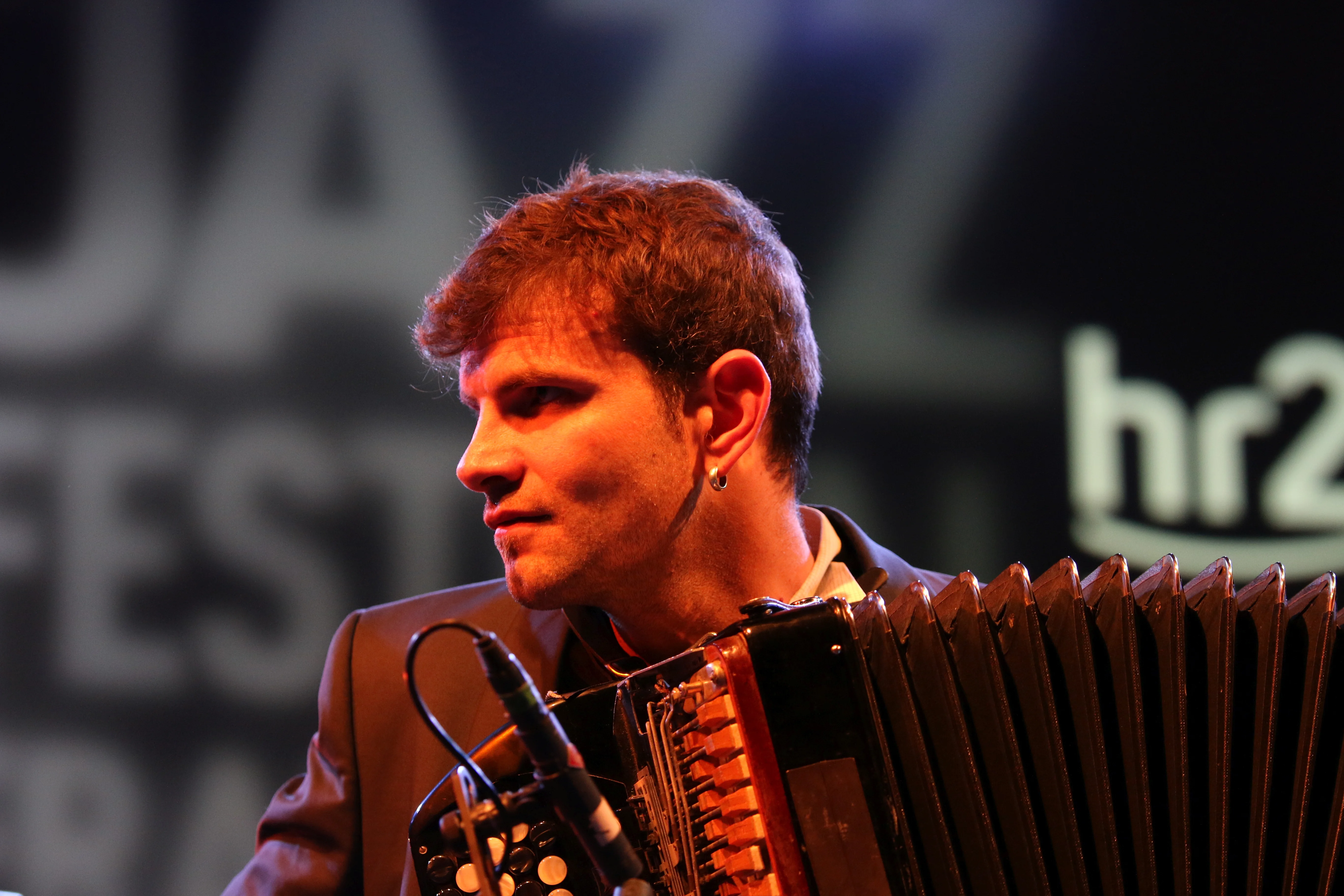
Image from Wikipedia
Image from Wikipedia
Vincent Peirani – The French Accordion Avant-Gardist Redefining Jazz
A Musician Bridging Chamber Music, Improvisation, and Strong Stage Presence
Vincent Peirani is one of those rare jazz musicians who not only master an instrument but also fundamentally expand its language. Born in 1980 in Nice, the accordionist, clarinetist, and composer has carved out a career that combines classical virtuosity, jazzy freedom, and stylistic curiosity into a distinctive profile. His artistic development represents a departure, boundary-crossing, and the courage to continually reinterpret familiar forms. (de.wikipedia.org)
Biography: From Conservatory Foundations to Jazz as a Way of Life
Peirani began playing the accordion at the age of eleven and turned to classical clarinet a year later. He continued his early studies at the Conservatory in Nice before moving to Paris to attend the Conservatoire national supérieur de musique et de danse, where he studied clarinet and solfeggio. At a young age, he received several national and international awards; in 1998, he won the Prix d’Accordéon Classique from CNSM Paris, and in 2000, he followed with first prizes in the jazz class at the Paris Conservatory. (de.wikipedia.org)
His path into jazz is closely linked to a biographical rupture: at the age of 17, he fell ill with cancer after his mother had passed away a year earlier. In the hospital, he listened to music by Bill Evans and Sixun and discovered jazz as an expressive form that unites intellect, emotion, and freedom. This experience continues to shape his attitude today: Peirani never plays just notes; he creates atmospheres, tensions, and musical narratives. (de.wikipedia.org)
Career Beginnings: Collaborations as an Artistic Laboratory
Since the 2000s, Peirani has collaborated with an impressive range of musicians in France, including Michel Portal, Daniel Humair, Vincent Lê Quang, Renaud Garcia-Fons, Louis Sclavis, François Jeanneau, Olivier Calmel, Youn Sun Nah, Denis Colin, Federico Casagrande, Anne Paceo, and Matthieu Saglio. These partnerships early on demonstrate the breadth of his musical vocabulary: jazz, chanson, chamber music, world music, and improvised music merge to create an open sound space. (de.wikipedia.org)
His debut album as a bandleader, Gunung Sebatu, was released in 2010 featuring original compositions. It marked the starting point of a career in which Peirani consistently freed the accordion from its folkloric associations and established it as the sonic center of a modern, colorful jazz. Here, one can already see the signature of a musician who focuses not on mere effect but on dramatic development, compositional depth, and subtle sound balance. (de.wikipedia.org)
The Breakthrough: Living Being and the Opening Up of the Accordion
With the quintet Living Being, Peirani formed an ensemble that encapsulates his artistic vision distinctly. Together with musicians from his circle, he developed a band that transforms influences from pop, rock, electronics, and jazz into a physically pulsating yet intricate sonic language. The group has produced four albums and central chapters by 2025, including Living Being, Living Being II – Night Walker, and Living Being IV – Time Reflections. (de.wikipedia.org)
The international breakthrough coalesced in 2013 and 2014: Peirani released Thrill Box, his first album as a leader, and received the “Revelation” award at the Victoires du Jazz in 2014, with the title of “Artist of the Year” following in 2015. Concurrently, his reputation as an instrumentalist grew, seamlessly incorporating the accordion into contemporary jazz with unparalleled stylistic openness. Critics early on described his music as multi-layered, rhythmically alive, and genre-crossing; also, reviews emphasized the blend of jazz, classical, folk, rock, and surprising structuring. (vincent-peirani.com)
Discography: Important Albums, Strong Projects, Distinctive Signature
Key milestones in his discography include Gunung Sebatu (2010), Thrill Box (2012), Belle Époque with Émile Parisien (2013), Living Being (2015), Tandem with Michael Wollny (2016), Living Being II – Night Walker (2018), So Quiet (2019), Abrazo with Émile Parisien (2020), Jokers (2022), Les Égarés (2023), and Living Being IV – Time Reflections (2025). This selection showcases an artist who redefines his role album by album while continuously focusing on artistic development. (de.wikipedia.org)
His work in duos and collectives is particularly influential. With saxophonist Émile Parisien, he developed projects that combine melodic fluidity and improvisational radicalism; with Michael Wollny, he created musically rich dialogues between jazz and chamber music; and with François Salque and Yamandu Costa, he opened the repertoire towards classical music, tango, and South American music culture. Peirani never appears merely as a soloist but as a catalyst shaping ensemble sound, arrangement, and dramatic tension. (de.wikipedia.org)
Current Projects and Releases: 2024 and 2025 Marked by New Forms
Recent releases and projects show Peirani in a productive phase. On his official website, upcoming works for 2024 and 2025 include Living Being IV – Time Reflections, Nuages, Viva Nana, Revivre, Fainéant.es, Jokers – Live at Bimhuis, Les Égarés, and CE2. The list highlights that Peirani cannot be reduced to a single formation but is simultaneously active in multiple sound worlds. (vincent-peirani.com)
For 2026, numerous concerts are scheduled on his official website, including performances with Abrazo, Jokers, Living Being IV, Les Égarés, and as a solo artist. This presence at prestigious festivals and European venues underscores the enduring relevance of his stage presence and the breadth of his artistic repertoire. (vincent-peirani.com)
Style and Sound Language: The Accordion as a Modern Narrative Voice
Vincent Peirani's style thrives on contrasts. He combines a classical, almost chamber music sensitivity with the urge for improvisational expansion. In press texts and reviews of Jokers, this aesthetic is described as cinematic, multi-layered, and influenced by rock and electronic elements; at the same time, poetic tension, virtuoso outbursts, and intimate moments are highlighted. The accordion appears not as a folkloric symbol but as an orchestral instrument with rich tonal variety. (actmusic.com)
Critics of his earlier works also emphasize the clever interweaving of genres. Reviewers have described his music as a mix of jazz, classical, and folk music that coalesces into a distinctive language; others highlighted that Peirani does not dominate the sound of his ensembles, but rather structures, unifies, and directs it dramatically. His authority as a jazz composer lies precisely in this: he thinks in form, color, and movement. (lira.se)
Awards and Recognition: An Artist with Institutional Impact
Peirani's success stems not only from scene recognition but also from institutional appreciation. His major awards include the Prix Django Reinhardt 2013 and two ECHO Jazz Awards in May 2015 for both his work as an instrumentalist and for the duo with Émile Parisien; additionally, he received further ECHO Jazz honors for Thrill Box and Tandem. Furthermore, he was named Chevalier de l’Ordre des Arts et des Lettres in 2016. (de.wikipedia.org)
The official biography on his website describes him as a musician whose charisma, openness, and creative independence resonate immediately. This formulation captures the essence of his authority: Peirani is not only an excellent instrumentalist but also a defining voice of European jazz characterized by curiosity, precision, and artistic independence. (vincent-peirani.com)
Cultural Influence: Between French Jazz Tradition and Global Openness
Peirani stands within a tradition of French jazz musicians who have brought the accordion out of the shadows of entertainment music into the context of contemporary art music and improvisation. His contribution lies in embedding the instrument in complex, modern arrangements while preserving its emotional directness. Thus, he reaches an audience that experiences jazz, chanson, classical music, and music from other cultural domains not as contradictions but as interconnected experiential spaces. (vincent-peirani.com)
His projects with Ballaké Sissoko, Vincent Ségal, and Émile Parisien in Les Égarés, as well as collaborations with Youn Sun Nah, Roberto Alagna, or Les Yeux Noirs, emphasize this cultural openness. Peirani is a musician of boundary-crossing but never a style tourist: his collaborations arise from compositional precision, audible experience, and a clear aesthetic stance. (actmusic.com)
Conclusion: Why Vincent Peirani Remains So Exciting Today
Vincent Peirani combines masterful technique, compositional intelligence, and a rare emotional openness. He has redefined the accordion in jazz, created new ensemble forms, and demonstrated through his projects that musical renewal springs from curiosity, discipline, and a willingness to take risks. Following his discography offers an experience of not just a musician but a consistent artistic development at the highest level. (de.wikipedia.org)
Especially on stage, this quality unfolds with full force: dynamics, spontaneous interaction, and a sound that oscillates between intimacy and dramatic expansiveness. Experiencing Vincent Peirani live means witnessing one of the most exciting European jazz artists of the present moment at a peak of creative presence. (vincent-peirani.com)
Official Channels of Vincent Peirani:
- Instagram: No official profile found
- Facebook: No official profile found
- YouTube: No official profile found
- Spotify: No official profile found
- TikTok: No official profile found