
Valeska Grisebach
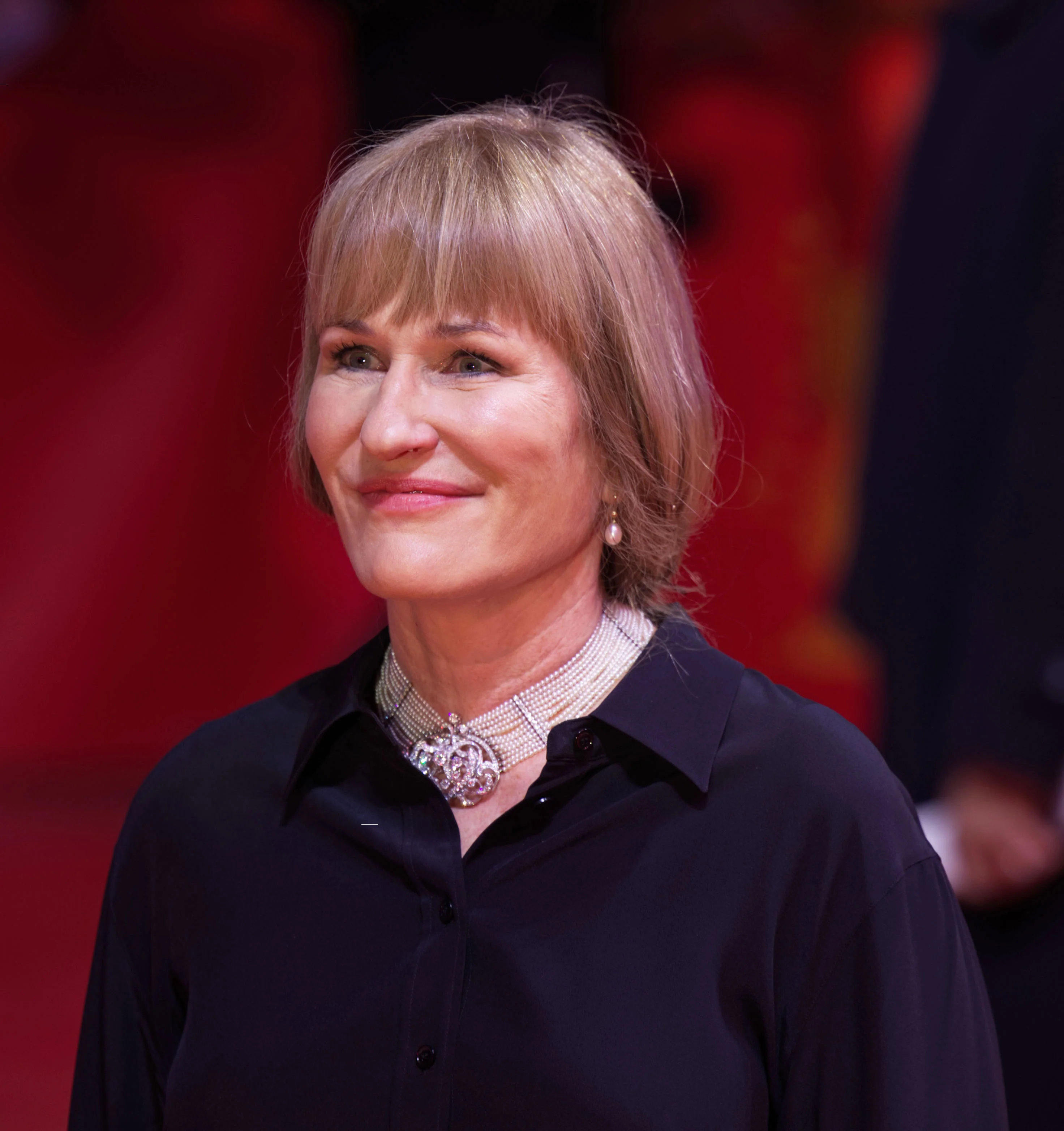
Image from Wikipedia
Image from Wikipedia
Valeska Grisebach – The Precise Storyteller of the Berlin School
A director who transforms everyday life, tension, and societal rifts into film with rare clarity
Valeska Grisebach, born on January 4, 1968, in Bremen, is one of the most prominent voices in German auteur cinema. She initially studied German philology and philosophy in Berlin, Munich, and Vienna, before beginning her film studies in Vienna, early on distinguishing herself with a focus on characters, environments, and social tensions. In film criticism, she is associated with the Berlin School and the New Austrian Film; in this lies the core of her artistic signature: observant, sober, atmospherically dense, and simultaneously emotionally charged. ([de.wikipedia.org](https://de.wikipedia.org/wiki/Valeska_Grisebach?utm_source=openai))
Biographical Beginnings: Education as the Foundation of a Unique Film Language
Valeska Grisebach's intellectual upbringing is not a peripheral aspect but an essential element of her artistic profile. German philology and philosophy provided her with a solid foundation for precise dialogues, character studies, and a pronounced sensitivity to language, perception, and social constellations. Her path through film studies in Vienna also explains the formal discipline of her works: Grisebach relies on observation rather than effects, on time rather than tempo, and on the power of situations instead of demonstrative intensification. ([munzinger.de](https://www.munzinger.de/register/portrait/biographien/grisebach%20valeska/00/25854?utm_source=openai))
Even in her early career, the will to understand cinema as a space of real experience is evident. Her graduation film Mein Stern was nominated for the Adolf Grimme Prize in 2002 and won the Critics' Prize at the International Film Festival in Toronto as well as the Grand Prize at the Torino Film Festival. This early recognition made it clear that Grisebach not only works autonomously in a formal sense but also generates international attention with her stories. ([de.wikipedia.org](https://de.wikipedia.org/wiki/Valeska_Grisebach?utm_source=openai))
The Breakthrough: From Mein Stern to Sehnsucht
With Mein Stern, Grisebach established herself as a director who transforms everyday observations into dramatic condensation. The film impresses with its gaze on youthful insecurity, emotional ambiguities, and the slightest shifts in interpersonal behavior. This is precisely how her reputation as a filmmaker developed: she does not tell loudly but creates tension with precision and patience. ([de.wikipedia.org](https://de.wikipedia.org/wiki/Valeska_Grisebach?utm_source=openai))
In 2006, she presented her second feature film, Sehnsucht, in competition at the Berlinale. The film solidified her profile within the Berlin School, a movement that shifts the focus away from conventional narrative and towards observation, silence, and social density. Grisebach's cinema never comes across as dogmatic in this context but remains open: she seeks the moments in which characters recalibrate their surroundings, their desires, and their limits. ([de.wikipedia.org](https://de.wikipedia.org/wiki/Valeska_Grisebach?utm_source=openai))
Western: International Recognition for a Quiet, Powerful Cinema
With Western, Valeska Grisebach achieved new visibility on the major festival stage in 2017. The film screened in the Un Certain Regard section at Cannes and was perceived by critics as a quiet, radically realistic work that precisely illuminates the friction between Western and Eastern European life worlds. The British BFI described Grisebach's approach as unique within the Berlin School and emphasized the discreet radicality of her form of realism. ([de.wikipedia.org](https://de.wikipedia.org/wiki/Valeska_Grisebach?utm_source=openai))
Western revolves around German construction workers in Bulgaria, language barriers, distrust, and the cultural codes of European peripheries. It is precisely in this constellation that Grisebach's strength as a storyteller is evident: she turns seemingly unspectacular situations into a dense social fabric. Instead of relying on plot mechanics, she focuses on physical presence, lines of sight, silence, and the tension between groups that initially remain strangers to each other. ([filmsboutique.com](https://filmsboutique.com/media/presskits/presskit_WESTERN_EN.pdf?utm_source=openai))
Current Projects: Das geträumte Abenteuer and the Return to Cannes
With Das geträumte Abenteuer, Grisebach made a striking comeback in 2026. The film premiered in the main competition of the 79th Festival de Cannes and was awarded the Jury Prize there. Official festival and cultural sources confirm not only her current presence but also the ongoing relevance of her cinema at the highest international level. ([festival-cannes.com](https://www.festival-cannes.com/en/f/das-getraumte-abenteuer/?utm_source=openai))
The thematic description also points to Grisebach's continued interest in European border areas, power dynamics, and social upheavals. According to festival and distribution information, a thriller and drama setting is central, unfolding on the border between Bulgaria and Turkey, negotiating questions of identity, violence, and economic pressure. The planned theatrical release underscores that Grisebach continues to work on large European co-productions and consistently develops her themes further. ([filmlinc.org](https://www.filmlinc.org/nyff2026/films/the-dreamed-adventure/?utm_source=openai))
Style and Signature: Realism, Precision, and Quiet Tension
Grisebach's films thrive on a remarkably controlled form. She works with long observations, open scenes, and a staging that gives the characters space without ever tipping into the arbitrary. This aesthetic discipline makes her cinema so distinctive: it generates tension not through narrative shocks but through social friction, unspoken conflicts, and the precision of the gaze. ([bfi.org.uk](https://www.bfi.org.uk/sight-and-sound/reviews/western-review-once-upon-time-modern-day-eastern-europe?utm_source=openai))
In both German and international reception, this restraint is read as a strength. Reviews and interviews highlight that Grisebach has left a unique mark in European auteur cinema with a few films. Her work combines a documentary-like accuracy with clear compositional order, making her films appear simultaneously open and highly controlled. ([sensesofcinema.com](https://www.sensesofcinema.com/2019/interviews/its-good-to-lose-control-an-interview-with-valeska-grisebach/?utm_source=openai))
Cinematic Significance and Cultural Influence
Valeska Grisebach is a central figure of the generation that has redefined German cinema following the end of classical narrative patterns. Her works stand for a cinema that does not explain social reality but makes it experiential. Particularly in the context of the Berlin School, she has shown that reduction is not a weakness but a form of artistic concentration that allows characters and spaces to become visible with special intensity. ([dffb-archiv.de](https://dffb-archiv.de/editorial/berliner-schule-dffb-1984-95-teil-1-akademie?utm_source=openai))
Her influence extends beyond national categories. The international festival presence from Toronto to Cannes, classification by renowned film media, and her continuous recognition as an independent author attest to her authority in European cinema. Grisebach's work appeals to audiences interested in precise storytelling, subtle character development, and a cinema that does not smooth over social realities but intensifies them. ([de.wikipedia.org](https://de.wikipedia.org/wiki/Valeska_Grisebach?utm_source=openai))
Conclusion: Why Valeska Grisebach Remains So Exciting
Valeska Grisebach is exciting because she finds big cinema in the small. Her films are not loud manifestos but finely crafted observations of intimacy, otherness, and societal tensions. Anyone seeking auteur cinema with attitude, precision, and international radiance will find a rarely consistent and distinctive understanding of film in her work. A look at her oeuvre is always worthwhile – and her films unfold their full power where cinema functions as a shared sight and experience. ([bfi.org.uk](https://www.bfi.org.uk/sight-and-sound/reviews/western-review-once-upon-time-modern-day-eastern-europe?utm_source=openai))
Official Channels of Valeska Grisebach:
- Instagram: no official profile found
- Facebook: no official profile found
- YouTube: no official profile found
- Spotify: no official profile found
- TikTok: no official profile found
Sources:
Upcoming Events
The Dreamed Adventure