
Tarik Saleh
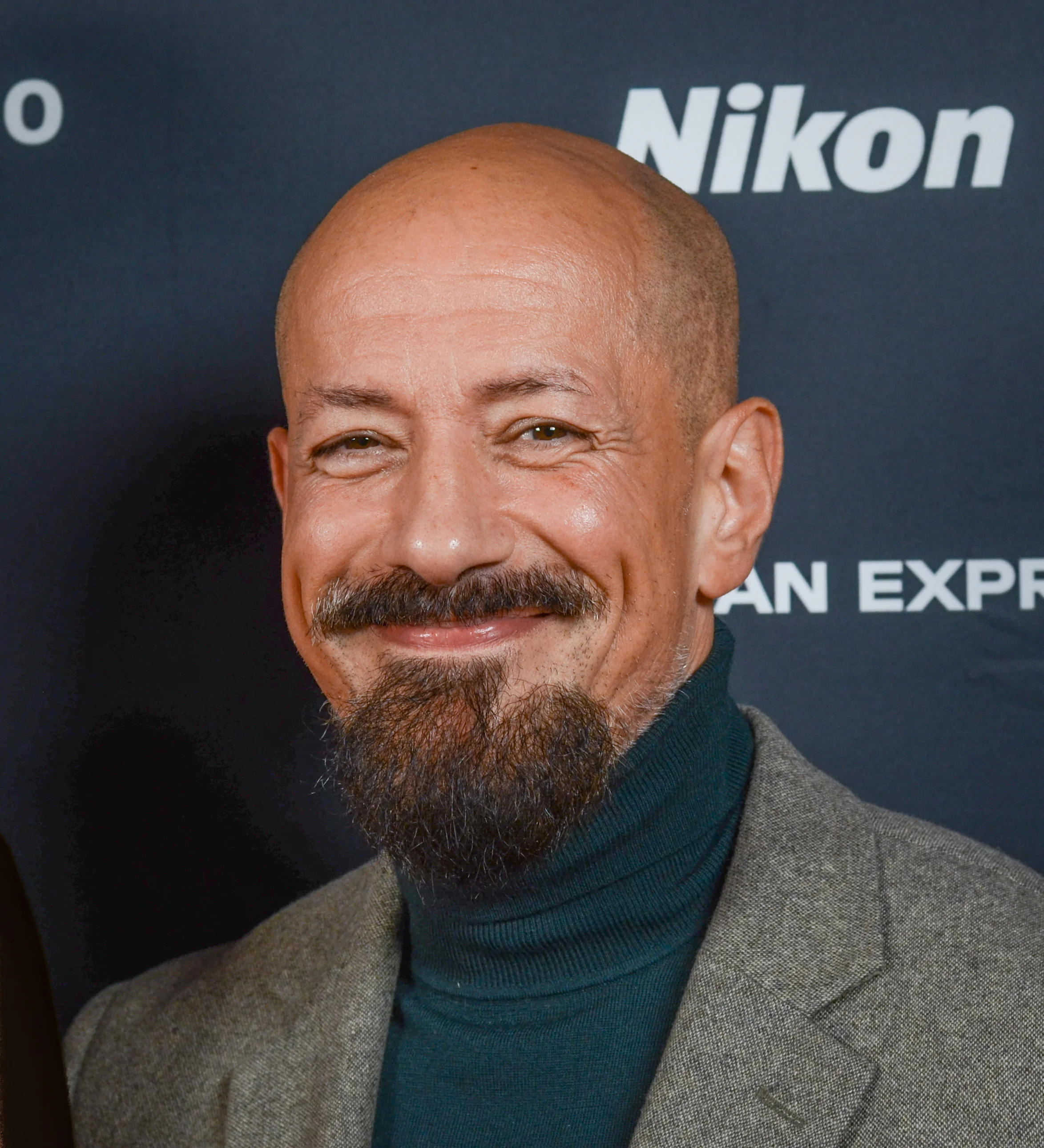
Image from Wikipedia
Image from Wikipedia
Tarik Saleh: Between Graffiti, Cinema, and Political Thriller
A filmmaker with a sharp eye for power, morality, and atmosphere
Tarik Saleh, born on January 28, 1972, in Stockholm, is one of the most prominent Swedish directors of his generation. As the son of a Swedish mother and an Egyptian father, he developed an early dual perspective on society, identity, and political conflicts that continues to shape his work today. He initially gained recognition not only as a filmmaker but also as an animator, journalist, TV personality, and one of the defining graffiti artists in Stockholm. His career combines visual radicalism with precise storytelling and a keen sense of tension. ([en.wikipedia.org](https://en.wikipedia.org/wiki/Tarik_Saleh?utm_source=openai))
Saleh's artistic journey illustrates how an author can consistently evolve from an image culture to an international film director. The transition from the street art scene to the film world did not occur as a rupture but as an expansion: strong visual ideas, political friction, and a sense for urban environments remained central constants. It is this connection that makes his works so distinctive and gives them a clear signature. ([it.wikipedia.org](https://it.wikipedia.org/wiki/Tarik_Saleh?utm_source=openai))
From Stockholm to Cairo: The Biographical Roots
Tarik Saleh grew up in Stockholm, but his Egyptian family roots played a crucial role in his later thematic choices. In the 1980s, he was among the most recognized graffiti artists in the city; together with Circle, he created the large-scale graffiti Fascinate in 1989, which is considered one of the earliest and most enduring examples of this art form in Sweden. This background in subcultural imagery explains much about his later aesthetics: Saleh thinks in shapes, contrasts, shadows, and strong constellations. ([it.wikipedia.org](https://it.wikipedia.org/wiki/Tarik_Saleh?utm_source=openai))
His familial connection to Egypt has repeatedly resonated within his films. His father was from Egypt, and his mother from Sweden; this tension between Nordic distance and Arabic heritage shapes his perspective on power structures, religious politics, and urban realities. In interviews and press materials, it becomes clear that Saleh does not speak about Egypt as an outsider but as an artist reflecting on cultural belonging and otherness simultaneously. ([theguardian.com](https://www.theguardian.com/film/2023/apr/12/director-tarik-saleh-film-cairo-conspiracy))
The Breakthrough as a Director: From Animation to Political Thriller
Saleh made his feature film debut in 2009 with Metropia, an English-language animated film that premiered at the Venice Film Festival. The work showcased his early preference for dystopian settings, controlled visual compositions, and societal undercurrents. The fact that a director from the street art scene debuted with such a stylized animated film underscores his unusual approach to cinema. ([en.wikipedia.org](https://en.wikipedia.org/wiki/Tarik_Saleh?utm_source=openai))
The international breakthrough followed with The Nile Hilton Incident, a gripping crime film set in Cairo just before the political upheaval of 2011. The film won the World Cinema Grand Jury Prize: Dramatic at the Sundance Film Festival and was awarded Best Film at the Guldbagge Awards. The reception in the specialist press was particularly strong: reviews praised the precision of the political setting, the atmospheric density, and the perspective of an author exploring Egyptian culture through both an insider and outsider lens. ([en.wikipedia.org](https://en.wikipedia.org/wiki/Tarik_Saleh?utm_source=openai))
Saleh himself describes the material as risky and emotionally charged; the production collided closely with reality, enhancing the film's intensity in a unique way. This is where the power of his cinema lies: he transforms political complexity into genre cinema without losing societal sharpness. His films never appear merely decorative but are always like precisely constructed examinations of power and moral erosion. ([atmo.se](https://www.atmo.se/films/the-nile-hilton-incident))
The Cairo Trilogy and the View on Authoritarian Systems
With Boy from Heaven, Saleh continued his Cairo Trilogy in 2022. The film premiered at Cannes, won the Best Screenplay award and the François-Chalais Prize, and was later submitted as Sweden's entry for the International Feature Film category at the Oscars. The official Atmo website also highlighted that the film received standing ovations at Cannes. Thus, the work is not only a stylistically controlled thriller but also a prestige project with an international festival profile. ([atmo.se](https://www.atmo.se/))
The thematic line of the trilogy is clear: religious institutions, state power, individual moral conflicts, and the question of how far a person will go to assert themselves in a repressive system. The Guardian positioned Boy from Heaven as a film rooted in real figures and family memories. This gives Saleh's cinema a personal depth that goes beyond mere political allegory. ([theguardian.com](https://www.theguardian.com/film/2023/apr/12/director-tarik-saleh-film-cairo-conspiracy))
In 2025, Saleh completed the trilogy with Eagles of the Republic, a political thriller that screened in the main competition at the Cannes Film Festival. The SVT review described the film as a noir-tinged drama about a movie star who must manage PR for the regime in Egypt. Thus, Saleh remained true to his direction: he tells stories of glamour, control, and propaganda without losing the tension of the genre. ([cineclubnucleo.com.ar](https://www.cineclubnucleo.com.ar/nucleo-conspiraciondivina.pdf?utm_source=openai))
Filmography, Production Work, and International Collaboration
Saleh's body of work includes not only feature films but also documentaries, television projects, and music videos. His documentaries include Sacrificio: Who Betrayed Che Guevara from 2001 and Gitmo: The New Rules of War from 2005. Later, he worked on television productions such as Westworld and Ray Donovan. This breadth showcases a director who confidently navigates between formats and productively utilizes various industrial contexts. ([en.wikipedia.org](https://en.wikipedia.org/wiki/Tarik_Saleh?utm_source=openai))
Crucial to his artistic position is also the production company Atmo, which Saleh co-founded with Kristina Åberg. The official website describes Atmo as a house that seeks new methods, new styles, and stories with social relevance; Saleh is also identified there as one of the owners. This institutional grounding provides his cinema not only creative but also organizational stability. ([atmo.se](https://www.atmo.se/about/))
Additionally, there are international co-productions and work with a close circle of collaborators, particularly with actor Fares Fares. In The Nile Hilton Incident and the subsequent Cairo films, this collaboration becomes a significant part of the cinematic identity. Saleh thus shapes a recognizable author cinema based on precisely recurring constellations, without becoming repetitive. ([atmo.se](https://www.atmo.se/films/the-nile-hilton-incident))
Aesthetics, Style, and Cultural Influence
Tarik Saleh's style can be described as controlled neo-noir, infused with political analysis and a pronounced visual discipline. His films work with urban spaces where hierarchies, corruption, and surveillance intensify. Particularly in The Nile Hilton Incident and Boy from Heaven, a direction is evident that generates tension not only through plot but also through mood, rhythm, and visual angles. ([atmo.se](https://www.atmo.se/films/the-nile-hilton-incident))
His origins in graffiti culture remain perceptible. Saleh thinks in striking images and the power of public space; his films carry something of the directness and immediacy of urban art. This explains why his work is so closely followed in both arthouse cinema and the festival landscape: it combines political precision with strong visual identity. ([it.wikipedia.org](https://it.wikipedia.org/wiki/Tarik_Saleh?utm_source=openai))
Another aspect of his cultural influence lies in the consistent linking of regional themes with global readability. Saleh tells stories that are not folkloristic but structural: they deal with power, ideology, fear, and adaptation. This allows them to reach audiences far beyond Sweden and Egypt, making him a director of international relevance. ([atmo.se](https://www.atmo.se/about/))
Current Projects and Public Resonance
Among the current projects is primarily Eagles of the Republic, which was presented in Cannes in 2025, marking the conclusion of the Cairo Trilogy. Accompanying coverage made it clear how much Saleh once again captured the attention of international critics with this film. The fact that the film appeared as a Cannes competition entry in 2025 confirms his status as a significant voice in political cinema. ([cineclubnucleo.com.ar](https://www.cineclubnucleo.com.ar/nucleo-conspiraciondivina.pdf?utm_source=openai))
The reception of his works remains closely tied to recognition from the festival and cultural criticism community. Particularly, The Nile Hilton Incident has been praised in specialized press as a rare connection between noir tradition and social accuracy. This resonance is no coincidence but an expression of cinema that unites visual tension and political substance at a high level. ([atmo.se](https://www.atmo.se/films/the-nile-hilton-incident))
Conclusion: An Author of Political Cinema with a Distinctive Signature
Tarik Saleh is exciting because he brings together multiple worlds in one work: graffiti and author cinema, Stockholm and Cairo, genre and social criticism. His films possess the energy of a precisely constructed thriller while also having the depth of political analysis. Those seeking modern European cinema with an international perspective will find in Saleh a director of remarkable clarity and consistency. ([en.wikipedia.org](https://en.wikipedia.org/wiki/Tarik_Saleh?utm_source=openai))
His ability to shape atmospheric, visually dense, and humanly ambiguous films from power narratives makes him an important voice of the present. His works belong on the big screen, as that is where they unfold their full intensity. Experiencing Tarik Saleh means understanding cinema as a political event and as a precise art form. ([atmo.se](https://www.atmo.se/))
Official Channels of Tarik Saleh:
- Instagram: no official profile found
- Facebook: no official profile found
- YouTube: no official profile found
- Spotify: no official profile found
- TikTok: no official profile found
Sources:
- Atmo - Official Production Site
- Atmo - About Atmo
- Atmo - Metropia
- Atmo - The Nile Hilton Incident
- The Guardian - Director Tarik Saleh, April 12, 2023
- SVT Nyheter - Review of Eagles of the Republic, November 13, 2025
- Cairo Conspiracy - Press Kit
- Wikipedia - Tarik Saleh
- Wikipedia: Image and text source
Upcoming Events
Eagles of the Republic
A political thriller like a sting: Eagles of the Republic brings power, masks, and tension to filmforum Duisburg. 07.06.2026, 8:30 PM, €7.90. #Cinema
Eagles of the Republic
A political thriller that touches the core: Eagles of the Republic at filmforum Duisburg. Tension, power games, and strong imagery on July 8, 2026. #Cinema