
Stefan Raab
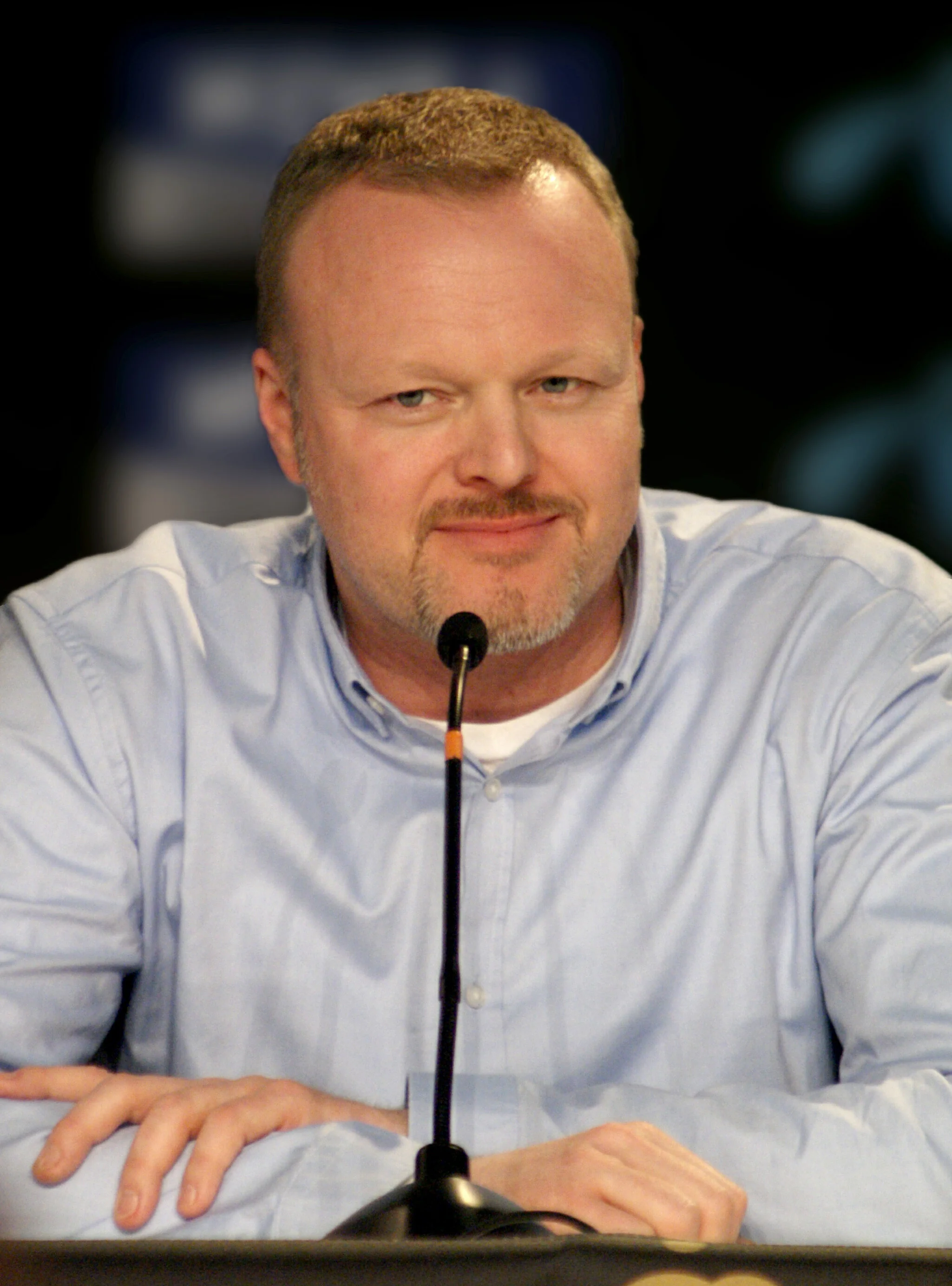
Image from Wikipedia
Image from Wikipedia
Stefan Raab: The Architect of German Event Pop Between TV, Satire, and Chart Success
An Entertainer Who Redefined Music, Television, and Pop Culture in Germany
Stefan Raab, born on October 20, 1966, in Cologne, is one of the defining figures in the German entertainment and music landscape. As a musician, composer, producer, presenter, and businessman, he has built a career since the 1990s that extends far beyond individual hits. Raab combined early TV fame with a keen sense of melody, irony, and collective attention, creating his own entertainment system. ([de.wikipedia.org](https://de.wikipedia.org/wiki/Stefan_Raab?utm_source=openai))
His name is synonymous with a format that consistently merges German pop music, television shows, and satirical presentations. Raab initially gained recognition as a presenter on VIVA and later with "Vivasion," before becoming a national phenomenon from 1999 onwards with "TV total" on ProSieben. At the same time, he developed a discography as a musician and producer that ranges from carnival earworms to Eurovision contributions and is still regarded as an unusually productive chapter in German pop culture. ([de.wikipedia.org](https://de.wikipedia.org/wiki/Stefan_Raab?utm_source=openai))
Early Years and the Path to Pop Icon
Raab grew up in Cologne, shaping himself early in an environment that connected regional language, pop pleasure, and media instincts. His public career began not as a classical singer but as a TV face with musical energy, condensing jokes, sketches, and songs into a memorable figure. Even at this early stage, it was evident that Raab did not see entertainment as an aside but as a stage for musical ideas and provocative friction. ([de.wikipedia.org](https://de.wikipedia.org/wiki/Stefan_Raab?utm_source=openai))
The breakthrough as a music performer came through unusual paths: Raab used his television presence to showcase his own songs, parodies, and single releases. His playful approach to Schlager, pop, and hip-hop became his trademark and granted him a recognizability that was rare in the German-speaking media landscape. Thus, he early on developed the hybrid form of musician, presenter, and pop commentator that would shape his later career. ([eurovision.de](https://www.eurovision.de/teilnehmer/Stefan-Raab-Biografie-des-Entertainers%2Cstefanraab129.html?utm_source=openai))
The Musical Breakthrough: From "Böörti Böörti Vogts" to "Maschen-Draht-Zaun"
Among his early musical successes are hits like "Böörti Böörti Vogts" and "Hier kommt die Maus," which established Raab as a cheeky, humorous voice in German pop. Particularly, "Hier kommt die Maus" reached number two on the charts in 1996 and was awarded gold, demonstrating his relevance as a hit maker. The later success of "Maschen-Draht-Zaun" also showcased how cleverly Raab could combine language comedy, observations of daily life, and earworm production. ([eurovision.de](https://www.eurovision.de/teilnehmer/Stefan-Raab-Biografie-des-Entertainers%2Cstefanraab129.html?utm_source=openai))
These songs were never merely gags but small pop experiments with high recognizability. Raab knew how to combine comedic sharpness with clean arrangements, simple hooks, and media-effective presentation. This is where his special position lies: he did not work against mass taste but reshaped it with parodic precision. ([rollingstone.de](https://www.rollingstone.de/wadde-hadde-dudde-da-die-13-bekanntesten-songs-von-stefan-raab-2-786443/?utm_source=openai))
ESC, Talent Promotion, and the Leap into National Music History
A central axis in Raab's career is the Eurovision Song Contest. Between 1998 and 2012, he was repeatedly involved in German entries, and in 2000 he competed himself with "Wadde hadde dudde da?" and finished in fifth place. Even more important for his authority as a music maker was his role as a discoverer and promoter of artists like Guildo Horn, Max Mutzke, Lena Meyer-Landrut, and later other talents from the TV and music sectors. ([de.wikipedia.org](https://de.wikipedia.org/wiki/Stefan_Raab?utm_source=openai))
With formats like "Stefan sucht den Super-Grand-Prix-Star," the "Bundesvision Song Contest," and "Unser Star für Oslo," Raab shifted the focus from mere moderation to curated music culture. He presented himself as a producer who created platforms for new voices while simultaneously using competition as a narrative form. This combination of talent promotion, show dramaturgy, and pop instinct made him a key figure in the German ESC success of the 2000s and early 2010s. ([wissen.de](https://www.wissen.de/lexikon/raab-stefan?utm_source=openai))
Discography: Between Studio Albums, Single Hits, and Current Releases
Raab's discography is not a classic catalog of a singer-songwriter but an archive of pop cultural interventions. According to Spotify, his repertoire includes both early works like the album "Stefan Raab" from 1998 and later releases such as "Get Ready" (2009), "Seine größten Hits – 25 Jahre" (2024), and current singles and EPs from 2024 and 2025. These include "PA AUFS MAUL (feat. Sido)," "Rambo Zambo (Was is Bubatz?) [feat. Fritze Merz]," "Weil wir so supergeil drauf sind," and the EP "Bitte lass das Licht an (from 'Das Kanu des Manitu')" featuring Max Mutzke. ([open.spotify.com](https://open.spotify.com/artist/0mTAcgBV656wqzn5Ga8LAv?utm_source=openai))
The range of these releases showcases Raab's musical flexibility. He navigates between carnival, comedy pop, Schlager references, rap influences, and cinematic entertainment music. Particularly the more recent productions with Sido, Fritze Merz, and Max Mutzke demonstrate that Raab is still active as a songwriter and producer, adapting his brand to new media contexts. ([de.wikipedia.org](https://de.wikipedia.org/wiki/Rambo_Zambo_%28Was_is_Bubatz?%29=&utm_source=openai))
Current Projects: Return to the Screen and New Music for Film and Show
After a long phase behind the scenes, Raab visibly returned to the screen in 2024. RTL describes "Du gewinnst hier nicht die Million bei Stefan Raab" as a new late-night, comedy, and competition show presented and produced by him. In 2026, he followed this with another major Saturday night show, "Wer weiß wie wann was war?" alongside Barbara Schöneberger, which reaffirmed Raab's return as a show engine. ([rtl.de](https://www.rtl.de/sendungen/du-gewinnst-hier-nicht-die-million-bei-stefan-raab/?utm_source=openai))
Musically, he remained present: in 2025, Raab provided songs for Michael Bully Herbig's film "Das Kanu des Manitu" and once again appeared as a songwriter with Max Mutzke in "Bitte lass das Licht an." The release was issued through Raab Music and Warner Music Central Europe; additionally, the Spotify EP lists three tracks, including "Mittelmäßiger Mann" and "El chico es intelligente." This demonstrates that Raab continues to view music as part of a larger entertainment concept, rather than an isolated side project. ([open.spotify.com](https://open.spotify.com/intl-de/album/3QBvNIxLC2pGGqW6JihYl2?utm_source=openai))
Style, Signature, and Cultural Influence
Stefan Raab's musical style thrives on directness, humor, and precise pop dramaturgy. He combines simple, catchy structures with linguistic sharpness, regional references, and a high suitability for television that instantly transfers his songs into collective memory. This is less classical high culture and more calculated mass communication at a high craft level. ([nmz.de](https://www.nmz.de/kritik/jazz-rock-pop/hits-clips-0?utm_source=openai))
Culturally, Raab has been a catalyst for event television and musical self-staging. His formats merged competition, live character, and pop aesthetics, transforming television into a space for musical public discourse. In Germany, few other entertainers have utilized the connection between satire, chart success, and talent promotion as consistently as Raab. ([whoswho.de](https://whoswho.de/bio/stefan-raab.html?utm_source=openai))
The reception in music press and pop media also points to his unique position. Contributions in Rolling Stone, laut.de, neue musikzeitung, and AllMusic paint the picture of an artist who is often perceived through humor but is fundamentally an extremely effective producer and song constructor. This dual role as a joker and a serious pop architect underscores the enduring appeal of his career. ([rollingstone.de](https://www.rollingstone.de/wadde-hadde-dudde-da-die-13-bekanntesten-songs-von-stefan-raab-2-786443/?utm_source=openai))
Official Channels of Stefan Raab:
- Instagram: https://www.instagram.com/therealstefanraab/
- Facebook: no official profile found
- YouTube: no official profile found
- Spotify: https://open.spotify.com/artist/0mTAcgBV656wqzn5Ga8LAv
- TikTok: no official profile found
Conclusion: Why Stefan Raab Remains Exciting Today
Stefan Raab remains exciting because he is more than just an entertainer with hits: he is a strategic inventor of pop moments. His career connects TV history, musical production, talent promotion, and current show formats into a rarely closed overall work. Anyone wanting to understand how entertainment becomes cultural relevance in Germany finds a prime example in Raab. ([de.wikipedia.org](https://de.wikipedia.org/wiki/Stefan_Raab?utm_source=openai))
His mix of wit, timing, and musical instinct ensures that new projects immediately attract attention. Raab has proven over decades that he not only observes trends but translates them into formats, songs, and television events. Those who experience this energy live or on TV see an artist who not only accompanies German pop but continually revitalizes it. ([eurovision.de](https://www.eurovision.de/teilnehmer/Stefan-Raab-Biografie-des-Entertainers%2Cstefanraab129.html?utm_source=openai))
Sources:
- Wikipedia – Stefan Raab
- Wikipedia – Stefan Raab/Diskografie
- eurovision.de – Stefan Raab: Biography of the ESC Participant
- RTL – You Won't Win the Million Here with Stefan Raab
- RTL – Who Knows How When What Was? New Quiz Show with Stefan Raab and Barbara Schöneberger
- RTL – Who Knows How When What Was? Barbara Schöneberger and Stefan Raab Host New RTL Quiz Show
- Spotify – Stefan Raab Artist Page
- Spotify – Bitte lass das Licht an (from "Das Kanu des Manitu")
- Spotify – His Greatest Hits – 25 Years
- RTL – Raab Delights with the Soundtrack to Bully's "Kanu des Manitu"
- Press Portal – DAS KANU DES MANITU Celebrates World Premiere in Munich
- Rolling Stone – The 13 Most Famous Songs by Stefan Raab
- Rolling Stone – On These Songs, Stefan Raab Had His Fingers in the Mix
- laut.de – Stefan Raab
- AllMusic – Stefan Raab Biography