
Oasis
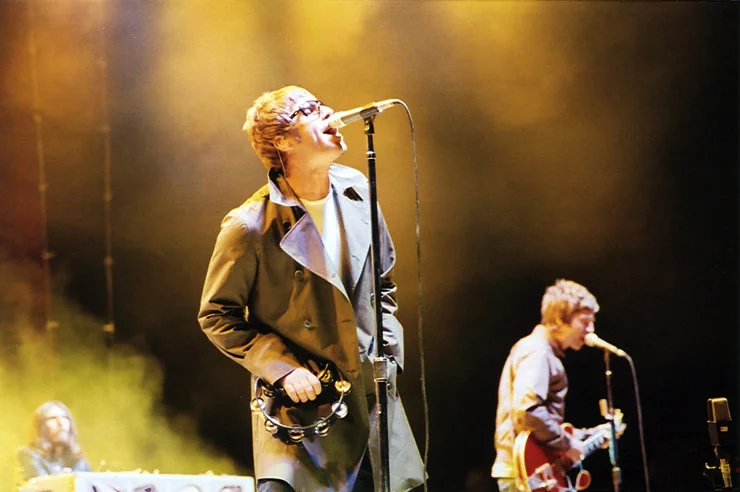
Image from Wikipedia
Image from Wikipedia
Oasis – The Britpop Icons with Stadium Anthems for Eternity
A Band That Shaped the Sound of the 90s and Still Fills Halls and Stadiums Today
Oasis is one of the most influential British rock bands of the last decades. Founded in October 1991 in Manchester, the group led by brothers Liam and Noel Gallagher quickly evolved from a local hope to a global powerhouse of Britpop. The raw text on Wikipedia already captures the core of their myth: the music, the success, the rivalry between the Gallagher brothers, and the status that grew to approximately 80 million records sold by 2014. Since July 2025, Oasis is back on tour, a comeback that impressively underscores the cultural significance of the band. ([oasisinet.com](https://www.oasisinet.com/?utm_source=openai))
The Beginnings in Manchester: Working-Class, Ambition, and the Will to Succeed
Oasis emerged in a climate where British rock was searching for new friction. The official band history describes the early years as a rise "from little-known Manchester newcomers playing in the back rooms of pubs" to one of the culturally significant rock 'n' roll bands of the last three decades. From the start, the band's ambition was maximal: better songs, bigger shows, more impact. This blend of self-confidence, street charm, and melodic directness made Oasis unmistakable early on. ([oasisinet.com](https://oasisinet.com/the-story/?utm_source=openai))
The breakthrough came with a debut phase that felt like a program statement. Even on Definitely Maybe, Oasis combined the melodic weight of the Beatles, the laid-back vibe of the Stones and Kinks universe, and the raw energy of punk into a new British pop-rock identity. The band set out to create an alternative to the prevalent grunge sentiment: not retreat, but breakthrough; not self-doubt, but triumph. This attitude also shaped the band's perception in the music press and among audiences. ([open.spotify.com](https://open.spotify.com/artist/0UN3fcWdK2mdTbasp0snlT?utm_source=openai))
The Rise to Britpop Giant
With Definitely Maybe and especially with (What’s the Story) Morning Glory?, Oasis became the central band of Britpop. The official chart history reflects their dominance: with Supersonic, the group first reached the UK Top 40 in 1994, followed by their first Top 10 hit with Live Forever, and then a streak of 22 consecutive Top 10 singles in the UK. Some Might Say became the band's first number 1 in April 1995. This sequence is not only a commercial success but also a cultural historical signal of Oasis' wide-reaching impact. ([officialcharts.com](https://www.officialcharts.com/node/66368/?utm_source=openai))
The international breakthrough was cemented by Morning Glory. Pitchfork highlights that the album helped Oasis gain real popularity in the USA, reaching as high as number 4 on the Billboard charts. Rolling Stone and other voices in the music press refer to the Britpop rivalry with Blur, which dominated the headlines in 1994 and ultimately pushed Oasis into pop history. Culturally, the band represented self-empowerment, great melodies, and the confident carrying of British pop tradition into a new era. ([pitchfork.com](https://pitchfork.com/reviews/albums/19771-oasis-whats-the-story-morning-glory/?utm_source=openai))
Songwriting, Production, and the Oasis Vibe
The heart of the band lay in the tension between Noel's songwriting and Liam's vocals. Noel Gallagher wrote most of the core pieces, focusing on breadth, hooklines, and anthemic character, while Liam Gallagher, with his distinctive nasally voice, gave the songs their unmistakable bite. This combination lent the Oasis sound a rare mix of pop sensibility and working-class attitude. The production of many classics featured dense guitar walls, clear choruses, and a drama aimed at large stages. ([open.spotify.com](https://open.spotify.com/artist/0UN3fcWdK2mdTbasp0snlT?utm_source=openai))
This principle was particularly strong in songs like Wonderwall, Don’t Look Back in Anger, Champagne Supernova, and Live Forever. The NTV report describes the transition from hard guitar sound to string arrangements and acoustic guitars, transforming the band into not just a noise but also a melodic force. It is precisely this balance between power and accessibility that explains why Oasis continues to thrive in karaoke bars, stadiums, and fan chants alike. ([n-tv.de](https://www.n-tv.de/leute/musik/Oasis-grossspurig-zum-Erfolg-article13489771.html?utm_source=openai))
Discography: From the Sturm und Drang Phase to Mature Stadium Rock
The discography of Oasis reads like a chronicle of British rock escalation. Key studio albums include Definitely Maybe (1994), (What’s the Story) Morning Glory? (1995), Be Here Now (1997), Standing on the Shoulder of Giants (2000), Heathen Chemistry (2002), Don’t Believe the Truth (2005), and Dig Out Your Soul (2008). This body of work is supplemented by live releases and anniversary editions that reposition the catalog in the present. ([de.wikipedia.org](https://de.wikipedia.org/wiki/Oasis/Diskografie?utm_source=openai))
Official platforms and music services list the most important pieces as permanent core marks of the band: Wonderwall, Don’t Look Back in Anger, Champagne Supernova, Stop Crying Your Heart Out, Stand By Me, Live Forever, and Supersonic. The official chart history also confirms the enormous density of singles by Oasis in the UK. In Germany, Wonderwall remains the band's most notable hit. ([officialcharts.com](https://www.officialcharts.com/node/66368/?utm_source=openai))
Critical Reception: Between Hysteria, Exaggeration, and Later Reevaluation
The music press never reacted to Oasis with distance but almost always took a stance. Be Here Now was already discussed at its release as overflowing, loud, and larger than life; some reviews admired it as a concept of grandeur, while others called it overindulgent. A later view of the album shows how strongly Oasis also operated through friction: even when critics battled with the band, the cultural force was undeniable. ([rollingstone.de](https://www.rollingstone.de/reviews/oasis-be-here-now-review/?utm_source=openai))
The official band history emphasizes that Oasis functioned not only in the UK but worldwide: Japan, North America, South America, Australia, and Europe were early playing fields for the band. This explains why Oasis was more than just a British phenomenon. The group formulated an international pop language with grand gestures, anthemic choruses, and a stage presence that retained its directness even in huge arenas. ([oasisinet.com](https://oasisinet.com/the-story/?utm_source=openai))
Current Projects, Reissues, and the Return to the Big Stages
The present of Oasis is marked by a remarkable revival. The official website mentions 2026 as the year for a documentary film on Oasis, along with a cinema and IMAX premiere of Oasis: Don’t Look Back In Anger. Additionally, the band refers to the Live ’25 program, a setlist playlist, and reissued formats surrounding (What’s the Story) Morning Glory? and the Knebworth anniversary. This shows that Oasis is not just an archive but an ongoing pop icon. ([oasisinet.com](https://www.oasisinet.com/))
The live dates also speak a clear language. The official tour list documents the 2025 concerts in Cardiff, Manchester, London, Edinburgh, Dublin, Toronto, Chicago, and East Rutherford. Thus, the band is reconnecting with its stadium aspirations, which had already been its trademark in the 90s. The return to the tour is therefore not just a nostalgic footnote but a new phase in the ongoing myth of Oasis. ([oasisinet.com](https://oasisinet.com/live/?utm_source=openai))
Conclusion: Why Oasis Still Captivates Today
Oasis remains exciting because the band has shaped pop, pathos, and rebellion into a form that is immediately understandable and timeless. The songs possess a rare blend of hooks, attitude, and collective memory. Anyone who experiences Oasis live feels not just a band but a piece of British music history that still functions loudly, proudly, and overwhelming. ([open.spotify.com](https://open.spotify.com/artist/0UN3fcWdK2mdTbasp0snlT?utm_source=openai))
The band represents anthems, rivalry, mass appeal, and the proof that rock music can remain emotional even in a grand format. That is precisely why it is worth seeing Oasis on stage: because of the energy, the songs, and this unique blend of bravado and sentiment that has connected generations since the 90s. ([officialcharts.com](https://www.officialcharts.com/node/66368/?utm_source=openai))
Official Channels of Oasis:
- Instagram: https://www.instagram.com/oasis/
- Facebook: https://www.facebook.com/OasisOfficial
- YouTube: https://www.youtube.com/channel/UCUDVBtnOQi4c7E8jebpjc9Q
- Spotify: https://open.spotify.com/artist/0UN3fcWdK2mdTbasp0snlT
- TikTok: https://www.tiktok.com/@oasis
Sources:
- Oasis - The official website
- The Story – Oasis - Official Website
- Live – Oasis - Official Website
- Videos – Oasis - Official Website
- Oasis Official Store - Big Brother Recordings Ltd
- Oasis - Spotify
- Oasis - Apple Music
- OASIS songs and albums | full Official Chart history - Official Charts
- Wikipedia: Oasis
- Wikipedia: Oasis/Diskografie
- n-tv.de - Oasis - grandly to success
- Rolling Stone - How Oasis and Blur changed the music world in 1994
- Pitchfork - Oasis: (What's the Story) Morning Glory? Album Review
Upcoming Events
OASIS: Don't Look Back In Anger live in Duisburg - filmforum 2026
OASIS: Don't Look Back In Anger
OASIS: Don't Look Back In Anger
Oasis - Don’t Look Back In Anger in Braunschweig