
Maurice Ravel
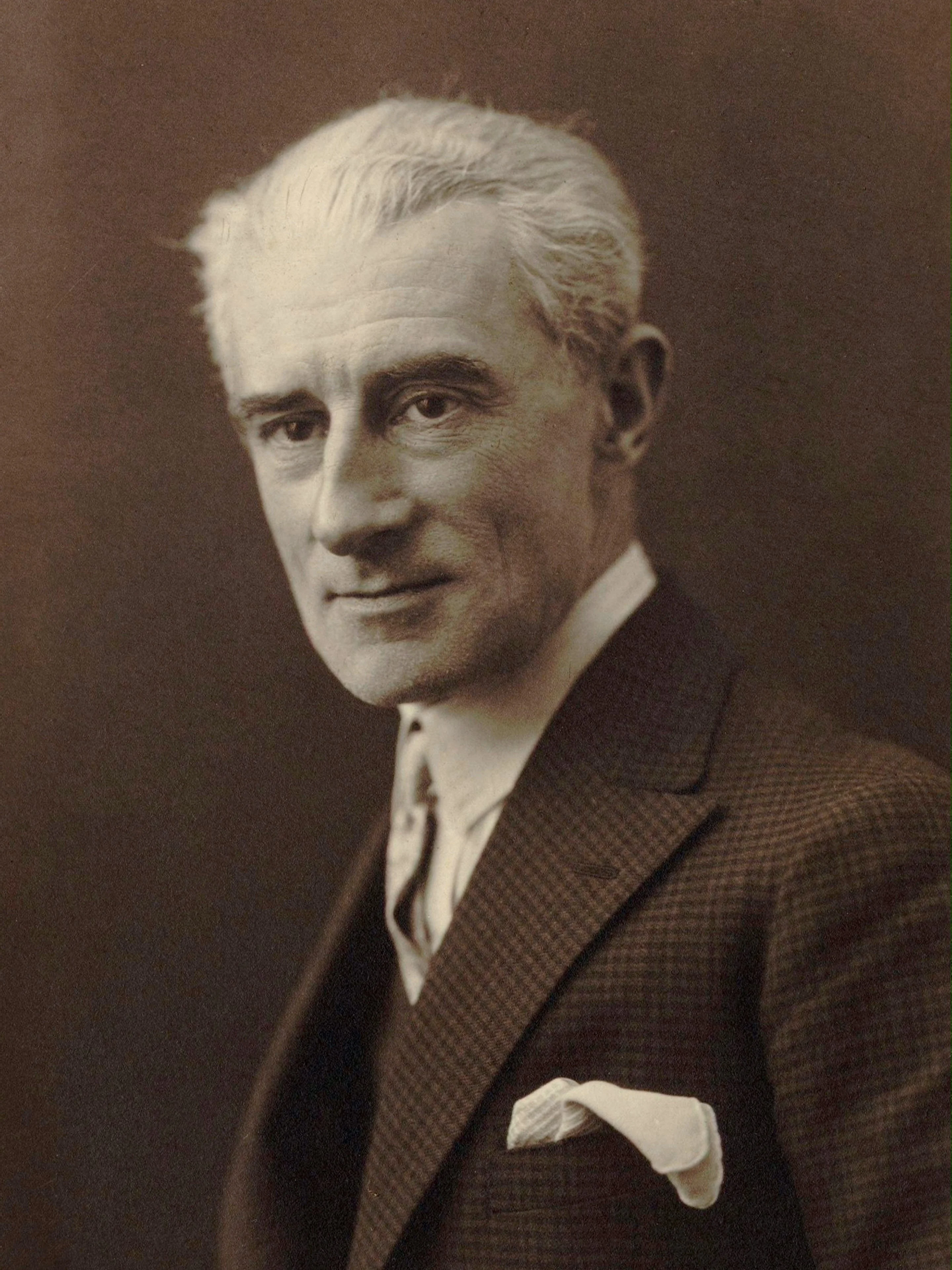
Image from Wikipedia
Image from Wikipedia
Maurice Ravel – the Magician of French Sound Colors
A composer who shaped the music of the 20th century with precision, elegance, and suggestion
Joseph-Maurice Ravel was born on March 7, 1875, in Ciboure in the French Basque Country and died on December 28, 1937, in Paris. As a French composer and, alongside Claude Debussy, a key representative of Impressionism in music, he became one of the decisive figures of modernity. His most famous work, the orchestral piece Boléro, originally intended as ballet music, still exemplifies Ravel's art of creating immense, irresistible tension from the smallest formal elements. ([de.wikipedia.org](https://de.wikipedia.org/wiki/Maurice_Ravel))
Background, Education, and the Parisian Influence
Ravel grew up in a family that moved to Paris shortly after his birth, where his father found employment. The musical foundation was laid during his years at the Conservatoire, where he returned in 1897 to the composition class of Gabriel Fauré and additionally studied counterpoint, fugue, and orchestration with André Gedalge. Fauré provided him access to the fashionable salons of then Paris, where Ravel was early on recognized as an independent artistic personality. ([de.wikipedia.org](https://de.wikipedia.org/wiki/Maurice_Ravel))
This education shaped not only his craftsmanship but also his attitude towards form. Ravel combined strict construction with tonal refinement and developed early on a language that fused clarity, precision, and sensitivity to color. The proximity to the Parisian avant-garde circles, especially to the “Apaches,” provided him with an environment where new works were informally tested and discussed. ([de.wikipedia.org](https://de.wikipedia.org/wiki/Maurice_Ravel))
The Difficult Path to Recognition
Ravel's career did not begin with a smooth course, but rather with setbacks that only enhanced his legend. Notably, the Prix de Rome became a touchstone: he applied five times and failed multiple times, despite being considered a favorite. The so-called "Ravel Affair" of 1905 garnered enormous public attention as his early exit sparked a debate about the structures of the conservatory and the competition system. ([de.wikipedia.org](https://de.wikipedia.org/wiki/Maurice_Ravel))
This episode particularly illustrates Ravel's stature: even his defeats broke the routine of the establishment. Critics and contemporaries recognized that here was not an academic epigone, but a composer with an individual signature. In the aftermath of these controversies, his reputation as an uncomfortable yet highly gifted innovator solidified, whose music could not be squeezed into simple categories. ([de.wikipedia.org](https://de.wikipedia.org/wiki/Maurice_Ravel))
From Miroirs to Daphnis et Chloé: The Breakthrough of an Orchestral Architect
In the years around 1900 and beyond, works emerged that unmistakably established Ravel's rank as a master of sound. Early key works include Pavane pour une infante défunte, Jeux d’eau, Sonatine, and Miroirs; later followed Rapsodie espagnole, Gaspard de la nuit, Ma mère l’oye, and the ballet Daphnis et Chloé. Particularly Rapsodie espagnole and Daphnis et Chloé demonstrate Ravel's ability to fuse dance forms, motivic concentration, and orchestral brilliance into an unmistakable sound language. ([de.wikipedia.org](https://de.wikipedia.org/wiki/Maurice_Ravel))
Ravel loved form, but he did not love it as a rigid academic rule. His music thrives on transparent texture, precise instrumentation, and often surprising balance between external calm and inner tension. In works like Daphnis et Chloé, it becomes clear how masterfully he integrated choirs, colors, and rhythmic energies into a grand musical tableau. ([musicologie.org](https://www.musicologie.org/Biographies/ravel_maurice.html))
Boléro, La Valse, and the Art of Obsessive Tension
Boléro was composed as ballet music in 1928 and is perhaps Ravel's most famous score. The work is based on an almost relentless principle: a one-movement dance, slow and almost uniform in melody, harmony, and rhythm, carried by the crescendo of the orchestra. This radical reduction is what made the piece one of the most effective orchestral works of the 20th century. ([de.wikipedia.org](https://de.wikipedia.org/wiki/Bol%C3%A9ro))
La Valse is also one of the works where Ravel infuses the form of dance with dramatic substance. The music showcases his deep interest in movement, masquerade, and musical choreography. His dance forms are never merely decorative; they become carriers of tension, irony, and historical reflection. ([de.wikipedia.org](https://de.wikipedia.org/wiki/Maurice_Ravel))
Style: Impressionism, Clarity, and a Distinct Orchestration
Ravel is often mentioned in the same breath as Debussy, yet the kinship remains superficial. The ENO describes that Ravel established his musical language early on and that his proximity to bitonality, jazz, and popular music is as audible as his reputation as a brilliant orchestrator with a fine sensibility for color and timbre. At the same time, Ravel's works differ from Debussy's music through more closed forms, dance types, and orientation to historical models. ([eno.org](https://www.eno.org/people/maurice-ravel/))
It is precisely this combination of modernity and discipline that makes Ravel's art so durably appealing. He relies on clarity, elegant proportions, and precisely articulated sound events. His scores never seem overloaded, although they demand utmost refinement; within them, one finds a compositional craft that arises sensuality from control. ([eno.org](https://www.eno.org/people/maurice-ravel/))
Spain, Basque Country, and Cultural Imagination
A central theme in Ravel's work is the imagined closeness to Spain. Although he was born in the French Basque Country, he grew up in Paris; the Spanish colors of his music do not derive from folkloric directness, but from stylized memory and cultural imagination. Contemporaries described his Spain as idealized, as an inner Spain that entered his compositions through familial and aesthetic influences. ([de.wikipedia.org](https://de.wikipedia.org/wiki/Maurice_Ravel))
This fascination shapes numerous works, such as Rapsodie espagnole, L’heure espagnole, Tzigane, and passages in Boléro. Ravel's Spanish elements are never mere exoticism; they are precise stylistic constructions. They connect rhythm, harmony, and instrumental color into a sonic image that is immediately recognizable yet remains artistically highly refined. ([de.wikipedia.org](https://de.wikipedia.org/wiki/Maurice_Ravel))
War, Loss, and Late Works
World War I also left its mark on Ravel. In 1915, he enlisted for military service and was assigned to the medical corps as a driver. In 1917, his mother, with whom he had lived until then, passed away; this loss deeply affected him. He later lived in Montfort-l’Amaury in the villa "Le Belvédère," where he spent the last 16 years of his life. ([de.wikipedia.org](https://de.wikipedia.org/wiki/Maurice_Ravel))
In his final years, his health deteriorated. Despite pain, exhaustion, and neurological symptoms, he still undertook concert tours through Europe, including a four-month tour of the USA and Canada in 1928. After a car accident in 1932, he lost the ability to compose; operations and a coma culminated in his death in 1937. That he continued to speak of unwritten music until the end marks one of the most poignant moments in Ravel's biography. ([de.wikipedia.org](https://de.wikipedia.org/wiki/Maurice_Ravel))
Discography, Reception, and the Living Legacy
Ravel's canon of works spans from piano miniatures and chamber music to opera, ballet, and orchestral repertoire. Among the most frequently cited highlights are Jeux d’eau, String Quartet in F Major, Gaspard de la nuit, Ma mère l’oye, Tzigane, the Piano Concerto in G Major, and the Piano Concerto for the Left Hand. The discography remains immense to this day, as his music has remained central to concert halls, studios, and repertoire history alike. ([de.wikipedia.org](https://de.wikipedia.org/wiki/Maurice_Ravel))
The critical reception regularly honors Ravel as one of the greatest orchestrators in music history. Warner Classics speaks of a catalog that knows practically no excess and is masterful in nearly all genres; the ENO also emphasizes his sense of color and early stylistic independence. The repertoire will particularly flourish in 2025: On the occasion of Ravel's 150th birthday, new recordings and anniversary projects will be released, including publications from Radio France, the Orchestre philharmonique de Strasbourg, and Warner Classics. ([warnerclassics.com](https://www.warnerclassics.com/release/ravel-masterpieces-0))
Current Projects and Publications Surrounding Ravel
Ravel himself can no longer be responsible for new projects, but his music will experience an exceptionally visible reinterpretation in 2025. Radio France announces a large triple album titled Ravel Paris 2025, performed by the Orchestre National de France under Cristian Măcelaru; the project will focus on the symphonic works of the composer during the anniversary year. Parallel new recordings of Daphnis et Chloé and collections like Ravel: Masterpieces underline the enduring relevance of his oeuvre. ([radiofrance.com](https://www.radiofrance.com/presse/ravel-paris-2025-par-lorchestre-national-de-france-nouvel-album-chez-naive))
These releases demonstrate that Ravel is not a name for a museum, but a living benchmark for interpretation, orchestral culture, and sound aesthetic. His works continue to be seen as repertoire, challenge, and inspiration. In the present of classical music, he remains the composer against whom elegance, precision, and emotional intensity can always be measured anew. ([radiofrance.com](https://www.radiofrance.com/presse/ravel-paris-2025-par-lorchestre-national-de-france-nouvel-album-chez-naive))
Conclusion: Why Maurice Ravel Continues to Captivate
Maurice Ravel fascinates because he never left virtuosity to chance while creating music that touches immediately. His career tells of perseverance, stylistic independence, and the ability to draw poetic strength from formal discipline. Those who listen to Ravel experience not only Impressionism, but an art of listening, orchestrating, and condensing at the highest level. ([de.wikipedia.org](https://de.wikipedia.org/wiki/Maurice_Ravel))
Those who experience Ravel live in concert encounter a sound universe of rare nobility and dramatic precision. His scores unfold in the hall that tension which remains only hinted at in the studio. This is precisely where his greatness lies: Ravel remains modern, elegant, and unforgettable. ([eno.org](https://www.eno.org/people/maurice-ravel/))
Official Channels of Maurice Ravel:
- Instagram: no official profile found
- Facebook: no official profile found
- YouTube: no official profile found
- Spotify: no official profile found
- TikTok: no official profile found
Sources:
- Wikipedia – Maurice Ravel
- English National Opera – Maurice Ravel
- Musicologie.org – Maurice Ravel (1875-1937)
- Radio France – Ravel Paris 2025
- Orchestre philharmonique de Strasbourg – Nouvelle parution : Daphnis et Chloé
- Warner Classics – Ravel: Masterpieces
- Gramophone – A New Ravel Journey Is Underway
- Wikipedia – Boléro