
Harold López-Nussa
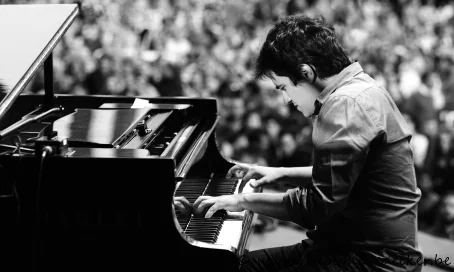
Image from Wikipedia
Image from Wikipedia
Harold López-Nussa: The Cuban Jazz Pianist Between Havana, Paris, and a New Timba Era
An artist who blends Cuban tradition and modern jazz language with immense intensity
Harold López-Nussa Torres, born on July 13, 1983, in Havana, is among the defining voices of Cuban jazz. The pianist and composer has been living in Toulouse since 2021 and has established a music career that uniquely combines classical training, Afro-Cuban roots, and international jazz aesthetics in an exceptionally elegant way. From an early age, he merged pianistic virtuosity with compositional independence, developing a stage presence that captivates both large festival stages and renowned jazz clubs alike. ([de.wikipedia.org](https://de.wikipedia.org/wiki/Harold_L%C3%B3pez-Nussa))
Biography: Rooted in a Family of Musicians, Shaped by Havana
López-Nussa grew up in a family where music was both everyday life and profession. His father is jazz drummer Ruy López-Nussa Lekszycki, his mother Mayra Torres was a piano teacher, and his uncle Ernán López-Nussa is also a well-known Cuban jazz pianist. He began studying at the Manuel Saumell Conservatory at the age of eight, transferred to the Amadeo Roldán Conservatory in 1995, and completed his education at the Instituto Superior de Arte in Havana. This classical training continues to form the foundation of his musical development. ([de.wikipedia.org](https://de.wikipedia.org/wiki/Harold_L%C3%B3pez-Nussa))
His origin from Havana is not a decorative detail for López-Nussa, but the core of his artistic self-understanding. Interviews and portraits reveal how profoundly the sound world of his hometown has influenced him: Afro-Cuban ceremonies, popular dance forms, son, danzón, and the great tradition of Cuban pianists. This cultural depth makes his work much more than mere virtuosic Latin jazz entertainment; it gives it historical resonance and emotional authenticity. ([matrixonline.net](https://www.matrixonline.net/profile/haroldlopeznussa))
The Path to Jazz and International Breakthrough
In 2007, López-Nussa made the definitive choice to pursue a career in jazz and formed his own band. In the following years, he performed with artists such as Chucho Valdés, David Sánchez, Horacio “El Negro” Hernández, Christian Scott, Stefon Harris, Bobby Carcassés, Elmer Ferrer, and Alexander Brown. Between 2008 and 2011, he also accompanied Omara Portuondo on international tours, an experience that significantly deepened his sensitivity towards song interpretation and vocal phrasing. ([de.wikipedia.org](https://de.wikipedia.org/wiki/Harold_L%C3%B3pez-Nussa))
A pivotal moment in his career was winning First Prize and the Audience Award at the Solo Piano Competition at the Montreux Jazz Festival in 2005. This award opened the door to an international career and marked the transition from a promising young pianist to a globally recognized jazz artist. He later received further honors, including Jazz Talent 2011 from the French ADAMI and Cubadisco 2014 for the music to Fábula. ([de.wikipedia.org](https://de.wikipedia.org/wiki/Harold_L%C3%B3pez-Nussa))
A Trio as a Musical Laboratory
Especially significant is López-Nussa's work in a trio. His brother Ruy Adrián López-Nussa often plays the drums, while bassists like Felipe Cabrera or Gaston Joya lay the rhythmic foundation. This lineup allows for highly nuanced interaction between composition and improvisation, between structural discipline and spontaneous energy. In his trio, the format becomes a laboratory for timbres, rhythmic shifts, and melodic condensation. ([de.wikipedia.org](https://de.wikipedia.org/wiki/Harold_L%C3%B3pez-Nussa))
Discography: From Early Works to Blue Note
His discography shows a consistent evolution from a Cuban rising star to an internationally connected jazz architect. Early albums include Sobre el atelier and Canciones from 2007, followed by Herencia (2009), El País de las Maravillas (2011), New Day (2013), Havana Paris Dakar with Alune Wade (2015), El Viaje (2016), Un día cualquiera (2018), Te lo dije (2020), and Timba a la Americana (2023). The official Blue Note site also lists NUEVA TIMBA as a current release for 2025. ([de.wikipedia.org](https://de.wikipedia.org/wiki/Harold_L%C3%B3pez-Nussa))
El Viaje received particular attention in the jazz scene after its release: Steinway lists it at number one in the iTunes Jazz Charts and number two in the Amazon Jazz Charts, while DownBeat rated the album four stars, associating López-Nussa with Herbie Hancock and Chick Corea. Such feedback underscores that his playing is not only technically impressive but also stylistically distinctive and historically relevant. ([steinway.com](https://www.steinway.com/artists/harold-lopez-nussa))
With Timba a la Americana, a new chapter began in 2023 at Blue Note. The album was produced by Michael League and came about against the backdrop of López-Nussa's decision to leave Cuba and start a new life in France. Blue Note describes the work as vibrant, infused with joy and pathos; it also marks an expansion of his sound spectrum, incorporating electronics and a modern production understanding. ([bluenote.com](https://www.bluenote.com/artist/harold-lopez-nussa/))
New Music 2024 and 2025: Present with Biographical Depth
In his recent releases, López-Nussa remains artistically in motion. The Blue Note and Universal announcements for NUEVA TIMBA position the album as the second release for the label and as a live/studio hybrid, recorded at Le Duc des Lombards in Paris and later refined in the studio. The release on September 5, 2025, includes contributions from Ruy Adrian López-Nussa, Luques Curtis, and Grégoire Maret, while narrating the biographical experience of migration, loss, and new beginnings. ([universalmusic.ca](https://www.universalmusic.ca/press-releases/harold-lopez-nussa-returns-with-nueva-timba-the-cuban-born-pianists-new-blue-note-album-out-sept-5-a-deeply-personal-musical-journey-that-presents-a-definitive-vision-for-the-future-of-latin/))
The selection of singles already suggests the stylistic range: “Bonito y Sabroso,” “Gitanerías,” and “Niña Con Violín” showcase how López-Nussa merges Cuban tradition, classical references, and contemporary studio aesthetics. The new pieces do not merely continue earlier works but condense his musical language in the sign of memory, family heritage, and future energy. ([bluenote.com](https://www.bluenote.com/artist/harold-lopez-nussa/))
Musical Style: Classical, Afro-Cuban, and Jazz as an Organic Unit
López-Nussa's playing combines classical clarity with rhythmic aggressiveness. Steinway describes that he primarily works in a trio format while integrating classical, indigenous, and jazz idioms. Notably, he possesses the ability to connect complex harmonic movements with an almost dance-like ease, without losing energetic grounding. ([steinway.com](https://www.steinway.com/artists/harold-lopez-nussa))
His closeness to Ernest Lecuona and Cuban traditional forms like son and danzón is not a nostalgic regression but compositional material. In his arrangements and original compositions, Afro-Cuban rituals, Yoruba influences, and jazz improvisation coalesce into a language that is both historically informed and contemporary. This transformation, rather than mere reproduction of tradition, marks the distinctive authority of his art. ([steinway.com](https://www.steinway.com/artists/harold-lopez-nussa))
The reception also highlights this complexity. WBGO called him one of the most important ambassadors of Cuban jazz piano and pointed out the significant importance of his international career. The combination of technical mastery, melodic imagination, and rhythmic precision makes him a pianist whose arrangements fascinate analytically while also being emotionally compelling. ([wbgo.org](https://www.wbgo.org/music/2023-11-03/harold-lopez-nussas-long-and-beautiful-journey?utm_source=openai))
Cultural Influence and International Significance
Harold López-Nussa stands in line with the great Cuban jazz pianists, yet he expands this tradition with a deeply personal narrative of home, exile, and artistic renewal. His performances at festivals like Montreux, Montreal, North Sea Jazz, Jazz à Vienne, Jazz in Marciac, and the Moers Festival have shaped his international visibility and solidified his status as a global jazz musician. ([de.wikipedia.org](https://de.wikipedia.org/wiki/Harold_L%C3%B3pez-Nussa))
Collaboration with artists like Chucho Valdés, David Sánchez, Christian Scott, and Stefon Harris showcases how well anchored he is in the international scene. At the same time, his work remains rooted in Cuban musical history and contributes to the global perception of Latin jazz as an open, adaptable art form. This balance of local authenticity and global relevance highlights his significance. ([de.wikipedia.org](https://de.wikipedia.org/wiki/Harold_L%C3%B3pez-Nussa))
Conclusion: A Pianist with Heritage, Attitude, and Presence
Harold López-Nussa captivates because he does not turn Cuban tradition into folklore but makes it a vibrant present. His music career fuses virtuosity, emotional depth, and form-conscious composition into a distinctive profile in modern jazz. Those who want to experience the intersection of Cuban identity, improvisational freedom, and detailed sound crafting at the highest level should listen to Harold López-Nussa live. ([bluenote.com](https://www.bluenote.com/artist/harold-lopez-nussa/))
Official Channels of Harold López-Nussa:
- Instagram: https://www.instagram.com/haroldlopeznussa/
- Facebook: No official profile found
- YouTube: https://www.youtube.com/channel/UCEJt8lO-E2nfLKS7QKltXwQ
- Spotify: https://open.spotify.com/artist/0Idg159PTZKon9ZGAeCLjR
- TikTok: No official profile found