
Die Acht
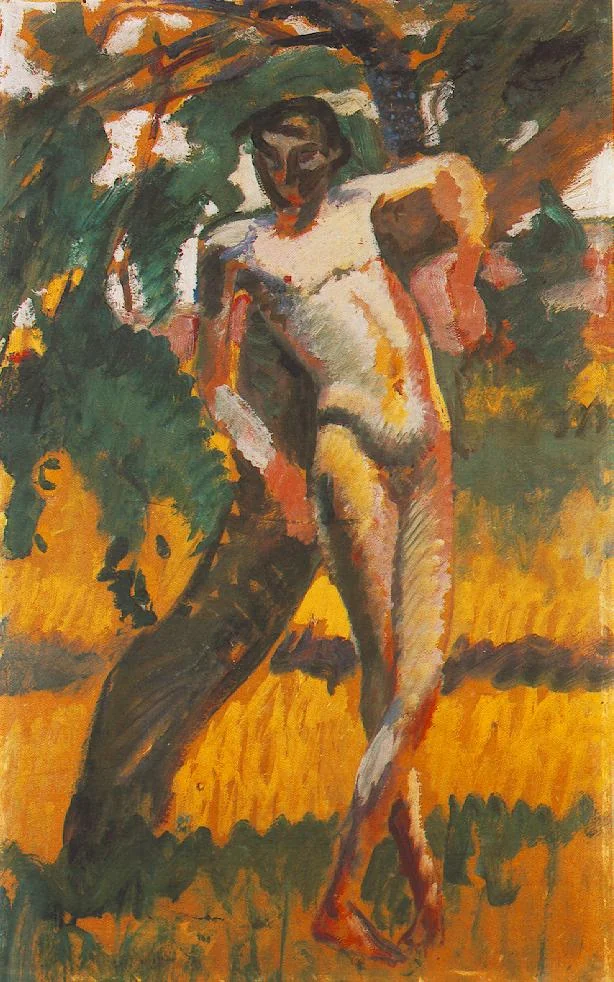
Image from Wikipedia
Image from Wikipedia
The Eight – The Hungarian Avant-Garde That Broke Open Modernity with Color, Attitude, and Rhythm
An Artist Group That Permanently Changed Hungarian Art Understanding
The Eight, in Hungarian Nyolcak, are among the most influential avant-garde groups of the early 20th century in Hungary. Between 1909 and 1918, a circle of painters formed here who consciously broke away from academic conventions and developed a new visual language that made European modernity visible in Budapest. Their emergence marked a turning point, as they not only incorporated stylistic impulses from France but also translated them with their own artistic consistency into a Hungarian modernity. ([de.wikipedia.org](https://de.wikipedia.org/wiki/Die_Acht))
Biographical Context: Origin from Paris, Perspective on Europe
The members of The Eight arrived in Paris in the early years of the 20th century, where they participated in academic training and became directly acquainted with the leading movements of modernity of the time. The Académie Julian was particularly important, where several later group members studied between 1901 and 1907, primarily under Jean-Paul Laurens. This Parisian influence explains why The Eight worked from the beginning in an international framework, rather than emerging solely from a local tradition. ([de.wikipedia.org](https://de.wikipedia.org/wiki/Die_Acht))
As a group, they united different temperaments, but shared the will to find new forms of expression. The members included Róbert Berény, Dezső Czigány, Béla Czóbel, Károly Kernstok, Ödön Márffy, Dezső Orbán, Bertalan Pór, and Lajos Tihanyi; guests included Vilmos Fémes Beck, Márk Vedres, and Anna Lesznai. It was precisely this mix of painting, sculpture, and literary environment that made The Eight an intellectually rich formation of modernity. ([de.wikipedia.org](https://de.wikipedia.org/wiki/Die_Acht))
The Breakthrough: Budapest 1909 as a Cultural Milestone
The Budapest exhibition of 1909 became the historical breakthrough for the group. The presentation was more than a debut: it brought a young generation of artists into the limelight, whose works visibly connected with the most modern international trends. Thus, The Eight did not appear as a marginal phenomenon but as a confident response to an art scene that was still heavily influenced by traditional standards. ([museum.hu](https://www.museum.hu/kiallitas/10669/A_Nyolcak))
Particularly exciting is the cultural context of these exhibitions. They were accompanied by high-profile cultural events and recognized by key intellectuals and artists of their time, including Ady Endre, Bartók Béla, Kodály Zoltán, and Lukács György. The Eight were thus at the heart of a multifaceted modernization process, in which visual art, music, literature, and philosophy reacted closely to one another. ([museum.hu](https://www.museum.hu/kiallitas/10669/A_Nyolcak))
Style and Artistic Development: From Fauvism to Classicism
Stylistically, the art of The Eight was primarily influenced by Fauvism and Post-Impressionism; Cézanne was also a decisive reference point. In addition, Expressionism, Cubism, and the Secession had a smaller impact on their visual language. The group is considered revolutionary because they sought new forms of expression that were not solely based on academic drawing, but were supported by color, composition, and artistic independence. ([de.wikipedia.org](https://de.wikipedia.org/wiki/Die_Acht))
The development of the group was not static. According to museum history, their painting moved from open, vibrant colors toward a classical monumental quality; in the later exhibitions, cubist and especially expressionistic features also emerged. This stylistic movement shows how experimental The Eight were: they did not remain fixed in a single formula but sought a modern form language that corresponded to the inner demands of the era. ([museum.hu](https://www.museum.hu/kiallitas/10669/A_Nyolcak))
International Resonance and Reception: Recognition, Criticism, and Later Revaluation
Even beyond Hungary, The Eight made an impression. In the spring of 1910, the young artist generation debuted in Berlin at the "Exhibition of Hungarian Painters" in the spaces of the Berlin Secession. The response from the Berlin press was mixed: the artists were recognized as talented and interesting while simultaneously criticized for their orientation towards French models, which did not yet meet with unanimous approval in Germany at the time. This tension defines their historical significance, as today they are credited with an independent contribution to the development of modernity. ([berlinischegalerie.de](https://berlinischegalerie.de/assets/downloads/presse/Pressetexte/Ausstellungen_2022/Magyar_Modern/Pressemappe_Magyar-Modern_Berlinische-Galerie.pdf))
Later art history has repeatedly confirmed this significance through exhibitions and research projects. The Eight have been featured in Budapest, Pécs, Vienna, and Paris; the exhibition history ranges from early retrospectives to centenary presentations in the 21st century. The fact that museums and art forums continually recontextualize the group underscores their enduring significance as central pioneers of the Hungarian avant-garde. ([de.wikipedia.org](https://de.wikipedia.org/wiki/Die_Acht))
Political Upheaval and Dispersal: Art in an Era of Crisis
The history of The Eight cannot be understood without the political rupture after World War I. The disintegration of the Austro-Hungarian monarchy, the social crisis, and territorial losses after Trianon profoundly changed the cultural climate in Hungary. In this situation, many progressive artists became politically active; Károly Kernstok, previously a leading figure in the group, even became the People's Commissioner for Fine Arts in the Council Republic of 1919. ([berlinischegalerie.de](https://berlinischegalerie.de/assets/downloads/presse/Pressetexte/Ausstellungen_2022/Magyar_Modern/Pressemappe_Magyar-Modern_Berlinische-Galerie.pdf))
The subsequent political persecution of leftist and Jewish intellectuals led to the emigration of many artists to Vienna and Berlin. Additionally, the most important publication forum for progressive Hungarian art, the journal "Ma," was created in this climate, highlighting how closely intertwined art, politics, and journalism were. The Eight thus represent not only a style but an entire attitude within the cultural history of Central Europe. ([berlinischegalerie.de](https://berlinischegalerie.de/assets/downloads/presse/Pressetexte/Ausstellungen_2022/Magyar_Modern/Pressemappe_Magyar-Modern_Berlinische-Galerie.pdf))
Cultural Influence: The Eight as a Hub of Hungarian Modernity
The Eight influenced Hungarian modernity far beyond their actual activity. Later artist groups explicitly acknowledged their heritage, and the exhibition history also shows that they serve as a reference point in 20th-century art. Their position between French avant-garde and Hungarian uniqueness made them mediators of a new aesthetic language that connected international thinking with regional identity. ([de.wikipedia.org](https://de.wikipedia.org/wiki/Die_Acht))
Particularly impressive is how deeply their impact remained anchored in museum memory. From Pécs to Budapest and Vienna to Paris, their works were exhibited again and placed in new art historical contexts. This continuous rediscovery shows that The Eight are not just a chapter of the past but a key to the history of European modernity. ([de.wikipedia.org](https://de.wikipedia.org/wiki/Die_Acht))
Conclusion: Why The Eight Still Fascinate Today
The Eight fascinate because they developed a uncompromising artistic language amid the conditions of a transformative era. Their colors, forms, and aesthetic decisions represent courage, sovereignty, and the will to rethink the art of an entire country. Anyone interested in avant-garde, art history, and the dynamics of European modernity encounters a group of extraordinary radiance here. A visit to a museum focused on The Eight is always worthwhile because their works continue to tell stories of departure, risk, and creative freedom. ([de.wikipedia.org](https://de.wikipedia.org/wiki/Die_Acht))
Official Channels of The Eight:
- Instagram: No official profile found
- Facebook: No official profile found
- YouTube: No official profile found
- Spotify: No official profile found
- TikTok: No official profile found
Sources:
- Wikipedia - The Eight
- Museum.hu - A Nyolcak
- Berlinische Galerie - Press Kit Magyar Modern
- Wikipedia: Image and Text Source