
Beatrix (Niederlande)
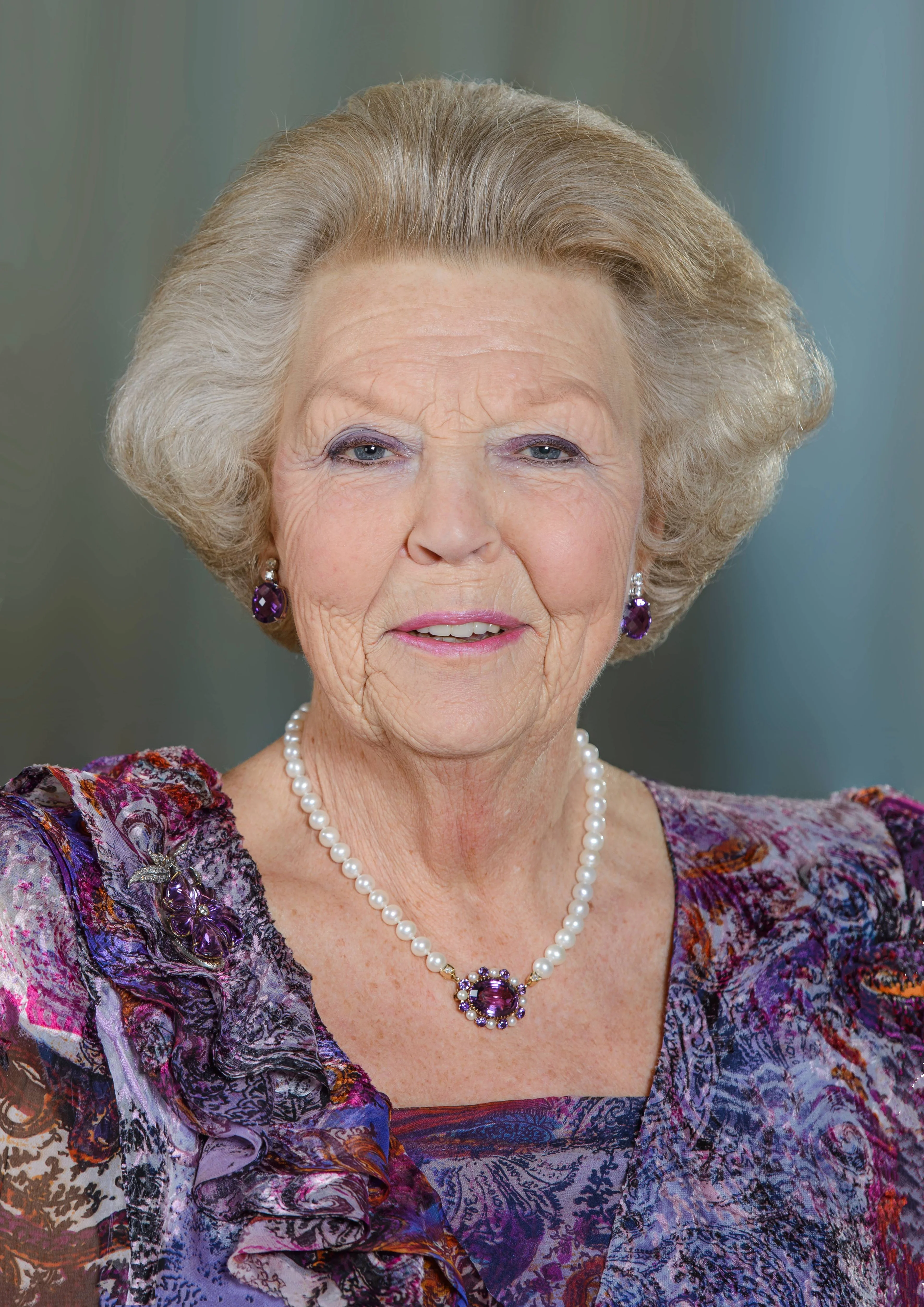
Image from Wikipedia
Image from Wikipedia
Beatrix of the Netherlands: A State Figure Between Duty, Dignity, and Historical Continuity
The Defining Monarch of Modern Netherlands
Beatrix Wilhelmina Armgard, Princess of the Netherlands, was the face of the Dutch monarchy for over three decades. Born on January 31, 1938, in Baarn, she grew up in an era marked by war, exile, and political upheaval. Her public journey took her to the throne in 1980 and, after a consciously timed abdication in 2013, into a new chapter as Princess Beatrix of the Netherlands. ([koninklijkhuis.nl](https://www.koninklijkhuis.nl/leden-koninklijk-huis/prinses-beatrix/jeugd?utm_source=openai))
Early Years Between War, Exile, and Royal Education
Beatrix's youth was closely linked to the history of Europe in the 20th century. After the outbreak of the war in 1940, the royal family initially fled to England and later to Canada, before returning to the Netherlands in 1945. These experiences early on shaped her understanding of state responsibility, public role, and institutional stability. ([koninklijkhuis.nl](https://www.koninklijkhuis.nl/leden-koninklijk-huis/prinses-beatrix/jeugd?utm_source=openai))
Her education took place after her return to the Netherlands, including at Werkplaats Kindergemeenschap in Bilthoven and Baarns Lyceum. In 1956, she passed her Gymnasium-A exam, and in 1961, she graduated from law studies at Leiden University. The combination of academic discipline and political education significantly influenced her later governing style. ([koninklijkhuis.nl](https://www.koninklijkhuis.nl/leden-koninklijk-huis/prinses-beatrix/studie?utm_source=openai))
The Path to Queen: Responsibility as a Life Mission
Beatrix married German diplomat Claus von Amsberg in 1966 and became the mother of three sons: Willem-Alexander, Friso, and Constantijn. With the death of her mother, Queen Juliana, and her own accession to the throne on April 30, 1980, her reign as Queen of the Netherlands began. In this role, she represented continuity, institutional calm, and a high level of protocol presence. ([koninklijkhuis.nl](https://www.koninklijkhuis.nl/leden-koninklijk-huis/prinses-beatrix/huwelijk-en-gezin?utm_source=openai))
Her working style was regarded as precise, controlled, and reliability-oriented. The royal house notes that she was Queen of the Netherlands for over 33 years and was succeeded by her eldest son Willem-Alexander in 2013. This transition made her a symbol of an orderly generational change within the monarchy. ([koninklijkhuis.nl](https://www.koninklijkhuis.nl/leden-koninklijk-huis/prinses-beatrix?utm_source=openai))
Abdication 2013: A Conscious Break with Royal Significance
On April 30, 2013, Beatrix handed over her office to Willem-Alexander, marking one of the most significant resignations by a European monarch in recent history. The abdication granted her life story a rare dramatic clarity: not the clinging to power, but the orderly transition was at the forefront. In doing so, she sent a signal for modernity within a tradition-conscious institution. ([koninklijkhuis.nl](https://www.koninklijkhuis.nl/leden-koninklijk-huis/prinses-beatrix?utm_source=openai))
Even after her abdication, she remained publicly active. The official website of the royal house documents numerous appointments, including visits to cultural and social events as well as representative duties in 2025 and 2026. Beatrix thus remained no mere figure of the past but an active presence in the public life of the Netherlands. ([koninklijkhuis.nl](https://www.koninklijkhuis.nl/leden-koninklijk-huis/prinses-beatrix?utm_source=openai))
Current Duties and Ongoing Presence in Public Life
Even in old age, Beatrix is visible in the Dutch public eye. In 2025 and 2026, she attended various events related to volunteering, culture, and social cohesion, such as the NLdoet project, a symposium in Utrecht, and institutions like the Nationaal Vlechtmuseum. These appointments showcase a princess fulfilling her representative role with seriousness and regularity to this day. ([koninklijkhuis.nl](https://www.koninklijkhuis.nl/actueel/nieuws/2025/12/19/prinses-beatrix-bij-werksymposium-in-vrijheid-verbonden?utm_source=openai))
Her connection to the country's cultural heritage is particularly evident at the reopening of mills and museum sites. As a patroness of De Hollandsche Molen, she supports the preservation of historical architecture and traditional craftsmanship. Beatrix thereby combines representation with social engagement and historical awareness. ([koninklijkhuis.nl](https://www.koninklijkhuis.nl/actueel/nieuws/2026/03/23/prinses-beatrix-heropent-molen-de-wachter?utm_source=openai))
Style, Presence, and Institutional Influence
Beatrix shaped the image of the Dutch monarchy with a blend of rigor, elegance, and institutional discipline. Her public appearance never represented extravagance but rather a sober form of dignity that instilled trust in the political everyday life of the country. This controlled presence made her one of the most influential state women in Europe. ([koninklijkhuis.nl](https://www.koninklijkhuis.nl/onderwerpen/koninklijk-huis/geschiedenis/koningen-en-koninginnen/koningin-beatrix-1980-2013?utm_source=openai))
In the collective memory of the Netherlands, she remains a monarch who gained authority not through spectacle but through consistency. Her biography also reflects the modernization of the monarchy: academically educated, historically sensitive, and politically attentive. Thus, Beatrix represents a state culture where tradition and present do not work against each other but stabilize one another. ([koninklijkhuis.nl](https://www.koninklijkhuis.nl/leden-koninklijk-huis/prinses-beatrix/studie?utm_source=openai))
Discography and Musical Influence
A discography in the music journalistic sense does not exist for Beatrix of the Netherlands, as she is not a musician, singer, or composer. There are also no album-related works, hit singles, or chart successes. For a serious classification, it remains to note: her cultural influence does not arise from music productions but through representation, state leadership, and public symbolism. ([koninklijkhuis.nl](https://www.koninklijkhuis.nl/leden-koninklijk-huis/prinses-beatrix?utm_source=openai))
Official Channels of Beatrix (Netherlands):
- Instagram: no official profile found
- Facebook: no official profile found
- YouTube: no official profile found
- Spotify: no official profile found
- TikTok: no official profile found
Conclusion: Why Beatrix Remains Fascinating
Beatrix of the Netherlands remains intriguing because her biography encapsulates a whole century of political and societal upheavals. She unites experiences of exile, education, monarchical responsibility, and the rare willingness for an orderly retreat. To understand her influence, one encounters a woman who embodied authority quietly, yet effectively. Her life path shows how strongly a personality can shape a country without pushing herself into the foreground. ([koninklijkhuis.nl](https://www.koninklijkhuis.nl/leden-koninklijk-huis/prinses-beatrix/jeugd?utm_source=openai))
This mixture of a sense of duty, historical depth, and public presence makes her a lasting figure in contemporary European history. Visiting her official appearances and public appointments is worthwhile because it reveals how vibrant a monarchy can be when supported by experience and attitude. Beatrix remains a woman of state who is not only known from history but is still perceived in public life. ([koninklijkhuis.nl](https://www.koninklijkhuis.nl/actueel/nieuws/2026/03/23/prinses-beatrix-heropent-molen-de-wachter?utm_source=openai))
Sources:
- The Royal House - Princess Beatrix
- The Royal House - Youth of Princess Beatrix
- The Royal House - Studies of Princess Beatrix
- The Royal House - Marriage and Family
- The Royal House - Queen Beatrix (1980-2013)
- The Royal House - Princess Beatrix Reopens Windmill De Wachter
- The Royal House - Princess Beatrix at the 25th Anniversary of the National Braid Museum
- The Royal House - The Royal Couple and Princess Beatrix Participate in the 21st Edition of NLdoet
- The Royal House - Princess Beatrix at the Work Symposium In Freedom Connected
- Wikipedia - Beatrix (Netherlands)