
Beatrix (Niederlande)
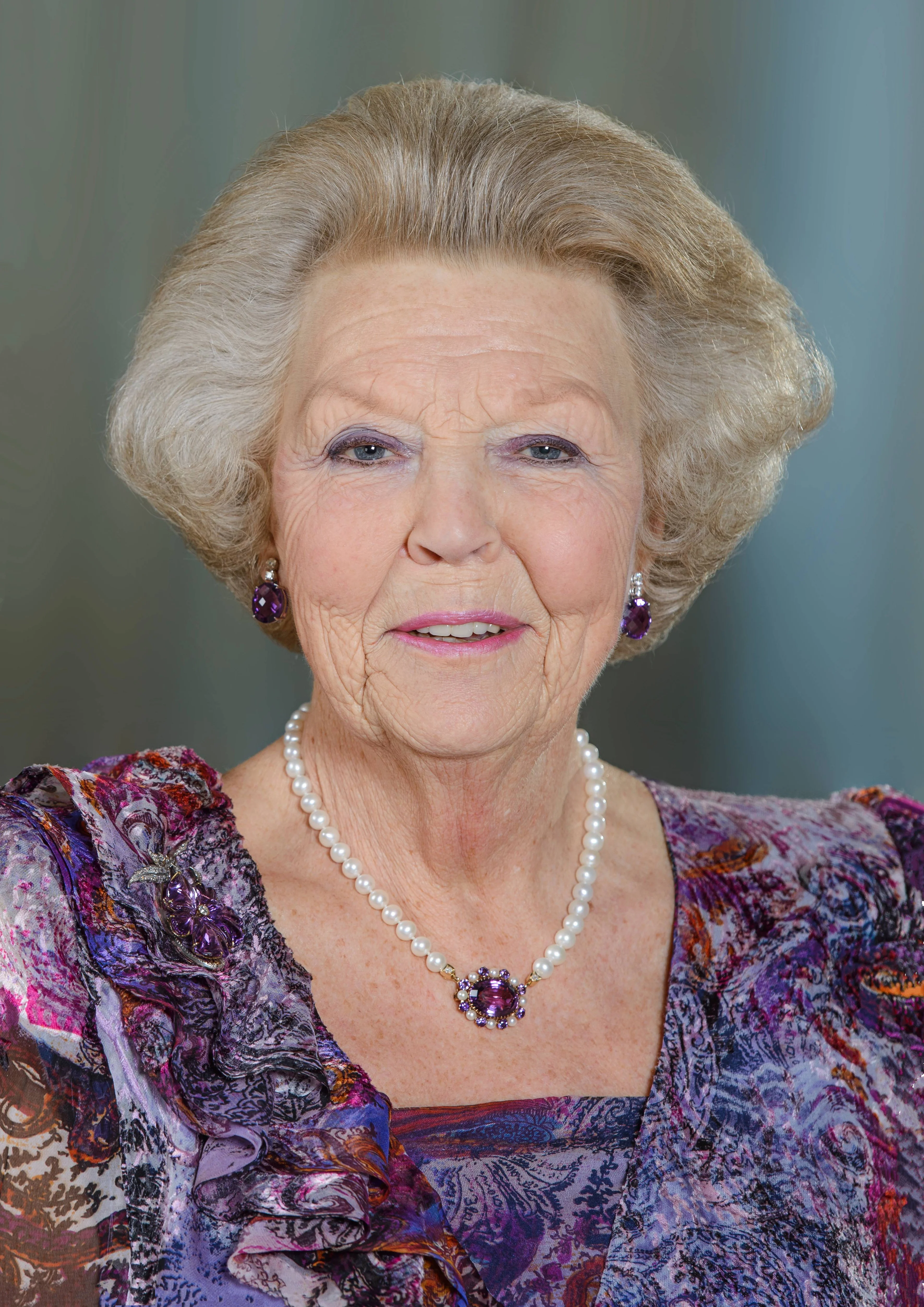
Image from Wikipedia
Image from Wikipedia
Beatrix of the Netherlands: The Reserved Monarch with Political Precision and European Charisma
A Queen Who Made History Through Stance
Beatrix Wilhelmina Armgard, Princess of the Netherlands, is one of the most influential figures of the Dutch royal family in the 20th and early 21st centuries. Born on January 31, 1938, in Baarn, she became Queen of the Netherlands in 1980 after her mother Juliana abdicated and remained in that position for 33 years until she abdicated in favor of her son Willem-Alexander on April 30, 2013. Since then, she has held the title Princess Beatrix of the Netherlands again. ([de.wikipedia.org](https://de.wikipedia.org/wiki/Beatrix_%28Niederlande%29))
To understand Beatrix, one quickly realizes: her significance lies not in spectacular self-presentation but in discipline, institutional continuity, and political sensitivity. The Dutch royal family outlines her biography through the stages of youth, study, marriage, social engagement, governance, and abdication – a clear indication of how closely her personal life story is intertwined with state reason. This connection makes her career historically and culturally fascinating. ([koninklijkhuis.nl](https://www.koninklijkhuis.nl/leden-koninklijk-huis/prinses-beatrix))
Background, Youth, and the Influence of History
Beatrix is the oldest of four daughters of Queen Juliana and Prince Bernhard of Lippe-Biesterfeld. When the Netherlands was occupied by the Wehrmacht in May 1940, the royal family fled to Britain under strict secrecy. This early experience of war, exile, and political threat shaped the future queen and infused a sense of seriousness into her understanding of her role, which always characterized her public presence. ([de.wikipedia.org](https://de.wikipedia.org/wiki/Beatrix_%28Niederlande%29))
From the outset, her youth was marked by a monarchy that not only represents but also offers guidance in times of crisis. Beatrix grew up in an environment where duty, formal distance, and institutional stability were central values. This fundamental attitude later reflected in the way she exercised her office: controlled, thoughtful, and with a keen sense for political processes. ([de.wikipedia.org](https://de.wikipedia.org/wiki/Beatrix_%28Niederlande%29))
Study, Marriage, and the Path to the Top of State
The royal house explicitly refers to the section “Study” in her biography, highlighting an education that prepared her for her later role. Although Beatrix did not have a traditional political career as a monarch, she emerged early on with a pronounced understanding of societal contexts. Her public role shaped not from party politics, but from diplomatic presence and the ability to grasp complex relationships. ([koninklijkhuis.nl](https://www.koninklijkhuis.nl/leden-koninklijk-huis/prinses-beatrix))
In 1966, she married Prince Claus of the Netherlands; together they had three sons: Willem-Alexander, Friso, and Constantijn. This family became the emotional center of her public biography, also symbolizing a monarchy that had to assert itself in a modern democracy. Beatrix's personal life never remained a mere private matter, but was always part of a public narrative about continuity and responsibility. ([koninklijkhuis.nl](https://www.koninklijkhuis.nl/leden-koninklijk-huis/prinses-beatrix))
The Role of Queen: Formality, Influence, and Political "Black Box"
When Beatrix became Queen of the Netherlands on April 30, 1980, she carried out her duties with greater formality than her predecessor Juliana. The Dutch state system traditionally grants the monarch more influence than many other European kings, and Beatrix consciously utilized this scope for action. Hence, her activities were often described as part of a “black box” in Dutch political culture, as her actual influence was hard to decipher. ([de.wikipedia.org](https://de.wikipedia.org/wiki/Beatrix_%28Niederlande%29))
This became particularly evident after parliamentary elections, when the monarch usually tasked a politician with forming a government. This was one of her most important responsibilities until parliament decided in 2012 to strip the head of state of this role, significantly curtailing its powers. This development marks a historical change in the Dutch constitutional framework and underscores how profoundly Beatrix shaped the role of the monarch over three decades. ([de.wikipedia.org](https://de.wikipedia.org/wiki/Beatrix_%28Niederlande%29))
Abdication as a Sovereign Conclusion of an Era
On the evening of January 28, 2013, Beatrix announced in a nationally broadcast address that she would abdicate in favor of her son Willem-Alexander on April 30, 2013. The transition took place in Amsterdam with the signing of the abdication document at the Palais on the Dam and the subsequent inauguration in the Nieuwe Kerk. This orderly change was not only a familial moment but also a constitutionally significant one of great symbolism. ([de.wikipedia.org](https://de.wikipedia.org/wiki/Beatrix_%28Niederlande%29))
With her abdication, Beatrix returned to the title of Princess and has lived again at Palace Drakensteyn in Lage Vuursche since February 2014. Her retreat from the highest state office did not feel like a farewell to privacy, but rather as the final act of a consciously shaped monarchical biography. It is precisely in the sober elegance of this transition that her political intelligence and sense of dignity are evident. ([de.wikipedia.org](https://de.wikipedia.org/wiki/Beatrix_%28Niederlande%29))
Public Role, Honors, and International Authority
Beatrix is a long-term member of the Club of Rome and a regular participant in Bilderberg conferences. This engagement in international circles points to a monarch who was involved in discussions about societal development, future issues, and European integration beyond mere protocol. Her profile extended far beyond symbolic representation. ([de.wikipedia.org](https://de.wikipedia.org/wiki/Beatrix_%28Niederlande%29))
Among the honors she received are the Grand Golden Honorary Badge for services to the Republic of Austria, the Grand Cross of the Order of Merit of the Italian Republic, the Congressional Gold Medal, and the Grand Cross of the Order of Merit of the Federal Republic of Germany at the special level. Such honors document international recognition and make clear the political and cultural influence Beatrix possessed as a head of state. ([de.wikipedia.org](https://de.wikipedia.org/wiki/Beatrix_%28Niederlande%29))
Current Activities and Presence Today
Even after her abdication, Beatrix remains publicly visible. The website of the royal house regularly documents her appointments and appearances, such as at cultural, social, and historical events. In 2026, for example, reports about visits to anniversaries, museum events, and the awarding of the Four Freedoms Awards have shown that she continues to play an active role in public life as a senior member of the royal house. ([koninklijkhuis.nl](https://www.koninklijkhuis.nl/leden-koninklijk-huis/prinses-beatrix))
There are currently no "projects" in a musical sense for Beatrix; instead, her societal presence takes precedence. Therefore, there is no discography, singles, album releases, or chart-relevant projects on an artist page in the strict sense. The cultural relevance here lies not in music production, but in governance, tradition, and public impact. ([koninklijkhuis.nl](https://www.koninklijkhuis.nl/leden-koninklijk-huis/prinses-beatrix))
Cultural Impact and Historical Legacy
Beatrix embodies a monarchy that convinces in a modern democracy not through loudness but through reliability. Her reign occurred during a time of profound political and social upheaval, yet she succeeded in solidifying the image of the royal family as a stable institution. This balance of tradition and adaptation makes her a key figure in Dutch contemporary history. ([de.wikipedia.org](https://de.wikipedia.org/wiki/Beatrix_%28Niederlande%29))
Her legacy lies in the controlled elegance of her office, in the discipline of language, and in the ability to productively connect public presence and distance. The historical perception of Beatrix is thus not shaped by dramatic gestures but by the long line of a governing style that placed responsibility before individuality. This is rare, and therein lies her lasting fascination. ([de.wikipedia.org](https://de.wikipedia.org/wiki/Beatrix_%28Niederlande%29))
Conclusion: Why Beatrix Remains Fascinating Today
Beatrix of the Netherlands represents a monarchy with dignity, for dignity without pathos, and for political presence without ostentation. Her biography speaks of experiences of war, state responsibility, international recognition, and a dignified transfer of power that made European history. Anyone interested in modern monarchy, Dutch politics, and the culture of European courts will find in her an extraordinary figure. ([koninklijkhuis.nl](https://www.koninklijkhuis.nl/leden-koninklijk-huis/prinses-beatrix))
Experiencing Beatrix live does not confront one with a staged show but with a historical personality whose presence grows from experience, discipline, and institutional depth. It is precisely for this reason that her name is associated with the image of a queen who has shaped the office and accompanied the Netherlands with calm authority for decades. ([koninklijkhuis.nl](https://www.koninklijkhuis.nl/leden-koninklijk-huis/prinses-beatrix))
Official Channels of Beatrix (Netherlands):
- Instagram: No official profile found
- Facebook: No official profile found
- YouTube: No official profile found
- Spotify: No official profile found
- TikTok: No official profile found