
Ariane Matiakh
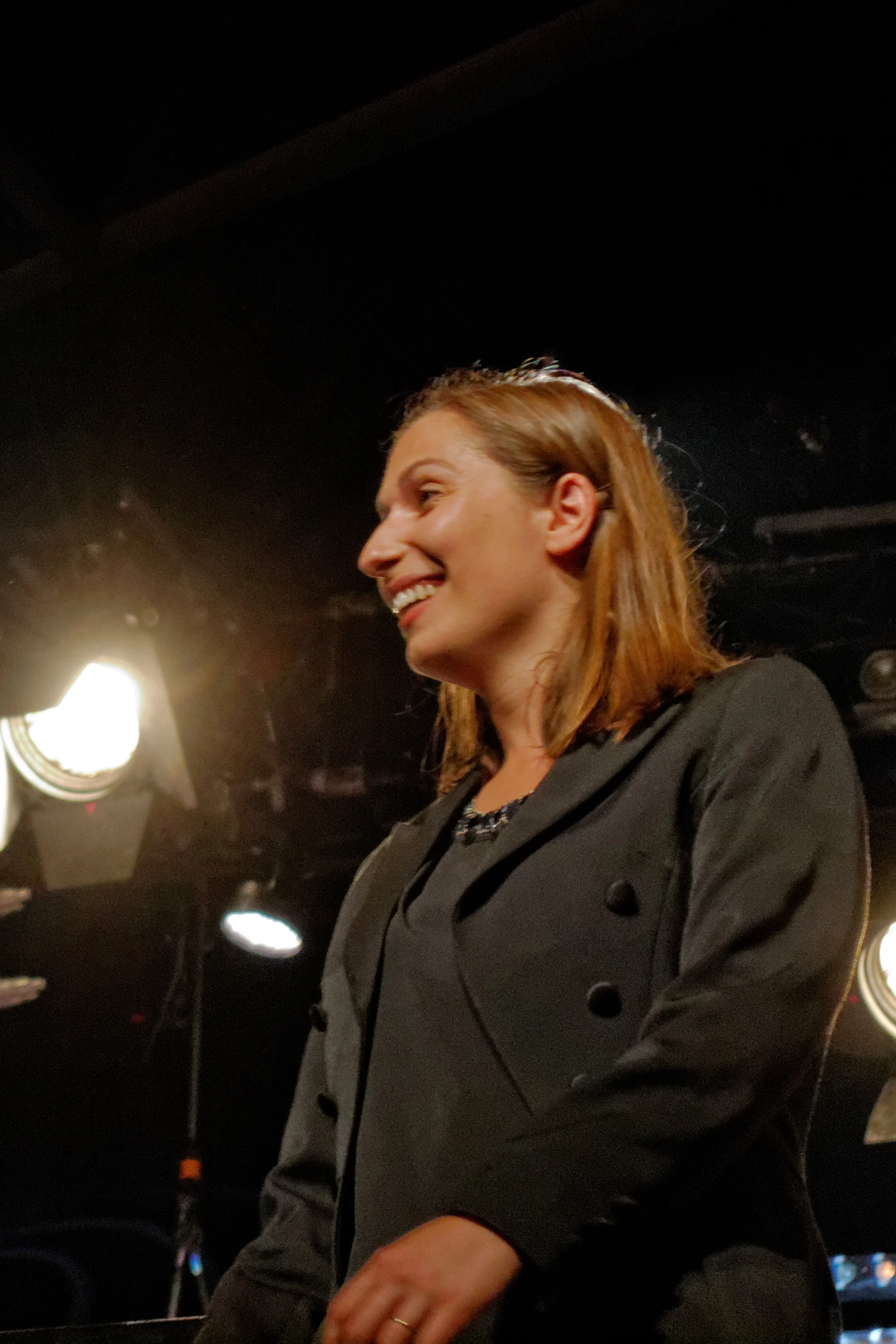
Image from Wikipedia
Image from Wikipedia
Ariane Matiakh: French Conducting Art Between Opera, Tone Colors, and a Spirit of Discovery
A conductor with a sense of precision, passion, and musical breadth
Ariane Matiakh, born on January 2, 1980, in Paris, is one of the prominent French conductors of her generation. Her artistic profile combines technical clarity, stylistic versatility, and a strong affinity for both opera and the symphonic repertoire. Growing up in a musical household, she developed a special connection to the piano and the structures of musical thinking at an early age. ([de.wikipedia.org](https://de.wikipedia.org/wiki/Ariane_Matiakh))
Today, her name represents a music career that cannot be confined to a single genre but seamlessly bridges opera, concert, and recording projects. This very range makes her exciting for music lovers: Matiakh works at the boundaries of repertoire, seeks tonal nuances, and gives rarely performed works a compelling profile. Her path illustrates a conductor who not only interprets but also makes repertoire visible. ([arianematiakh.com](https://arianematiakh.com/en/biography))
Early Formation and Education in a Musical Environment
The artistic roots of Ariane Matiakh run deep into the world of opera, as she is the daughter of the two opera singers Béatrice Cramoix and Yvan Matiakh. This environment shaped not only her hearing but also her understanding of vocal lines, dramatic tension, and musical architecture. From a young age, she showed a particular talent for the piano, which later paved the way for her conducting career. ([de.wikipedia.org](https://de.wikipedia.org/wiki/Ariane_Matiakh))
Her education is an essential part of her authority. Matiakh won prizes in piano, chamber music, and conducting at the Conservatoire à rayonnement régional de Reims, as well as for piano accompaniment at the Conservatoire à rayonnement régional de Rueil-Malmaison. Between 2002 and 2005, she studied conducting at the University of Music in Vienna, where she worked with teachers such as Leopold Hager, Yuji Yuasa, Erwin Ortner, and Ervin Acél, and attended masterclasses by Seiji Ozawa. Concurrently, she sang in the Arnold Schönberg Choir under Nikolaus Harnoncourt and Adam Fischer. ([de.wikipedia.org](https://de.wikipedia.org/wiki/Ariane_Matiakh))
The Breakthrough: From Montpellier to the International Stage
The start of her career was not loud but substantial. In 2005, Ariane Matiakh was unanimously appointed assistant conductor at the Orchestre and the Opéra National de Montpellier, where she led numerous concerts over three seasons. There, she worked with experienced figures such as Emmanuel Krivine, Armin Jordan, James Conlon, Lior Shambadal, Friedemann Layer, Lawrence Foster, Alain Altinoglu, Jerzy Semkow, and Bernhard Kontarsky. These years were a school of repertoire, rehearsal work, and practical opera experience. ([de.wikipedia.org](https://de.wikipedia.org/wiki/Ariane_Matiakh))
Particularly formative was her last-minute substitute for James Conlon in May 2006 with Shostakovich's 7th Symphony. The performance received high praise and marked the beginning of her international career. From then on, engagements followed at the Komische Oper Berlin and the Royal Opera in Stockholm, as well as performances at opera houses in Amsterdam, Gothenburg, Graz, Nice, Strasbourg, and Halle. Thus, a French education evolved into a European career with remarkable reach. ([de.wikipedia.org](https://de.wikipedia.org/wiki/Ariane_Matiakh))
Guest Conductor at Leading Orchestras and Opera Houses
In the symphonic realm, her path led to major orchestras across Europe. She conducted, among others, the Berlin Radio Symphony Orchestra, the Orchestre de Paris, the Vienna Symphony, the Hamburg Philharmonic, the Swedish Radio Symphony Orchestra, the Dresden Philharmonic, the Staatskapelle Halle, the WDR Symphony Orchestra Cologne, the MDR Symphony Orchestra Leipzig, the Orchestre National du Capitole de Toulouse, the Orchestre de la Suisse Romande, the Basel Symphony Orchestra, and the Strasbourg Philharmonic. This list not only shows presence but also reliability in the international music scene. ([de.wikipedia.org](https://de.wikipedia.org/wiki/Ariane_Matiakh))
Also on the opera stage, Matiakh is present with a wide repertoire. In recent years, she conducted works such as La Bohème, Carmen, Le nozze di Figaro, Madama Butterfly, The Magic Flute, Tosca, Werther, Samson et Dalila, and La voix humaine. For the 2024/25 season, debuts at the Deutsche Oper Berlin with Carmen and at La Monnaie in Brussels with Mikael Karlsson's Fanny and Alexander are highlighted; additional significant productions are set for the 2025/26 season. This illustrates an artistic development that confidently navigates between the classical canon and contemporary opera. ([arianematiakh.com](https://arianematiakh.com/en/biography))
Current Projects: Reutlingen, New Productions, and Repertoire Maintenance
Since the 2022/23 season, Ariane Matiakh has been the chief conductor of the Württemberg Philharmonic Reutlingen, and her website now refers to her fifth season in this position for the 2026/27 season. For this season, alongside commitments in Reutlingen, new productions of Ariadne auf Naxos at La Monnaie in Brussels, Lucrezia Borgia at the Opéra de Lyon, and Manon Lescaut at the Opéra de Nice are announced. Additionally, there are debuts with several international orchestras, including the Royal Philharmonic Orchestra London and the Orchestre Philharmonique de Monte-Carlo. ([arianematiakh.com](https://arianematiakh.com/en/biography))
For 2025/26, the official biography reports new opera and concert engagements, including Janáček's The Cunning Little Vixen at the Stuttgart State Opera, Philippe Leroux’s L’Annonce faite à Marie at the Théâtre du Châtelet, as well as Poulenc’s La Voix Humaine and Escaich’s Point d’Orgue at the Théâtre des Champs-Élysées. This is accompanied by a broad concert activity with orchestras such as the Royal Liverpool Philharmonic Orchestra, the Norrköping Symphony Orchestra, and the Orquesta Sinfónica de Tenerife. Thus, Matiakh remains active in a field of work that closely intertwines opera, symphonic music, and contemporary repertoire maintenance. ([ks-gasteig.de](https://www.ks-gasteig.de/index.php/en/ariane-matiakh-biography?format=pdf&tmpl=component))
Discography: From Repertoire Standards to Musical Discoveries
Ariane Matiakh’s discography reflects her preference for rarely played works and meticulously crafted editions. Her recordings include, among others, Poulenc and Françaix, Johanna Doderer, Zara Levina, Clara Schumann and Beethoven, Harald Genzmer, Richard Strauss, Ermanno Wolf-Ferrari, Ernst von Dohnányi, and Max Bruch. It is particularly important that she consistently engages with repertoire that lies outside of standard concert programming and receives new attention through precise tonal shaping. ([de.wikipedia.org](https://de.wikipedia.org/wiki/Ariane_Matiakh))
One of her most distinguished recordings is the recording of Zara Levina's two piano concertos with the Berlin Radio Symphony Orchestra, for which she received a Grammy nomination. Her work on Charles Koechlin with the Basel Symphony Orchestra and the Württemberg Philharmonic is also highlighted, having been very positively received in the specialized press. Thus, her discography represents a connection of artistic curiosity, editorial diligence, and interpretative profile. ([arianematiakh.com](https://arianematiakh.com/en/biography))
Style, Sound Aesthetics, and Artistic Signature
The official biography describes Matiakh's trademarks as versatility, musicality, technical precision, and a natural, passionate approach. This can also be seen in her repertoire: she moves between baroque transparency, classical form, French sound culture, and contemporary music. Her conducting aims for balance, structure, and energy, rather than merely producing effects. ([arianematiakh.com](https://arianematiakh.com/en/biography))
This signature becomes particularly evident in her Koechlin recordings. The release was associated with press reviews on the website itself: The Guardian praised the "lithe elegance" of the Basel Symphony Orchestra under Matiakh, while the Los Angeles Times described the recording as colorful, charismatic, and sonically outstanding. Such reactions demonstrate that her work achieves significant attention not only in the concert hall but also in the recording studio. ([arianematiakh.com](https://arianematiakh.com/))
Cultural Influence, Awards, and Recognition
Matiakh's significance goes beyond pure concert activity. She is among the conductors representing French music life internationally and simultaneously sets impulses through repertoire decisions. Her work on Koechlin, Levina, or Doderer exemplifies an attitude that brings together musical discovery and cultural mediation. ([arianematiakh.com](https://arianematiakh.com/en/biography))
Governmental and institutional recognition further underscores her authority. In 2014, she received the rank of Chevalier de l’ordre des Arts et des Lettres, and in 2022, she was appointed Officier of the same honor. This is complemented by her award as the winner of “Les Talents Chefs d’orchestre de l’Adami” in 2008, her finalist participation in the Donatella Flick Conducting Competition in 2009, and her nomination at the Victoires de la Musique Classique. This paints a picture of an artist whose career is based on substance, recognition, and sustainable presence. ([de.wikipedia.org](https://de.wikipedia.org/wiki/Ariane_Matiakh))
Conclusion: A Conductor Who Brings Repertoire to Life
Ariane Matiakh stands for a music career that elegantly combines competence and a spirit of discovery. She possesses the rare ability to conduct grand operas with dramatic tension while simultaneously shaping symphonic works with tonal delicacy and analytical sharpness. Her biography reveals an artist with international experience, stylistic breadth, and a clear sense of musical quality. ([arianematiakh.com](https://arianematiakh.com/en/biography))
What remains exciting about her is that she does not merely affirm the familiar but makes it audible in new ways. Anyone wishing to experience conducting as a lively dialogue between score, orchestra, and audience should follow Ariane Matiakh on stage. Her concerts and opera productions promise musical tension, precise shaping, and genuine artistic presence. ([arianematiakh.com](https://arianematiakh.com/en/biography))
Official Channels of Ariane Matiakh:
- Instagram: no official profile found
- Facebook: no official profile found
- YouTube: no official profile found
- Spotify: no official profile found
- TikTok: no official profile found
Sources:
- Ariane Matiakh – Official Website
- Ariane Matiakh – Biography
- Ariane Matiakh – Recordings
- Ariane Matiakh – Media
- Artist Secretariat at Gasteig – Biography PDF
- Wikipedia – Ariane Matiakh
- Wikipedia (fr) – Ariane Matiakh
- Royal Liverpool Philharmonic Orchestra / Artist Page – Ariane Matiakh
- La Monnaie / De Munt – Fanny and Alexander
- Berlin.de – Carmen / Deutsche Oper Berlin
- Württembergische Philharmonie Reutlingen – Ariane Matiakh PDF
- Wikipedia: Image and Text Source