
Ansgar Schlei
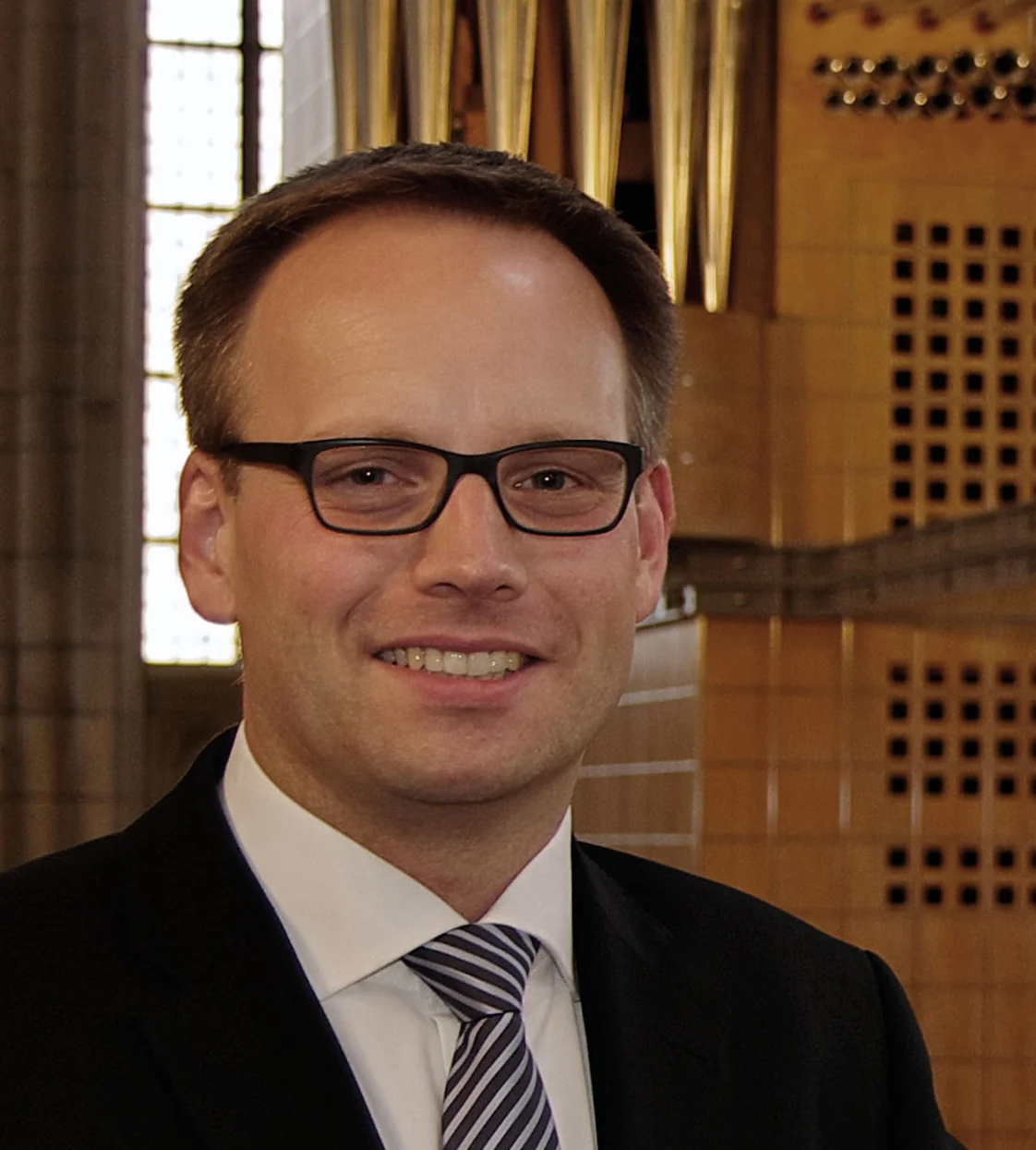
Image from Wikipedia
Image from Wikipedia
Ansgar Schlei – Church Music with Attitude, Precision, and Spiritual Depth
An Organist Between Tradition, Education, and Public Influence
Ansgar Schlei is a German church musician, organist, and choir director whose work shapes church music practice in the Rhineland and beyond. Born in 1978, he combines solid academic training, liturgical competence, and concert activity into a profile that is rarely so distinctly outlined in the German-speaking organ culture. His musical career represents the connection between community, concert hall, and music law expertise. ([de.wikipedia.org](https://de.wikipedia.org/wiki/Ansgar_Schlei))
Those wanting to hear or experience Ansgar Schlei encounter not just a mere accompaniment to worship, but a musician with a pronounced stage presence and a sensitivity for historical organ culture. His artistic development is closely linked to Protestant church music, while also being enhanced by additional studies in law and his publishing work. This precisely fosters an authority that reaches far beyond the organ bench. ([de.wikipedia.org](https://de.wikipedia.org/wiki/Ansgar_Schlei))
Biography: Education, Examinations, and the Path to the Organ
Schlei studied Protestant church music at the Hochschule für Musik und Theater Hannover. His teachers included Cornelius Schneider-Pungs and Pier Damiano Peretti, supplemented by further studies with Hans-Joachim Rolf, Gerrit Zitterbart, Peter-Anton Ling, and Hildebrandt Haake. He completed his A examination in Artistic Organ Performance with distinction, which clearly underscores his demands regarding technique, stylistic awareness, and musical discipline. ([de.wikipedia.org](https://de.wikipedia.org/wiki/Ansgar_Schlei))
He deepened his education with the likes of Bine Katrine Bryndorf, Carlo Hommel, Ton Koopman, Michael Radulescu, Reinhold Richter, and Harald Vogel. These names mark an environment that emphasizes historically informed performance practice, tonal differentiation, and a high degree of interpretative precision. Concurrently, Schlei studied law in Göttingen, Hagen, and Cologne, which plausibly complements his later engagement with church music law. ([de.wikipedia.org](https://de.wikipedia.org/wiki/Ansgar_Schlei))
Career: From Springe and Hannover to Bad Münder and Wesel
After initial positions as a church musician in Springe and Hannover, Schlei took on the role of organist and choir director at the Ev.-luth. Petri-Pauli congregation in Bad Münder am Deister in 2001. There, he also acted as the artistic director of the concert series "Klanghorizonte Bad Münder" and the "Abendmusiken Bad Münder" series he initiated. Thus, he early on connected community work with programmatic concert design and made church music visible as a cultural offering. ([de.wikipedia.org](https://de.wikipedia.org/wiki/Ansgar_Schlei))
In 2005, he was appointed to the Willibrordi Cathedral in Wesel, holding the position of district cantor in the Wesel church district. Since then, Schlei has been a significant figure in the cathedral music scene, overseeing concerts, liturgy, and musical education in a demanding church environment. The stationary continuity of this work gives his career a rare coherence. ([de.wikipedia.org](https://de.wikipedia.org/wiki/Ansgar_Schlei))
His public functions have also included serving as the vice president of the Association of Protestant Church Musicians in the Evangelical Lutheran Church of Hanover and later as the chairman of the Association for Church Music in the Protestant Church in the Rhineland. Schlei thus acts not only as an interpreter but also as an organizer, advocate, and shaper of church music structures. This dual role bolsters his authority within the field. ([de.wikipedia.org](https://de.wikipedia.org/wiki/Ansgar_Schlei))
Current Projects: Concert Calendar, Cathedral Music, and Musical Continuity
On his official website, Schlei indicates an active concert schedule for 2026, including the series "Majesty and Melody – The Organ Sonatas of Josef Rheinberger" at the Willibrordi Cathedral in Wesel. The programs feature repertoires from Josef Rheinberger, Johann Sebastian Bach, John Ebenezer West, and other composers, showcasing a clear preference for organ literature with substantial musical and liturgical weight. ([ansgar-schlei.de](https://www.ansgar-schlei.de/termine?utm_source=openai))
Additionally, there are organ concerts in Billerbeck, Dinslaken, Landsberg am Lech, Duisburg-Hamborn, Fulda, and again Wesel. These dates demonstrate a vibrant concert practice that connects regional roots with supra-regional presence. Nothing new regarding albums or singles is evident in the verified sources; currently, Schlei's focus is clearly on live work with organ and choir. ([ansgar-schlei.de](https://www.ansgar-schlei.de/termine?utm_source=openai))
Discography and Audio Documents: Organ Music as a Sound Archive
The preserved audio documents on Wikipedia refer to Ansgar Schlei's YouTube channel and mention releases such as "Gloria – Festive Sounds from Willibrordi Cathedral in Wesel," "Organ Music from Willibrordi Cathedral in Wesel," and "The Willibrordi Cathedral and Its History." The repertoire includes works by Bach, Handel, Guilmant, Franck, Karg-Elert, Clérambault, Böhm, Mendelssohn Bartholdy, Reger, and Boëllmann, positioning Schlei firmly at the core of the classical organ tradition. ([de.wikipedia.org](https://de.wikipedia.org/wiki/Ansgar_Schlei))
These audio documents are not a popular chart discography but rather a musical working archive: they document stylistic awareness, sound management, and the cultivation of a church music canon. Precisely therein lies their strength. Those who listen to Schlei do not hear a short-term release but a curated repertoire with church-related, historical, and aesthetic depth. ([de.wikipedia.org](https://de.wikipedia.org/wiki/Ansgar_Schlei))
Style and Musical Signature: Historical Depth Over Showmanship
Schlei's artistic signature is characterized by the organ as a thought space for form, registration, and spatial sound. The programs documented on his website show a clear orientation towards Rheinberger, Bach, and the Romantic to late-Romantic organ literature, that is, music intertwining timbre, architecture, and liturgical dignity. This demands clean articulation, finely balanced registration, and a long breath in musical dramaturgy. ([ansgar-schlei.de](https://www.ansgar-schlei.de/termine?utm_source=openai))
His training under personalities such as Ton Koopman, Michael Radulescu, and Harald Vogel also indicates a way of thinking in historical and interpretative contexts. Schlei thus stands in a tradition that does not view organ playing merely as an accompaniment but rather as an independent art form with its own rhetoric, color, and spiritual presence. It is precisely this connection that makes his work so exciting for church music lovers. ([ansgar-schlei.de](https://www.ansgar-schlei.de/vita?utm_source=openai))
Cultural Influence: Church Music Law, Journalism, and Institutional Impact
A unique aspect of Schlei is his engagement with church music legal issues. Through the website kirchenmusikrecht.de, he provides information, advice, and professional consultation for church music services; furthermore, a manual for church music services is described there. This expands his work from musical practice to the legal and structural side of the profession. ([ansgar-schlei.de](https://www.ansgar-schlei.de/recht?utm_source=openai))
This connection of music, law, and institution makes him a rare double figure: both performer and professional authority. His temporary work as an organist in the Christus Pavilion at EXPO 2000 in Hanover also shows that his career is shaped not only by church administration but also by representative contexts. His work holds public relevance beyond the narrower community context. ([ansgar-schlei.de](https://www.ansgar-schlei.de/vita?utm_source=openai))
Acknowledgment and Recognition
In May 2022, Schlei was awarded the title of Church Music Director by the Evangelical Church in the Rhineland. This title honors not only long-standing practice but also leadership responsibility, professional competence, and continuous artistic presence. In the church music landscape, this is a clear sign of institutional recognition. ([de.wikipedia.org](https://de.wikipedia.org/wiki/Ansgar_Schlei))
The official website also lists him as Church Music Director at the Willibrordi Cathedral in Wesel, district cantor in the Wesel church district, and concert organist. These titles summarize what shapes his career: musical excellence, organizational responsibility, and sustainable presence in a traditional church environment. ([ansgar-schlei.de](https://www.ansgar-schlei.de/?utm_source=openai))
Conclusion: Why Ansgar Schlei Remains Compelling
Ansgar Schlei represents a church music that prioritizes substance over effects, repertoire over routine, and education over pose. His musical career combines academic rigor, liturgical practice, and concert expression into a credible overall picture. Those wishing to experience organ art in all its cultural depth find in him an artist who does not merely manage tradition, but keeps it alive. ([de.wikipedia.org](https://de.wikipedia.org/wiki/Ansgar_Schlei))
It is especially in live performance that this work unfolds its full effect: in the space, in the breath of the registers, in the dialogue between architecture and sound. Ansgar Schlei invites us to experience church music not merely as background music of faith but as an independent art form. A visit to one of his concerts is always worthwhile wherever organ music can be more than a soft background. ([ansgar-schlei.de](https://www.ansgar-schlei.de/termine?utm_source=openai))
Official Channels of Ansgar Schlei:
- Instagram: No official profile found
- Facebook: No official profile found
- YouTube: https://www.youtube.com/channel/UCXmTSX0pxTBzit-XSThIJwQ
- Spotify: No official profile found
- TikTok: No official profile found