
Andreas Heuser
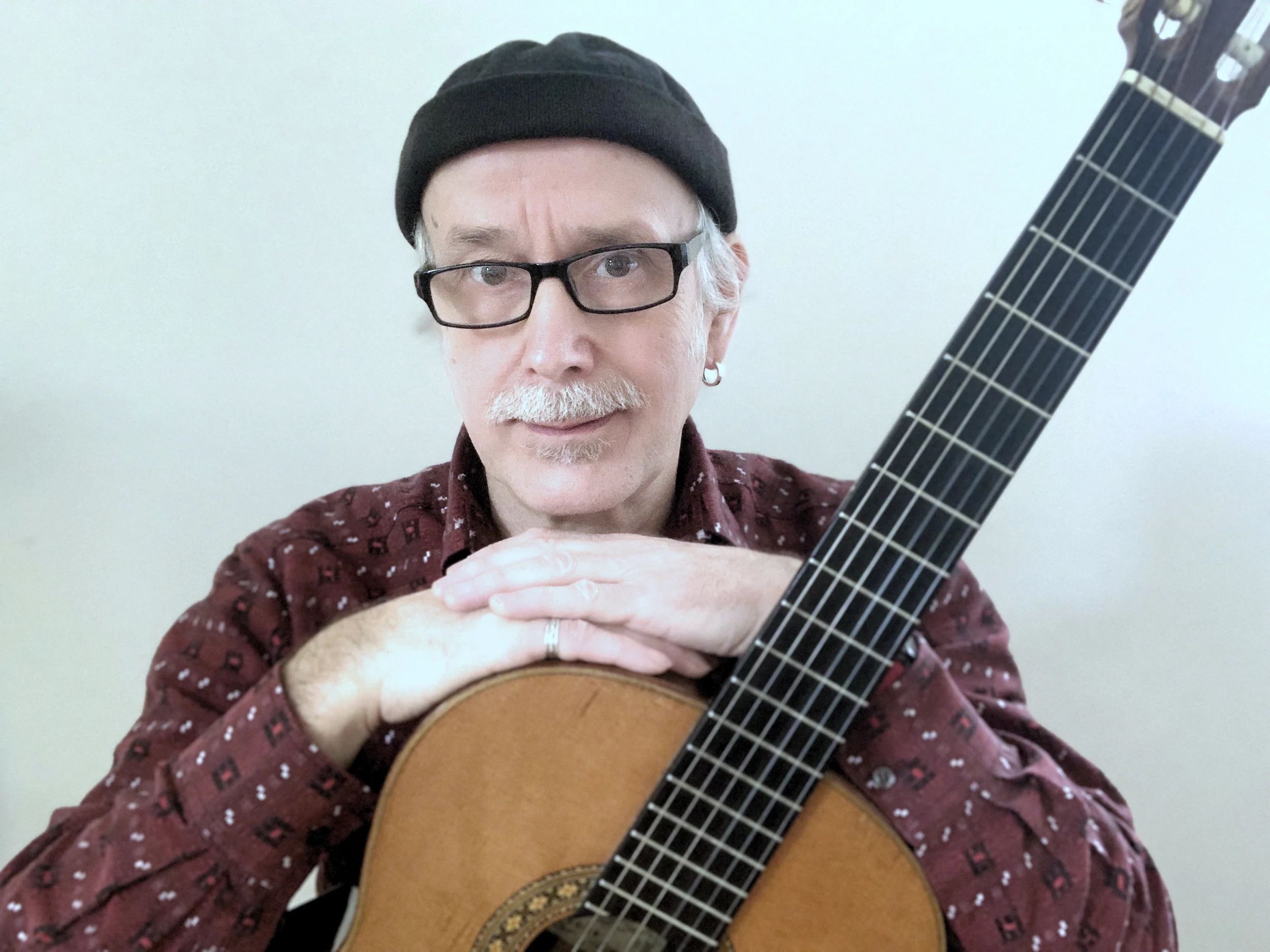
Image from Wikipedia
Image from Wikipedia
Andreas Heuser: The Sound Architect Between Classical, Jazz, and World Music
A Musician Who Does Not Manage Borders, but Dissolves Them
Andreas Heuser, born on November 6, 1959, in Friedrichshafen, is among those German musicians whose work cannot be confined to a single category. As a guitarist, violinist, and composer, he has been moving between neoclassicism, jazz, and world music for decades, having developed a distinctive artistic signature. His music career is characterized by stylistic openness, virtuosic instrumental mastery, and a keen sense of musical dramaturgy. ([de.wikipedia.org](https://de.wikipedia.org/wiki/Andreas_Heuser?utm_source=openai))
Even his official artist page describes him as a bridge builder between musical cultures and styles. He works with 10- and 6-string concert guitars, 6- and 8-string steel-string guitars, requinto, electric guitar, glissentar, and electric violin, demonstrating that his instruments are part of his aesthetic. This versatility shapes not only his solo work but also his ensemble projects, where composition and arrangement merge closely. ([andreasheuser.com](https://www.andreasheuser.com/))
Biographical Roots and Early Artistic Influence
The biography of Andreas Heuser does not begin with a quick career twist but with continuous development. As early as 1988, he began collaborating with Kazim Calisgan, resulting in key projects like Calisgan & Heuser, E5, Baba Jam Band, and ultimately, the Transorient Orchestra. These early configurations laid the foundation for his later work as a musician between East and West. ([andreasheuser.com](https://www.andreasheuser.com/transorient-orchestra-bandgeschichte-und-projekte.html))
Heuser is not only an interpreter but also a creator of musical spaces. The official account points to a solid education as a classical guitarist, jazz guitarist, and violinist, which allows him to connect different traditions precisely. This is where that rare blend of technical sovereignty and emotional openness arises, which characterizes his artistic profile. ([andreasheuser.com](https://www.andreasheuser.com/))
The Path Through Bands, Collectives, and Intercultural Projects
A central chapter of his career is his work in band projects that extend far beyond the classical format. The Baba Jam Band, formed in 1991 and active until 2007, combined Middle Eastern-Anatolian music with jazz rock and was awarded the German Folk Promotion Prize in 1992. Subsequently, he worked with Zinctone, the violet quartet, and Nefes in Motion, where Heuser explored different sonic perspectives. ([andreasheuser.com](https://www.andreasheuser.com/ehemalige-bandprojekte.html))
Particularly, the violet quartet showcases his affinity for experimental formats: electric violins, unusual playing techniques, and the intense use of effects shaped their aesthetic. Nefes in Motion, on the other hand, built a bridge between East and West starting in 2003, combining Sufi music with contemporary jazz. These projects make clear that Heuser's work cannot be reduced to solo performance, but always aims at collective sound exploration. ([andreasheuser.com](https://www.andreasheuser.com/ehemalige-bandprojekte.html))
Transorient Orchestra: The Leading Project of an Entire Era
With the Transorient Orchestra, founded in 2003, Andreas Heuser created his most significant ensemble. From a musical collaboration that began in 1988, a world music big band developed, which is one of the most notable musical bodies in the Ruhr region. The orchestra won the worldmusic award ruhrgebiet in 2003 and the competition "Sounds from the New Home", and in 2017 it received the WDR Jazz Prize in the category of Music Cultures. ([andreasheuser.com](https://www.andreasheuser.com/transorient-orchestra-bandgeschichte-und-projekte.html))
The orchestra's lineup reflects the cultural diversity of its concept: instruments like Santur, Oud, Nay, Darbuka, Kaval, flugelhorn, and saxophone enter into dialogue with guitar, violin, bass, and drums. The music combines Eastern melody, Western harmony, and improvisational energy into a dense, urban sound. This connection of compositional precision and open improvisation has given the ensemble a strong cultural resonance. ([andreasheuser.com](https://www.andreasheuser.com/transorient-orchestra.html))
Discography: From Acoustic Solo Sound to Orchestral Broadeness
Heuser's discography shows a constant expansion of his sound universe. His solo albums include "Continuum" (1996), "Unknown Places" (1999), "Northern Plains" (2005), "Blue" (2021), "Excursions to a Place Called Home" (2022), "En Route 2020" (2022), "At Night" (2025), and "Like a Mirror" (2025). These releases document not only his development as a guitarist but also his ability to juxtapose intimate solo pieces and complex sound architectures. ([andreasheuser.com](https://www.andreasheuser.com/cds-streaming.html))
Additionally, there are ensemble and collaboration albums such as "Karadeniz" (2005), "Live" or "Live at the Katakomben Theater" (2009), "Zip Zip" (2021), and "Transorient Express" (2023) with the Transorient Orchestra. With Stefan Lakatos, he also released "The Orastorios - Moondog Rounds" (2022), and with Jan Bierther the duo album "Windy City" (2022). This selection illustrates a musician who consistently thinks in cycles and views his projects as ongoing artistic explorations. ([andreasheuser.com](https://www.andreasheuser.com/cds-streaming.html))
Current Projects and New Releases
In 2024 and 2025, Andreas Heuser remains productive and visible. His official site lists the two current albums "At Night" and "Like a Mirror" from 2025; both feature his characteristic instrumentation and focus on acoustic and electroacoustic nuances. Furthermore, streaming releases and the ongoing management of his catalogs across various platforms are also on the agenda. ([andreasheuser.com](https://www.andreasheuser.com/cds-streaming.html))
The recent ensemble activities of the Transorient Orchestra further emphasize his role as a musical initiator. 2023 marked the 20th anniversary of the orchestra, accompanied by new concerts, sessions, and renewed collaboration with the NRW Youth Jazz Orchestra. Thus, Heuser remains present not only as a soloist but also as an ensemble leader and project developer. ([andreasheuser.com](https://www.andreasheuser.com/transorient-orchestra-bandgeschichte-und-projekte.html))
Style and Musical Language: Virtuosity with Narrative Depth
Andreas Heuser's style is hard to label, and therein lies his strength. The official artist page describes him as a musician whose work eludes genre categorization; press reviews refer to him as a stylistic wanderer who forms musical order from cultural diversity. His playing style utilizes the sonic possibilities of multiple guitars and the violin with high precision, combining technical brilliance with poetic design. ([andreasheuser.com](https://www.andreasheuser.com/))
Particularly striking is his ability to balance composition and improvisation. In the solo context, finely crafted soundscapes arise between classical formal rigor and open jazzy movement, while in ensembles, rhythmic complexity, modal colors, and transcultural melodies converge. As a result, Heuser's music feels both intellectually controlled and emotionally direct. ([andreasheuser.com](https://www.andreasheuser.com/))
Cultural Influence and Recognition in the Music Scene
Heuser is much more than a skilled instrumentalist. With the Transorient Orchestra, he has created a model of lived cultural collaboration that has made an impact in the Ruhr region and beyond. The jury of the WDR Jazz Prize recognized the ensemble as a source of constant musical ideas, and press reviews have highlighted how seamlessly integration, improvisation, and sound diversity come together here. ([andreasheuser.com](https://www.andreasheuser.com/transorient-orchestra.html))
Critics have repeatedly responded with recognition for his work. Reviews emphasized the unique blend of Western harmony, Eastern rhythms, and striking composition, while others noted his ability to find a richly colorful narrative instrument in the guitar. This reputation stems from a long career that consistently emphasizes exchange, openness, and musical curiosity. ([andreasheuser.com](https://www.andreasheuser.com/))
Conclusion: A Border Crosser with Artistic Authority
Andreas Heuser is fascinating because he does not just connect genres but reorders musical spaces. His career unites soloistic depth, ensemble spirit, intercultural experience, and a rare sensitivity to sound colors and forms. Those who experience him live encounter not merely a repertoire program but an open musical narrative that unfolds in the moment and resonates long after. ([andreasheuser.com](https://www.andreasheuser.com/))
Official Channels of Andreas Heuser:
- Instagram: no official profile found
- Facebook: no official profile found
- YouTube: no official profile found
- Spotify: no official profile found
- TikTok: no official profile found
Sources:
- ANDREAS HEUSER Guitarist / Violinist / Composer - Artist Page
- CDs / LPs / Streaming - Official Discography and Current Releases
- Transorient Orchestra - Official Ensemble Page
- Transorient Orchestra - Band History and Projects
- Former Band Projects - Official Project History
- Wikipedia: Andreas Heuser - Image and Text Source