
Alexander von Zemlinsky
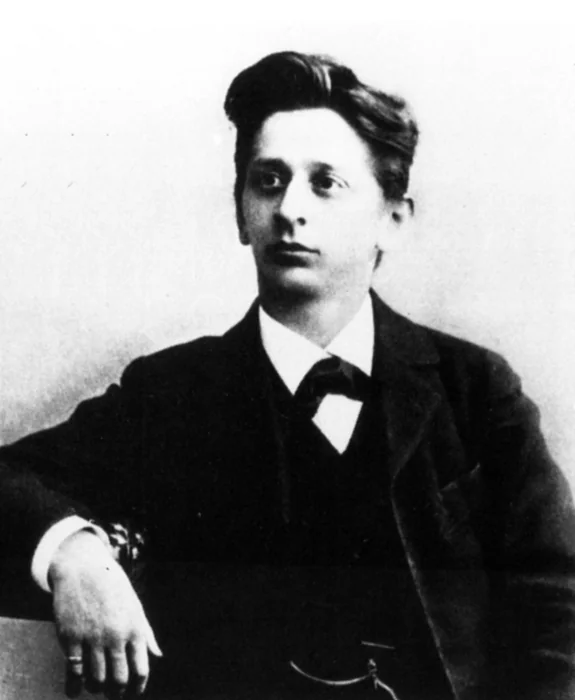
Image from Wikipedia
Image from Wikipedia
Alexander von Zemlinsky – Sound Poet Between Late Romanticism, Modernism, and Musical Exile
A Composer of Enormous Depth Who Only Late in Life Received the Recognition His Music Deserves
Alexander von Zemlinsky is one of the most fascinating personalities in the history of Viennese music: composer, conductor, teacher, and sensitive chronicler of an era torn between imperial late romanticism, cultural avant-garde, and political catastrophe. Born in 1871 in Vienna and dying in 1942 in exile in New York, he embodies that generation which found an independent, highly differentiated language in the musical modernism of the early 20th century. His works combine expressive intensity, delicate orchestration, and a pronounced instinct for drama. ([zemlinsky.at](https://www.zemlinsky.at/de/biographie))
Viennese Origins, Jewish Background, and Early Influences
Zemlinsky grew up in the Leopoldstadt district of Vienna, shaped by Jewish life, and showed an exceptional musical talent from an early age. He was admitted to the Conservatory of the Society of Music Friends at the age of thirteen, where he studied until 1892 and wrote early works that still clearly stood in the shadow of Johannes Brahms. His family background also influenced him: His father, Adolf von Zemlinszky, was a writer and journalist; the cultural openness of the household early on shaped the young composer’s perspective. ([zemlinsky.at](https://www.zemlinsky.at/de/biographie))
Even in these early years, a typical strength of Zemlinsky was evident: a sure sense of form and sound balance. The early appreciation he received from Johannes Brahms not only brought him attention but also artistic legitimacy in an environment that rigorously scrutinized new voices. At the same time, the tension that would shape his career began to emerge: high compositional quality, but no significant mass success in terms of an immediate breakthrough. ([zemlinsky.at](https://www.zemlinsky.at/de/biographie))
Encounters with Schönberg, Alma Schindler, and the Viennese Music Scene
One of the decisive biographical turning points was his encounter with Arnold Schönberg, whom Zemlinsky briefly taught about counterpoint and with whom he later had a close familial and artistic connection. Also formative was his intense, unhappy love for Alma Schindler, who later married Gustav Mahler. These relationships entrenched Zemlinsky in the center of Viennese modernity, where musicians, writers, critics, and visual artists were in a highly concentrated exchange. ([zemlinsky.at](https://www.zemlinsky.at/de/biographie))
The Viennese years for Zemlinsky were a phase of networking, learning, and self-assertion. He moved among the Tonkünstlerverein, Ansorge-Kreis, and the "Vereinigung schaffender Tonkünstler," which he co-founded with Schönberg to provide a space for new music. This activity demonstrates Zemlinsky not just as a composer, but as a cultural mediator who actively shaped the musical life of his time. ([zemlinsky.at](https://www.zemlinsky.at/de/biographie/wien-1895-1911?utm_source=openai))
Conductor and Opera Composer: The Path Through Theater, Pit, and Stage
After 1900, Zemlinsky established himself in Vienna as a musical figure, initially as conductor at the Carl-Theater and the Theater an der Wien, later at the Volksoper and briefly at the Hofoper. The significant repertoire houses provided him with important craftsmanship but also limitations: he often conducted operettas instead of the classical core repertoire. Nevertheless, this practice shaped his confident approach to musical theater, timing, scene setting, and dramatic climax. ([zemlinsky.at](https://www.zemlinsky.at/de/biographie))
By 1910, he had composed four operas that impressively demonstrate his affinity for the stage. In particular, the works based on Oscar Wilde and later the fragment of König Kandaules showcase his ability to translate psychological tension into sonic architecture. Zemlinsky did not conceive of opera as a decorative genre, but as a dramatic art form where vocal lines, orchestral color, and literary content interact at the highest level. ([zemlinsky.at](https://www.zemlinsky.at/de/biographie))
Prague, Berlin, and Major Successes as a Conductor
Zemlinsky's decisive artistic rise took place from 1911 in Prague, where he served as the musical director of the German Landestheater until 1927. There, he celebrated his greatest successes as a conductor, particularly with Mozart, Wagner, Mahler, and Schönberg. His name during this time represented an interpretative approach that uncovered music not for effect but for inner logic and truth of expression. ([zemlinsky.at](https://www.zemlinsky.at/de/biographie))
In 1927, he moved to the Kroll-Oper in Berlin and later took a teaching position at the music academy. However, he increasingly found himself overshadowed by younger conductors. The political rupture of the Nazi era abruptly ended this development: in 1933, he had to resign his position as Jewish employees were removed from state service. This expulsion marked not only a biographical turning point but also a cultural loss for the German-speaking music landscape. ([zemlinsky.at](https://www.zemlinsky.at/de/biographie))
The Œuvre: Between Late Romanticism, Expressionism, and Condensed Sound Speech
Zemlinsky's discography, in the narrower sense of the term, does not include pop hits, but includes central compositions of the 20th century that have gained a firm foothold in concert and opera practice. Some of his most important works are the early Clarinet Trio, the four String Quartets, the Sinfonietta, the Maeterlinck Songs, the Lyrical Symphony, and the operas A Florentine Tragedy and The Dwarf. These pieces represent an aesthetic that connects late romantic chromaticism, motivic condensation, and expressive lyricism. ([deutsche-biographie.de](https://www.deutsche-biographie.de/sfz115259.html?language=en))
Especially the Lyrical Symphony is regarded as a key work: a large-scale, seven-movement piece for soprano, baritone, and orchestra that, in its emotional tension, is often compared to Mahler's Das Lied von der Erde. The Seejungfrau has also established itself as an early symphonic sound painting of the 20th century. For Zemlinsky, orchestration is never mere brilliance, but a psychological tool; it conveys internal conflicts, memories, and existential unrest. ([deutsche-biographie.de](https://www.deutsche-biographie.de/sfz115259.html?language=en))
Style and Musical Development: The Art of Highly Sensitive Balance
Zemlinsky's style remains uniquely situated in music history: he never fully transcends tonality, yet draws from the harmonies, polyphony, and rich instrument colors of Wagner and Brahms, propelling them into a modernized, often ethereal language. Deutsche Biographie describes his music as being of the highest level in compositional technique and orchestral treatment; simultaneously, it connects direct emotionality with tragic fundamental colors. This is precisely where its lasting fascination lies. ([deutsche-biographie.de](https://www.deutsche-biographie.de/sfz115259.html?language=en))
Throughout his later works, the language becomes more condensed, starker, and more economical. The experience of emigration, political threat, and physical crises makes the music appear more sober and often more austere. Especially the late songs and the unfinished music theater reveal a composer who does not speak in revolutionary gestures, but in precisely controlled arcs of tension that revolve around loss, alienation, and ultimate dignity. ([deutsche-biographie.de](https://www.deutsche-biographie.de/sfz115259.html?language=en))
Reception, Rediscovery, and Contemporary Significance
After his death, Zemlinsky's music faded into the background for decades. It was not until the 1970s that a renaissance commenced, fueled by performances, recordings, and a more intense engagement with his biography. This revision process made it clear that Zemlinsky was not merely a marginal figure but a central mediator between late romanticism and modernism. His art today represents music that appears modern without dogmatic rupture and is precisely why it continues to resonate. ([zemlinsky.at](https://www.zemlinsky.at/de/biographie))
The music press and scholarly literature continue to emphasize the special status of his works in the repertoire. Gramophone describes the Zemlinsky renaissance as a result of renewed attention to quartets, the Lyrical Symphony, and operas such as A Florentine Tragedy and The Dwarf. Such receptions underline that Zemlinsky is no longer merely a historical name but a vibrant part of the concert and opera canon. ([gramophone.co.uk](https://www.gramophone.co.uk/review/zemlinsky-lieder?utm_source=openai))
Conclusion: Why Alexander von Zemlinsky Remains So Fascinating Today
Alexander von Zemlinsky captivates because his music encompasses everything that defines Viennese modernism: beauty and crisis, tradition and new beginnings, lyrical intimacy and dramatic intensity. His biography tells of artistic greatness without swift fame, of productive closeness to Schönberg and Mahler, of operatic passion, conducting artistry, and exile. Those who listen to Zemlinsky encounter a master of musical in-betweens, whose works blend emotional directness with formal elegance. Experiencing his music live is always worthwhile, as it unfolds its full atmospheric and dramatic power in the concert hall. ([zemlinsky.at](https://www.zemlinsky.at/de/biographie))
Official Channels of Alexander von Zemlinsky:
- Instagram: no official profile found
- Facebook: no official profile found
- YouTube: no official profile found
- Spotify: no official profile found
- TikTok: no official profile found