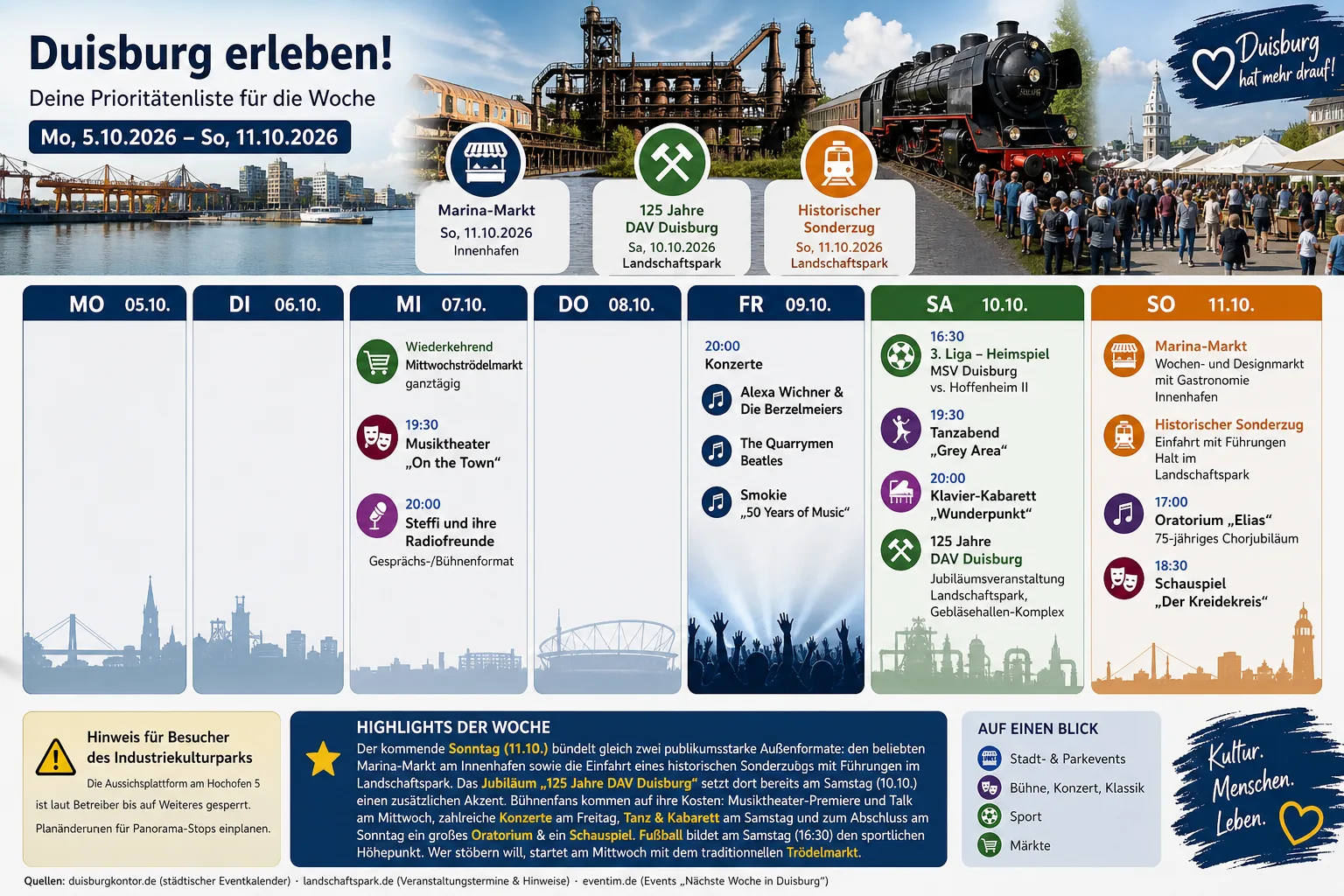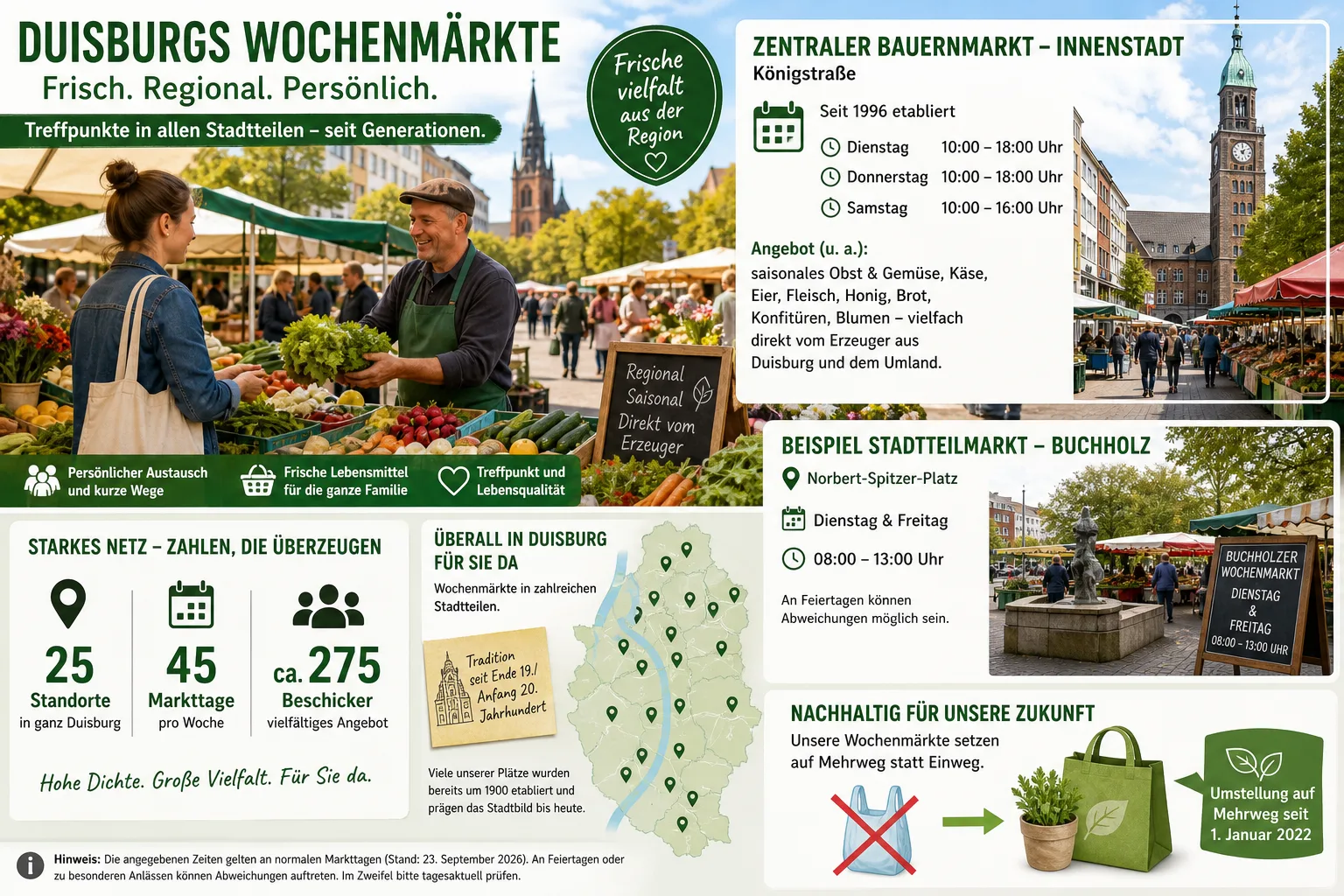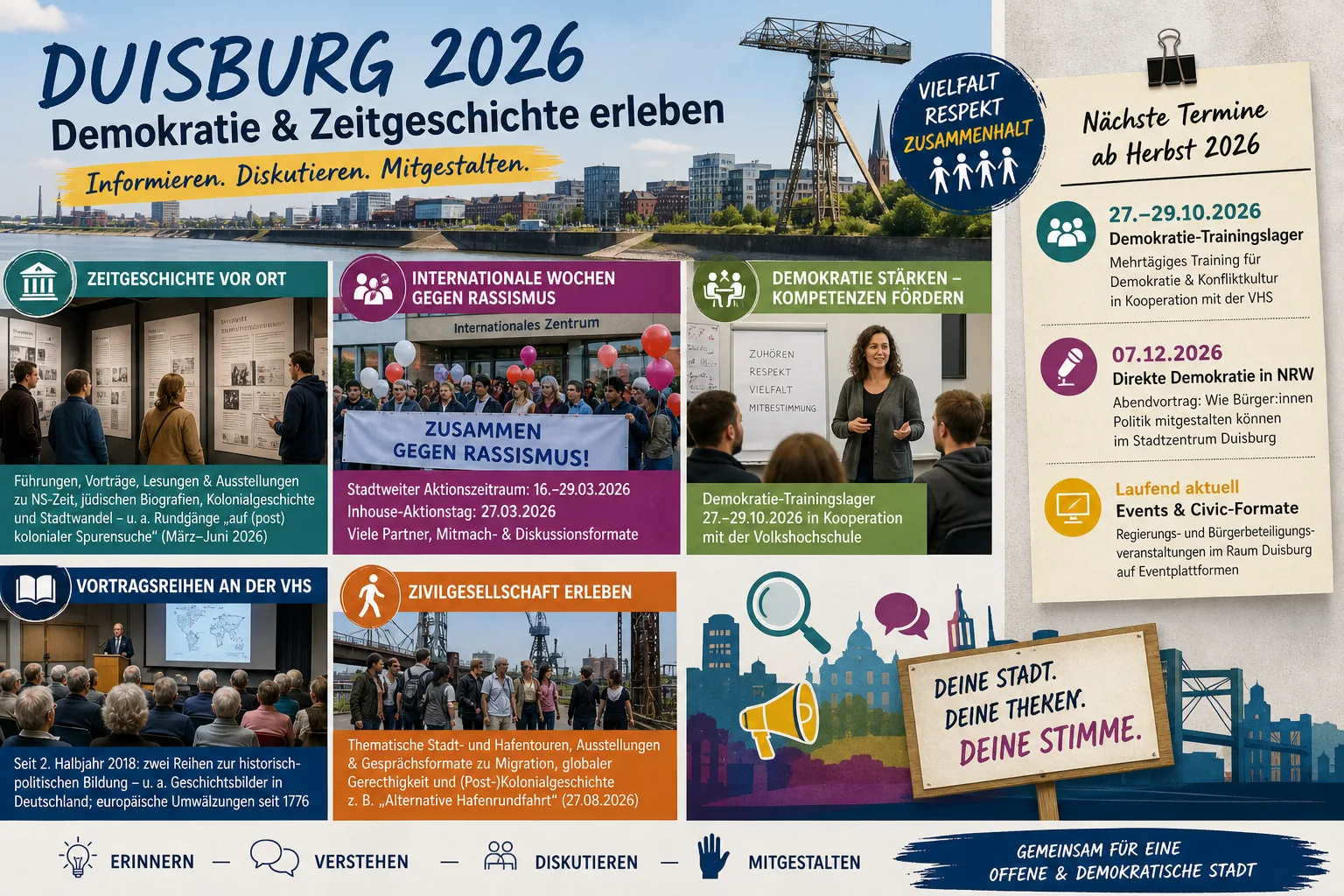
Modern Architecture in Duisburg: Buildings That Impress
Modern Architecture in Duisburg – Buildings That Will Impress in the Coming Months
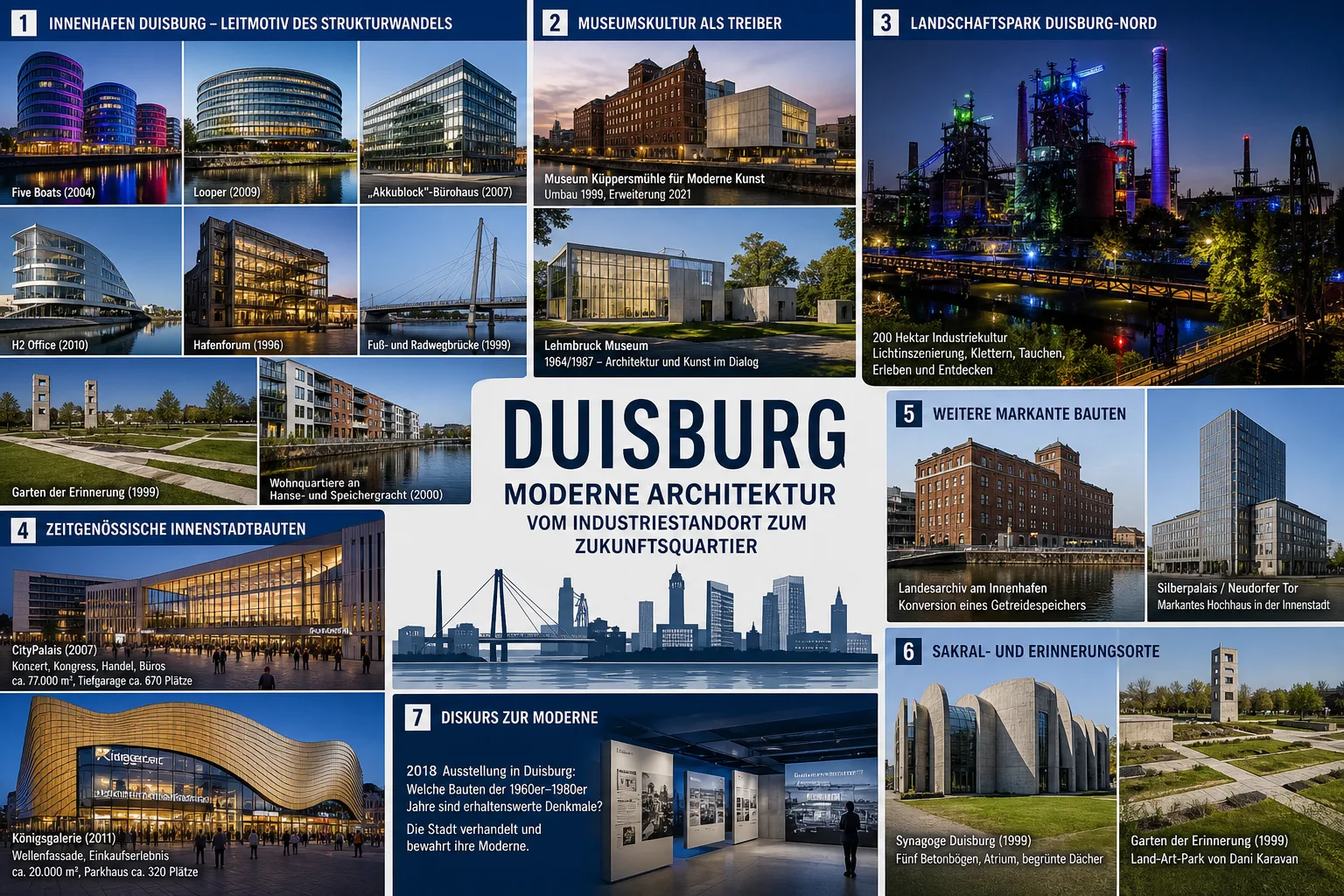
This guide helps you to specifically experience modern architecture in Duisburg in the coming weeks and months: at the Inner Harbor, in museum buildings, in the Landschaftspark Duisburg-Nord, and in the city center – with a practical route and tips for planning.
How to Plan Your Architecture Day (and What to Expect On Site)
If you want to discover Duisburg through architecture soon, it is worth planning your visit like a small "exhibition in urban space": with fixed stops, short distances, and time slots for lighting moods, changes in perspective, and interiors. A mix of waterfront (Inner Harbor), culture (museums), large structures (Landschaftspark), and city center typologies (shopping and event architecture) works especially well.
- Best time of day for photos: In the coming weeks, late afternoon into the evening is ideal, as facades, water reflections, and lighting appear particularly clear.
- Mobility: You will be able to reach many points on foot; for longer distances (e.g., towards Landschaftspark), public transport or a bicycle will be worthwhile.
- Interiors: For museums and individual buildings, it will pay off to check the respective opening hours and admission rules shortly before your visit.
- Accessibility: In the coming months, you will find different levels, ramps, and stairs depending on the stop; for specific requirements, a preliminary check on the official websites is recommended.
Duisburg Inner Harbor: Architectural Walk by the Water
At Duisburg's Inner Harbor, you will experience in a small area how contemporary office, residential, and cultural architecture interacts with the harbor space. For your next visit, the area is suitable as a compact "open-air collection": you move along the promenade and can directly compare volumes, facade rhythms, reflections, and transitions between old structures and new buildings.
Striking Building Ensembles You Can Head for on a Walk
- Five Boats: If you pass by in the evening, you will particularly notice the sculptural, oval building forms and the staging through light.
- Looper: On a visit, you will experience the atrium idea as a spatial center; the building offers good sightlines for interior-exterior relationships (where publicly accessible).
- "Akkublock" Office Building: In the coming months, you will especially notice the technically precise facade effect here, which appears very "graphic" by the water.
- H2 Office: When standing on the promenade, you will be able to perceive the impression of a "ship" and the terraced transitions to the outdoor area.
- Hafenforum: In the future, you will be able to observe how a warehouse typology remains readable as a place for work and encounters, while contemporary elements mark new layers of use.
Engineering Structures & Urban Space as an Architectural Experience
For your next walk, it is worth consciously including the foot and cycle connections: bridges, railing lines, visual jumps over the harbor basin, and the interplay of water and facades will strongly shape your sense of space.
Garden of Remembrance: Landscape Architecture as Narrative
If you visit the Garden of Remembrance in the coming weeks, you will experience a quiet, very deliberately composed sequence of paths, edges, and "traces." The facility is particularly suitable for planning a break between the larger buildings and reading architecture as a sequence of spatial segments.
Museums as Architectural Destinations: Küppersmühle & Lehmbruck Museum
For your next visit to Duisburg, two museum buildings will be particularly rewarding if you want to not only look at architecture but also "walk through" it: spaces, lighting, material changes, and the choreography from urban space into the building are noticeably at the center here.
Museum Küppersmühle for Modern Art: Spatial Sequences at the Inner Harbor
If you visit the Museum Küppersmühle in the coming months, you will experience the effect of a large, clearly guided museum tour: robust surfaces, precisely placed openings, and a strong connection to the harbor space. Plan time to view the exterior views by the water and the interiors one after the other – the change in perspective will sharpen your perception significantly.
Lehmbruck Museum: Transparency, Park Connection, and Concentrated Exhibition Spaces
At the Lehmbruck Museum, the contrast will be particularly worthwhile for you in the future: open, light-filled areas with a strong connection to the outside and at the same time quieter, concentrated rooms where art and architecture rely on "silence." If you combine the museum visit with a walk in the surrounding greenery, you will be able to particularly understand the transition between building and landscape.
Landschaftspark Duisburg-Nord: Industrial Facilities as Walkable Architecture
In the Landschaftspark Duisburg-Nord, you will find an extraordinary architectural experience in the coming months: large-scale industrial forms, paths, viewpoints, and uses that make the place tangible as a "walkable spatial object." The area is particularly suitable for architecture enthusiasts because you can read scale, materiality, and structure up close.
What You Can Specifically Experience On Site
- Spatial Scale: You will experience how enormous volumes change the human scale and how paths feel like a staging.
- Mix of Uses: On your walk, you will notice that leisure, sports, and cultural offerings activate the place and show architecture "in operation."
- Evening Atmosphere: If you visit in the evening, the lighting will greatly change the character of the area and emphasize details that are less noticeable during the day.
For your planning, it is recommended to schedule fixed time slots for viewpoints, quieter areas, and photo stops so that the park is not only "large" but also easy to read.
City Center: CityPalais, Königsgalerie, and High Points
If you want to perceive Duisburg as a metropolitan ensemble in the future, a detour to the city center will be worthwhile: Here you can compare modern functional architecture (events, commerce, transport) in one place and directly experience the effect of facades, passages, and interiors.
CityPalais: Bundled City Functions
At the CityPalais, you will experience how a large building brings together different uses. For a future visit, it is worth consciously walking around the building and observing the transitions between public space, entrances, and interior areas.
Königsgalerie: Facade Effect and Interior Dramaturgy
In the Königsgalerie, the effect of the facade in the street space will particularly catch your eye on your next walk. Inside, you can observe the spatial guidance, sightlines, and the staging of lounge areas as part of modern commercial architecture.
High Points in the Cityscape: Reading Verticality
If you consciously look at the silhouette "from afar" in the coming months, you will recognize high-rise buildings as landmarks. For a good understanding, a brief change of perspective is recommended: once from close to pedestrian zones and once from an open square or a wider street.
Other Stops: Synagogue and State Archive (External Impact & Urban Space)
If you want to supplement your next architecture tour with quieter, more concentrated stops, two places will be suitable that work strongly through attitude and urban impact.
Synagogue: Restrained Monumentality in Urban Space
On a future visit, you will particularly perceive the effect of a clear, protected building and the importance of thresholds (access, forecourts, sightlines). Please plan your visit respectfully and follow the current visiting and security rules on site.
State Archive: Warehouse Effect and Public Address
At the Inner Harbor, the State Archive will appear to you as a striking, calm building block. For your next route, it is worth viewing the external effect from several distances: up close (material and details) and from further away (proportions in the harbor ensemble).
Suggested Route (Half-Day or Weekend)
To ensure your visit works well in the coming weeks, here is a practical sequence. You can adjust it according to weather, opening hours, and your personal pace.
Option A: Half-Day (Focused on the Inner Harbor)
- Start at the Inner Harbor: promenade and building ensembles (Five Boats, Looper, H2 Office – external effect).
- Garden of Remembrance as a quiet intermediate stop.
- Museum Küppersmühle (if open): interiors & view back to the harbor.
- Finish with an evening walk for lighting mood and reflections on the water.
Option B: Weekend (Inner Harbor + Landmark)
- Day 1: Inner Harbor route (as in Option A) plus city center detour (CityPalais, Königsgalerie).
- Day 2: Landschaftspark Duisburg-Nord with enough time for the path system, viewpoints, and evening atmosphere.